
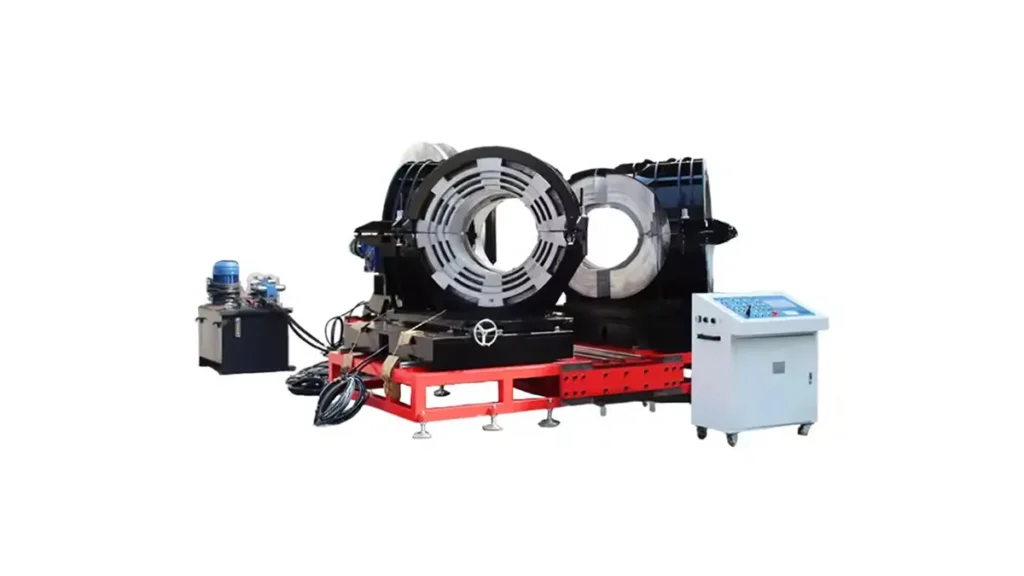
Landfill projects demand pipeline systems that can perform safely under demanding conditions, from leachate collection and conveyance to gas recovery and drainage management. In these environments, the quality of pipe joining is not a minor detail—it directly affects system integrity, environmental protection, and long-term operating costs. This is why butt fusion machine technology has become an essential part of modern landfill construction, especially when working with HDPE pipe.
HDPE, or high-density polyethylene, is widely selected for landfill applications because it offers excellent chemical resistance, flexibility, impact strength, and long service life. Yet even the best pipe material can fail if the joints are weak. HDPE pipe welding, especially butt fusion welding, creates a continuous, leak-resistant pipeline by thermally joining pipe ends into a single homogeneous structure. In landfill projects, this matters because the system must safely contain liquids and gases for many years without frequent maintenance.
The process begins with careful site planning and pipe preparation. In landfill engineering, every section of piping must be aligned correctly before welding. The ends of the HDPE pipes are cleaned, clamped into a fusion machine, and trimmed to ensure a perfectly square surface. A heated platen is then inserted between the pipe ends to soften the polymer. Once the correct melting stage is reached, the heater is removed and the pipe ends are pressed together under controlled pressure. After cooling, the joint becomes as strong as the pipe itself.
What makes this method especially suitable for landfill work is the reliability of the final fusion joint. Because the weld is made from the same base material, there are no gaskets, adhesives, or mechanical fasteners that can degrade over time. This is an important advantage in landfill environments where chemical exposure, ground movement, moisture, and pressure fluctuations can challenge traditional joining methods. A properly executed fusion joint helps reduce the risk of leakage, environmental contamination, and costly repairs.
Key benefit: butt fusion welding creates a continuous pipe network that is highly resistant to leaks, stress, and corrosion-related joint failure.
Why HDPE Welding Matters in Landfill Engineering
Landfills are highly regulated facilities because they must control contamination from waste decomposition. Leachate, the liquid produced as waste breaks down, must be collected and transferred through a dependable piping network. Similarly, landfill gas systems often require robust pipes to safely transport methane and other gases to treatment or energy recovery systems. In both cases, pipe joining quality can influence system safety and performance for decades.
HDPE welding is used in landfill projects because it supports large-diameter pipelines, buried installations, and systems exposed to chemically aggressive environments. The material’s flexibility helps it absorb settlement and minor soil movement better than rigid piping systems. This is particularly valuable in landfills, where ground conditions can change over time due to waste compaction, seasonal moisture variation, and operational activity.
Another major advantage is that welded HDPE joints provide a smooth internal bore. This helps maintain efficient flow and reduces the chance of blockages or turbulence. For leachate lines, that means more stable transport of liquids. For gas collection systems, it helps support consistent flow behavior across the network. In large projects, these performance benefits can translate into lower maintenance and improved operational reliability.
How Butt Fusion Is Used on Site
In landfill projects, butt fusion is often the preferred method for joining HDPE pipe sections because it is efficient, repeatable, and suitable for long pipeline runs. Contractors typically use manual, hydraulic, or CNC automatic fusion equipment depending on pipe size, project scale, and accuracy requirements. For small-to-medium installations, manual systems may be sufficient. For larger diameters or high-volume construction, hydraulic and automatic machines improve consistency and productivity.
The process usually follows a controlled sequence. First, the pipe is secured in the machine clamp system. Second, the pipe ends are faced to create matching surfaces. Third, heat is applied with a fusion platen to prepare the material for joining. Fourth, the heater is removed and the softened ends are brought together under proper fusion pressure. Finally, the weld is held in place during cooling. Each step must be carefully managed to ensure a high-quality bond.
Important note: temperature accuracy, pressure stability, and pipe alignment are critical to achieving a durable fusion joint in landfill environments.
Because landfill projects often involve outdoor installation, field conditions can affect the welding operation. Wind, dust, moisture, and uneven ground can all influence the quality of the work if not properly managed. Skilled operators therefore use protective measures, accurate equipment settings, and thorough inspection procedures before and after each weld. In many large projects, welding logs and quality records are maintained to verify compliance with project requirements.
For contractors, choosing the right equipment is just as important as choosing the right pipe material. A dependable machine can help improve installation speed, reduce error rates, and support consistent weld quality. This is one reason many project teams evaluate a supplier’s technical support, customization capability, and quality control before making a purchase. A trusted manufacturer with strong experience in HDPE pipeline systems can make a meaningful difference on site.
Main Applications in Landfill Projects
Leachate collection systems: HDPE pipes collect contaminated liquids and transport them to treatment facilities. Leak-free joints are essential to prevent seepage into the surrounding soil.
Landfill gas collection: Welded HDPE pipelines help transport methane-rich gas to flares or energy recovery systems. Reliable joints help maintain pressure and reduce emission risks.
Stormwater and drainage lines: Some landfill zones use HDPE piping for drainage control. Fusion welding provides strong joints that can handle buried service conditions.
Sump and transfer piping: In pumping and transfer areas, welded pipe assemblies support fluid movement through harsh operating environments.
Tip: the better the weld quality, the lower the risk of environmental incidents and future maintenance interruptions.
Why Contractors Prefer Fusion Welding Over Mechanical Joining
Mechanical joints can be useful in some pipeline systems, but landfill projects often require a more permanent and resilient solution. Fusion welding eliminates many of the weak points associated with gaskets, bolts, and seals. These components can loosen, wear out, or fail due to chemical exposure and ground settlement. By contrast, a butt-fused joint becomes an integrated part of the pipeline itself.
Cost is another factor. Although fusion equipment and trained operators are required, the long-term value is significant. A well-welded HDPE system can reduce the likelihood of repairs, emergency interventions, and environmental remediation. Over the life of a landfill site, those savings can be substantial. In addition, fusion welding supports larger pipe sizes and complex layouts more effectively than many alternative joining methods.
The quality of the machine also plays a major role. Modern butt fusion systems are designed to maintain accurate heating, stable hydraulic pressure, and proper clamp alignment. These features help produce repeatable welds that meet project specifications. For global contractors and distributors, access to customizable equipment and reliable after-sales support is often a key purchasing factor.
When selecting a supplier, many buyers look for proven industry experience, technical guidance, and fast delivery. Manufacturers with advanced production capability and strict inspection procedures can provide the consistency required for critical landfill infrastructure. Equipment certifications and international compliance also add confidence for large-scale project procurement.
Project advantage: high-quality fusion equipment helps contractors build safer, longer-lasting landfill networks with fewer interruptions.
Quality Control in HDPE Pipe Welding
Quality control is essential in landfill applications because even small defects can lead to major problems over time. Before welding, operators check pipe dimensions, surface condition, and machine calibration. During welding, they monitor temperature, pressure, and timing. After welding, the joint is inspected visually and, in some cases, through additional testing methods depending on project requirements.
Machine performance consistency is especially important when long welding shifts are required. This is why manufacturers often test equipment for temperature accuracy, hydraulic stability, and clamp alignment. Reliable machines reduce operator uncertainty and improve the probability of producing acceptable welds throughout the project. In demanding landfill environments, that consistency helps support both compliance and durability.
For larger projects, advanced CNC automatic fusion systems can improve repeatability further. These machines help standardize critical parameters and reduce the likelihood of human error. However, even with automation, operator training remains important. Well-trained crews understand how to prepare pipes, verify settings, and respond to changing site conditions. That combination of technology and expertise produces the best results.
JQ-Fusion Support for Landfill Pipe Welding
Reliable landfill welding depends on both the pipe material and the equipment used to join it. JQ-Fusion focuses on HDPE pipe welding machines designed for real-world pipeline projects, including water supply, gas distribution, mining, and industrial applications. The same engineering approach is highly relevant to landfill construction, where performance and durability are essential.
With more than 20 years of industry experience, JQ-Fusion provides manual, hydraulic, and CNC automatic butt fusion welding machines for different pipe diameters and project requirements. The company emphasizes manufacturing precision, strict inspection, and practical customization for global clients. This can be valuable for landfill contractors who need machine configurations tailored to specific site conditions or project standards.
JQ-Fusion also supports OEM and ODM customization, which can help distributors and contractors align equipment with their market or project needs. From color and voltage to branding and machine design, flexible options make it easier to match operational requirements. For teams working on time-sensitive landfill projects, fast logistics and technical support can also reduce delays and improve deployment efficiency.
Learn more about the company’s solutions through these resources: butt fusion machine, HDPE pipe welding equipment, hydraulic butt fusion welding machine, automatic butt fusion machine, and electrofusion welding machine.
Common Questions
1. Why is HDPE preferred for landfill pipelines?
HDPE is chemically resistant, flexible, and durable, making it suitable for buried pipelines in harsh landfill conditions.
2. Is butt fusion better than mechanical joining for landfill work?
In many cases, yes. Butt fusion creates a continuous joint with fewer leak paths and better long-term reliability.
3. What areas of a landfill use welded HDPE pipe?
Leachate collection, landfill gas recovery, drainage lines, and transfer piping commonly use welded HDPE systems.
4. What affects weld quality most?
Pipe preparation, accurate temperature control, stable pressure, proper alignment, and skilled operator handling are the main factors.
5. Can automatic fusion machines improve landfill project quality?
Yes. Automatic systems help standardize parameters, improve repeatability, and reduce operator error on large projects.



