
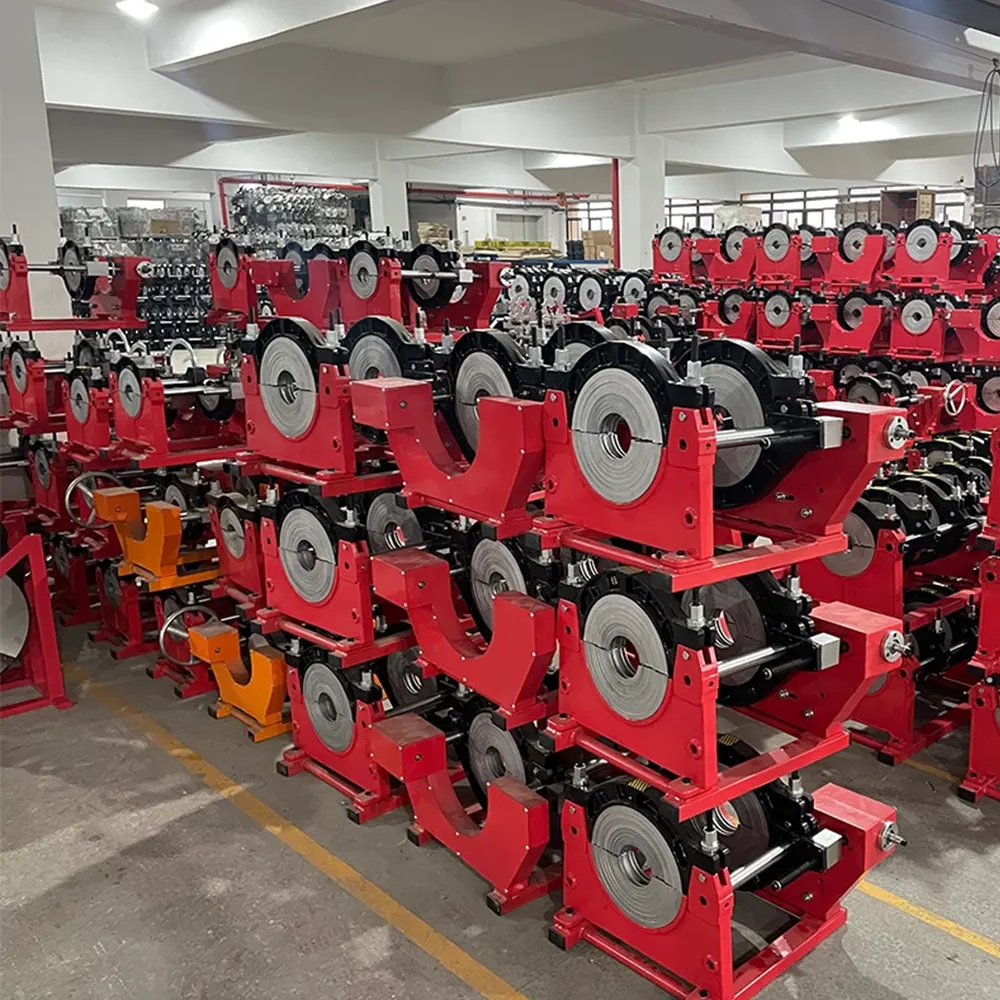
Plastic pipe welding, particularly using techniques like butt fusion, has become a cornerstone of modern infrastructure development. This method is essential for creating robust, leak-free joints in high-density polyethylene (HDPE) pipelines, which are increasingly favored for their durability, flexibility, and corrosion resistance. From urban water mains to rural gas distribution and industrial slurry transport, the applications are vast and critical to public safety and economic efficiency.
Core Applications in Infrastructure Projects
The use of plastic pipe welding spans several key sectors of infrastructure, each with its own demanding specifications and performance requirements.
Water Supply and Distribution Networks
Municipal water systems rely heavily on welded HDPE pipes. The seamless joints created by a butt fusion machine prevent leaks, protecting precious water resources and preventing contamination. This is crucial for both potable water delivery and wastewater management, especially in areas with corrosive soils.
Gas Distribution Pipelines
Safety is paramount in gas distribution. Butt fusion welding creates homogeneous, full-strength joints that are as strong as the pipe itself, eliminating potential weak points. This integrity is vital for preventing gas leaks in residential, commercial, and industrial supply networks.
Mining and Industrial Slurry Lines
In harsh mining environments, pipelines transport abrasive slurries and tailings. Welded HDPE pipes resist abrasion and chemical attack far better than metallic alternatives. The smooth interior of the fused joint also minimizes friction and prevents buildup, ensuring consistent flow and reducing maintenance downtime.
Telecommunications and Power Conduits
Fused plastic conduits provide a continuous, watertight protective pathway for fiber optic cables and electrical wiring. This safeguards critical communication and power infrastructure from moisture and physical damage, ensuring network reliability.
Key Advantage: Joint Integrity
The primary advantage of butt fusion welding is the creation of a homogeneous joint. Unlike mechanical fittings, the fused joint has no gaps, seals, or different materials that could fail. The resulting connection is monolithic, with strength often exceeding that of the base pipe, ensuring long-term system integrity under pressure and stress.
Key Advantages of Plastic Pipe Welding
The shift towards welded plastic piping systems is driven by a compelling set of technical, economic, and environmental benefits.
Superior Durability and Corrosion Resistance
HDPE is inherently inert and does not rust, corrode, or support biological growth. A welded system maintains this resistance throughout, unlike systems with metallic components. This leads to a service life often exceeding 50 years with minimal maintenance, drastically reducing lifecycle costs.
Leak-Free Performance
The fusion process creates a permanent, molecular bond. This eliminates the primary cause of pipeline failure: leaks at joints. For water and gas networks, this means conservation of resources, enhanced public safety, and elimination of costly, disruptive repair work.
Flexibility and Seismic Resilience
Welded HDPE pipelines can bend and flex without compromising joint integrity. This makes them exceptionally resilient to ground movement, settling, and even seismic events. They can be installed in challenging terrains with fewer fittings, simplifying design and installation.
Key Advantage: Cost-Effectiveness
While the initial investment in a quality butt fusion machine is required, the long-term savings are substantial. The combination of faster installation (due to fewer components and easy joining), minimal maintenance, and ultra-long service life results in a significantly lower total cost of ownership compared to traditional piping materials.
Lightweight and Faster Installation
HDPE pipes are much lighter than metal or concrete pipes, reducing handling costs and enabling installation with lighter equipment. The fusion welding process itself is relatively quick and can be performed in most weather conditions, accelerating project timelines.
Environmental Sustainability
HDPE pipes have a smooth interior that improves flow efficiency, reducing pumping energy. Their long life and leak-free nature conserve water and prevent soil contamination. Furthermore, HDPE is recyclable, contributing to a more circular economy in construction.
The Role of Advanced Welding Equipment
The consistency and quality of the weld are directly dependent on the precision and reliability of the welding equipment. Modern butt fusion machines incorporate sophisticated hydraulic systems, precise temperature controls, and alignment features to ensure every joint meets stringent standards. Manufacturers like JQ-Fusion provide a range of machines, from manual to fully automatic CNC-controlled units, catering to projects of all scales and complexities. The right equipment, backed by proper operator training, is non-negotiable for achieving the advantages outlined above. For contractors seeking reliable performance, exploring the capabilities of a dedicated butt fusion machine manufacturer is a critical step.
Key Advantage: System Versatility
Plastic pipe welding is not limited to straight pipes. With the right equipment, such as multi-angle fitting welding machines, complex networks with tees, elbows, and reducers can be seamlessly integrated. This allows engineers to design efficient, customized pipeline layouts for virtually any infrastructure need, all while maintaining the core benefits of a fused system.
In conclusion, plastic pipe welding is far more than just a joining technique; it is an enabling technology for durable, efficient, and sustainable infrastructure. Its application across water, gas, mining, and telecommunications projects demonstrates its versatility. The key advantages—leak-free integrity, corrosion resistance, long-term cost savings, and installation efficiency—make it a superior choice for modern engineering challenges. As technology advances, the role of precision welding equipment and expert manufacturers becomes ever more central to successful project outcomes. Partnering with an experienced supplier ensures access to not only quality machinery but also the technical support necessary for optimal results. Learn more about professional solutions from industry leaders like JQ-Fusion.
Frequently Asked Questions (FAQs)
What is the main difference between butt fusion and electrofusion welding?
Butt fusion joins two pipe ends by heating them with a plate and pressing them together. Electrofusion uses fittings with embedded heating wires that are energized to melt and fuse the pipe to the fitting. Butt fusion is typically used for long, straight pipe runs, while electrofusion is ideal for repairs, ties-ins, and complex branch connections.
How long does a butt-fused HDPE joint last?
When performed correctly using qualified procedures and equipment, a butt-fused joint in HDPE pipe is considered to have a service life equal to that of the pipe itself—often 50 to 100 years. The joint does not degrade separately from the pipe material.
Can plastic pipe welding be used for high-pressure applications?
Yes. HDPE pipes and their fused joints are rated for significant pressure capacities. They are commonly used in potable water mains and gas distribution systems operating at pressures well over 100 PSI. The specific pressure rating depends on the pipe’s DR (Dimension Ratio) and material grade.
What training is required to operate a butt fusion machine?
Operators should undergo formal training from the equipment manufacturer or a certified program. Training covers machine setup, pipe preparation (facing), heating and fusion parameters, cooling procedures, and joint inspection. Proper training is essential for ensuring joint quality and system safety.
Is specialized equipment needed for different pipe sizes?
Yes, butt fusion machines are configured for specific diameter ranges. A quality manufacturer like JQ-Fusion offers machines covering a wide spectrum, from small-diameter service lines to large-diameter mains. Some machines feature modular components or adjustable frames to handle a range of sizes with one unit.



