
High-Density Polyethylene (HDPE) pipe has become a cornerstone of modern industrial infrastructure, prized for its corrosion resistance, flexibility, and long service life. However, the true strength of an HDPE pipeline system lies not just in the material itself, but in the quality and integrity of its joints. Welding is the primary method for joining HDPE pipes, creating monolithic, leak-free connections that are as strong as the pipe itself. This article explores how HDPE pipe welding is utilized across various industrial applications and examines the methods that deliver the best performance for demanding projects.
Core Welding Methods for Industrial HDPE Pipelines
Two primary welding techniques dominate industrial HDPE pipe installation: Butt Fusion and Electrofusion. Each method has distinct principles, equipment requirements, and ideal use cases.
Butt Fusion Welding is the most common method for joining long sections of pipe of the same diameter. The process involves heating the squared ends of two pipe sections simultaneously with a heated plate. Once the material reaches a specific molten state, the plate is removed, and the ends are pressed together under controlled pressure to form a homogeneous joint. The key to success is precise control of temperature, pressure, and time throughout the heating, switching, and cooling phases.
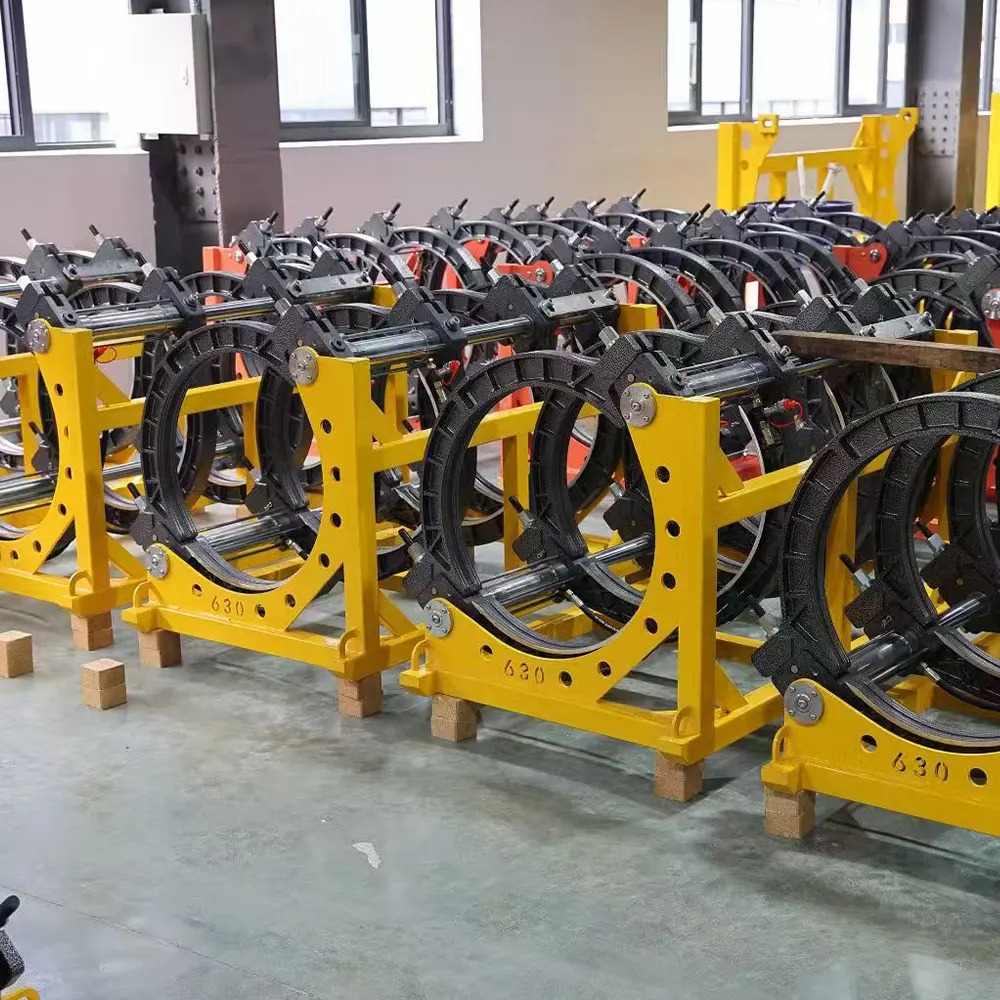
This method is highly favored for its efficiency in creating strong, reliable joints for straight runs of pipe. It is the go-to technique for large-diameter mainlines in sectors like municipal water supply, gas distribution, and industrial process piping. The performance of butt fusion welding is heavily dependent on the quality and precision of the butt fusion machine used, which ensures consistent application of the critical welding parameters.
Electrofusion Welding utilizes fittings (couplers, elbows, tees) that have embedded heating wires. The pipe ends are inserted into the fitting, and an electrical current is passed through the wires, melting the inner surface of the fitting and the outer surface of the pipe. The resulting fusion creates a pressure-tight joint. This method is exceptionally versatile for repairs, tie-ins, and connecting pipes in confined spaces where butt fusion equipment cannot maneuver.
Performance Factors: Choosing the Right Method
Selecting the optimal welding method is critical for project success. Key performance factors include:
- Joint Strength & Integrity: A properly executed butt fusion joint typically has a strength equal to or greater than the pipe itself. Electrofusion joints, when performed correctly on clean, prepared surfaces, also provide excellent long-term integrity.
- Application Flexibility: Electrofusion excels in complex, space-restricted applications like service connections, repairs, and branching. Butt fusion is optimal for long, straight, same-diameter runs.
- Process Control & Consistency: Modern butt fusion machines, especially hydraulic and CNC automatic models, offer superior control over the welding cycle (temperature, pressure, time), minimizing human error and ensuring repeatable, high-quality joints.
- Total Project Efficiency: For long pipeline spreads, butt fusion is generally faster and more cost-effective. For small-scale or repair work, the simplicity and portability of electrofusion can lead to greater overall efficiency.
Industrial Applications Demanding Robust Welding
The reliability of HDPE welding makes it indispensable in several high-stakes industrial sectors.
Water & Wastewater Management
Municipal water supply, sewage force mains, and industrial effluent lines rely on HDPE’s resistance to chemicals and abrasion. Butt-fused pipelines ensure zero leakage, protecting groundwater and maintaining system pressure. Electrofusion is crucial for connecting laterals and performing in-trench repairs.
Oil, Gas, & Mining
In slurry transport, mine dewatering, and gas gathering lines, pipelines face extreme abrasion and pressure. The seamless joints created by fusion welding prevent failure points. The durability offered by quality welding equipment is non-negotiable in these harsh environments to prevent costly downtime and environmental incidents.
Industrial & Chemical Processing
Plants use HDPE for corrosive chemical transport, cooling water lines, and process piping. Fusion-welded systems eliminate the corrosion risk associated with metal flanges or threaded connections, ensuring process purity and safety.
The Role of Advanced Welding Equipment in Performance
Consistent, high-performance welding is unattainable without professional-grade equipment. The capabilities of the welding machine directly translate to joint quality. Key features of high-performance machines include:
- Precise Temperature Control: Ensures the HDPE reaches the correct melt state without degradation.
- Accurate Hydraulic Pressure Systems: Apply consistent force during the fusion and cooling stages.
- Proper Alignment Clamps: Prevent misalignment, which is a primary cause of joint weakness.
- Data Recording (on advanced models): Provides a verifiable log of welding parameters for quality assurance.
Manufacturers like JQ-Fusion, with decades of experience, design their butt fusion machine products with these precise controls. Their focus on strict quality testing for temperature accuracy, hydraulic stability, and alignment ensures that contractors have a reliable tool capable of delivering the best welding performance on site, project after project.
Ensuring Best Practice for Optimal Results
Beyond choosing the right method and equipment, adherence to best practices is essential:
1. Proper Pipe Preparation: Ends must be clean, dry, and squared accurately.
2. Controlled Environment: Wind, rain, and extreme temperatures can adversely affect the fusion process.
3. Operator Training & Certification: Skilled operators who understand the material science and machine operation are vital.
4. Strict Adherence to Procedures: Following the pipe manufacturer’s and machine manufacturer’s recommended procedures for time, temperature, and pressure is mandatory.
Partnering with an equipment supplier that offers comprehensive technical support and training, such as the global support services highlighted by industry leaders, is a significant advantage in maintaining these standards.
Conclusion
HDPE pipe welding is a critical enabling technology for modern industrial infrastructure. The choice between Butt Fusion and Electrofusion welding methods depends on specific project requirements regarding joint strength, application flexibility, and operational efficiency. For large-scale, straight-run pipelines, the controlled, robust joints produced by a high-quality butt fusion machine offer unmatched performance. Across water, gas, mining, and chemical industries, the integrity of the welded joint is the linchpin for system safety, longevity, and leak-free operation. Ultimately, achieving the best performance hinges on a triad of factors: selecting the correct welding method, utilizing precise and reliable equipment from experienced manufacturers, and enforcing rigorous on-site welding procedures.
Frequently Asked Questions (FAQs)
Q1: What is the main advantage of butt fusion over other joining methods?
A1: The primary advantage is that it creates a fully homogeneous joint with no need for additional gaskets, seals, or mechanical parts. The fused joint is as strong as the pipe itself and is completely leak-proof, making it ideal for pressure applications.
Q2: Can electrofusion be used for large-diameter pipes?
A2: Yes, electrofusion fittings are available for large diameters. However, for long runs of large-diameter pipe, butt fusion is generally more economical and efficient. Electrofusion is often preferred for large-diameter repairs, tie-ins, or complex fittings.
Q3: How critical is operator skill in HDPE welding?
A3: Extremely critical. While modern machines provide excellent control, the operator must properly prepare the pipe, set up the machine correctly, monitor the process, and ensure environmental conditions are suitable. Proper training and certification are essential for consistent, high-quality welds.
Q4: What quality checks are performed on a completed fusion joint?
A4: Visual inspection for a uniform bead shape and proper alignment is the first step. For critical applications, non-destructive testing methods like ultrasonic scanning can be used to check for internal flaws. Reviewing data logs from automated welding machines is also a key quality assurance step.
Q5: Why is partnering with a reputable equipment manufacturer important?
A5: A reputable manufacturer ensures machine precision, reliability, and safety. They provide vital technical support, training, and access to genuine spare parts. This partnership reduces project risk, minimizes downtime due to equipment failure, and guarantees that the machinery meets the required international standards for performance.



