
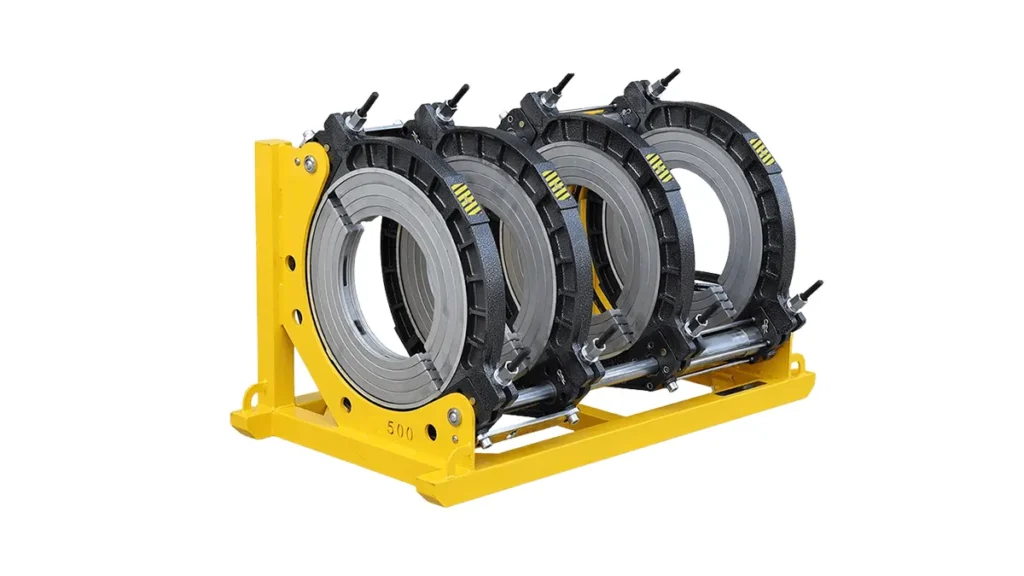
Hydraulic HDPE pipe welding machines (hydraulic butt-fusion units) are widely used across Ghana for reliable joins in water supply, irrigation, mining, and municipal infrastructure. This guide explains how these machines work on-site, what Ghanaian contractors should expect, and practical tips for achieving durable welds in local conditions.
Overview: Why Hydraulic Butt-Fusion Works Well in Ghana
Hydraulic butt-fusion welding creates homogeneous, leak-proof joints by heating and pressing polyethylene pipe ends together under controlled pressure. In Ghana — where many projects range from urban water mains in Accra and Kumasi to rural borehole networks and irrigation systems — hydraulic units offer consistent performance for larger diameters and longer runs than manual tools. They deliver repeatable weld quality, speed up production, and reduce rework, especially on long-distance installations and rainy-season work.
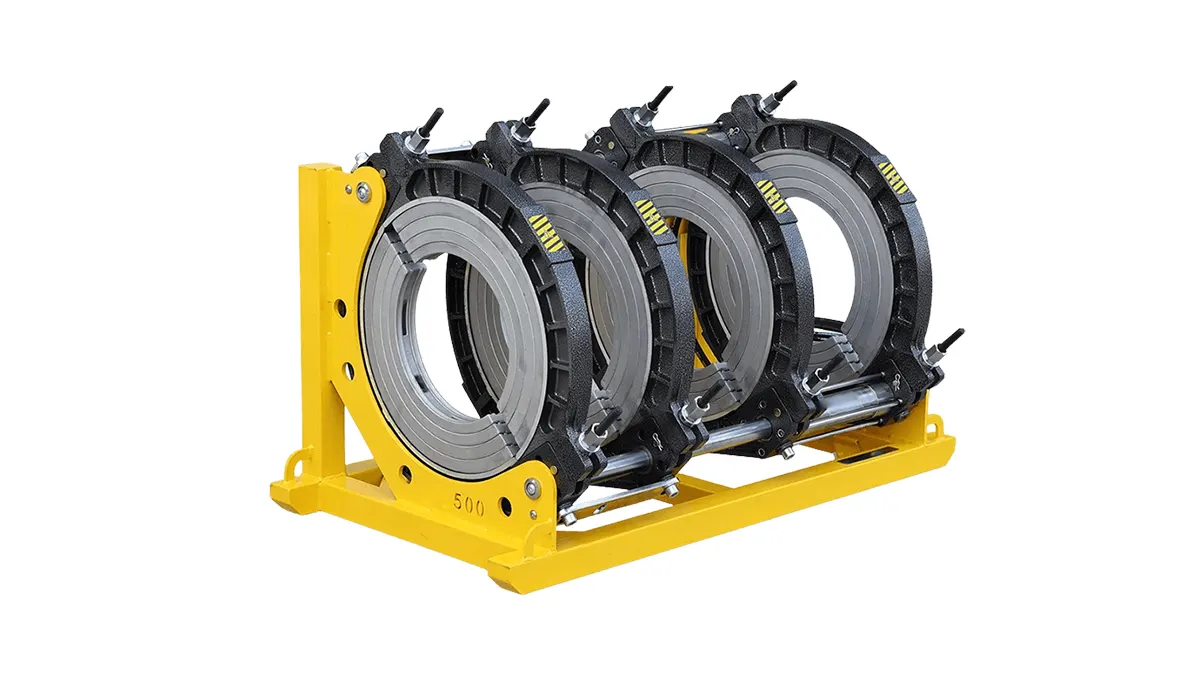
How a Hydraulic HDPE Pipe Welding Machine Works — Step by Step
1. Preparation: Positioning and Alignment
Operators place the two pipe ends in the clamp frame and use the hydraulic system to align them precisely. Accurate alignment ensures concentric heating and uniform pressure distribution — critical for pipes used in potable water systems and distribution networks common in Ghana.
2. Facing (Trimming)
A facing tool trims the pipe ends to remove oxides and produce flat, parallel faces. The hydraulic drive advances the facing cutter; the result must be burr-free to prevent weak spots in the fusion joint.
3. Heating
An insulated heating plate (temperature controlled) contacts both trimmed ends. The machine’s temperature controller ensures the surface reaches the correct melt condition; typical PE100 welding temperatures are between 200–260°C depending on the material and local standards.
4. Fusion (Butt-Joining)
After removal of the heater, the hydraulic cylinder pushes the molten pipe ends together at a prescribed pressure. The machine holds a controlled fusion force for the specified press-in distance and time to form a molecular bond.
5. Cooling and Demolding
The joint cools under maintained pressure until the melt solidifies. Cooling time depends on pipe diameter and ambient temperature — an important consideration under Ghana’s warm climate. After cooling, the clamps are released and the welded pipe can be moved.
6. Inspection and Finishing
Visual inspection and, when required, non-destructive testing (e.g., hydrostatic pressure test sections) confirm weld integrity. Any flash or excess material can be trimmed with a pipe trimmer so the network remains clean and smooth.
Typical Machine Specs (Reference)
| Model | Pipe Range (mm) | Max Hydraulic Force | Typical Cycle Time |
|---|---|---|---|
| Compact Hydraulic 160–250 | 160–250 | 10–20 kN | 6–12 min |
| Mid-Range 315–630 | 315–630 | 50–200 kN | 10–25 min |
| Large Diameter 800–2000+ | 800–2000+ | 200–1000 kN | 20–60+ min |
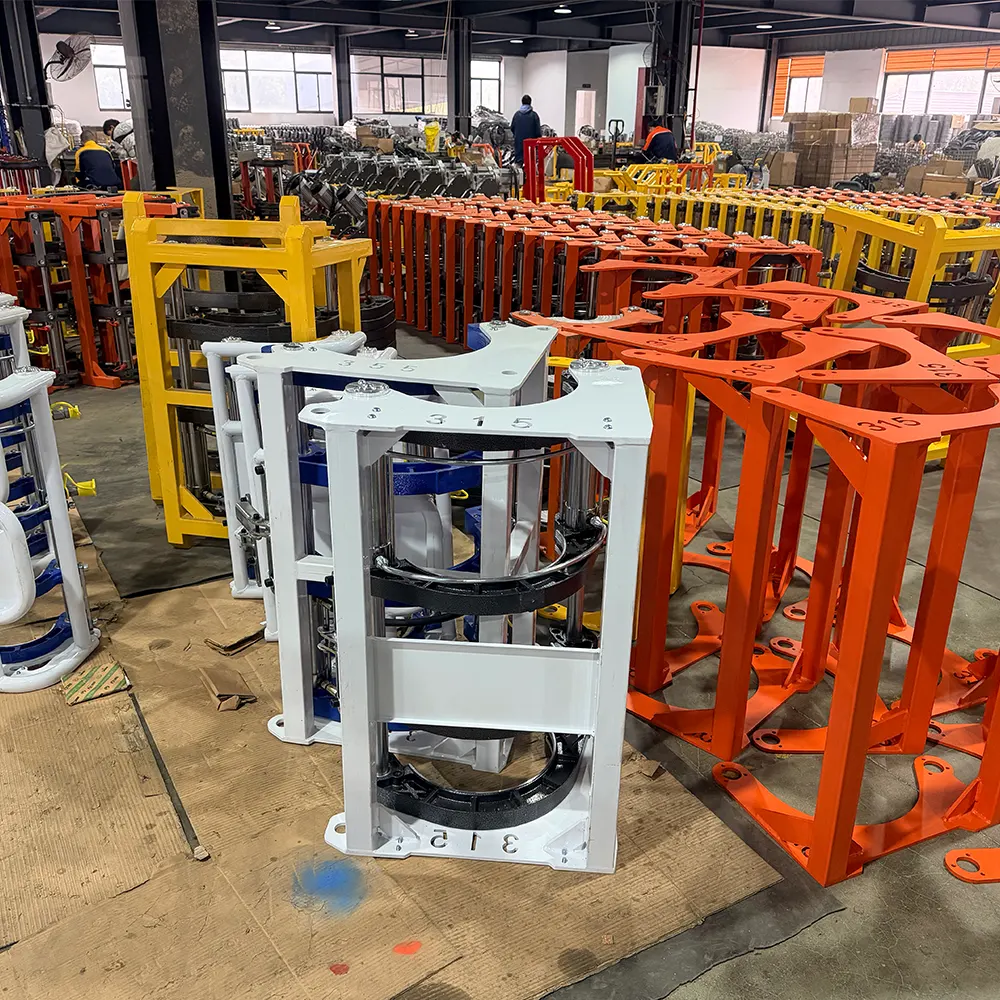
Benefits for Ghanaian Projects
Reliability: Homogeneous joints resist corrosion and infiltration — ideal for drinking water systems and long-life networks.
Speed: Hydraulic systems maintain consistent pressure and reduce operator fatigue on long runs common in rural extension work.
Scalability: Models cover a wide range of diameters, making it easy to switch between urban trunklines and smaller village distribution pipes.
Practical Site Tips for Ghana
Power and Equipment: Bring reliable power solutions or generators when working at remote sites. Confirm heater temperature stability before starting a welding run.
Training: Invest in short fusion certification for teams — correct facing, pressure, and cooling times reduce rework and costly leak repairs.
Climate & Soil: High ambient temperatures shorten cooling times but can increase heater recovery time. Secure work platforms on lateritic or sandy soils to keep pipe alignment precise.
Common Issues & Quick Fixes
| Problem | Likely Cause | Quick Fix |
|---|---|---|
| Weak weld or cold joint | Incorrect heater temp / insufficient fusion pressure | Verify heater calibration; increase pressure to spec; re-weld if needed |
| Uneven flash | Misalignment or uneven facing | Re-face pipe ends; check clamp alignment; reattempt weld |
| Heater takes long to recover | High ambient temp or generator underpowered | Upgrade power supply; allow additional recovery time |
Safety & Maintenance
Always use PPE (heat-resistant gloves, goggles) and keep bystanders at a safe distance during heating and fusion. Perform daily checks on hydraulic oil levels, heater element condition, and alignment rails. Regular calibration of temperature controllers and pressure gauges preserves weld quality over the life of the machine.
For sourcing equipment and technical support, JQ-Fusion offers a range of hydraulic butt-fusion machines suitable for projects across Ghana, with models sized for both rural water works and large municipal pipelines.



