
Learning pipe welding step by step can feel challenging at first, especially for new operators who are responsible for producing safe, durable, and consistent joints. In real pipeline work, every detail matters: pipe preparation, machine setup, heating time, alignment, pressure control, and cooling all affect the final weld quality. That is why a structured learning path is essential. New operators should not rush into production work without understanding the process, because even a small mistake can lead to weak joints, wasted material, and project delays.
For beginners, the best approach is to learn pipe welding as a series of clear stages. Start with safety awareness, then move to equipment identification, material preparation, machine operation, process control, and quality inspection. This method helps operators build confidence while reducing errors. It also creates a strong foundation for working with different welding systems, including a butt fusion machine used in water supply, gas, mining, and industrial pipeline projects.
✅ Key idea: A new operator should first understand the “why” behind each step, not only the “how.” When the process makes sense, welding becomes easier to control and much more repeatable.
1. Learn the Basics of Pipe Welding
Before touching any machine, new operators should understand what pipe welding is designed to achieve. The goal is to create one continuous, sealed pipeline connection that can withstand pressure, movement, and long-term service. In butt fusion welding, two pipe ends are heated and pressed together to form a single joint. This process is widely used for HDPE pipelines because it produces strong, leak-resistant connections when done correctly.
Operators should also learn the main types of equipment used in the field. Depending on the job, they may work with manual, hydraulic, or CNC automatic systems. Each machine type has different control levels, but the welding principles remain the same: clean the ends, align the pipes, heat evenly, fuse under proper pressure, and allow enough cooling time. Understanding this foundation helps beginners avoid confusion later.
2. Start with Safety Training
Safety comes first in every welding environment. New operators must learn how to handle hot plates, moving clamps, electrical components, and hydraulic pressure systems. Protective gloves, safety boots, eye protection, and proper work clothing are not optional. The work area should also be dry, stable, and free from unnecessary clutter.
Important: Never begin welding without checking emergency procedures, equipment condition, and safe operating distance around the machine.
It is also important to learn how to shut down the machine quickly if something goes wrong. New operators should know where the power switch, pressure release, and temperature controls are located. Good safety habits developed at the beginning will prevent accidents later and improve overall workplace discipline.
3. Understand the Welding Machine Components
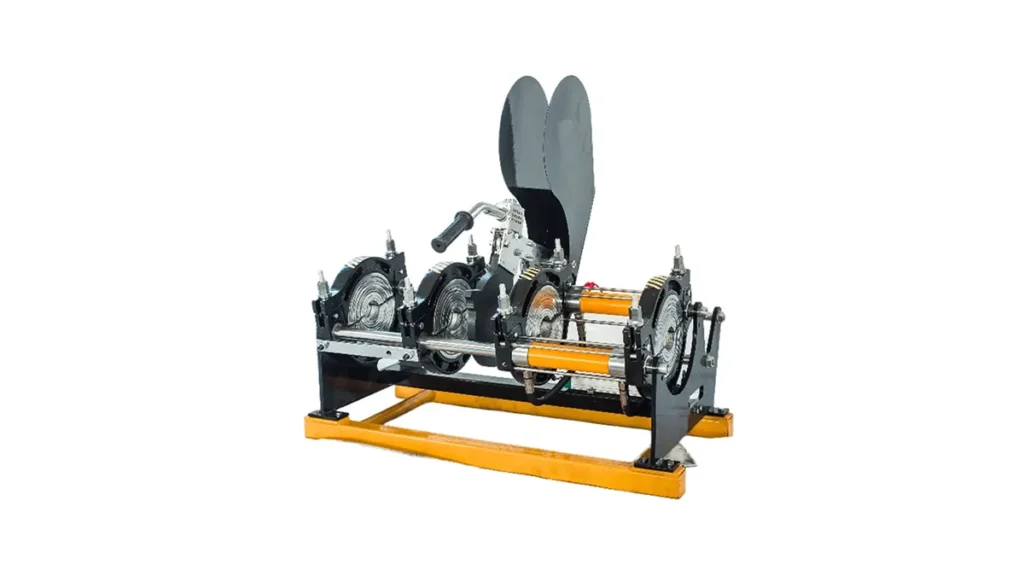
Every operator should be able to identify the major parts of the welding machine and explain their functions. A typical setup may include the frame, clamps, hydraulic unit, heating plate, trimmer, control panel, and pipe supports. If the operator does not understand these parts, it becomes difficult to carry out accurate welding steps.
The heating plate is responsible for softening the pipe ends to the correct temperature. The trimmer creates smooth, even faces so the pipe ends can align properly. The clamps hold the pipes firmly in place during the process. The hydraulic or pressure system helps maintain the required force during fusion. By learning each component one by one, beginners can understand how the machine supports weld quality.
4. Prepare the Pipe Correctly
Pipe preparation is one of the most important stages in the entire process. New operators should inspect the pipe for damage, dirt, moisture, and deformation before welding begins. If the pipe surface is dirty, the joint may fail. If the pipe ends are uneven, the fusion line may be weak or inconsistent.
Preparation usually includes cleaning the pipe, placing it in the machine, clamping it firmly, and facing the ends with a trimmer. After trimming, the operator should check whether both pipe ends are smooth, flat, and aligned. This step may seem simple, but it has a major impact on the final weld. Good preparation saves time and reduces the chance of rework.
⭐ Operator tip: Clean surfaces and accurate alignment are often more important than speed. A careful setup produces a much stronger result than a rushed one.
5. Learn the Heating Process Step by Step
Heating is the stage where the pipe ends become soft enough to fuse. New operators should learn the correct heating temperature, the required heating time, and the way to position the pipes against the heating plate. The goal is to heat both ends evenly, without overheating or underheating them.
If the heating time is too short, the pipe surfaces may not soften enough to create a strong bond. If the heating time is too long, the material may degrade. Temperature control is equally important. Many modern systems are designed to maintain stable heat, which helps operators achieve more consistent results. However, the operator still needs to monitor the process carefully and follow the recommended specifications for each pipe size and material type.
6. Practice the Fusion and Pressure Control
Once the pipe ends are heated correctly, they must be brought together under the proper pressure. This is where many beginners need the most practice. Too much pressure can distort the joint, while too little pressure can leave gaps or weak fusion. Learning to apply the correct force is a skill that comes from both training and repetition.
Operators should observe how the molten bead forms around the joint. A uniform bead usually indicates that the pressure and alignment are correct. Uneven beads, excessive flash, or irregular shapes may indicate a problem with setup or force control. By practicing under supervision, new operators can learn how to recognize good and bad welds early.
Reminder: Consistent pressure is a skill, not a guess. Operators should always follow the recommended procedure for the pipe size, material, and machine type being used.
7. Respect Cooling Time
After fusion, the joint must cool naturally for the required time before the pipe is moved or stressed. New operators sometimes make the mistake of handling the pipe too early because the outside surface looks solid. In reality, the inside of the joint still needs time to stabilize.
Cooling time helps the fusion joint strengthen and maintain its shape. If the pipe is disturbed too early, the weld may become misaligned or weakened. Operators should always follow the recommended cooling period and avoid shortcuts. Patience at this stage directly improves joint reliability.
8. Inspect the Finished Weld
Quality inspection is the final step in the learning process. New operators should examine each weld for symmetry, bead consistency, alignment, and signs of surface contamination. A good weld usually has a neat, even bead and consistent fusion around the joint.
Operators should also learn how to record inspection results. In professional pipeline work, documentation matters because it helps teams track quality, identify repeated issues, and improve future performance. Good recordkeeping is especially useful in large projects where many joints are completed each day.
🔍 Inspect for: proper alignment, uniform bead shape, no contamination, correct cooling, and stable joint appearance.
9. Build Skill Through Supervised Practice
New operators learn best when theory is combined with hands-on practice. Reading procedures is important, but real improvement comes from repeated welding under the guidance of an experienced technician or supervisor. Supervised practice allows beginners to correct mistakes quickly and understand why certain results occur.
A good training program should begin with simple pipe sizes and basic machine settings before moving to more advanced tasks. As confidence grows, the operator can learn how to handle larger diameters, different materials, and more complex project conditions. This gradual approach supports long-term skill development and reduces learning pressure.
10. Learn from Equipment Quality and Reliable Support
The quality of the welding machine also affects how quickly a new operator can learn. Stable, accurate equipment makes the process easier to understand because it reduces unpredictable results. That is why many contractors look for machines with dependable temperature control, stable pressure performance, and strong clamping accuracy. Reliable manufacturing and technical support can make a major difference during training and daily production.
For companies that need durable and customizable welding equipment, manufacturers such as JQ-Fusion provide practical solutions for global pipeline projects. Their product range includes hydraulic, automatic, and electrofusion systems designed for different working conditions. Strong machine performance, training support, and global service help new operators learn more efficiently and work with greater confidence.
When a project requires dependable equipment and strong after-sales assistance, working with an experienced supplier can improve both training results and long-term productivity. You can explore more details about their solutions here: butt fusion machine.
11. Follow a Simple Learning Sequence
A practical step-by-step learning sequence makes training easier to manage. New operators can follow this order:
Step sequence: learn safety rules, identify machine parts, prepare the pipe, trim and align ends, heat correctly, fuse with proper pressure, respect cooling time, and inspect the final weld.
This sequence keeps the process organized and helps beginners remember each stage. It also encourages a disciplined work style, which is essential in professional welding operations.
Conclusion
New operators can learn pipe welding step by step if they combine safety awareness, machine knowledge, careful preparation, correct heating, controlled fusion, and proper inspection. The best results come from steady practice, clear procedures, and reliable equipment. With patience and supervision, beginners can develop the skills needed to produce strong, consistent welds and support demanding pipeline projects.
FAQ
Q1: How long does it take a new operator to learn pipe welding?
It depends on training quality, machine type, and practice frequency. Basic understanding can come quickly, but consistent skill usually takes regular supervised practice.
Q2: What is the most important step for beginners?
Pipe preparation and alignment are among the most important steps because they directly affect joint quality and welding consistency.
Q3: Can a beginner learn welding without supervision?
It is not recommended. Supervision helps beginners avoid mistakes, understand the process faster, and stay safe while working.
Q4: Why is cooling time so important?
Cooling time allows the fused joint to stabilize. Moving the pipe too early can weaken the weld or affect alignment.
Q5: What kind of machine is best for learning?
A stable and well-designed machine with accurate temperature and pressure control is best for training because it helps beginners learn the process more clearly.



