
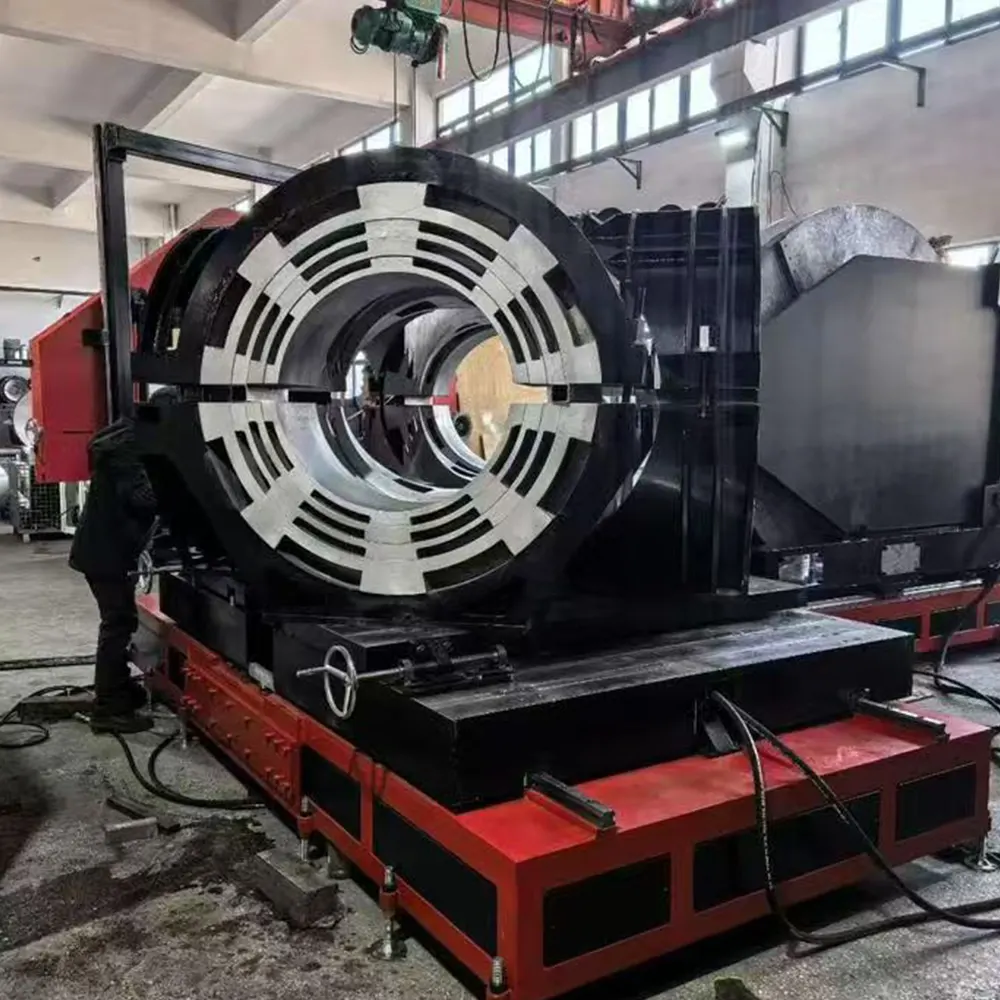
Pipeline installation speed can determine whether a project finishes on time, stays within budget, and avoids costly rework. In water supply, gas distribution, mining, and industrial pipeline construction, contractors are under constant pressure to move fast without sacrificing quality. The challenge is not just installing pipe quickly, but installing it in a way that maintains alignment, joint integrity, and long-term system reliability.
One of the fastest ways to improve productivity is to treat the installation process as a complete workflow rather than a series of isolated tasks. When material preparation, equipment selection, crew coordination, and welding quality are optimized together, job sites run more smoothly and delays are reduced. For teams working with HDPE pipelines, choosing the right butt fusion machine can make a significant difference in both speed and consistency.
Key idea: Faster pipeline installation does not come from rushing. It comes from removing bottlenecks, standardizing procedures, and using reliable equipment that helps workers complete each joint correctly the first time.
1. Start With Better Planning
A well-planned pipeline project always installs faster than a reactive one. Before the first pipe is moved into position, project managers should confirm the route, material quantities, joint locations, workforce allocation, and equipment schedule. Clear planning reduces unnecessary movement, waiting time, and repeated handling of the same materials.
In many installations, delays happen because teams discover missing components, incompatible pipe sizes, or unclear welding instructions after work has already started. This creates idle time and forces crews to pause while materials or approvals are corrected. Pre-job planning meetings help prevent these issues by ensuring that everyone understands the sequence of work and the expected output for each day.
A practical way to improve speed is to divide the project into zones or sections. This allows teams to work in parallel instead of waiting for one entire segment to finish before starting the next. When the site layout supports multiple active work fronts, productivity often increases noticeably.
2. Use the Right Welding Equipment
The welding stage is often the pace-setter for the entire installation. If fusion equipment is slow to heat, difficult to adjust, or inconsistent in pressure control, the whole schedule can suffer. High-performance equipment reduces setup time and helps crews produce repeatable results with fewer interruptions.
For HDPE pipe projects, a machine that offers stable temperature control, accurate hydraulic pressure, and reliable clamp alignment can improve both speed and quality. Machines built with strong manufacturing standards and tested for field performance are more likely to keep projects moving efficiently. JQ-Fusion, for example, focuses on manual, hydraulic, and CNC automatic butt fusion solutions designed for different diameters and project demands.
⚙️ Tip: Match the machine type to the scale of the project. Smaller jobs may benefit from simpler setups, while large industrial installations usually gain more speed from hydraulic or automatic systems.
If you want to compare machine categories and project suitability, it is useful to review a supplier’s product range, technical support, and stock availability before procurement. A manufacturer with fast delivery and strong engineering support can reduce downtime when a project needs additional units or replacement parts.
3. Standardize the Workflow
Repetition improves speed. The more standardized the workflow, the less time workers spend deciding what to do next. Standard operating procedures should cover pipe handling, facing, cleaning, heating, joining, cooling, inspection, and documentation. When every crew member follows the same method, the installation becomes more predictable and efficient.
Standardization also reduces errors. If each operator uses a different approach, the chance of misalignment or incomplete fusion increases. Those mistakes slow the project because defective joints must be cut out and reworked. A standardized process makes training easier, especially for new workers joining a large project.
Contractors can further improve efficiency by using checklists for each joint stage. A simple checklist ensures that surfaces are clean, temperatures are correct, pipe ends are aligned, and cooling time is respected. This creates a disciplined process without adding unnecessary complexity.
4. Train the Crew for Speed and Precision
A skilled crew works faster because it spends less time correcting mistakes. Training should focus on practical repetition, not just theory. Workers need to understand how to position the pipe, operate the equipment, verify the settings, and recognize when a joint is ready to move to the next stage.
Well-trained operators can complete tasks with less supervision, which allows supervisors to focus on broader site coordination. This is especially important on large projects where multiple teams are working simultaneously. Strong technical knowledge also improves safety, which prevents accidents that can halt progress for hours or even days.
👷 Training matters most when the project is under pressure. A calm, capable crew can keep production steady even when deadlines are tight or site conditions change unexpectedly.
5. Improve Material Handling and Site Layout
Pipeline installation speed is often lost before welding even begins. Poor material handling forces workers to search for pipes, move heavy components repeatedly, or clear space before they can start. A tidy and organized site layout saves time every single day.
Materials should be arranged in the order they will be used. Tools, consumables, and inspection equipment should be stored near the work zone so crews do not need to walk long distances to retrieve them. If the layout is well designed, the team can move smoothly from one step to the next with minimal interruption.
Large inventory support from a reliable supplier can also help when an urgent replacement is needed. This matters for contractors working with tight schedules because missing parts can stop an otherwise well-run installation. Suppliers with strong logistics capabilities and ready stock often become valuable partners on time-sensitive projects.
6. Reduce Rework Through Quality Control
Speed is only valuable when the finished pipeline performs correctly. Rework is one of the biggest hidden causes of delay because it consumes labor, equipment time, and management attention. Quality control should therefore be part of the installation process, not a separate task at the end.
Inspection should begin early, not after the whole section is complete. Teams can monitor temperature accuracy, pressure stability, clamp positioning, and visual alignment during the work process. When problems are caught immediately, they are easier and faster to correct.
Manufacturers that apply strict testing procedures to their equipment can help reduce site rework. For example, a supplier that checks each machine for temperature accuracy and hydraulic stability is more likely to deliver equipment that performs consistently in the field. This kind of reliability supports faster project completion by reducing unexpected failures.
7. Choose Equipment With Strong Customization Support
No two pipeline projects are exactly the same. Pipe diameters, site conditions, power requirements, and client specifications can vary widely. Equipment that can be customized to match project demands helps contractors avoid delays caused by mismatched machine capabilities.
OEM and ODM customization can improve installation speed by ensuring that the machine setup is aligned with the actual work environment. Voltage options, design changes, branding, machine size, and functional upgrades can all influence operational efficiency. When equipment is built around the project instead of forcing the project to adapt to the equipment, the workflow becomes much smoother.
This is one reason many global contractors prefer manufacturers with flexible engineering support. A responsive team can recommend the right configuration and help solve technical issues before they cause delays in the field.
8. Strengthen Support After Purchase
Installation speed depends not only on the machine itself, but also on the support that follows the sale. Even a highly capable crew can lose time if technical questions go unanswered or spare parts are difficult to obtain. Fast after-sales support keeps the project moving when unexpected issues arise.
A supplier that offers professional technical guidance, installation assistance, and efficient logistics support can make a real difference on active job sites. When project teams know help is available, they can solve problems sooner and stay focused on production rather than troubleshooting.
Strong support reduces downtime. In pipeline projects, even a short delay can affect the entire schedule, so responsive service is part of installation speed.
9. Work With a Supplier That Understands Global Projects
Fast installation is easier when the supplier understands international project requirements. Experience across water supply systems, gas networks, mining applications, and industrial pipelines helps manufacturers design equipment that performs reliably in different conditions. This matters because speed depends on compatibility, durability, and consistent operation.
JQ-Fusion brings more than 20 years of industry experience and supports a broad product range that includes hydraulic butt fusion welding machines, automatic butt fusion welding machines, electrofusion welding machines, and multi-angle pipe fitting welding machines. For contractors, that variety means a better chance of finding the right solution for the job from the start.
Products manufactured under strict quality systems and certified for international use can help reduce risk. When equipment is trusted, crews work with more confidence, and that confidence translates into faster execution.
Important point: The fastest projects are usually not the ones that move recklessly. They are the ones where planning, equipment, crew skill, and support all work together.
10. Use Performance Metrics to Keep Improving
If a contractor wants to improve installation speed consistently, progress must be measured. Useful metrics include joints completed per day, average setup time, rework rate, downtime frequency, and inspection pass rate. These indicators show where the process is strong and where it is slowing down.
Once the bottleneck is identified, the team can apply targeted improvements. For example, if setup time is too long, the issue may be equipment organization. If rework is high, the cause may be training or inspection gaps. If delivery delays are common, the procurement plan may need to change.
Continuous improvement is the most reliable way to build long-term speed. Each completed project can provide lessons for the next one, leading to a stronger, faster, and more efficient operation over time.
Conclusion
Improving pipeline installation speed is about creating a system that supports efficiency at every stage. Good planning reduces avoidable delays, the right equipment improves welding productivity, standardized workflows reduce confusion, and strong quality control prevents rework. When crews are trained well and supported by a dependable supplier, projects move forward with greater confidence and fewer interruptions.
For HDPE pipeline work in particular, choosing dependable fusion equipment is one of the most effective ways to increase speed while preserving welding quality. Contractors that invest in reliable machines, technical support, and process discipline are better positioned to meet deadlines and deliver durable pipeline systems.
Frequently Asked Questions
Q1: What is the fastest way to improve pipeline installation speed?
The fastest improvement usually comes from better planning, organized material handling, and using reliable welding equipment that reduces setup and rework time.
Q2: Does automatic fusion equipment always speed up installation?
Not always, but automatic systems can improve consistency and reduce operator variation, which often helps larger projects move faster.
Q3: How does training affect installation speed?
Well-trained workers make fewer mistakes, need less supervision, and complete each task more efficiently, which directly improves overall project speed.
Q4: Why is quality control important for faster installation?
Quality control prevents rework. When problems are identified early, crews avoid wasting time on repairs and can keep the project moving.
Q5: What should contractors look for in a fusion machine supplier?
Look for stable product quality, technical support, customization capability, fast delivery, and proven experience in global pipeline projects.



