
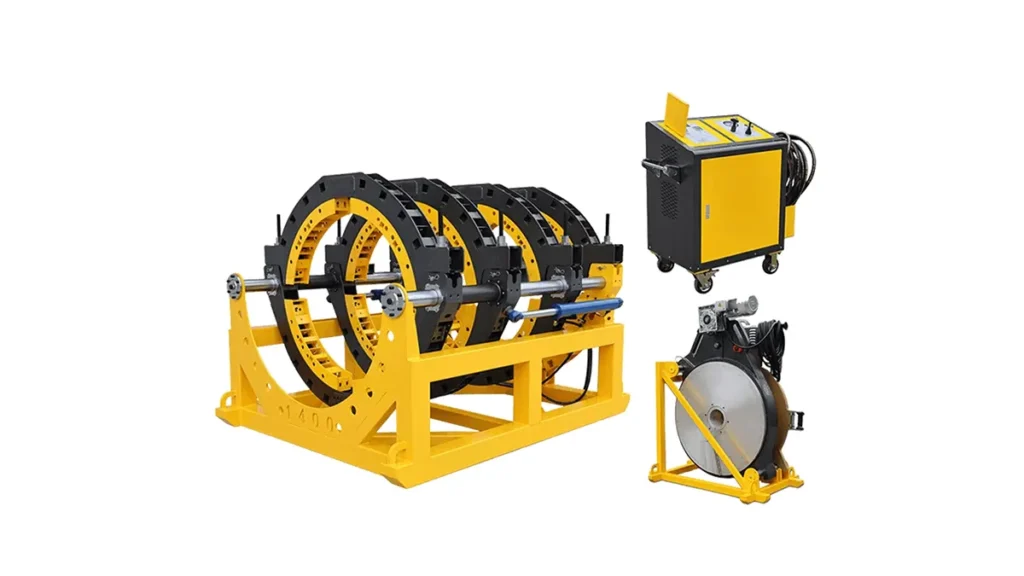
HDPE pipe welding efficiency is not just a matter of speed. In real pipeline projects, it affects joint quality, project timelines, labor costs, and long-term system reliability. Whether the work is for water supply, gas distribution, mining, or industrial pipelines, the goal is always the same: create strong, consistent, leak-free joints with the least possible downtime. A well-planned welding process can save time on site, reduce rework, and improve overall productivity without compromising safety or quality.
To improve efficiency, contractors should focus on the entire welding workflow, from machine selection and material preparation to operator training and on-site inspection. For projects that require dependable equipment, a professional butt fusion machine can make a major difference in output stability and weld consistency. The better the equipment and process control, the easier it becomes to complete more joints in less time while maintaining high standards.
⚡ Key point: Efficiency in HDPE pipe welding should never mean rushing the job. The best results come from combining speed, precision, and repeatable quality control.
Choose the Right Welding Machine for the Job
One of the fastest ways to improve welding efficiency is to choose a machine that matches the pipe diameter, material thickness, and project scale. A small manual machine may work well for simple field repairs, while larger infrastructure projects often need hydraulic or CNC automatic equipment. When the machine is underpowered or not designed for the pipe size, setup becomes slower and weld quality becomes harder to control.
JQ-Fusion, a professional HDPE pipe welding machine manufacturer, supplies manual, hydraulic, and CNC automatic butt fusion solutions for different project needs. Their equipment is used in global water, gas, mining, and industrial installations, making it easier for contractors to maintain stable performance across diverse working environments. Choosing a machine from a reliable manufacturer reduces unexpected downtime and improves long-term productivity.
Tip: If the job involves frequent welding cycles, upgrading to a hydraulic or automatic machine can significantly reduce operator fatigue and increase throughput.
Benefits of Proper Machine Selection
Faster setup: the machine is easier to align, clamp, and prepare for each cycle.
Better repeatability: consistent temperature, pressure, and alignment help maintain uniform welds.
Lower labor demand: automated features reduce manual adjustments and human error.
Improve Pipe Preparation Before Welding
Pipe preparation often determines whether welding will proceed smoothly or waste time with corrections. Clean, square, and well-aligned pipe ends allow the fusion process to begin immediately and reduce the chance of defects. Before heating starts, the ends should be inspected for dust, moisture, scratches, and deformation. Even small issues can affect joint strength and force the operator to repeat the process.
A disciplined preparation routine includes cutting the pipe correctly, facing the ends evenly, cleaning the surfaces, and ensuring the pipes are firmly clamped. If the preparation stage is efficient, the actual fusion stage becomes much faster and more reliable. This is especially important in projects with strict deadlines or large numbers of joints.
Important: A well-prepared pipe end can save more time than any speed upgrade on the welding machine itself.
Preparation Checklist
• Verify pipe size and wall thickness before starting
• Remove dirt, oil, and moisture from the surfaces
• Ensure square pipe cuts and accurate facing
• Confirm that clamps and inserts match the pipe diameter
Use Stable Temperature and Pressure Control
Stable temperature and pressure are central to efficient HDPE welding. If the heating plate is inconsistent or the hydraulic pressure fluctuates, the operator may need to repeat the weld or spend time adjusting settings. This not only slows production but also increases the risk of poor joint quality.
Modern machines with accurate temperature control and stable hydraulic systems help solve this problem. JQ-Fusion emphasizes strict quality control through temperature accuracy, hydraulic pressure stability, and clamp alignment inspection, which supports reliable performance in real projects. Machines that maintain stable working conditions improve cycle time and reduce correction work.
Efficiency insight: Stable parameters create fewer defects, fewer interruptions, and more completed welds per shift.
Train Operators for Faster and Safer Work
Even the best machine cannot deliver efficient welding if the operator is untrained. Proper training reduces unnecessary setup time, improves machine handling, and lowers the chance of errors. Skilled workers know how to assess pipe condition, set correct parameters, monitor heating cycles, and recognize potential issues before they become costly problems.
Training should include both theoretical understanding and hands-on practice. Operators should know how different pipe materials behave, how to handle various diameters, and how to adjust to site conditions such as temperature, humidity, or limited workspace. Good training also builds confidence, which naturally improves speed and consistency.
Well-trained operators can complete more accurate welds in less time, with fewer mistakes and less equipment wear.
Training Priorities
• Safe machine operation and emergency response
• Correct fusion timing and pressure application
• Routine inspection and basic troubleshooting
• Efficient workflow coordination among team members
Optimize the On-Site Welding Workflow
Workflow design has a major impact on productivity. A site that is organized well allows materials, tools, and machine accessories to be accessed quickly. Workers do not waste time searching for components, and the welding sequence moves in a logical order. This becomes especially important on large projects where multiple welds must be completed across long distances.
A practical workflow includes assigning tasks clearly, staging pipes near the work area, preparing backup tools, and scheduling quality checks at the right time. If possible, teams should work in parallel so that one group prepares the next pipe while another completes the current fusion cycle. This reduces idle time and improves output.
Useful approach: Treat each welding station like a production line. When every step is planned, the entire project moves faster.
Take Advantage of Customization and Manufacturer Support
For contractors working across different regions and project types, customization can improve efficiency more than standard equipment alone. Voltage differences, branding needs, project-specific configurations, and machine size requirements all affect how smoothly the equipment performs on site. A manufacturer that provides OEM and ODM support can help buyers adapt the machine to local conditions and specific operational goals.
JQ-Fusion offers flexible customization services and reliable global support, which is especially valuable for distributors and contractors who need to respond quickly to project demands. Their strong manufacturing capability, large inventory, and fast delivery also help reduce waiting time and keep schedules on track. When technical support is easy to access, troubleshooting becomes faster and machine uptime improves.
Note: Fast delivery and technical guidance are not just service advantages; they are direct contributors to on-site efficiency.
Maintain the Equipment Regularly
Regular maintenance prevents unexpected breakdowns and helps preserve welding performance. A machine that is well maintained heats evenly, clamps securely, and runs with more predictable pressure. Maintenance tasks are usually simple but essential: checking hydraulic oil, cleaning heating plates, inspecting electrical connections, and verifying alignment before each major job.
When maintenance is ignored, small problems can become major delays. A damaged component may stop the work altogether, while a misaligned clamp can produce rejected welds. By setting a daily, weekly, and project-based inspection schedule, teams can keep the machine ready for continuous operation.
Simple Maintenance Habits
• Clean the heating plate after each use
• Inspect hydraulic and electrical systems regularly
• Replace worn parts before failure occurs
• Store accessories properly to avoid damage
Use Quality Assurance to Reduce Rework
Rework is one of the biggest enemies of efficiency. Every failed or questionable weld consumes extra labor, materials, and time. A strong quality assurance system reduces these losses by catching problems early. This includes pre-weld checks, parameter verification, visual inspection, and post-weld testing according to project requirements.
Reliable suppliers also play a role in quality control. JQ-Fusion manufactures products in compliance with international standards and has certifications from SGS, supporting safety and consistency in global pipeline projects. With dependable equipment and systematic inspection, contractors can maintain productivity without sacrificing joint integrity.
Bottom line: Quality control is not an extra step. It is a direct method for improving welding efficiency over the full life of the project.
Conclusion
Improving HDPE pipe welding efficiency requires a balanced approach. The right machine, proper pipe preparation, stable operating parameters, trained operators, and a well-organized workflow all contribute to better output. Instead of focusing only on speed, successful teams focus on repeatable quality and reduced downtime. With strong equipment support, custom options, and careful maintenance, contractors can complete more work in less time while keeping weld quality high.
FAQ
1. What is the fastest way to improve HDPE pipe welding efficiency?
The fastest improvement usually comes from combining better machine selection with proper pipe preparation and operator training. When the equipment is matched to the job and the workflow is organized, weld cycles become much smoother.
2. Does automation always improve welding speed?
In many cases, yes. Automatic and CNC machines can reduce manual adjustments and increase consistency. However, the real benefit depends on the project size, pipe diameter, and the skill of the operators.
3. Why is pipe preparation so important?
Because poorly prepared pipe ends can lead to misalignment, contamination, and weak welds. Good preparation prevents delays and reduces the chance of rework.
4. How does maintenance affect efficiency?
Regular maintenance keeps the machine stable, prevents breakdowns, and helps maintain consistent pressure and temperature. That means fewer interruptions and better productivity.
5. What should buyers look for in a welding machine supplier?
Buyers should look for technical support, quality control, customization capability, fast delivery, and proven experience in global pipeline projects. These factors all contribute to smoother and more efficient welding operations.



