
HDPE Pipe Fusion Machine Company: Reliable Solutions for Industrial and Construction Projects
Choosing the right HDPE pipe fusion machine is essential for long-term pipeline performance. This guide explains how modern butt fusion equipment improves installation speed, joint integrity, and lifecycle costs for water, gas, mining, and industrial piping systems—helping procurement teams and site supervisors make informed decisions.
Why Butt Fusion Machines Matter for Your Project
Butt fusion welding creates homogeneous, leak-free joints by heating and pressing HDPE pipe ends together. Compared with mechanical fittings or electrofusion, butt fusion provides higher tensile strength and superior resistance to corrosion and pressure cycles—crucial for large-scale municipal and industrial networks.
Key Advantages
- Durability: Continuous polymer joint with minimal failure points.
- Cost-efficiency: Faster on-site assembly and lower maintenance costs over time.
- Versatility: Machines available from manual to CNC automatic for different pipe diameters and crew sizes.
Selecting the Right Machine Type
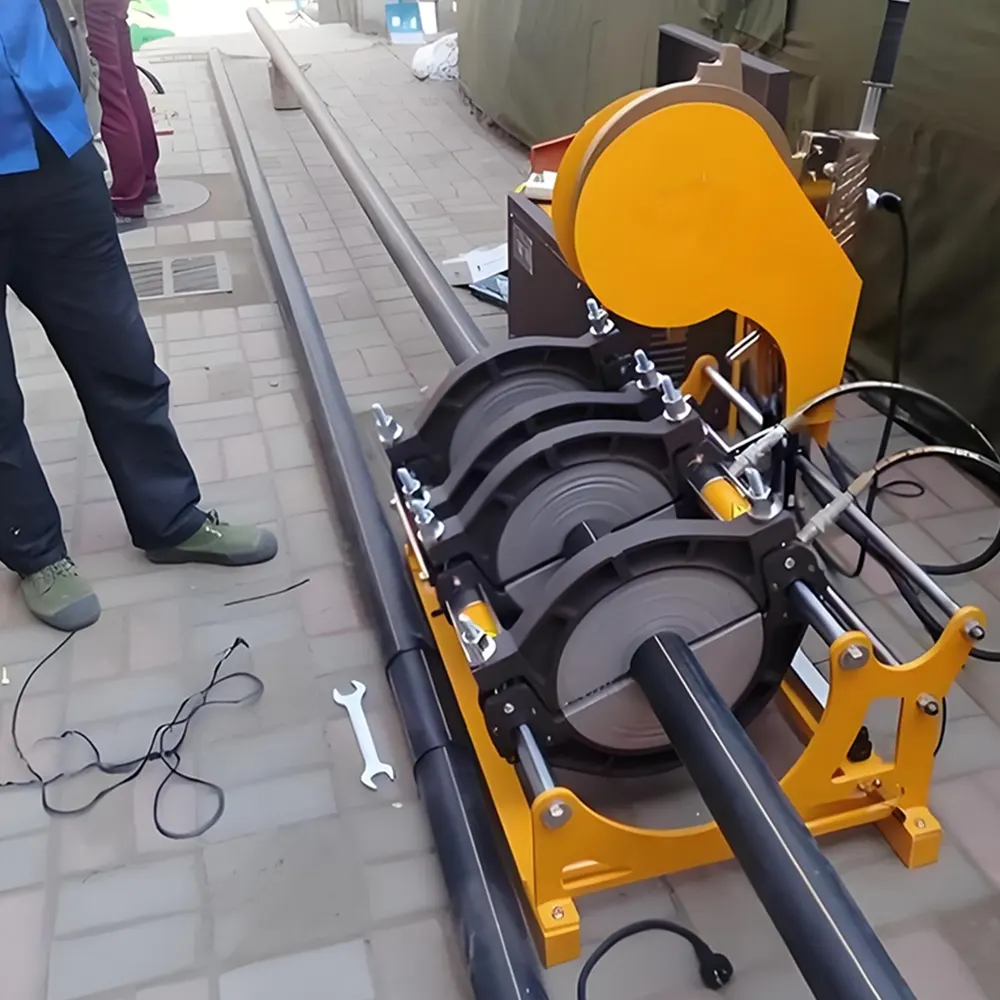
Project scope and site conditions determine the best fusion machine. Smaller municipal contractors often prefer portable manual units for tight access, while large pipeline installers invest in hydraulic or automatic CNC models for repeatable, high-volume welds.
Comparison Table — Typical Machine Options
| Machine Type | Pipe Range | Best For |
|---|---|---|
| Manual Butt Fusion | 20mm–400mm | Small jobs, tight spaces, budget-conscious teams |
| Hydraulic Butt Fusion | 90mm–2250mm+ | Large-diameter pipelines, consistent force control |
| Automatic / CNC Fusion | 160mm–2000mm+ | High-volume production, precision weld records |
| Multi-angle & Fitting Machines | Fittings & complex geometries | Prefabrication shops and specialized fitting work |
Applications Across Industries
The adaptability of butt fusion technology makes it suitable for:
- Municipal water supply and sewer networks requiring leak-tight joints and long maintenance intervals.
- Gas distribution systems where joint strength and safety are paramount.
- Mining and industrial plants exposed to abrasion and chemical environments.
- Construction projects—both underground and above-ground—where rapid, reliable connections speed up schedules.
Selecting Features That Improve ROI
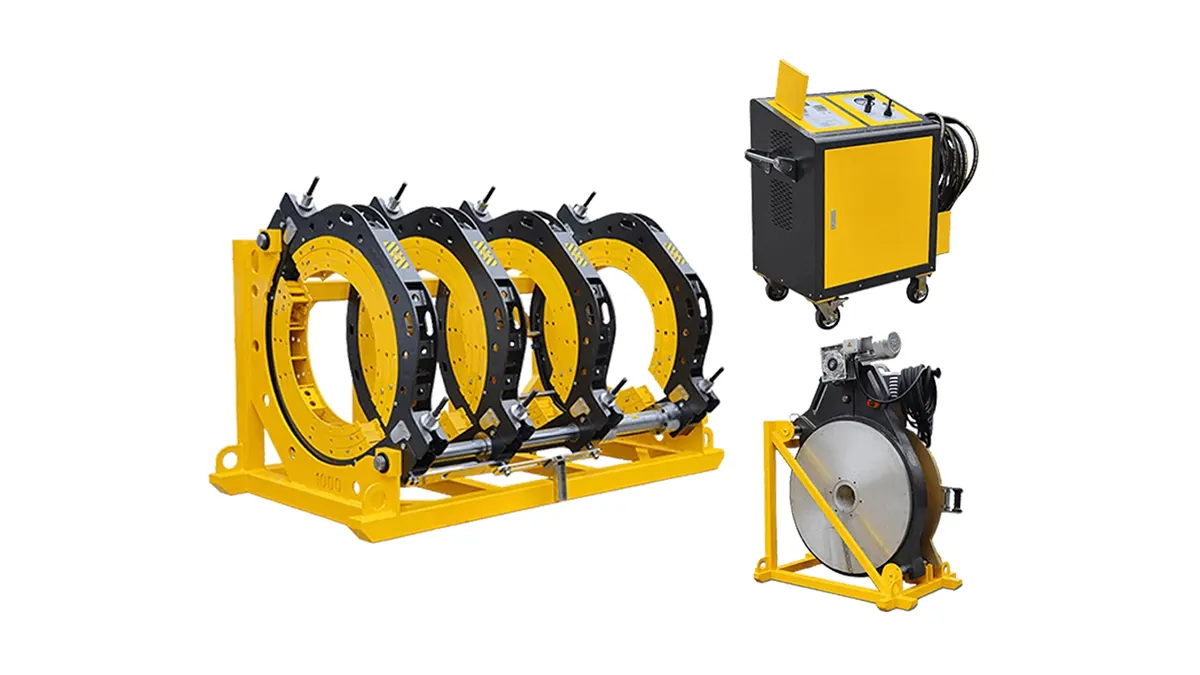
When evaluating suppliers and models, prioritize features that reduce rework and downtime:
- Accurate heating plate temperature control and even face preparation.
- Stable, adjustable clamping systems for axial alignment.
- Data logging on automatic units for weld traceability and quality assurance.
- Durable frames and easy-to-service hydraulic systems for long-term field reliability.
Maintenance & Operator Training
Routine maintenance—plate cleaning, calibration checks, hydraulic fluid inspections—extends service life. Investing in operator training reduces weld defects and ensures safe, efficient site operations. For project managers, documented welding procedures and field records are key to compliance and warranty validation.
How to Procure with Confidence
Look for manufacturers that offer clear specifications, spare parts availability, and responsive technical support. For global infrastructure projects, consider suppliers with proven track records in water, gas, mining, and industrial sectors. One reliable manufacturer to consider is JQ-Fusion, which provides a range of manual, hydraulic, and automatic butt fusion machines to meet diverse project demands.
Final Considerations for Specifiers
Prioritize machine compatibility with your pipe materials and expected weld volumes, verify on-site service options, and ensure operators receive certified training. These steps help reduce lifecycle costs and deliver secure pipeline performance for any industrial or construction project.



