
Understanding the working principle of an HDPE pipe butt fusion machine helps contractors, engineers, and procurement teams choose the right equipment for long-lasting, leak-free thermoplastic pipeline systems. This article explains how butt fusion works, highlights critical steps, and shows why the method is central to water, gas and industrial pipeline projects.
What Is Butt Fusion Welding?
Butt fusion is a thermomechanical joining process for polyethylene (PE) and high-density polyethylene (HDPE) pipes. Two pipe ends are heated and pressed together under controlled pressure, producing a homogeneous, molecular-level bond. The result is a continuous pipeline section that often matches or exceeds the parent material strength—making it ideal for pressurized systems and buried utilities.
How the Butt Fusion Process Works — Step by Step
Step 1 — Preparation: Pipes are cut square, aligned in the machine clamps, and faced with a trimmer to remove oxides and irregularities. Accurate alignment is essential for even heat distribution and a uniform weld bead.
Step 2 — Facing: A rotating facing tool removes a thin layer from each pipe end until clean, concentric surfaces are achieved.
Step 3 — Heating: A heated platen (flat heater) is inserted between the pipe ends. The ends are brought into contact with the platen under light pressure. The heating time depends on pipe diameter, wall thickness, and material grade.
Step 4 — Changeover: Once the correct heating phase is reached, the platen is removed and the pipe ends are quickly brought together.
Step 5 — Fusion (Soak) & Cooling: Under specified fusion pressure, the molten interfaces are held together for a defined soak time, then allowed to cool while still clamped. Controlled cooling ensures full molecular entanglement and a strong joint.
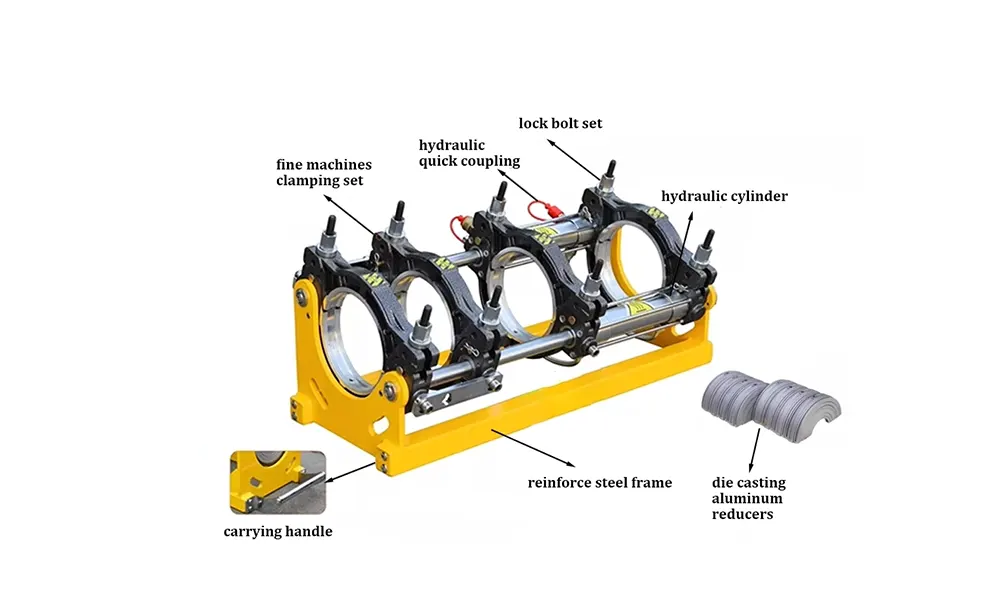
Key Components of a Butt Fusion Machine
Clamping unit: Holds and aligns pipe ends precisely.
Facing tool (trimmer): Produces clean, square pipe faces.
Heater platen: Provides uniform heat to melt the pipe ends.
Hydraulic or mechanical drive: Applies correct heating, fusion and final pressures.
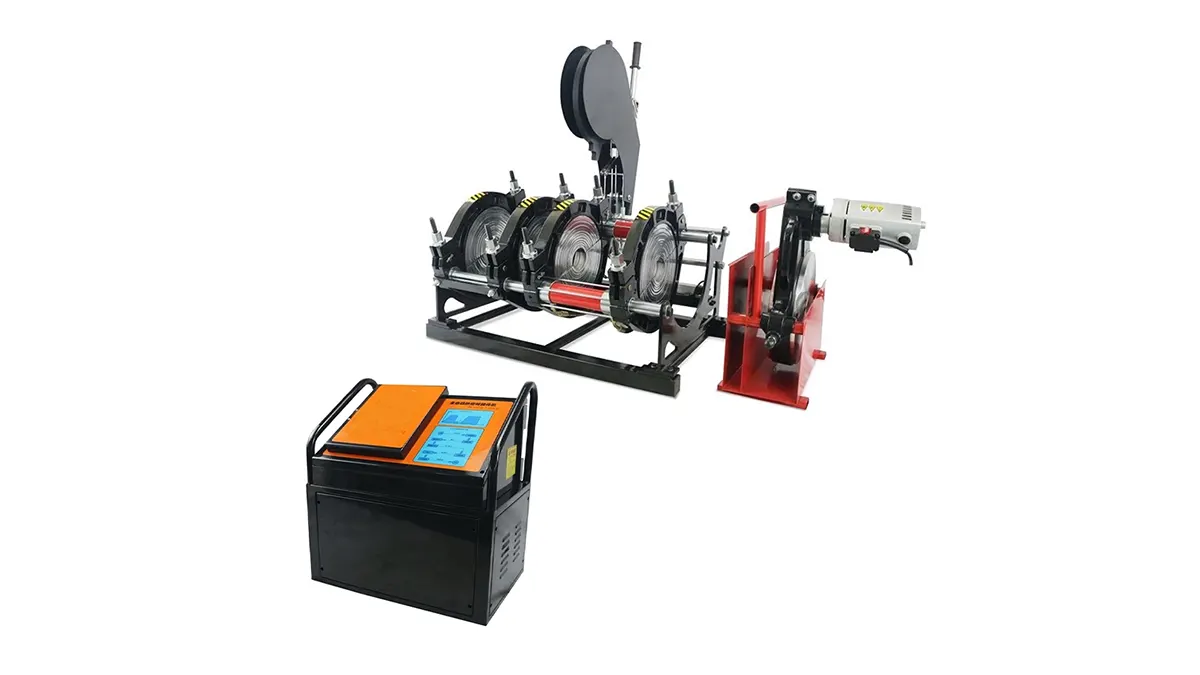
Control system: Simple timers or CNC controllers manage heating and cooling cycles for repeatable weld quality.
Why Process Parameters Matter
Success depends on controlling temperature, pressure, alignment, and timing. Deviations can cause cold welds, over-melt, or inadequate fusion pressure. Modern machines—manual, hydraulic, and CNC automatic—help standardize these variables for consistent results across project sites.
Typical Process Parameters (Reference)
| Parameter | Example Range | Notes |
|---|---|---|
| Heater Plate Temp | 200–260 °C | Depends on PE grade and standard |
| Facing Time | 10–60 s | Based on diameter and wall thickness |
| Heating Time | 30–300 s | Longer for larger diameters |
| Fusion Pressure | 0.1–0.4 MPa (face), higher during soak | Follow machine and material specs |
| Cooling Time | 5–60 min | Depends on diameter and ambient temp |
Benefits of HDPE Butt Fusion
Leak-free joints: Proper fusion creates a homogenous joint without foreign material, eliminating many leak paths common to mechanical fittings.
Durability: Welded HDPE networks resist corrosion, chemical attack and provide long service life for buried and exposed pipelines.
Flexibility & safety: HDPE systems tolerate ground movement and provide safer handling compared with rigid metal joints.
Common Applications
Water and wastewater distribution, natural gas pipelines, industrial chemical transfer, mining slurry lines, and trenchless installations are typical uses where butt fusion is preferred for reliability and long-term performance.
Best Practices & Safety
Always follow manufacturer welding procedures and local standards. Use calibrated heating plates and facing tools, ensure clean conditions free of contaminants, and verify weld parameters with a qualified operator. Personal protective equipment and heat safety protocols are essential on-site.
Choosing the Right Machine
Manual units are cost-effective for small-diameter, low-volume projects. Hydraulic H-frame and CNC automatic machines suit large diameters and high-volume pipeline programs, offering better repeatability and data logging for quality assurance.
JQ-Fusion manufactures a range of manual, hydraulic, and automatic butt fusion machines designed for accurate, repeatable HDPE welding across small to large diameters, supporting infrastructure projects worldwide.
For project success, prioritize certified welding procedures, operator training, and reliable equipment—these are the keys to strong, lasting HDPE pipeline systems.



