
Improving construction efficiency when using welding machines on-site is a high-impact way to shorten schedules, cut costs, and raise pipeline quality. This practical guide covers proven methods—planning, equipment choices, operator workflows, and QC—to boost site productivity for HDPE butt fusion and electrofusion projects.
Why Welding Machine Efficiency Matters
Efficient welding workflows reduce idle time and rework, directly affecting project margins. On busy construction sites, small productivity gains compound: faster joint cycles, fewer defects, and smoother logistics lead to measurable savings.

Core Principles to Boost Site Productivity
- Plan and Pre-fabricate: Pre-cut and align pipe strings in a temporary yard, then transport welded sub-assemblies to the trench. This reduces field setup time and weather-related delays.
- Right-size Equipment: Match manual, hydraulic or CNC automatic welding machines to pipe diameters and terrain. Overpowered or underpowered machines both slow operations.
- Standardize Procedures: Create visual checklists for alignment, facing, heating, and cooling stages to minimize operator variability.
- Train and Certify Operators: Cross-train crews on machine setup, preventive maintenance, and troubleshooting to keep machines moving.
Equipment Selection & Maintenance Best Practices
Choosing the right welding machine type for the job and keeping it in top condition prevents downtime. Key actions include scheduled lubrication, clamp inspection, heating plate checks, and calibration of automatic controllers.
Checklist for Machine Readiness
- Daily visual inspection and cleaning of heating plate and clamps.
- Weekly calibration of temperature controllers and pressure gauges.
- Carry common spare parts: seals, heaters, fuses, and trimming blades.
- Store machines under cover and transport on padded pallets to prevent misalignment.
Optimizing Workflow & Site Layout
Layout and logistics determine how fast crews can perform welds. Streamline the site by creating work zones: staging, welding, inspection, and temporary storage. Use simple signage and color-coded tags to reduce search time for fittings and tools.
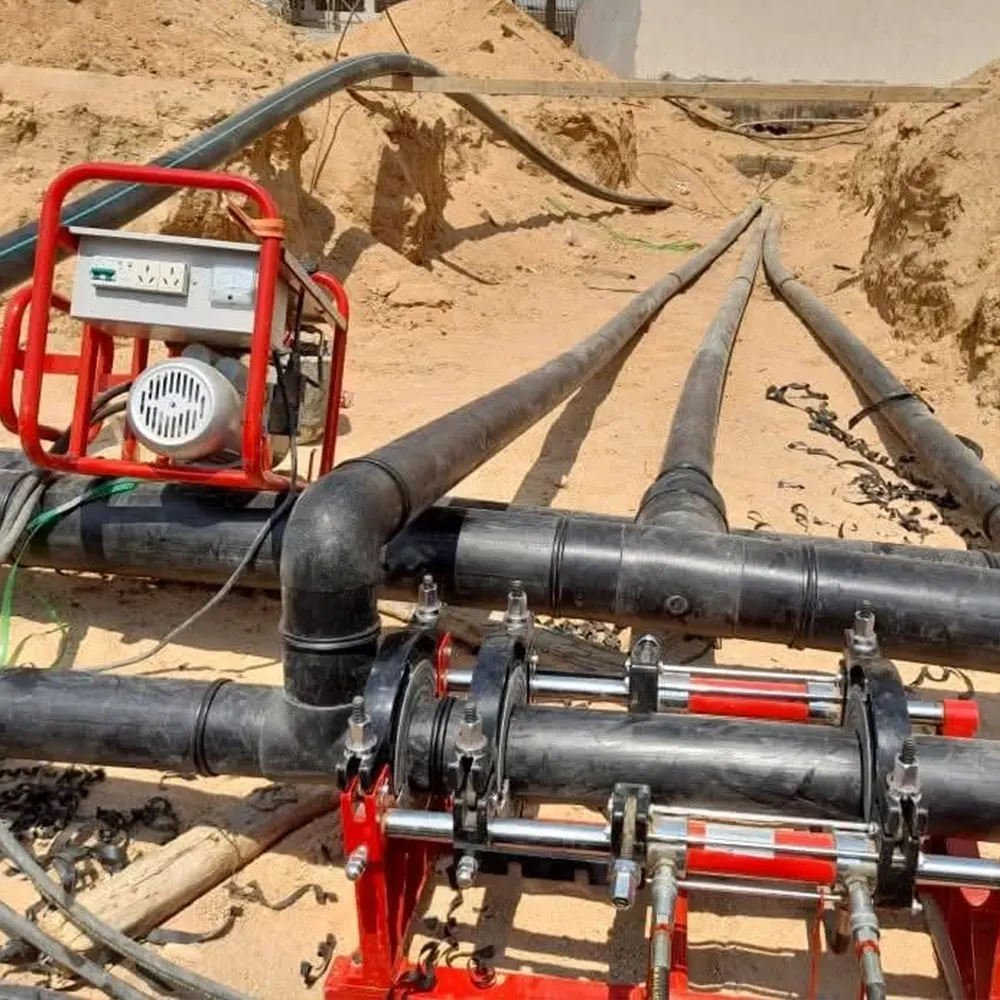
Practical Tips for Faster Joint Cycles
- Preheat spare plates so the heater is ready during changeovers.
- Parallelize tasks: while one operator completes a weld cycle, another prepares the next pipe ends.
- Use lightweight handling aids and roller supports to speed alignment for large diameter pipes.
- Schedule welding during optimal temperature windows to avoid slow cooling or overheating.
Quality Control and Documentation
Consistent QC prevents costly rework. Implement a simple digital log that records machine ID, operator, joint number, temperatures, pressures, and cooling times. Quick audits validate procedure adherence and support warranty claims.
Table: Typical Productivity Gains after Best Practice Implementation
| Metric | Baseline | After Optimization | Improvement |
|---|---|---|---|
| Average weld cycle (small dia) | 18 min | 12 min | 33% |
| Machine downtime | 6 hrs/week | 1.5 hrs/week | 75% |
| Rework rate | 4.8% | 1.2% | 75% |
Operator Training & Standard Operating Procedures
Regular, focused training is one of the fastest ways to improve productivity. Develop brief modules that cover machine setup, clamp alignment, facing quality, heater handling, and emergency procedures. Use hands-on assessments and create laminated SOP cards for each machine model.
SOP Highlights
- Pre-check (5 min): clamps, heater, pressure system, and documentation device.
- Facing tolerance: inspect for concentricity and remove flash per spec.
- Heating profile adherence: log plate temp and time; avoid under/over heating.
- Cooling verification: document achieved joint temperature before handling.
Measuring Success: KPIs to Track
Key performance indicators make improvements visible. Track average weld cycle, joints per shift, downtime hours, and rework percentage. Review weekly to spot trends and take rapid corrective actions.
Quick KPI Dashboard (example)
- Joints per day per crew
- Mean time between failures (MTBF)
- First-pass acceptance rate
- Average setup time per machine
Supplier & Support Consideration
Choose a supplier that offers training, spare part kits, and field service support to minimize downtime. For HDPE welding machines and global project support, consider suppliers like JQ-Fusion who provide a range of manual, hydraulic, and automatic butt fusion solutions.
Final Recommendations
Start with a short pilot: implement standardized SOPs, one trained crew, and a simple digital log. Measure baseline KPIs for two weeks, apply optimizations, and iterate. With focused training, proper equipment selection, and disciplined QC, most sites see 20–40% productivity gains within months.
Actionable Checklist
- Define staging and welding zones before mobilization.
- Stock critical spares and preheat plates.
- Roll out laminated SOP cards and quick digital logs.
- Schedule weekly machine checks and monthly calibrations.


