
Keeping an electrofusion welder in top condition extends equipment life, ensures consistent joint quality, and reduces costly downtime. This guide covers practical maintenance tasks, recommended service intervals, and troubleshooting tips that operators and maintenance teams can apply to achieve reliable performance from electrofusion welding systems.
Quick Daily Checks
Before starting work each day, perform a short checklist to verify the welder is ready for safe, accurate operation:
- Visual inspection: look for damaged cables, connectors, or cracked housings.
- Confirm displays and LEDs illuminate normally and error codes are cleared.
- Ensure the power source and fuse/circuit breaker are functioning and properly rated.
- Clean the unit’s exterior and air vents of dust and debris to maintain cooling efficiency.
Weekly Tasks
Weekly checks catch issues before they impact weld quality:
- Inspect electrode clamps and connector pins for wear or corrosion — clean or replace as needed.
- Verify application software or welding parameter databases are up to date.
- Test the welding cycle with a dummy load or sample fitting to confirm heating element control.
Recommended Service Intervals
Below is a practical schedule used by maintenance professionals to plan preventive care. Adjust intervals based on usage intensity, environmental conditions, and manufacturer guidance.
| Task | Frequency | Notes |
|---|---|---|
| Daily visual & functional checks | Daily | Quick start-up checklist to prevent immediate failures |
| Electrical connectors and lead inspection | Monthly | Lubricate or replace corroded connectors; secure loose terminals |
| Calibration / verification of output | 6–12 months | Ensure voltage/current accuracy; record calibration data |
| Cooling system & fan maintenance | 6 months | Clean filters, replace worn fans to avoid thermal trips |
| Software updates & backup of weld logs | 6–12 months | Keep weld recipes current and store traceability records |
| Full service & safety inspection | Annual | Performed by qualified technician; includes insulation tests & parts replacement |
Critical Components to Monitor
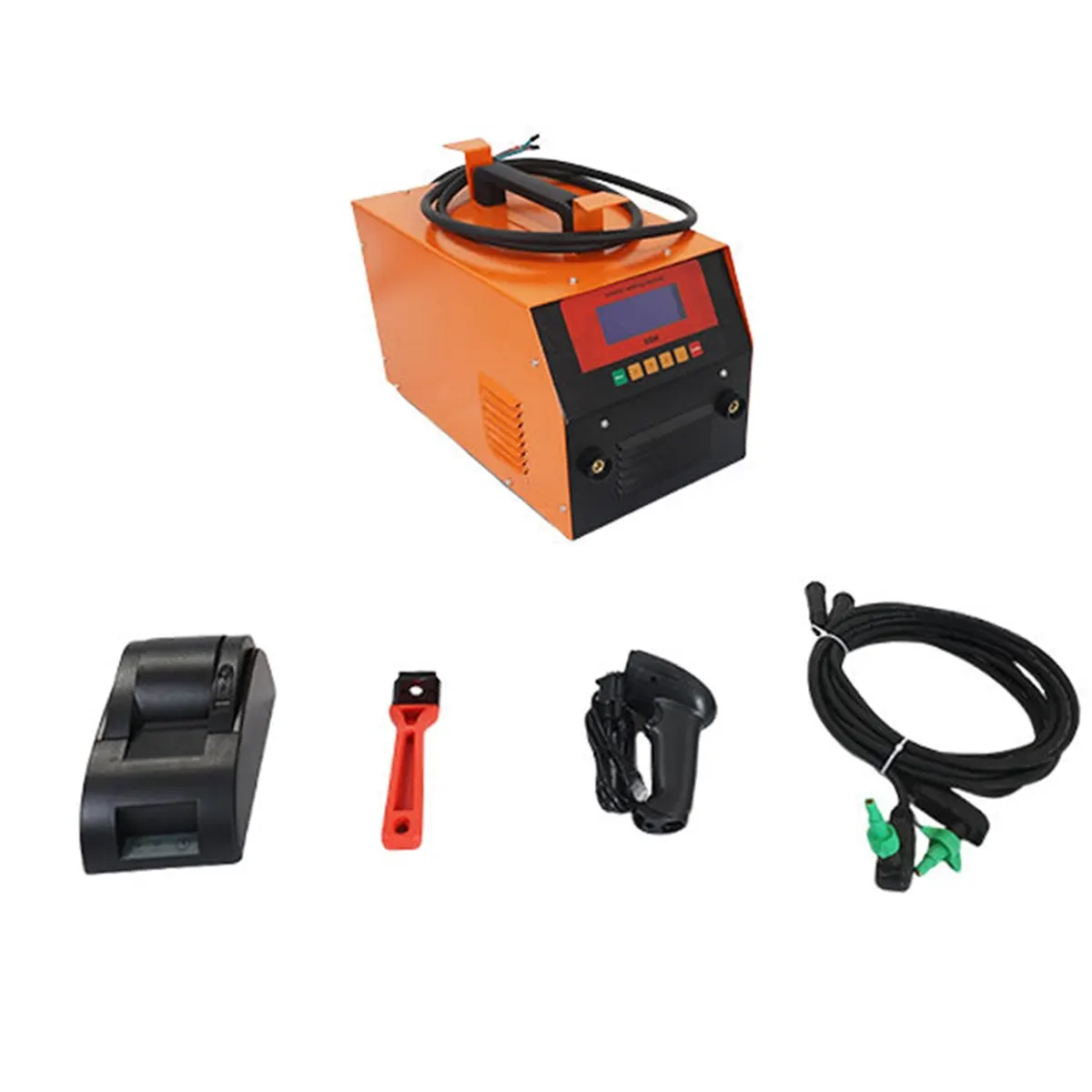
Electrofusion welders rely on a few components that directly affect fusion quality. Monitor these closely:
- Heating coils: degraded coils cause uneven heating — replace when output fluctuates.
- Control electronics and power modules: look for swelling capacitors or burn marks.
- Cables and connectors: fracturing insulation or loose crimps increase resistance and heat loss.
- Sensors and thermocouples: inaccurate readings lead to poor joint control — calibrate regularly.
Troubleshooting Common Issues
When weld cycles fail or weld quality drops, follow systematic checks to isolate the cause:
- Verify supply voltage and grounding — unstable mains often trigger weld faults.
- Check connector resistance with a handheld meter; replace high-resistance leads.
- Run a control test on a calibrated sample fitting to compare weld profiles.
- Review weld logs for repeated error codes and time stamps to identify patterns.
Best Practices for Long-Term Reliability
Adopt these habits to keep your electrofusion welder delivering consistent results:
- Keep a maintenance log with service dates, parts replaced, and calibration records.
- Train operators on correct connector handling, storage, and basic diagnostics.
- Store welding units and fittings in dry, temperature-controlled conditions to preserve electronics and consumables.
- Use only recommended replacement parts and qualified service technicians for repairs.
Warranty and service planning: schedule preventive maintenance before warranty expiration milestones and maintain documented service history to simplify claims and keep traceability for critical projects.
JQ-Fusion supplies electofusion and HDPE welding equipment backed by factory service options and spare parts. Contact the manufacturer or an authorized service provider if you need certified calibration or repairs beyond routine maintenance.



