
Butt welding machines for HDPE pipes require careful parameter selection to achieve leak-free, durable joints. This guide walks through the critical settings, typical specifications, and performance indicators you need to optimize fusion quality, reduce rework, and increase on-site productivity.
Understanding Butt Welding Machine Parameters
Successful butt fusion depends on controlling four core variables: heat, pressure, time, and alignment. These interact with pipe material (PE80, PE100), wall thickness (SDR), and ambient conditions. Misadjustment in any area can create weak joints, surface voids, or non-uniform weld beads.
Key Settings Explained
Heating Plate Temperature: Typically between 200–260°C depending on material and plate surface. Correct temperature ensures proper melting without degradation.
Heating Time: Determined by pipe OD and SDR. Underheating causes cold welds; overexposure leads to excessive melt flow.
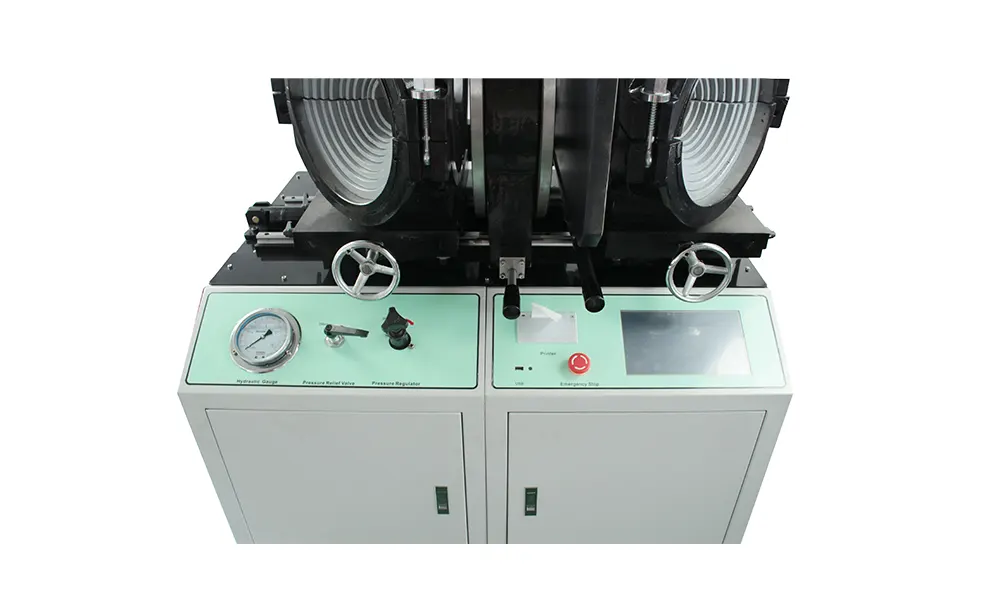
Fusion (Joint) Pressure: Applied during the weld and hold phases. Pressure must be steady and controlled — hydraulic systems offer better repeatability for larger diameters.
Cooling/Hold Time: Critical to allow crystallization and strength development. Cooling time increases with pipe diameter and ambient temperature variations.
Operational Parameters That Affect Performance
Beyond basic settings, monitor:
- Facing Quality: Proper facing/trimming removes oxidized surfaces and ensures square ends for consistent contact.
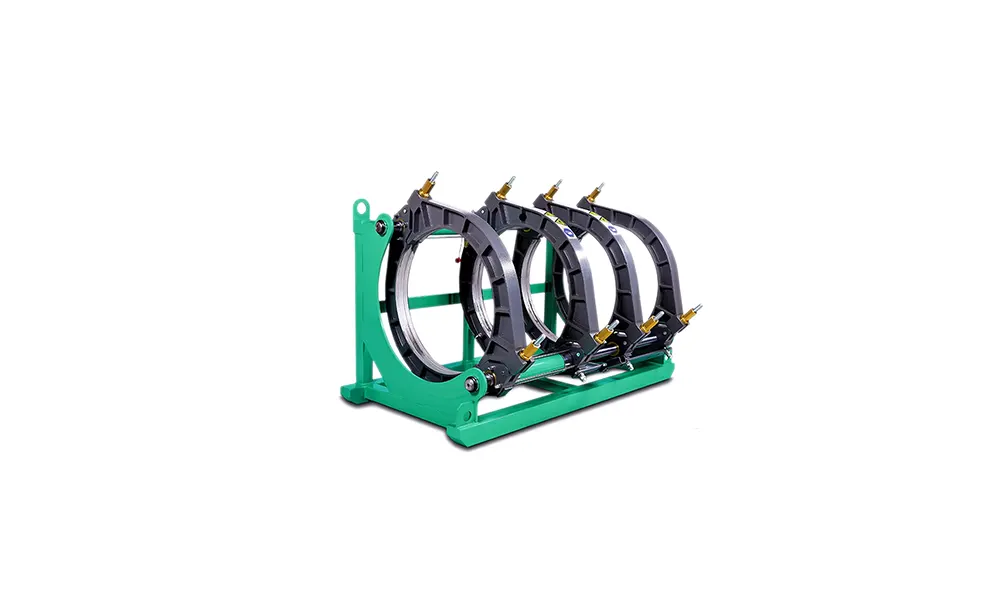
- Alignment & Clamp Rigidity: Misalignment creates asymmetric welds and stress concentrators.
- Hydraulic Stability: Pressure fluctuations can change bead geometry and reduce tensile performance.
- Plate Flatness & Surface Condition: Warped or contaminated plates produce uneven heating.
Typical Parameter Ranges by Pipe Diameter
| Pipe OD (mm) | Heating Temp (°C) | Heating Time (s) | Fusion Pressure (bar) | Hold Time (min) |
|---|---|---|---|---|
| 20–63 | 200–220 | 20–60 | 0.5–2 | 3–10 |
| 75–160 | 210–230 | 60–180 | 2–6 | 10–30 |
| 180–630 | 220–250 | 180–600 | 6–18 | 30–120 |
| >630 (Large Diameter) | 220–260 | Variable (machine-dependent) | Hydraulic systems: high stable pressure | Proportionally long; follow procedure |
Machine Types and Typical Specs
| Type | Best For | Repeatability | Automation |
|---|---|---|---|
| Manual Butt Fusion | Small-diameter, portable jobs | Operator-dependent | Low |
| Hydraulic Butt Fusion | Medium to large diameters, site work | High | Partial |
| CNC/Automatic Butt Fusion | Production lines, long runs | Very high | Full automation |
Step-by-Step: Setting Parameters for a Reliable Weld
Start with the pipe OD and SDR to reference a standard heating table. Verify plate temperature, square the ends with a trimmer, align pipes and clamps, then follow the sequence: heating → removal of heating plate → fusion under controlled pressure → hold/cool. Use recorded parameters for traceability.
Common Troubleshooting Tips
Cold Welds: Increase heating time or temperature, confirm plate reading, and ensure facing removed oxidized layers.
Excess Flash / Over-Melt: Reduce heating time or temperature, check plate contact and facing accuracy.
Asymmetric Bead: Inspect clamp alignment and pipe centering; re-clamp and reattempt.
Quality Control & Testing
Implement visual inspection, bead size checks, and destructive tensile/shear tests for sample joints. Maintain a welding log with parameters, ambient conditions, and operator ID to support warranty and traceability.
Maintenance & Calibration
Keep heating plates clean, verify temperature sensors against a calibrated thermometer, inspect hydraulic hoses and seals, and lubricate moving parts. Periodic calibration of pressure transducers and temperature controllers preserves repeatable results.
Selecting the Right Machine for Your Project
Match machine capacity to pipe diameter, required throughput, and field conditions. For utilities and contractors working on municipal water or gas lines, prioritize hydraulic stability and serviceability. Production facilities benefit from CNC models for consistent cycle-to-cycle performance.
Performance Metrics to Track
- First-pass acceptance rate
- Average weld cycle time
- Rework percentage
- Energy consumption per weld (for heated plates)
About JQ-Fusion
JQ-Fusion is a professional manufacturer specializing in HDPE pipe welding machines, offering manual, hydraulic, and CNC automatic butt fusion equipment for a wide range of pipe sizes used in water supply, gas distribution, mining, and industrial pipelines.
Quick Parameter Checklist Before Welding
– Confirm pipe OD & SDR, plate temperature, and facing quality.
– Set heating, fusion, and cooling times per standard table.
– Verify clamp alignment and hydraulic stability.
– Record all parameters and ambient conditions in the welding log.
Final Notes for On-Site Success
Careful parameter control, consistent facing, and disciplined QC are the cornerstones of reliable butt fusion. Invest in machine maintenance, operator training, and traceable records to minimize failures and extend pipeline life.



