
Choosing the right butt fusion machine supplier in Pakistan can make or break pipeline projects — from municipal water networks in Lahore to irrigation and gas distribution works in Sindh and Balochistan. This guide helps engineers, contractors, and procurement teams compare options, evaluate features, and pick equipment that suits local conditions and budgets.
Why the right supplier matters for Pakistan projects
Durability in harsh climates: Pakistan’s heat, dust and seasonal monsoon conditions demand machines with robust finishes, sealed electronics, and reliable hydraulic systems to avoid downtime on remote sites.
Local support and spare parts: Quick access to replacement heaters, clamps, and hydraulic components shortens repair cycles — critical when projects run on tight schedules. Consider suppliers with export experience and a clear spare-parts plan.
Training & certification: Proper operator training and traceable weld records are essential for utility and gas projects. Ask suppliers about on-site training, welding procedure qualification, and documentation that meet local authority requirements.
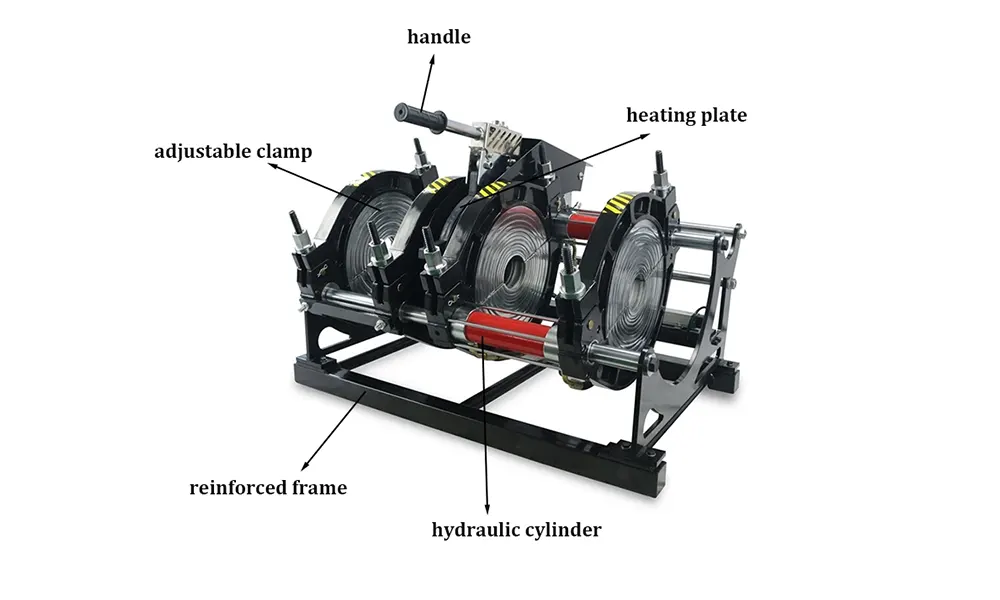
Types of butt fusion machines and when to use them
Manual machines
Simple, low-cost units for small-diameter pipes (usually up to 315mm). Best for short-run repairs, small rural irrigation projects, and teams that value portability over automation.
Hydraulic machines
Offer stronger clamping and consistent pressure control for medium to large diameters. Ideal for municipal water mains, longer runs, and sites where a balance of productivity and affordability is required.
Automatic / CNC machines
Provide programmable welding cycles, accurate heating control and data logging for high-volume or critical pipelines such as urban water supply and gas distribution systems. They reduce operator variability and produce traceable weld records.
Quick comparison table
| Machine Type | Typical Pipe Range | Productivity | Best For |
|---|---|---|---|
| Manual | 20–315mm | Low | Repairs, small rural projects |
| Hydraulic | 63–1600mm | Medium | Municipal water, medium pipelines |
| Automatic / CNC | 63–2000mm+ | High | Large projects, gas distribution, traceable weld records |
Key features to evaluate before buying
Heating plate quality: Even, well-machined plates with reliable thermostats produce consistent fusion beads and reduce rework.
Clamping system: Look for robust clamps and interchangeable jaws to cover local pipe SDRs and fitting types common in Pakistan projects.
Hydraulic power & pressure control: Stable pressure delivery is critical for large-diameter weld integrity. Verify rated pressure and flow specs.
Data logging and traceability: For gas and major municipal contracts, choose units that export weld reports or integrate with weld-tracking systems.
Portability and site setup: Consider weight, frame design, and ease of assembly if working in remote or uneven terrain common in rural Pakistan.
Supplier checklist for buyers in Pakistan
Inventory & lead time: Confirm stock levels and expected delivery times; long lead times can delay seasonal projects.
Local partners & service network: Verify whether the supplier offers local agents, on-site commissioning or regional workshops.
Certifications & test reports: Request material certificates, welding procedure tests and any applicable ISO or EN documentation.
Warranty & spare parts: Clear warranty terms and an easily reachable supply chain for wear parts prevent costly downtime.
Training & technical support: On-site operator training, maintenance manuals, and remote support options are valuable additions.
Matching machines to common Pakistan scenarios
Urban water distribution: Automatic/CNC machines for high throughput and weld traceability.
Irrigation canals & rural networks: Manual or compact hydraulic units that are portable and easy to operate.
Gas pipelines & industrial connectors: Hydraulic or automatic machines with strict pressure controls and documentation.
How to finalize a supplier and negotiate terms
Request sample welds or a factory acceptance test (FAT) report. Ask for images/videos of the machine in use under similar climate conditions. Negotiate clear incoterms, spare parts kits, training packages and lead times. Consider total cost of ownership — not just the purchase price — factoring in shipping, customs, spare parts and expected service intervals.
Final recommendation
When selecting a butt fusion machine supplier in Pakistan, prioritize durability, local support, and traceability. For reliable HDPE welding solutions and export experience, consider contacting JQ-Fusion for product options and after-sales services.



