
Finding the right butt fusion machine manufacturer in Portugal means balancing European standards, local project needs, and long-term service. This guide helps Portuguese contractors, municipal engineering teams, and private developers choose a supplier that delivers reliable HDPE pipe welding equipment for water, gas, mining, and industrial pipelines.
Why supplier choice matters in Portugal
Regulatory alignment: Portuguese projects must meet EU and national regulations. Choose manufacturers who supply CE-marked equipment and documentation that simplifies certification and project approvals.
Climate and installation context: Portugal’s coastal and inland conditions—from Algarve’s heat to northern humidity—affect on-site welding workflows and equipment maintenance. Robust machines with corrosion-resistant components reduce downtime.
Local support and language: Portuguese-speaking technical support or timely English support shortens commissioning times. Fast spare parts delivery across Portugal (mainland and islands) is often a deciding factor.
Key questions to ask prospective manufacturers
1. What welding methods and machine types do you offer? Confirm availability of manual, hydraulic, and CNC automatic butt fusion machines to match small repair work through to large-diameter pipeline projects.
2. What pipe diameters and materials are supported? Verify compatibility with the HDPE grades used in Portugal for water and gas networks.
3. Can you provide CE certification and EN-standard welding procedures? Documentation that meets EU norms speeds up procurement and quality audits.
4. What is your spare parts and training policy? On-site training, Portuguese-language manuals, and stocked critical spare parts reduce project delays.
Machine types and quick selection guide
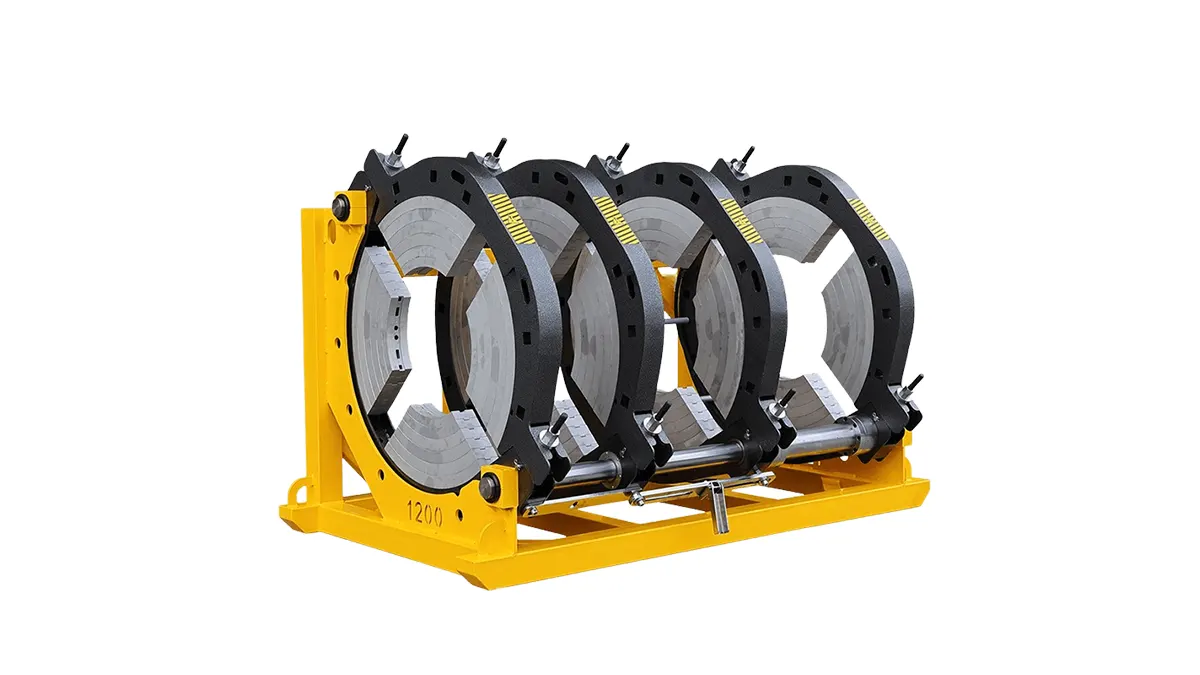
Match machine choice to project scale. Small-maintenance teams favor compact manual units; contractors building distribution grids often select hydraulic or automatic machines for repeatable weld quality.
| Product Type | Diameter Range | Typical Use |
|---|---|---|
| Manual Butt Fusion | 20mm–630mm | Repairs, small utility connections, site portability |
| Hydraulic Butt Fusion | 160mm–2000mm+ | Municipal networks, mainline welding, high-volume contractors |
| Automatic / CNC Machines | 63mm–1200mm+ | Large projects, repeatable precision, data-logged weld records |
Logistics, warranty and after-sales service
Shipping and customs: A supplier experienced with shipments to Portugal will manage export documents and offer cost-effective logistics—important for tight project timelines.
Warranty & training: Seek clear warranty terms, remote support options, and on-site or virtual training. Training in Portuguese is a major plus for local crews.
Spare parts availability: Ask about local stock, lead times for critical components, and service partners in Portugal or nearby EU countries.
Evaluating price versus long-term value
Lowest purchase price is rarely the best metric. Compare lifecycle costs—energy efficiency, consumable cost, calibration, and potential downtime. Machines that reduce rework and improve weld pass rates save money over the project life.
Practical next steps for Portuguese buyers
Start by defining project scope: pipe materials, diameters, expected production rates, and on-site conditions. Request standard technical sheets, CE/EN documentation, and references from similar European projects. Arrange a product demo or virtual walk-through to confirm usability with your crew.
For reliable butt fusion solutions tailored to international infrastructure projects, consider contacting JQ-Fusion at https://jq-fusionwelding.com/ to discuss machine options, certifications, and service packages that suit Portugal’s market and regulatory environment.



