
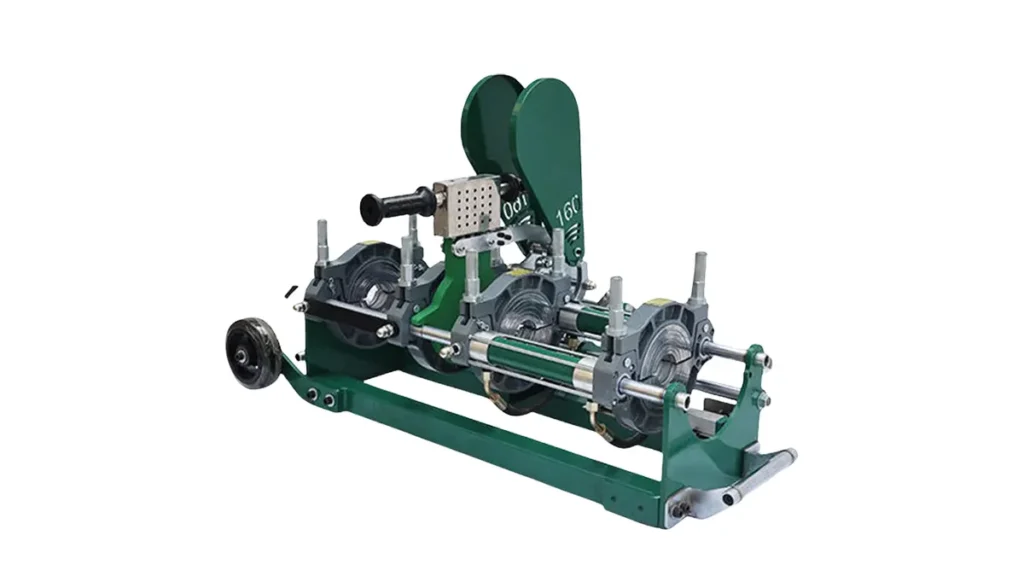
In the construction and maintenance of natural gas distribution networks, the integrity of pipeline joints is non-negotiable. A leak in a gas line can have catastrophic environmental and safety consequences. This is precisely why industry professionals rely on a butt fusion machine for gas pipelines. Unlike mechanical fittings, butt fusion creates a homogeneous, monolithic pipe system that is as strong as the pipe itself, eliminating potential leak paths. Understanding the nuances of this technology—from its operational features to crucial PE butt fusion equipment standard compliance—is essential for any project manager or contractor in the PE gas piping sector.
Key Features of a Reliable Butt Fusion Machine for Gas Pipelines
Not all welding machines are created equal. For gas applications, the machinery must adhere to rigorous safety and performance criteria. Here are the core components and features that define a professional-grade system:
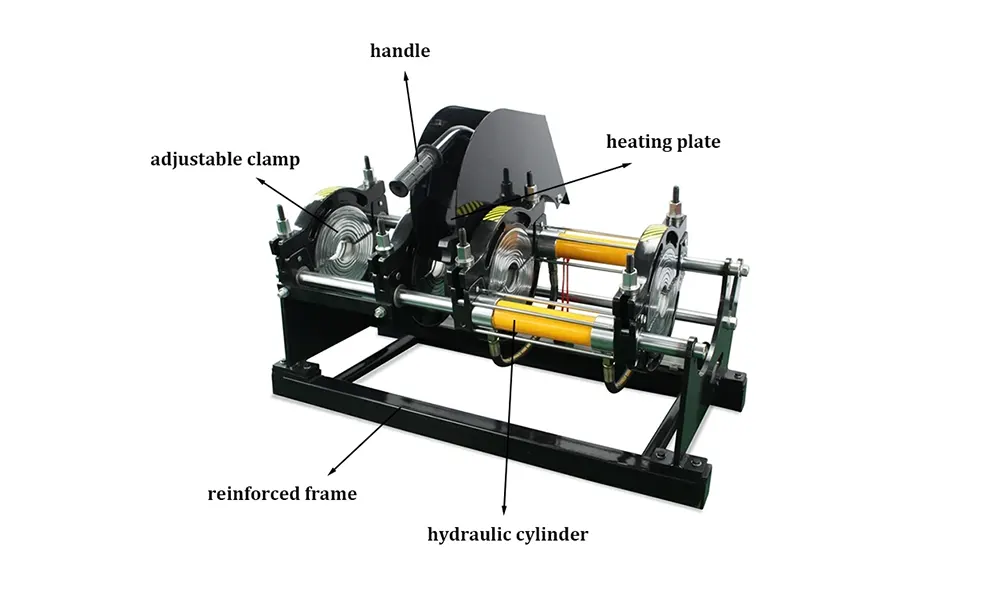
- Precision Hydraulic Control Units: Modern machines, such as the hydraulic series, offer smooth, controlled pressure application essential for meeting the strict hydraulic butt fusion welding machine protocols for high-pressure gas lines. A consistent force prevents misalignment and ensures a proper melt bead.
- High-Accuracy Heating Plates: The heart of the fusion process is the heater. It must maintain a uniform temperature across its surface with a tolerance of ±10°C. Non-stick Teflon coatings are crucial to prevent contamination of the pipe ends.
- Robust Clamping Systems: The clamps must hold the pipes firmly without causing surface damage. For gas pipelines, where ovality and wall thickness variations are common, strong, self-centering jaws are essential to correct misalignment.
- CNC Data Logging: Increasingly, gas utility companies demand traceability. A butt fusion machine for gas pipelines equipped with a CNC automatic butt fusion machine interface can record every parameter—temperature, time, and pressure—providing a digital fingerprint of each joint for quality assurance against ISO 21307 butt fusion procedures.
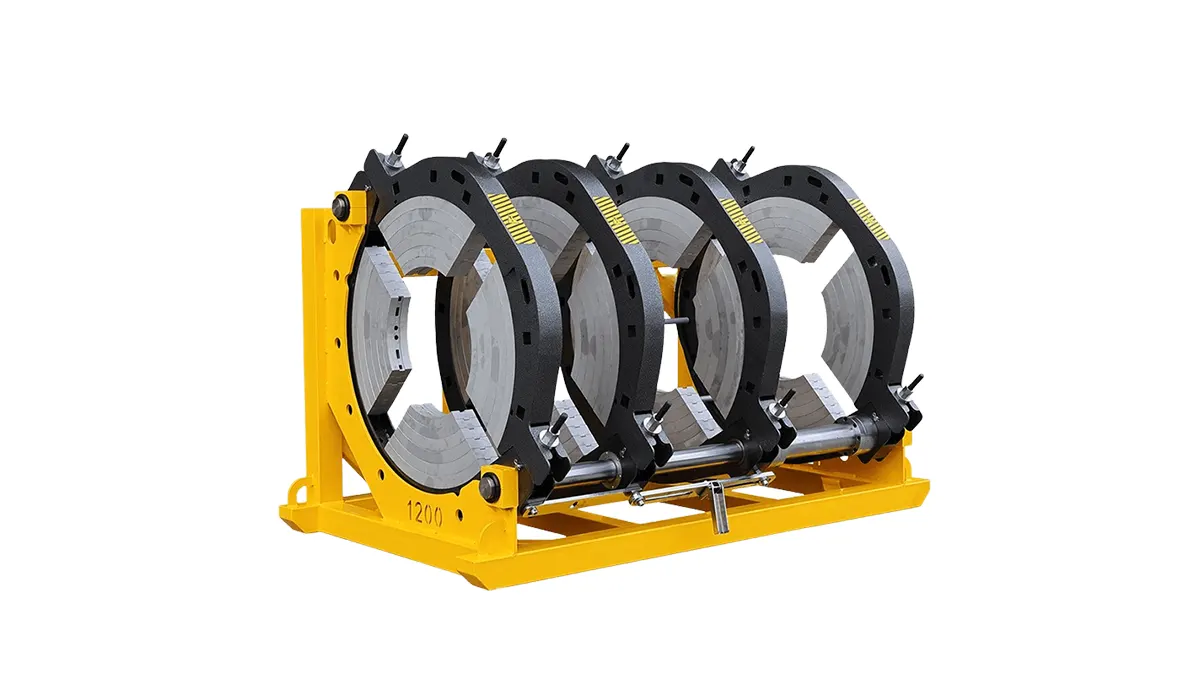
Understanding the Critical Welding Parameters for Gas Distribution
Successfully welding PE gas pipes requires mastering three critical parameters. These vary slightly depending on the PE gas pipe standard (such as PE80 or PE100), but the fundamental physics remains constant:
| Parameter | Function | Gas Pipe Specific Consideration |
|---|---|---|
| Temperature | Heating plate contact | Must be between 200°C – 230°C. Overheating can degrade the PE material properties, leading to long-term stress cracking in the presence of odorized gas condensates. |
| Pressure | Bead-up and fusion | Interfacial pressure must strictly follow the manufacturer’s guidelines. Insufficient pressure results in poor mixing; excessive pressure forces out the molten material, creating a cold joint. |
| Time | Soaking and cooling | Short soak times prevent proper heat penetration. Critically, pipes must remain clamped under pressure during the entire cooling cycle to prevent brittle fracture initiation sites. |
Manual vs. Hydraulic vs. CNC Automatic: Selecting the Right Equipment
Choosing the appropriate technology depends heavily on your project scale, pipe diameter, and quality assurance requirements. For small-scale service lines or repair work, a manual unit might suffice. However, for long-distance transmission mains, a hydraulic or CNC model is mandatory.
- Manual Machines: Best suited for pipes under 200mm. They are portable, cost-effective, and ideal for rural gasification projects where power access may be limited.
- Hydraulic Machines: The industry workhorse for diameters from 160mm to over 2000mm. They significantly reduce operator fatigue and provide the brute clamping force needed to align thick-walled, large-diameter HDPE pipe fusion equipment.
- CNC Automatic Machines: These are non-negotiable for many regulated gas utility projects. They remove human error from the equation by automatically executing the welding cycle, ensuring perfect compliance with PE pipe fusion standards and generating an auditable report for every joint.
Ensuring Safety and Compliance in Gas Pipeline Fusion
Safety is paramount. A professional butt fusion machine for gas pipelines integrates specific safety features beyond standard models. The heating element should be housed in a cradle that protects the operator, and the hydraulic unit must have a calibrated pressure gauge clearly visible. It is also vital that the machine is certified to meet ISO 12176-1 specifications, ensuring that the tool itself is not a variable in the safety equation.
Operator competence is equally critical. A machine is only as good as the technician controlling it. Certification to PE fusion operator requirements is a standard requirement on most gas transmission projects. This training covers not just the button pushing, but the understanding of the thermal dynamics and material compatibility at play. Manufacturers like JQ-Fusion design their equipment with intuitive controls to support properly trained professionals in achieving 100% pass rates on destructive joint tests.
Application Scenarios for Gas Butt Fusion Machines
The versatility of butt fusion makes it the primary choice for numerous gas infrastructure tasks:
- High-Pressure Transmission Mains: Connecting hundreds of kilometers of large-bore PE pipes that carry gas from production fields to distribution centers.
- Distribution Networks: The grid of smaller pipes that traverse cities and towns to deliver gas to commercial and residential meters.
- Pipeline Rehabilitation: Inserting new PE liners into aging cast-iron or steel mains. The butt fusion machine for gas pipelines is used to weld the liner sections together on-site.
- Directional Drilling Pulls: Weld strings are fused by the machine on the launch side and then pulled through the drilled hole, minimizing surface disruption.
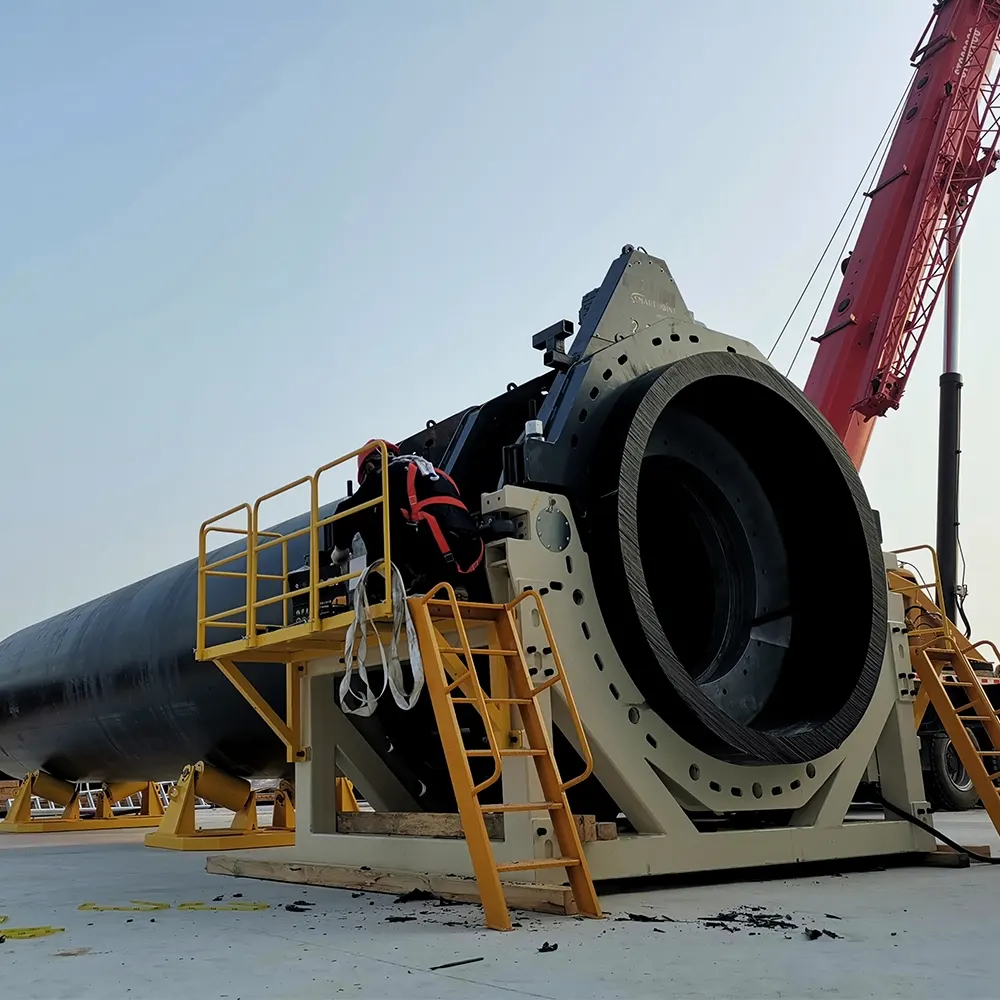
Maintaining Your Butt Fusion Equipment for Peak Performance
To guarantee the longevity of the machine and the integrity of future welds, a strict maintenance schedule is required. The heating plate surface must be cleaned regularly with a non-abrasive pad to remove polymer residue; a damaged PTFE coating can lead to sticking. The hydraulic oil should be inspected for contaminants, and the system should be calibrated periodically against a master gauge. The trimmer blades must be sharp—dull blades smear the material instead of cutting it, which introduces microscopic contaminants into the joint interface on PE gas piping systems.
Selecting a Manufacturer and Support Partner
When procuring a machine, look beyond the initial price tag. Consider the availability of spare parts, the accessibility of technical support, and the manufacturer’s specific experience with gas applications. A supplier who understands the critical safety function of the tool will offer robust after-sales care and clear guidance on lifecycle costs.
At JQ-Fusion, our engineering team focuses exclusively on crafting welding solutions that deliver reliability and precision under challenging field conditions. We support project managers in selecting the correct model and ensuring their operators are familiar with the equipment’s unique capabilities for gas pipeline construction.
Frequently Asked Questions About Gas Pipe Welding
- Can I use a water pipe butt fusion machine on a gas line?
While the basic principle is the same, gas-specific machines often require more rigorous documentation and pressure control systems. It’s crucial to use a machine that complies with ASTM F2620 heat fusion for gas applications to ensure the data logging and safety parameters are met. - What is the minimum cooling time for a gas pipe weld?
Cooling time is a direct function of the wall thickness and the material grade. Removing the pipe from the clamps prematurely is one of the most common causes of joint failure. Always consult the specific PE pipe fusion standards chart for your pipe diameter. - How do I prevent contamination during welding?
The pipe ends must be thoroughly cleaned with isopropyl alcohol before facing. The trimmer must produce a continuous ribbon of even thickness on both sides, indicating that the oxidized surface layer has been successfully removed from the PE gas pipe fittings.



