
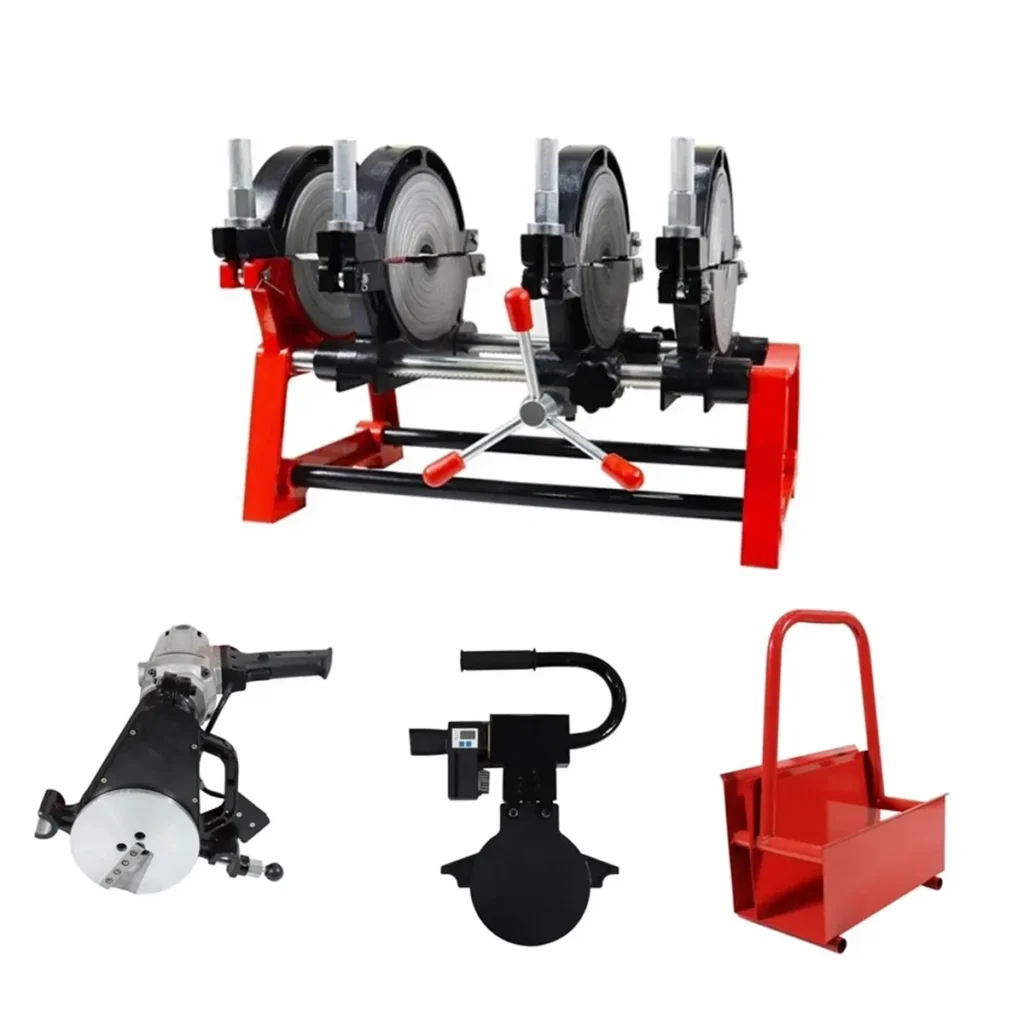
In the world of high-density polyethylene (HDPE) pipe joining, the performance of a butt fusion welding machine depends on far more than just the mainframe. The integrity and longevity of a welded joint are directly tied to the quality and condition of its supporting components. Understanding butt fusion machine accessories is essential for contractors, pipeline installers, and project managers who aim for zero-leak networks in water supply, gas distribution, and industrial applications.
Why Quality Accessories Matter for Joint Integrity
When performing butt fusion machine operations, the welding cycle relies on precise temperature control, accurate facing, and consistent interfacial pressure. Even a minor defect in an accessory can introduce contamination, misalignment, or uneven heating. This leads to weak joints that may pass initial visual inspection but fail under long-term stress or pressure testing. The core accessories — heating plates, trimmers, and clamps — function as an integrated system. If one part underperforms, the entire welding procedure deviates from recognized ISO 21307 butt fusion procedures.
Heating Plate: The Heart of Thermal Fusion
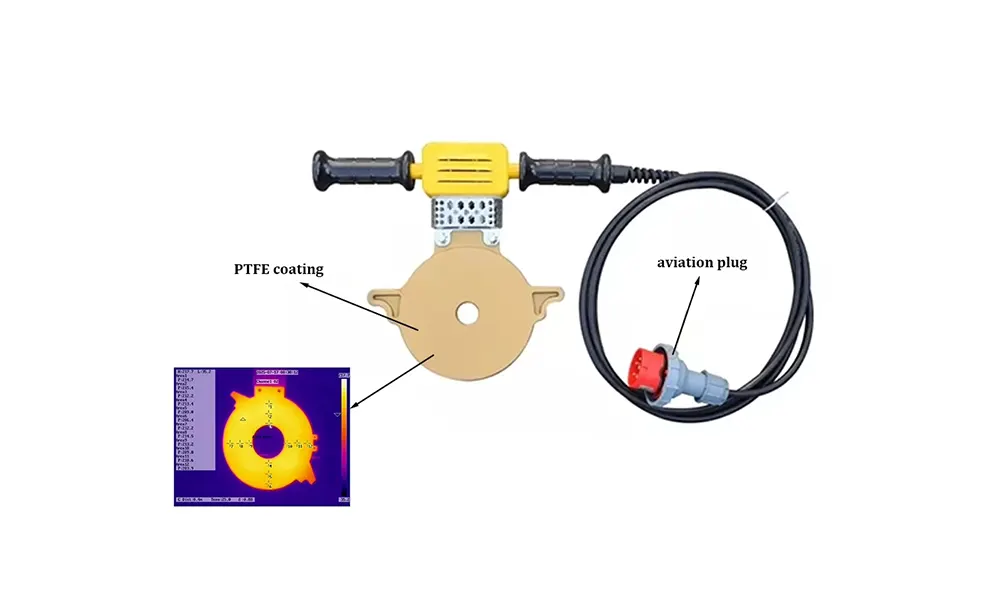
The heating plate is arguably the most critical butt fusion machine accessory. It must deliver uniform surface temperature across its entire face to melt the pipe ends consistently. Non-stick PTFE coatings are standard to prevent molten polyethylene from adhering, but the quality of this coating varies significantly. A damaged or poorly coated plate transfers impurities into the weld zone, creating cold spots or brittle joints.
Key features to evaluate include:
- Digital temperature control accuracy within ±5°C
- Even heat distribution verified by thermal imaging
- Durable non-stick surface with clean release properties
- Built-in overheat protection for operator safety
For large-diameter projects, heating plates must match the pipe wall thickness and diameter to ensure sufficient soak time. Checking the plate for scratches or residue before every weld is a field practice recommended by the PPI technical guidance.
Pipe Facer and Trimmer: Achieving Clean, Parallel Surfaces
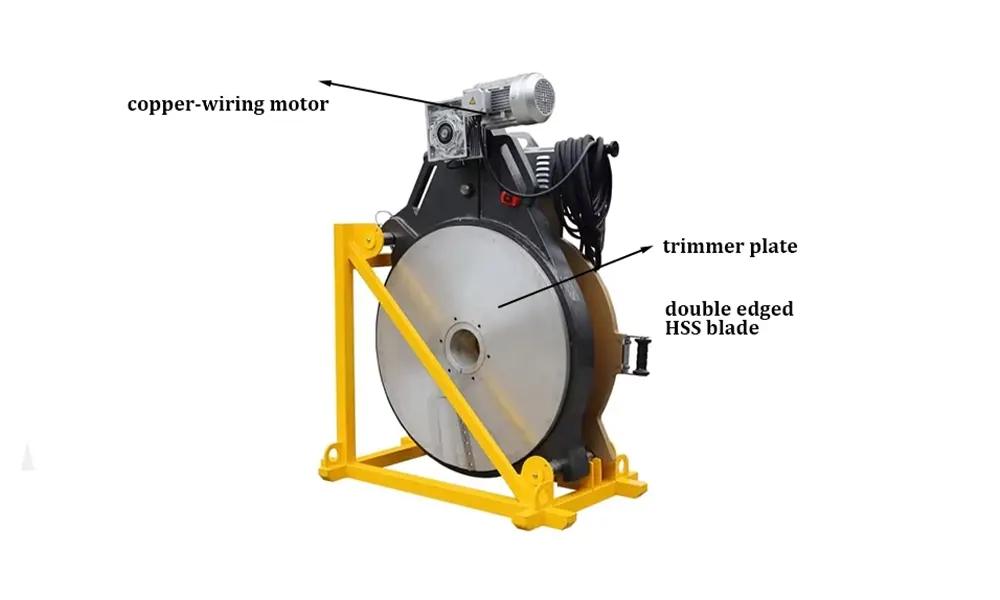
The facing tool, typically a rotary trimmer or planing block, prepares the pipe ends by removing oxidized material and creating perfectly flat, parallel faces. This accessory directly influences the butt fusion machine accessories equation because misaligned facers produce gaps that the melt pressure cannot fill. High-quality trimmers use hardened steel blades that maintain sharpness across hundreds of facing cycles. Dull blades abrade rather than cut the polyethylene, resulting in a polished surface that inhibits proper chain entanglement during fusion.
Contractors should consider the following when selecting or maintaining their facer:
- Blade sharpness and material grade (carbide-tipped is recommended)
- Rigidity of the trimmer frame to prevent chatter
- Compatibility with the specific pipe diameter range
- Ease of blade replacement in the field
After facing, the pipe ends should not be touched, and the trimmer should be immediately stored in a clean location to avoid contamination. Immediate pipe alignment within the clamps follows to minimize exposure to dust or moisture.
Clamping System: Alignment and Axial Force
The clamping system on a hydraulic butt fusion machine secures the pipe and applies the fusion pressure. Accessories related to clamping include jaw inserts, reduction liners, and the hydraulic or manual drive mechanism. For automatic butt fusion welding machine models, the clamping pressure is regulated by the CNC control unit, but the mechanical condition of the jaws still matters tremendously. Worn or deformed jaw inserts cause uneven grip, leading to pipe slippage during the critical cooling phase.
| Accessory Type | Primary Function | Material / Standard | Key Inspection Point |
|---|---|---|---|
| Heating Plate | Melt pipe ends uniformly | Aluminum alloy, PTFE coated | Surface temperature variance |
| Rotary Trimmer | Face pipe ends flat and clean | Steel alloy, carbide blades | Blade sharpness, axial play |
| Clamp Jaws / Inserts | Secure pipe alignment | Steel, aluminum | Grip wear, deformation |
| Hydraulic Power Unit | Generate and regulate fusion pressure | Steel reservoir, hydraulic oil | Oil level, hose integrity |
| Reduction Liners | Adapt clamp to smaller diameters | Aluminum, steel | Fitment, surface condition |
Proper clamp maintenance involves regular cleaning of the grip surface and checking for mechanical damage that could affect alignment. Many manual butt fusion welding machine users benefit from keeping spare jaw inserts for the most common pipe sizes they encounter on site.
Hydraulic Power Unit and Control Accessories
For butt fusion machine accessories in hydraulic setups, the pump station, hoses, and quick-connect couplings are often overlooked until a failure occurs on the job site. A reliable hydraulic power unit must maintain consistent pressure output regardless of ambient temperature or load variations. Accessories such as pressure gauges, relief valves, and filtration elements should be inspected daily. Contaminated hydraulic fluid is a common cause of erratic carriage movement, which ruins the fusion cycle by introducing pressure spikes.
Additionally, data logging accessories and barcode scanners are becoming increasingly important for PE fusion traceability. These devices attach or integrate with the machine control unit to record welding parameters for each joint, providing auditable quality assurance records.
Spare Parts and Wear Components
Maintaining an inventory of critical butt fusion machine accessories can prevent costly downtime on linear pipeline projects. Field environments accelerate wear, and waiting for replacement parts can delay schedules by days or weeks. Essential spares typically include:
- Heating plate assembly (or just the non-stick coating service)
- Trimmer blades and fastening screws
- Hydraulic seals and o-rings
- Electrical relays and temperature sensors
- Replacement grips for manual clamping levers
For companies like JQ-Fusion, the focus on quality manufacturing extends to the durability of these accessories, ensuring that contractors can access both the machines and the supporting components from a single, reliable source.
Field Maintenance Best Practices
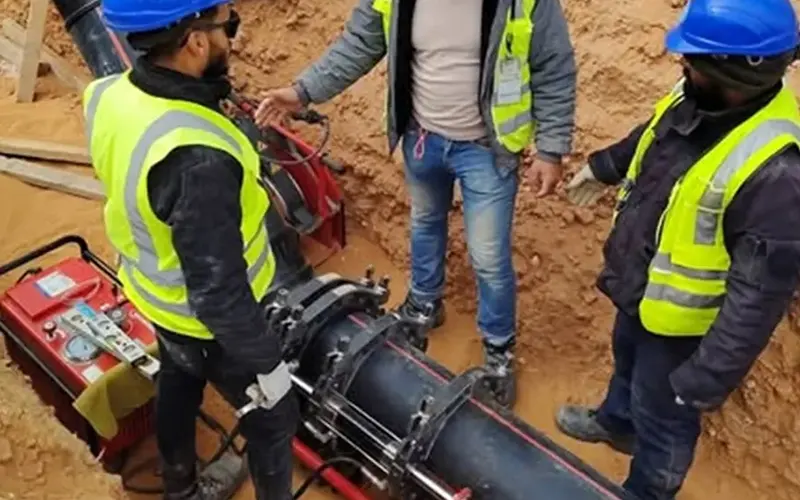
Even the best butt fusion machine accessories require disciplined field care to deliver consistent results. At the start of each work shift, operators should run through a checklist that covers the heating plate thermometer calibration against a reference probe, trimmer blade inspection under magnification for nicks, and clamping pressure verification using a load cell if possible. Cleanliness cannot be overstated; polyethylene dust from the facing process must be blown clear of the clamp area and heating plate before each cycle.
During transport between job sites, accessories should be secured in padded cases. Impact damage to a heating plate’s flat surface, even a small dent, creates a localized cold zone that will manifest as a kissing bond — visually intact but mechanically weak. The same applies to the trimmer; a bent shaft produces a concave or convex face that alters the interfacial pressure distribution during bead formation.
Integrating Accessories with Operator Competency
While high-grade butt fusion machine accessories provide the mechanical foundation, fusion quality also hinges on operator skill. An experienced technician understands how accessory condition interacts with process parameters. For example, a slightly colder ambient temperature may require a longer heat soak time, but only if the heating plate is verified to be at the correct setpoint. Similarly, an operator who senses excessive resistance from the trimmer knows to check blade sharpness before proceeding, rather than forcing the cut and risking pipe end damage. Operator qualification programs aligned with heat fusion operator qualification guidelines emphasize this interconnection between equipment maintenance and procedural adherence.
Investing in genuine, high-performance accessories and treating them as precision instruments rather than commodity items separates reliable distribution networks from those plagued by premature failures. Whether working on a municipal water transmission line or a gas gathering system, the message remains the same: the joint is only as good as the tools that make it.



