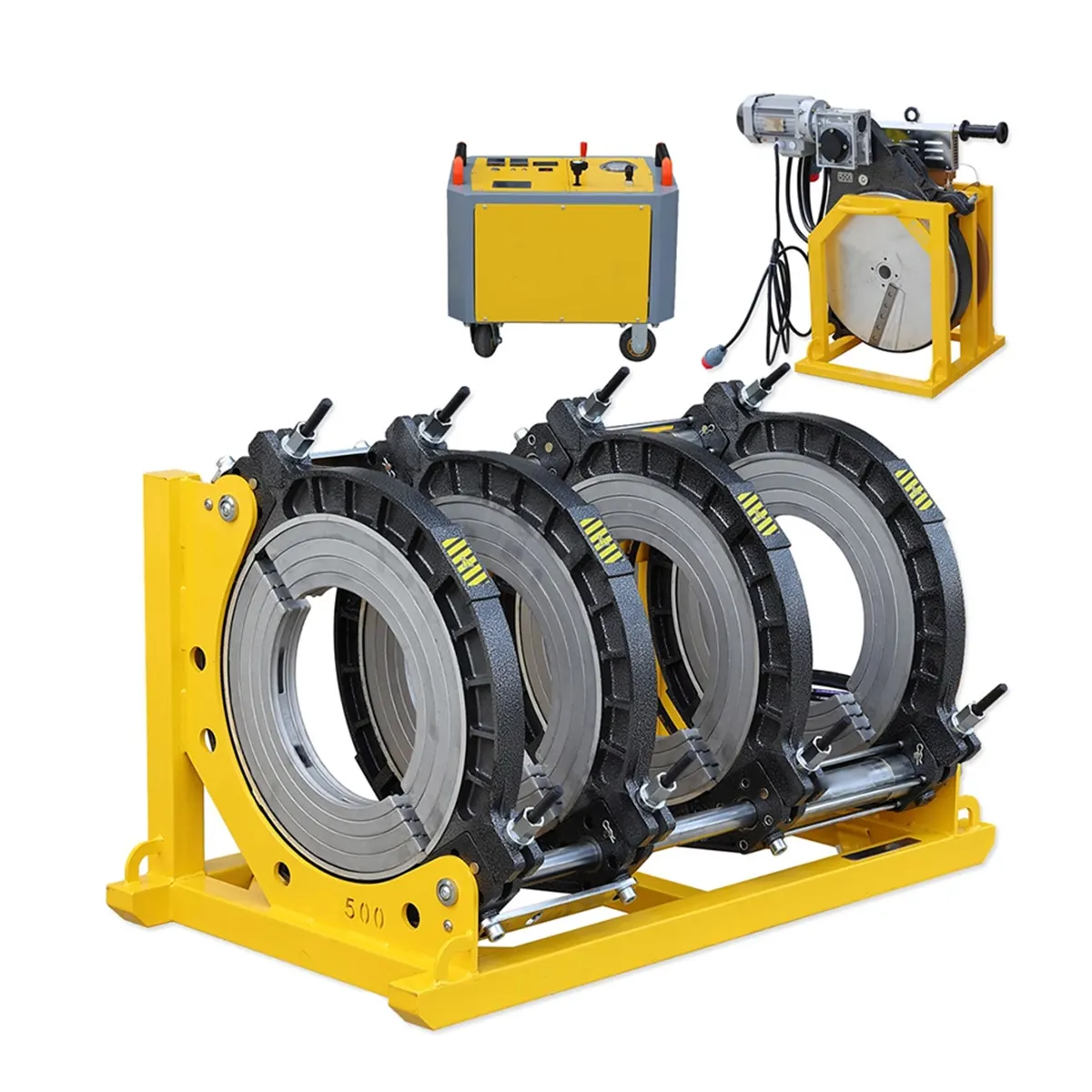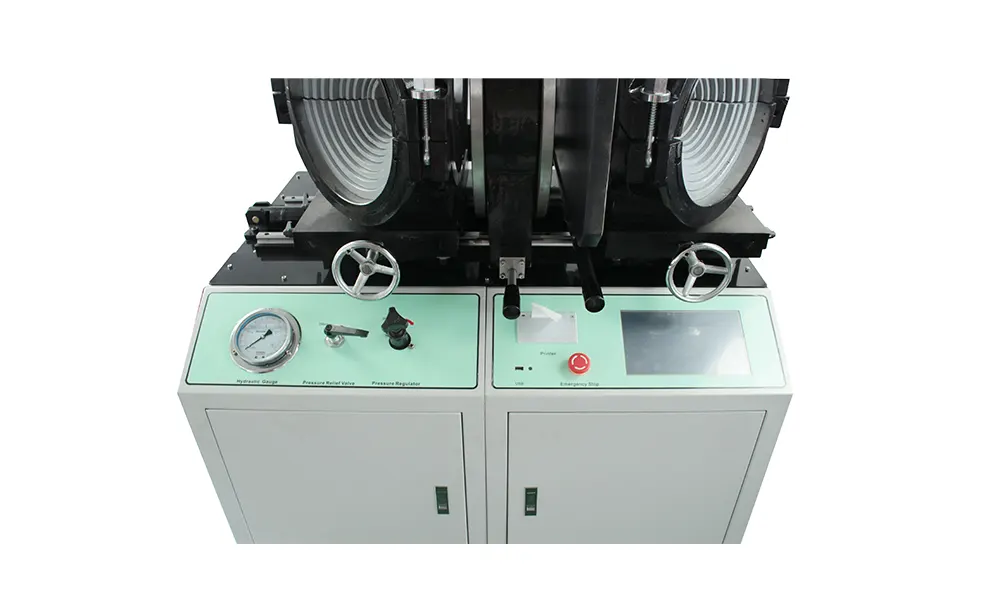
Achieving a flawless HDPE pipe joint depends heavily on the quality and condition of your HDPE welding machine milling cutter. This critical component is responsible for creating perfectly flat, parallel, and contaminant-free pipe ends, which is a non-negotiable prerequisite for a strong, leak-proof butt fusion weld. If your milling cutter is dull, misaligned, or of poor quality, you risk introducing gouges, uneven heating, and cold spots into the joint, undermining the integrity of your entire pipeline system. Understanding how to select, maintain, and utilize the right cutting tool is essential for any contractor, project manager, or installation crew working in water supply, gas distribution, or industrial applications.
The Direct Link Between Milling Cutter Quality and Weld Integrity
The fusion process requires that both pipe ends are heated to a precise molten state before they are pressed together. Any imperfection on the face of the pipe disrupts this thermal profile. A high-performance HDPE welding machine milling cutter achieves a smooth surface finish, removing oxidized material and minor scratches. This allows for uniform heat absorption from the heater plate, per the guidelines established in ISO 21307 butt fusion procedures. Conversely, a dull blade tears the polyethylene rather than slicing it cleanly, leaving a furry or ridged face that entraps air and inhibits molecular diffusion during the joining phase. The result is a brittle connection with poor long-term performance under pressure or environmental stress cracking.
Key Blade Characteristics for Peak Performance
When evaluating replacement cutters or the tooling included with a new machine, you need to look beyond the price tag. The metallurgy and geometry of the inserts play a decisive role in how cleanly the tool shears the HDPE.
Material Composition and Edge Retention
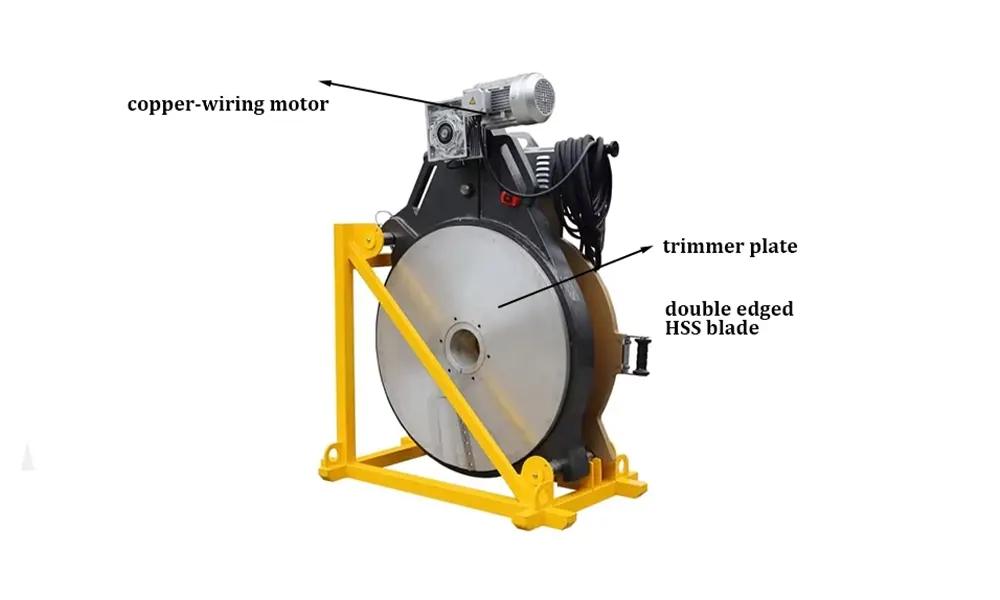
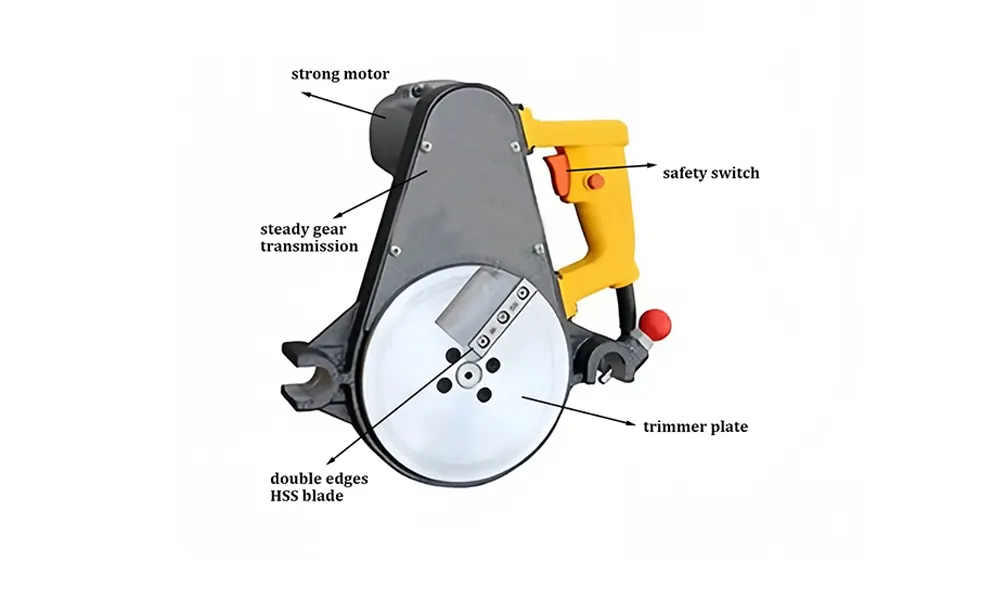
Look for high-speed steel or carbide-tipped blades. Carbide provides superior hardness and wear resistance, standing up to the abrasive nature of continuous polyethylene trimming. Blades that lose their edge too quickly will begin to push material rather than cut it, which drastically increases the torque load on the machine’s motor and compromises face flatness. A durable cutter ensures thousands of consistent facing cycles on a busy construction site.
Chip Clearance and Geometry
The design of the gullets and the rake angle of the teeth should be optimized for plastic. Unlike wood or metal chips, HDPE swarf tends to be continuous and stringy. An excellent HDPE welding machine milling cutter features polished flutes and a non-stick coating that prevents molten or sticky plastic from welding itself to the blade. Proper chip evacuation prevents clogging, keeps the cutting zone cool, and stops the carriage from being lifted off its guides by packed debris, which would ruin face parallelism.
Matching the Milling Cutter to Your Butt Fusion Machine
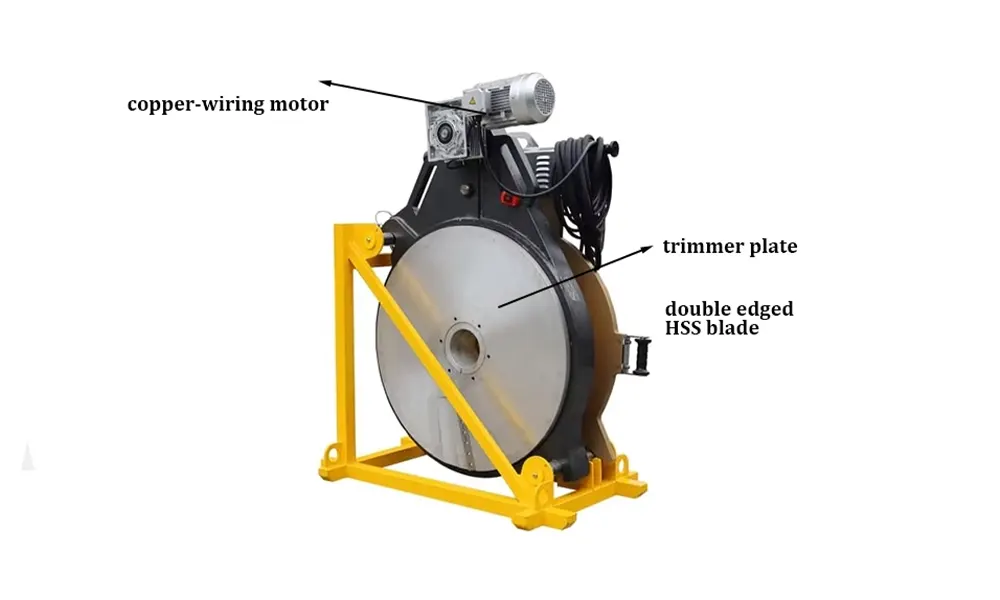
Compatibility goes beyond just the outer diameter capacity. The dual-sided trimming system must be perfectly concentric with the machine’s clamping axis. A cutter that is even slightly off-center will produce a beveled or stepped pipe face, leading to severe misalignment during the heating and fusion stages. Always verify that the cutter is specifically engineered for your machine frame model, whether you operate a manual butt fusion welding machine or a fully CNC automatic butt fusion machine. The mounting mechanism must lock the disc rigidly without play, eliminating vibration that causes chatter marks on the pipe face.
| Feature | Optimal Specification | Benefit to Your Weld |
|---|---|---|
| Blade Material | Carbide-tipped or HSS | Long edge life and clean shearing of abrasive HDPE |
| Tooth Geometry | Positive rake, wide gullets | Efficient chip ejection and minimal friction heating |
| Surface Treatment | Non-stick coating (e.g., PTFE) | Prevents sticky swarf buildup and extends blade usage |
| Run-out Tolerance | Less than 0.1 mm axial deviation | Guarantees pipe faces are flat and parallel for uniform heating |
Maintaining dead-sharp blades is not merely a suggestion but a critical practice for anyone using hydraulic butt fusion equipment. We recommend inspecting the cutter after every shift. Even a single chipped insert will leave a raised line on every pipe face it touches, which translates into a contaminated fusion interface. If the cutter requires excessive force to turn by hand, or if the trimmings appear melted and glazed rather than crisp ribbons, it is time to sharpen or replace the unit. Always follow a regular maintenance schedule as outlined in the PPI butt fusion procedure to minimize variability in joint quality across your crew.
Sharpening Service and Replacement Intervals
Do not attempt to freehand sharpen the inserts. The complex relief angles must be ground with machine precision to maintain the correct cutting profile. Many professional manufacturers, such as JQ-Fusion, supply their HDPE welding machine milling cutter designs with easily replaceable cartridge blades. Keeping a spare, factory-sharp cutter on site eliminates downtime. When you notice that the shavings change from thin, brittle chips to heavy, continuous strings that jam the guard, you have waited too long. Swap the disc out immediately to protect the machine’s drive system.
Ensuring a Smooth and Contamination-Free Milling Face
The workshop or field environment introduces grit, mud, and moisture that can degrade the cutting edge. Besides the mechanical blade condition, consider these practical steps to ensure a pristine result every time:
- Clean pipe surface first: scrub the pipe end to remove sand and soil before clamping, preventing blade impact with abrasive debris.
- Lock the carriage: ensure the clamp inserts have solid grip so the pipe ends do not shift during the facing cycle.
- Gentle pressure approach: feed the rotating cutter slowly against the pipe stubs. Excessive thrust damages the polyethylene and dulls the blades faster.
- Face until continuous ribbon: continue trimming until a complete, unbroken peel appears from both pipe ends simultaneously, confirming full face contact and parallelism.
- No touch rule: never wipe the freshly milled face with a rag or your fingers, as oils and lint will contaminate the surface prior to fusion.
Why Your Cutter Choice Matters for Long-Term Pipeline Performance
In pressure pipe applications regulated by such references as PE butt fusion equipment standard, the wall thickness and stress rating demand a near-perfect joint. A rough-milled surface effectively reduces the available molecular contact area, functioning as a built-in defect that can propagate a crack under stress. Selecting the right HDPE welding machine milling cutter, and maintaining it rigorously, directly eliminates this risk. Contractors who prioritize cutter sharpness report fewer field leaks, higher first-pass yield on hydrostatic tests, and a significant reduction in costly rework. Whether you are operating a compact manual rig for a rural water system or a large-bore hydraulic setup for an industrial outfall, the milling tool remains the quiet guardian of your weld integrity and your professional reputation.