
A precisely configured HDPE pipe welding machine configuration is the foundation of every successful pipeline project. Whether you are working on municipal water distribution, gas conveyance, or industrial slurry lines, the integrity of the joint depends entirely on matching the machine setup to the pipe material, diameter, wall thickness, and site conditions. Incomplete or incorrect configuration leads to cold welds, misalignment, and eventual joint failure—problems that are entirely preventable with the right approach.
Why Machine Configuration Determines Weld Quality
Butt fusion welding relies on controlled heating, precise alignment, and consistent interfacial pressure. These three parameters are not universal—they shift with every change in material grade, wall thickness, and ambient temperature. A machine that is perfectly configured for PE100 SDR11 pipe will not automatically produce reliable joints on PE80 SDR17 pipe without parameter adjustment. The welding machine configuration must account for the full set of variables present on the job site.
Key factors that influence the required HDPE pipe welding machine configuration include:
- Pipe outside diameter and wall thickness
- Material classification — PE80, PE100, PE100-RC
- Standard applicable to the project — ISO 21307 butt fusion procedures
- Ambient temperature and wind conditions
- Power supply stability and voltage tolerance
Core Components of a Complete Butt Fusion Machine Configuration
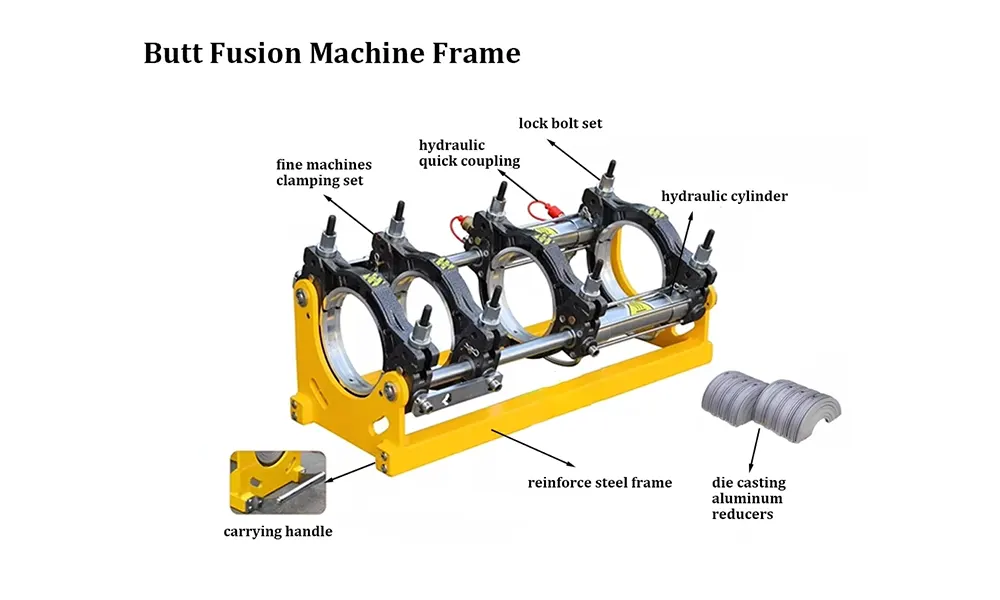
A properly configured butt fusion machine is not just a single unit—it is an integrated system of components that must all be set correctly for the specific pipe being joined. Each element plays a critical role in maintaining alignment, temperature control, and fusion pressure.
Clamp System and Frame Alignment
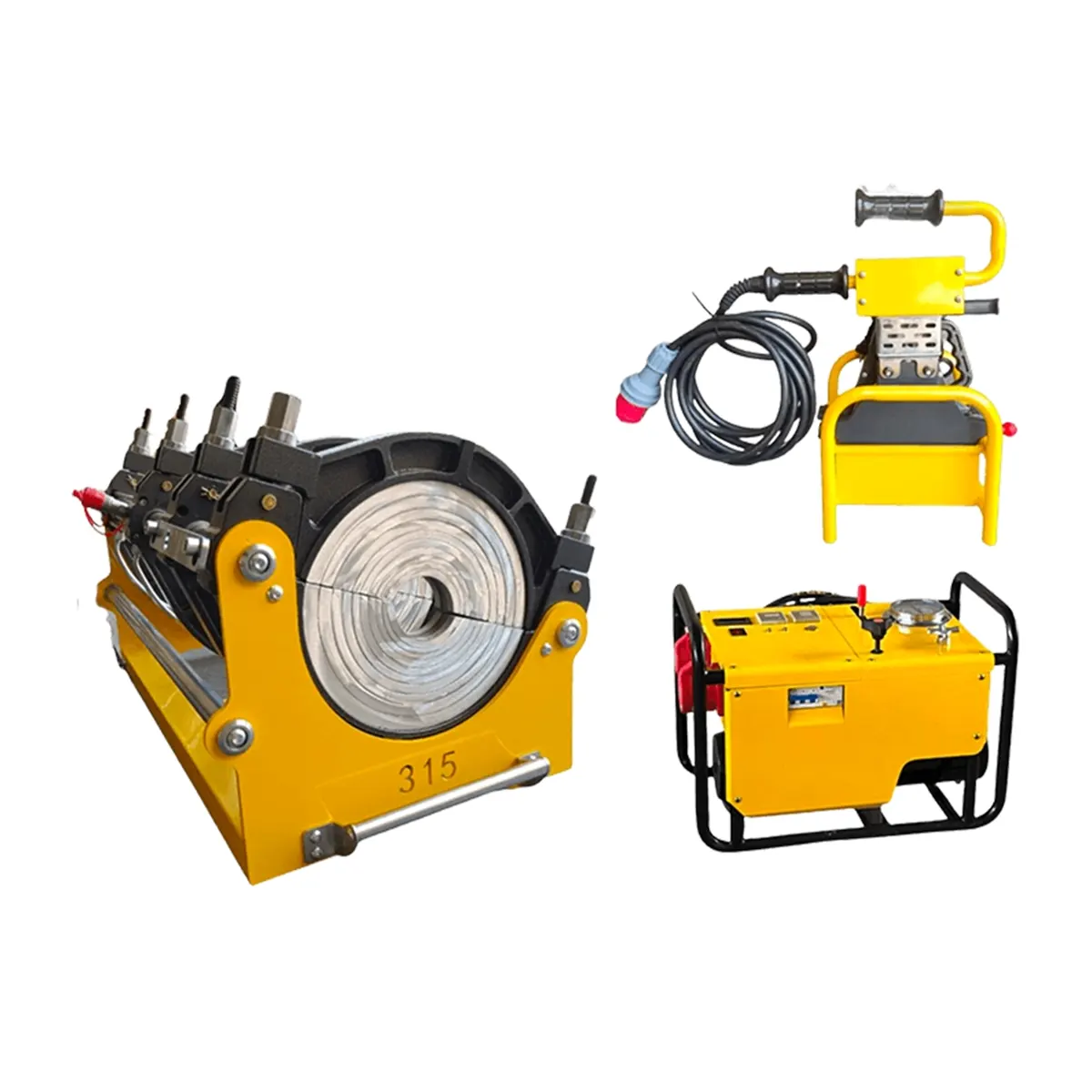
The clamp system holds the pipe ends in coaxial alignment during the entire welding cycle. Misalignment exceeding 10% of the pipe wall thickness can create a stress concentration that compromises long-term joint performance. Machines should be configured with insert reducers matched to the specific pipe diameter. When working with a hydraulic butt fusion welding machine, the movable jaw travel must be checked against the required stroke length for the pipe size.
Heating Plate Configuration
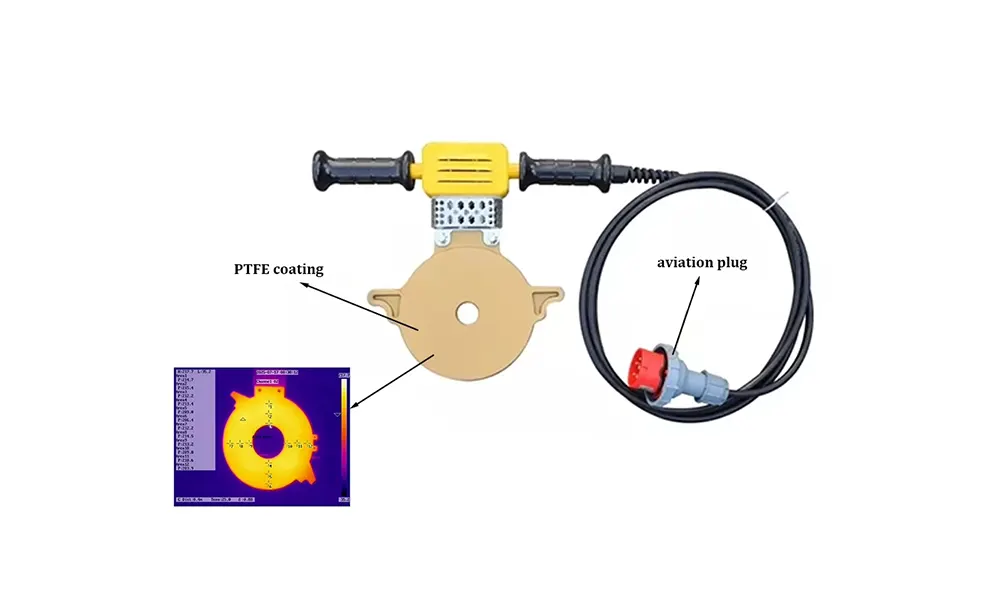
The heating plate must be set to the correct surface temperature, typically between 200°C and 220°C for PE materials, as specified in PE butt fusion equipment standard. Temperature variation across the plate surface should not exceed ±5°C. Anti-stick coatings, usually PTFE, must be intact and clean. The heating plate size must cover the full pipe end face without gaps, and the plate should be configured with the appropriate power rating for the diameter range.
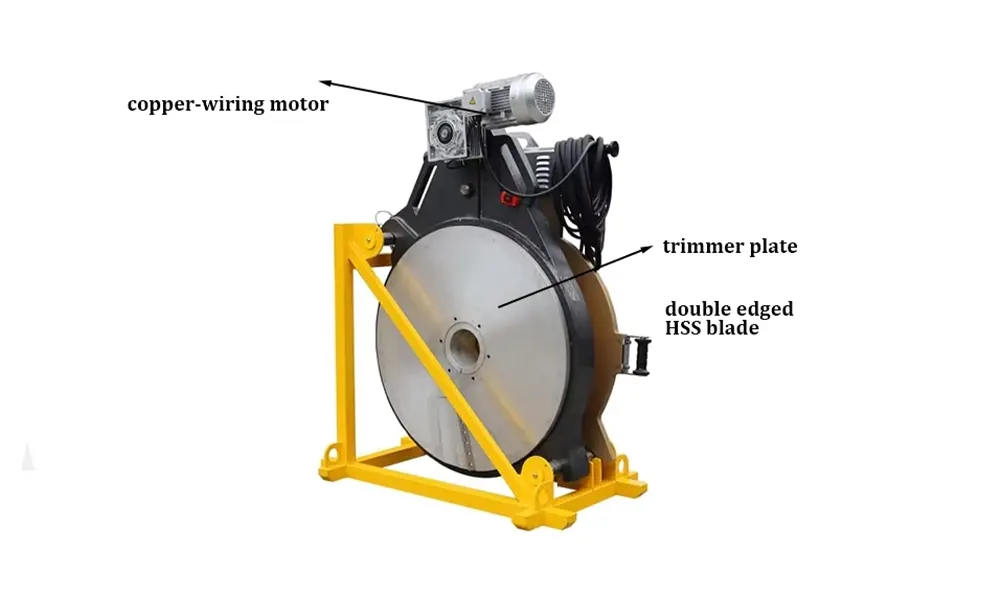
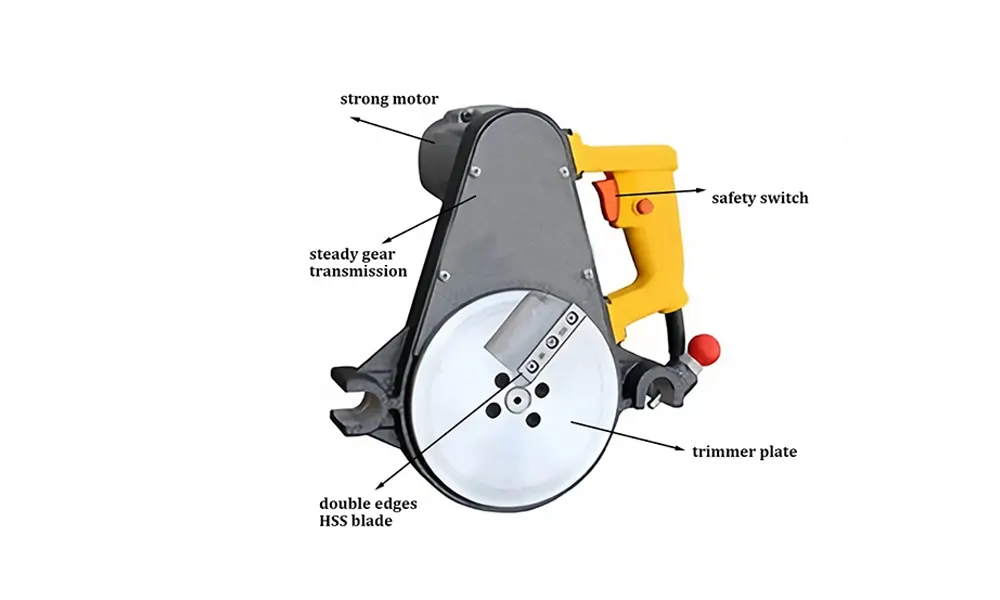
Trimmer and Facing Tool Setup
The trimmer produces clean, parallel pipe end faces that are essential for uniform heating and fusion. Blades must be sharp and set to produce a continuous chip without gouging. The trimmer must be configured to remove sufficient material to eliminate oxidation and contamination while minimizing waste. For larger diameters, a hydraulic trimmer with adjustable speed control provides more consistent facing results.
Hydraulic Power Unit Configuration
The hydraulic system provides the controlled force needed for pipe movement, bead-up, and fusion pressure. Pressure configuration must be calculated based on pipe cross-sectional area and the specified interfacial pressure for the material grade. A machine configured for PE100 typically requires 0.15 MPa interfacial pressure during the fusion stage. The hydraulic unit should be equipped with a pressure gauge that allows fine adjustment and a relief valve to prevent over-pressurization.
CNC Automatic Machine Configuration Advantages
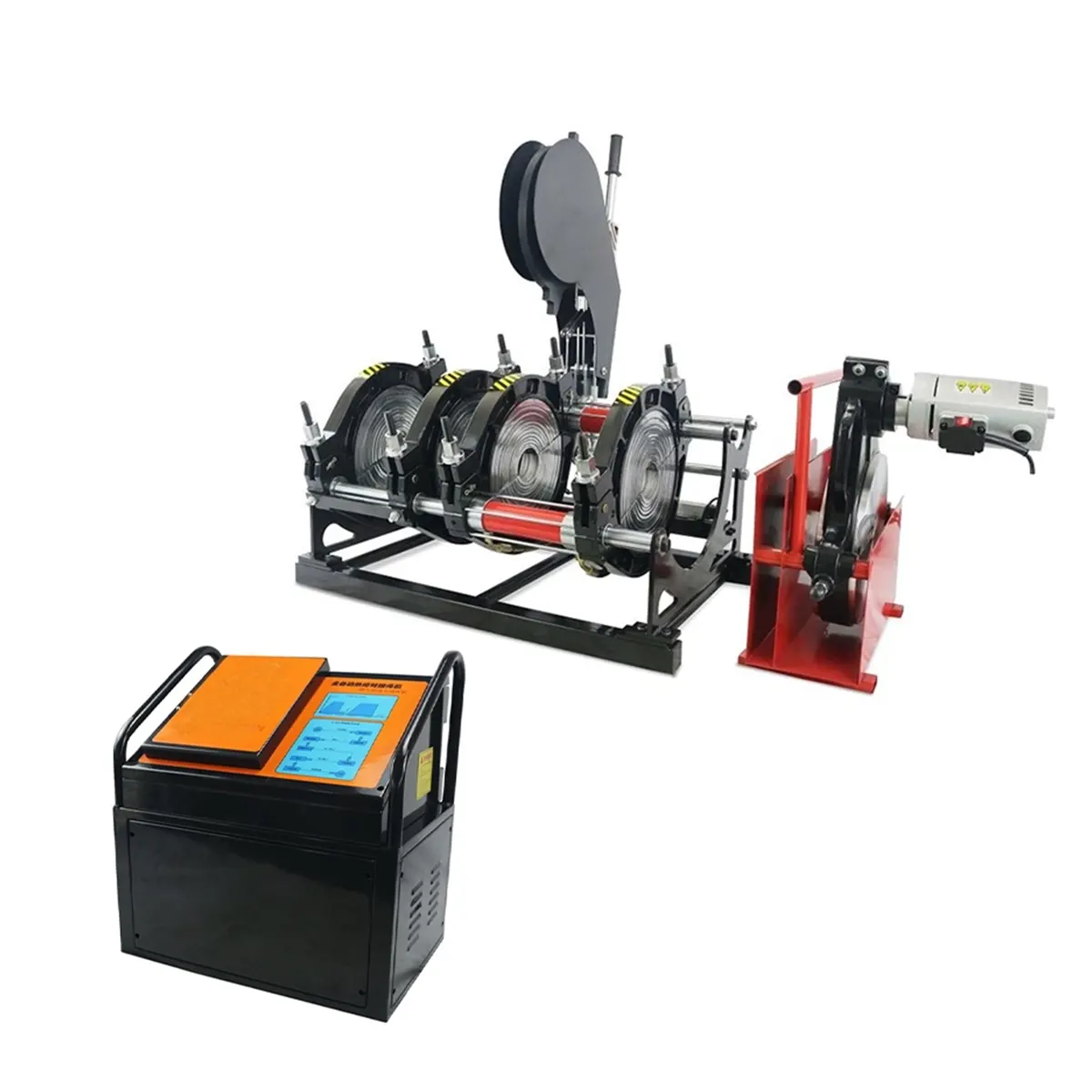
Modern CNC automatic butt fusion welding machines remove much of the manual calculation burden. These systems store welding protocols in memory and automatically adjust pressure, heating time, and cooling cycles based on input parameters. However, even automatic machines require correct initial setup: the operator must input the correct pipe material, diameter, and standard requirements. Regular calibration of sensors and position encoders is essential to maintain configuration accuracy.
Temperature Monitoring and Data Logging
Configured machines should include temperature monitoring at multiple points: heating plate surface, ambient environment, and in some cases, the pipe interface. Data logging capability, as outlined in PE fusion traceability requirements, records the actual parameters used during each weld. This configuration allows for quality verification and provides documentation for regulatory compliance.
Machine Configuration by Pipe Diameter Range
Different diameter ranges require fundamentally different machine configurations. Selecting the correct machine type for the pipe size is the first and most important configuration decision.
| Diameter Range | Recommended Machine Type | Key Configuration Consideration |
|---|---|---|
| 20 mm – 250 mm | Manual or Automatic | Lightweight frame, manual clamp force |
| 250 mm – 800 mm | Hydraulic or CNC Automatic | Hydraulic clamping, insert adjustability |
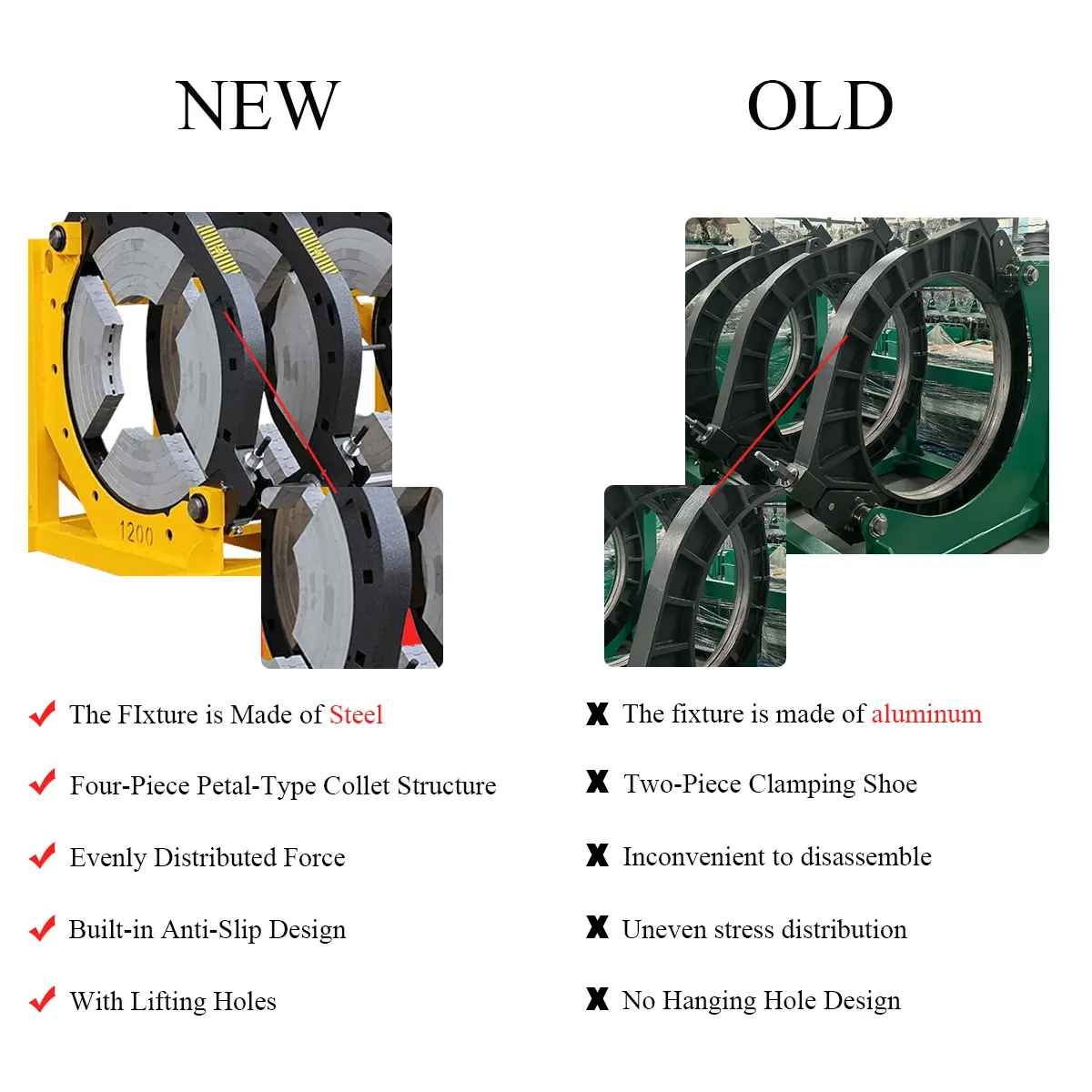
| 800 mm – 1600 mm | Hydraulic with powered frame | Multi-segment inserts, crane lift points |
| 1600 mm – 2500 mm | Heavy-duty hydraulic | Split frame, independent hydraulic stations |
Manual Machine Configuration for Field Flexibility
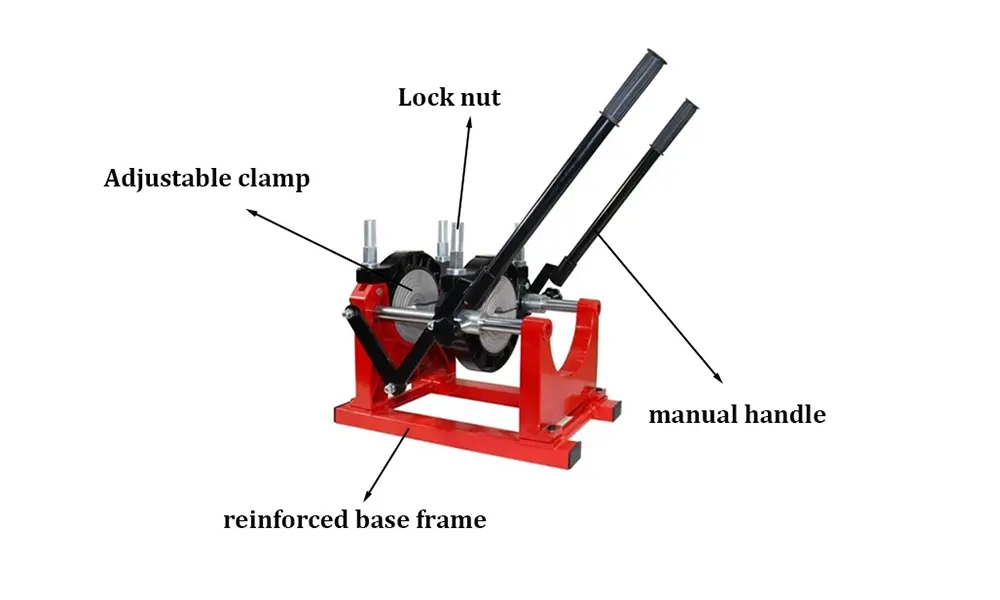
Manual butt fusion machines remain popular for smaller diameters and remote sites where power access is limited. The configuration of a manual machine centers on the lever arm ratio and clamp tightening sequence. Operators must be trained to apply consistent torque to all clamp bolts, working in a cross-pattern to achieve uniform pressure distribution. The manual machine frame must be rigid enough to resist bending under full clamping force, and the guide rods must be kept clean and lubricated.
Multi-Angle Fitting Machine Configuration
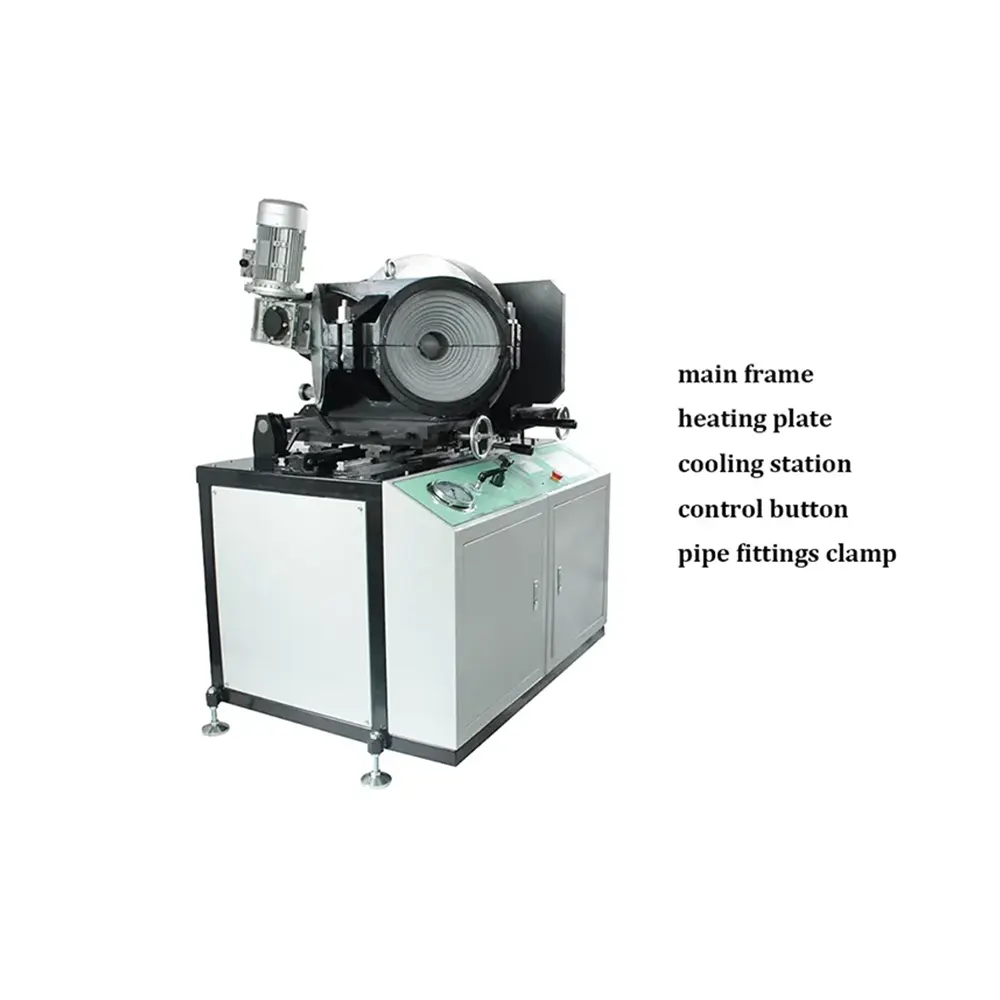
Fabricated fittings require specialized machine configurations. Multi-angle pipe fitting welding machines allow the operator to set segmented bends, tees, and crosses at precise angles. Configuration involves setting the individual clamp positions along a circular track, adjusting the heating plate orientation, and calculating the required fusion pressure for each joint interface separately. These machines must be configured with a high degree of geometric precision to ensure fitting accuracy within specified tolerances.
Electrofusion Machine Configuration Considerations
While fundamentally different from butt fusion, electrofusion machines also require correct configuration. The electrofusion control unit must be set to deliver the correct voltage and fusion time based on the fitting manufacturer’s specifications. Input voltage tolerance, ambient temperature compensation, and traceability coding should all be configured before welding begins. Reference the PE electrofusion equipment standard for detailed requirements.
Power Supply and Environmental Configuration Factors
Site power quality directly impacts machine performance. Generator sets must be sized to handle the starting current of heating plates and hydraulic motors. Voltage drop under load can cause temperature fluctuations that affect joint quality. Machines operating in cold environments require configuration adjustments: longer heating times, pre-warming of the heating plate, and protection of the fusion zone from wind and precipitation. High-altitude sites may require calibration adjustments due to reduced air density affecting heat transfer.
Common Configuration Errors to Avoid
- Using incorrect insert reducers for the pipe diameter
- Setting fusion pressure without calculating pipe cross-sectional area
- Operating with a contaminated or damaged heating plate surface
- Neglecting to verify temperature calibration before starting work
- Skipping the bead-up verification step that confirms proper configuration
- Using the same configuration parameters for different material grades
JQ-Fusion Machine Configuration Support
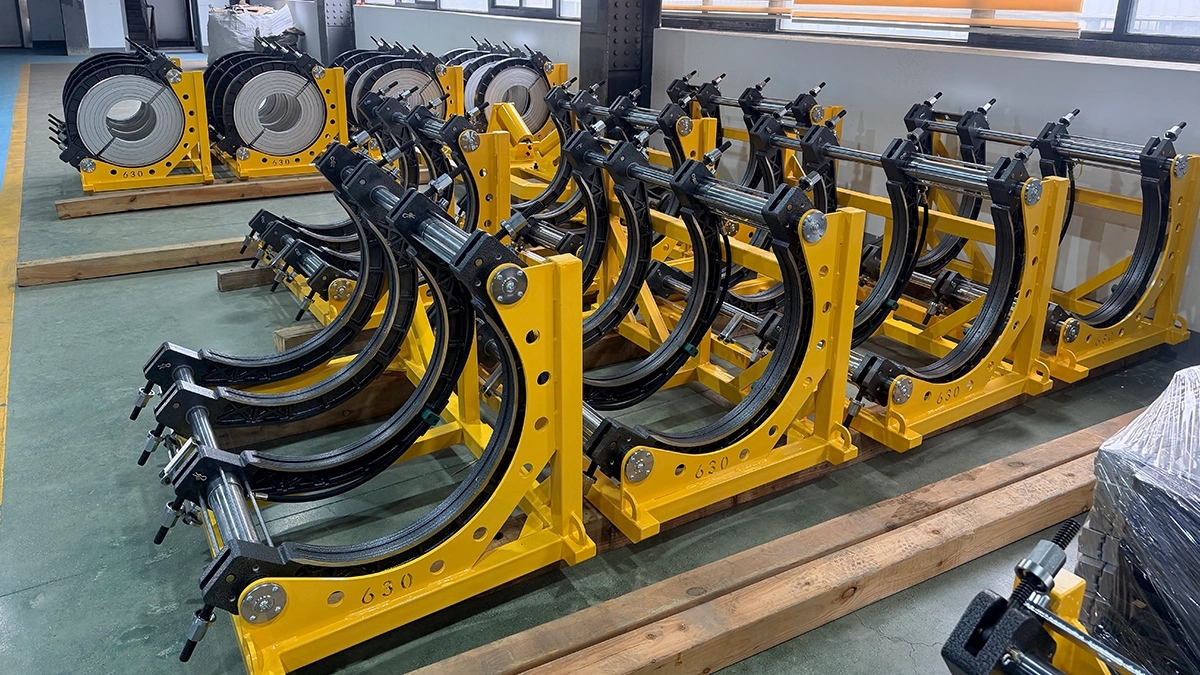
At JQ-Fusion, we understand that proper machine configuration is essential for project success. Our range includes manual, hydraulic, and CNC automatic butt fusion welding machines covering diameters from 20 mm to 2500 mm. Each machine is supplied with detailed configuration guidance, and our technical team provides support to help operators achieve optimal setup for their specific pipe materials and site conditions. We encourage all users to consult the PPI butt fusion procedure for generic joining protocols that complement machine-specific settings.
Operator Qualification and Configuration Verification
Even the best-configured machine cannot compensate for an unqualified operator. Projects following ASTM F2620 heat fusion standards require documented operator qualification. Configuration verification should include a trial weld that is destructively tested to confirm that the machine setup produces acceptable joint quality. The bend-back test or side-bend test provides immediate feedback on whether the configuration parameters are correct for the specific material and conditions.
Maintaining Configuration Integrity Over Time
Machine configuration is not a one-time activity. Daily checks should include temperature verification with a calibrated contact thermometer, inspection of clamp inserts for wear, and confirmation that hydraulic pressure readings match calculated values. Periodic recalibration of pressure transducers, temperature controllers, and position sensors ensures that the machine continues to operate within specified tolerances. Keeping a log of machine configuration changes and calibration events supports quality assurance and helps identify trends that may indicate maintenance needs.
A well-configured HDPE pipe welding machine is the difference between a joint that lasts decades and one that fails prematurely. By understanding the role of each component, matching the setup to the specific pipe and site conditions, and maintaining configuration discipline throughout the project lifecycle, contractors can achieve the strong, leak-free fusion joints that modern infrastructure demands. For further guidance on machine selection and configuration, explore the resources available at JQ-Fusion support center.



