
Pipe fusion is the cornerstone of modern HDPE piping systems, creating leak-proof, monolithic joints that outperform traditional mechanical connections. Whether you’re working on municipal water supply, gas distribution, mining slurry lines, or industrial chemical transfer, selecting the right equipment from the different types of pipe fusion machines directly impacts weld integrity, project efficiency, and long-term system reliability. This guide breaks down each category, helping contractors, distributors, and project managers make informed decisions based on pipe diameter, job site conditions, and performance requirements.
Understanding the Core Categories of Pipe Fusion Equipment
Pipe fusion technology has evolved significantly, giving rise to several specialized machine types. Each is engineered for specific applications, pipe sizes, and operational environments. The primary classification revolves around the joining method — butt fusion and electrofusion — with further subdivisions based on automation level, power source, and frame design. Below, we explore each category in detail, highlighting operational principles, typical use cases, and key advantages.
Butt Fusion Machines: The Industry Workhorse
Butt fusion is the most widely adopted method for joining HDPE pipes, particularly in medium to large diameter applications. The process involves heating pipe ends against a temperature-controlled plate until molten, then pressing them together under controlled pressure to form a homogeneous joint. Butt fusion welding machines come in three main configurations, each suited to different operational scales and precision requirements.
Manual Butt Fusion Machines
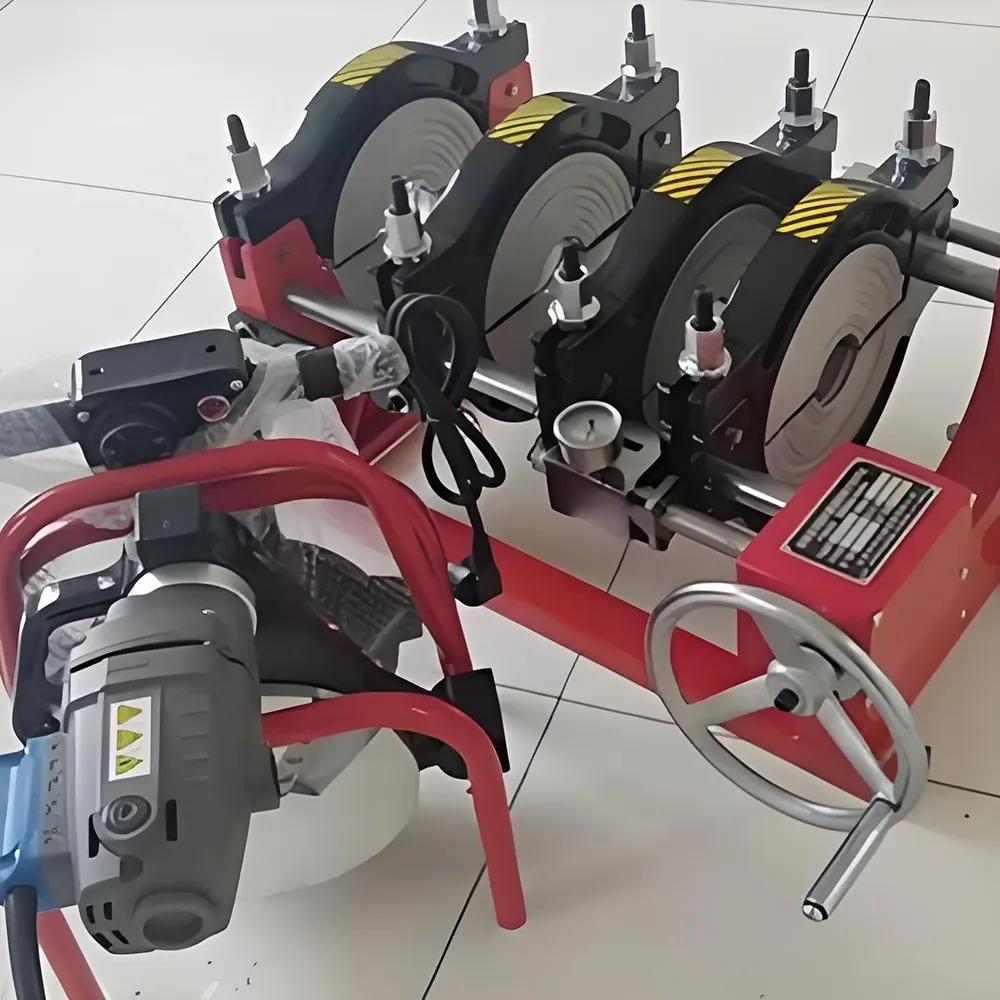
Manual machines are the most economical and portable option, ideal for small-diameter pipes typically ranging from 40mm to 315mm. The operator manually controls clamping, facing, heating, and fusion pressure using mechanical levers. These machines are lightweight and field-friendly, requiring no external power source beyond the heating plate. They are commonly used in rural water supply projects, irrigation systems, and small-scale plumbing installations where portability and cost-effectiveness are priorities. While they demand skilled operators to maintain consistent ISO 21307 butt fusion procedures, modern manual machines feature precise alignment clamps and calibrated pressure indicators that help maintain weld quality.
Hydraulic Butt Fusion Machines
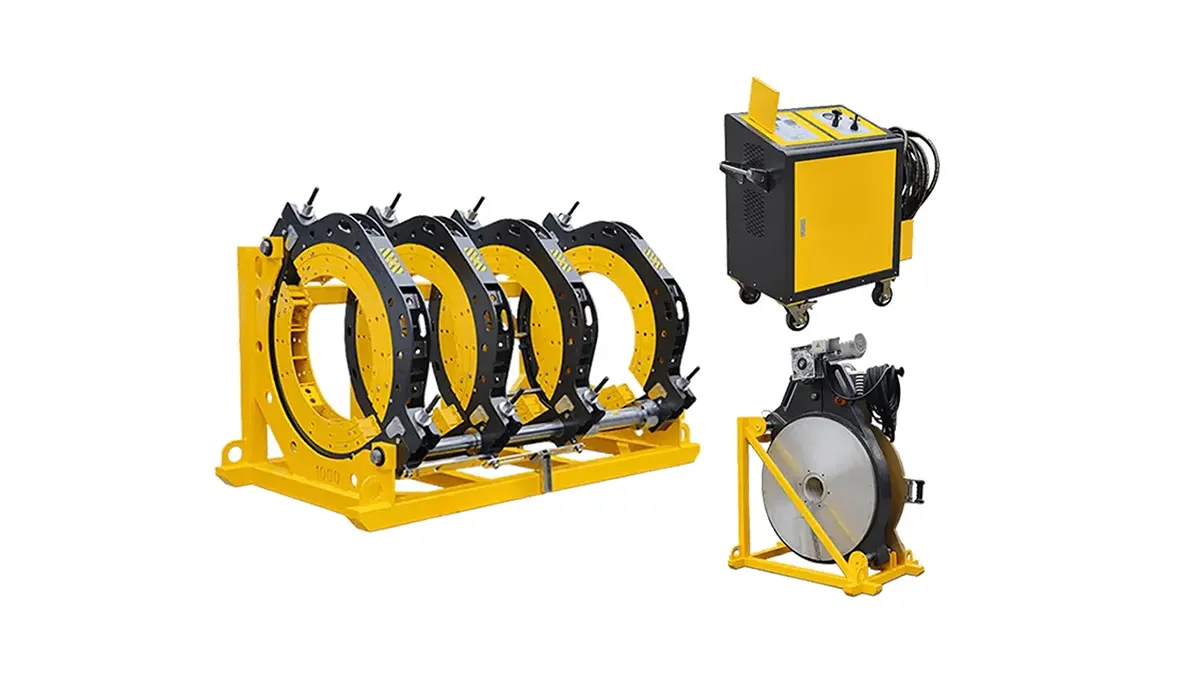
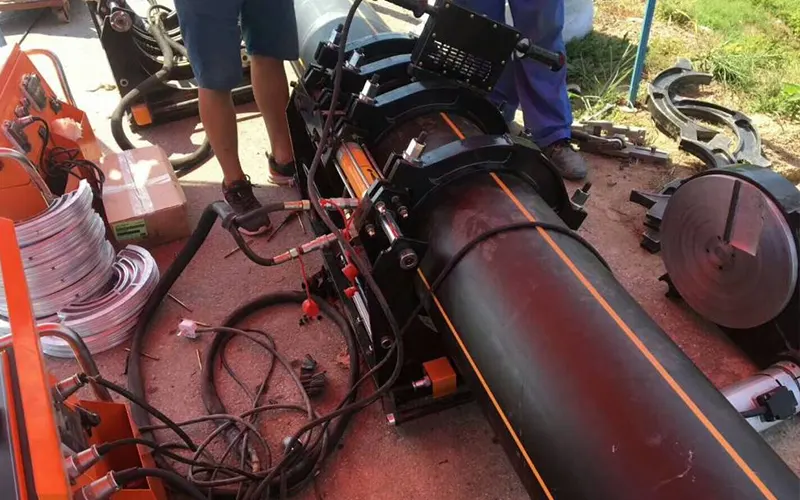
For medium to large diameter pipes (200mm to over 2000mm), hydraulic butt fusion machines provide the power and control necessary for consistent, high-strength welds. A hydraulic power unit drives the moving carriage, ensuring smooth and uniform pressure application — critical for larger pipe cross-sections where manual force is insufficient. These machines often include an integrated trimmer for precise end-facing and a PTFE-coated heating plate for even temperature distribution. Applications include main water transmission lines, gas distribution networks, and industrial slurry pipelines. The hydraulic system minimizes operator fatigue and significantly reduces the risk of misalignment, making it the preferred choice for infrastructure projects demanding repeatable, documented weld quality.
CNC Automatic Butt Fusion Machines
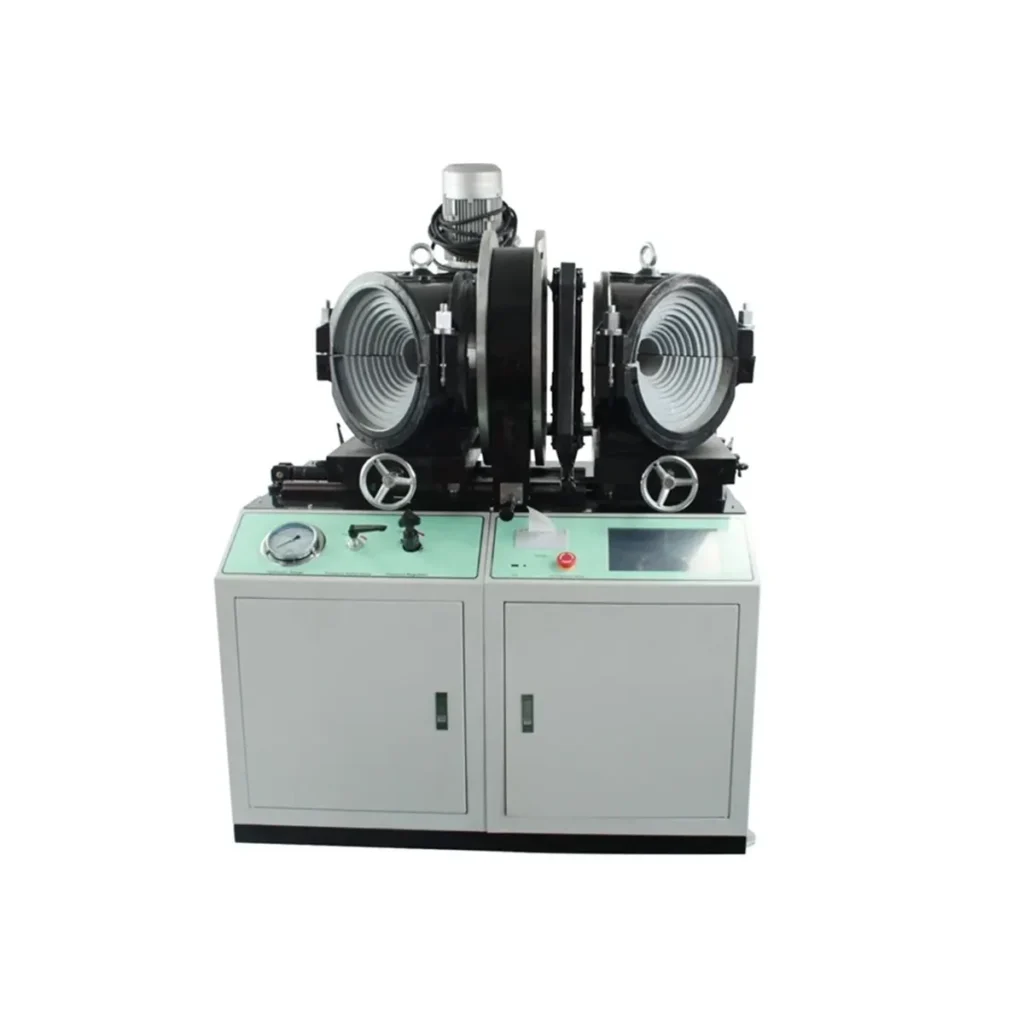
CNC automatic butt fusion machines represent the pinnacle of fusion technology, integrating programmable logic controllers (PLC) that automate the entire welding cycle. The operator simply inputs pipe parameters, and the machine manages heating time, soak time, heater plate removal, and fusion pressure according to preset standards. These machines eliminate human variability, delivering exceptionally consistent joints with full data logging capabilities for quality assurance and traceability. They are indispensable in nuclear power plants, large-scale gas projects, and any application where documented compliance with ASTM F2620 heat fusion standards is mandatory. Touchscreen interfaces, barcode scanning for pipe traceability, and USB data export are common features that streamline project documentation.
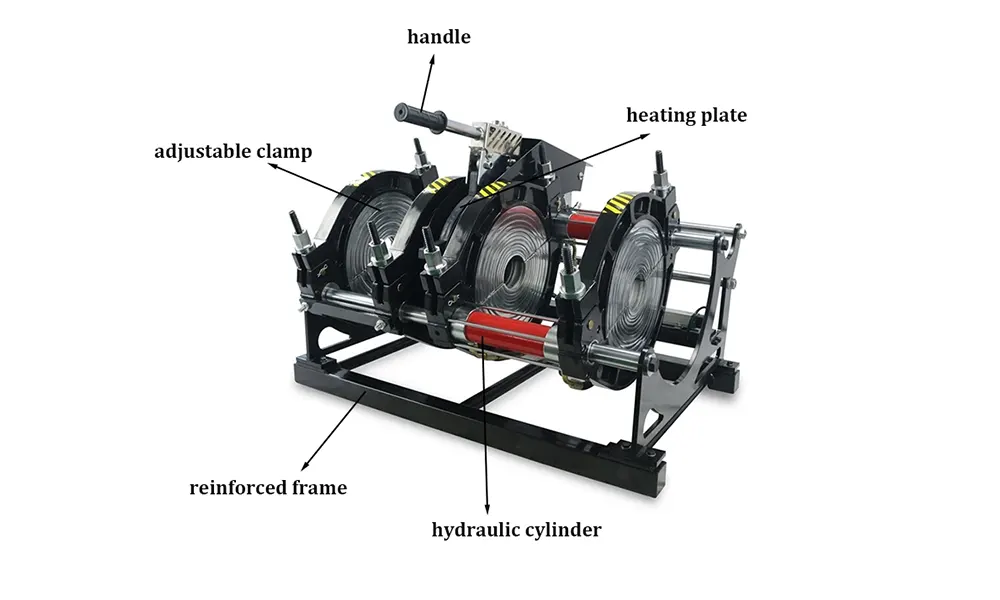
Electrofusion Machines: Precision for Complex Joints
Electrofusion employs specialized fittings with embedded heating coils. An electrofusion machine supplies a precisely controlled electric current to melt the fitting and pipe surface together, forming a reliable joint. This method excels in tight excavation zones, trenchless pipe repair, and connections where butt fusion equipment cannot physically fit. Electrofusion is also the go-to solution for tee connections, saddle branches, and joining pipes of different wall thicknesses or grades. Modern electrofusion processors automatically read fitting barcodes or RFID tags, setting the correct fusion parameters to prevent operator error. They are widely used in gas distribution for service connections and in congested utility corridors.
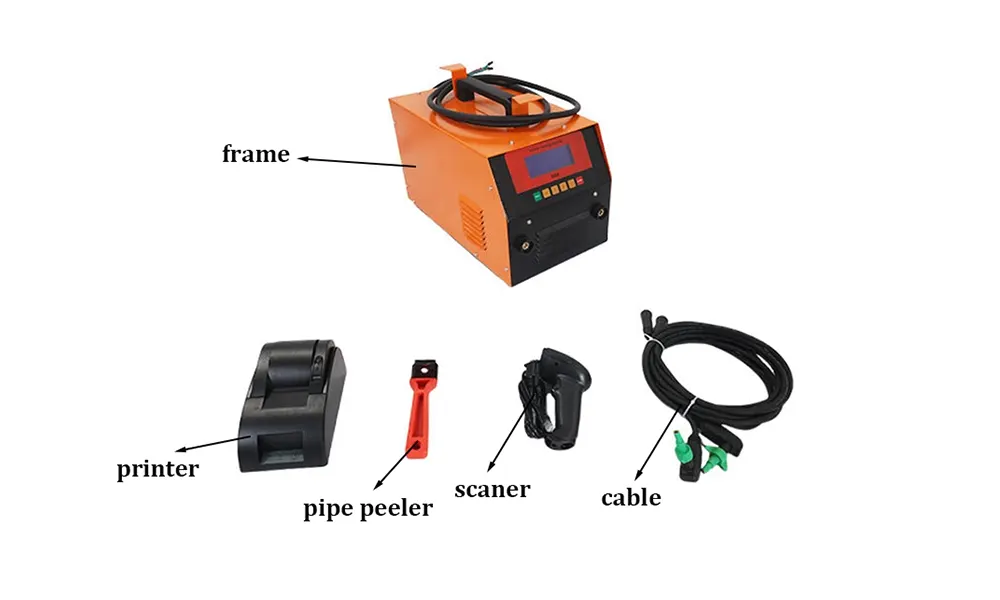
Multi-Angle Pipe Fitting Machines: Specialized Segment Welding
Designed for fabricating HDPE fittings such as elbows, tees, wyes, and crosses, multi-angle machines allow precise angular welding of pipe segments. These machines feature adjustable clamps with multi-axis rotation, enabling welders to join pipe sections at exact angles from 0° to 90° and beyond. They are essential in fitting workshops and prefabrication facilities that supply custom HDPE components for pipeline projects. Models range from compact 315mm units to large 1600mm versions capable of producing heavy-duty industrial fittings.
| Machine Type | Pipe Range | Power Source | Automation Level | Best For |
|---|---|---|---|---|
| Manual Butt Fusion | 40mm – 315mm | Electric (heating plate) | Manual operation | Small projects, rural water, irrigation |
| Hydraulic Butt Fusion | 200mm – 2000mm+ | Hydraulic + Electric | Semi-automated | Infrastructure, water mains, gas lines |
| CNC Automatic Butt Fusion | 160mm – 1200mm+ | Electric + Hydraulic | Fully automated | Nuclear, critical gas, QA-intensive projects |
| Electrofusion | 20mm – 800mm+ | Electric (processor unit) | Semi / Fully automated | Tight spaces, repairs, service connections |
| Multi-Angle Fitting | 90mm – 1600mm | Electric + Hydraulic | Manual / Semi-automated | Fitting fabrication, prefabrication shops |
Key Factors for Choosing the Right Machine
Selecting among the different types of pipe fusion machines requires evaluating several critical factors beyond just pipe diameter. Making the right choice ensures weld integrity, operational efficiency, and long-term cost-effectiveness.
- Pipe Diameter and Wall Thickness: This is the primary determinant. Manual machines handle smaller diameters efficiently, while hydraulic and CNC machines are necessary for larger, thicker-walled pipes that require substantial fusion force. Always check the machine’s specified clamping range and ensure it covers the DR (Dimension Ratio) ratings of your pipes.
- Project Scale and Production Rate: For high-volume installations, CNC automatic machines dramatically increase throughput by reducing cycle times and minimizing operator fatigue. For occasional repairs or small installations, a manual or compact hydraulic unit may be more cost-effective.
- Job Site Conditions: Remote locations without reliable power may favor manual machines or hydraulic units with generator compatibility. Confined spaces like trenches or inside existing pipelines often necessitate electrofusion equipment due to its compact nature and ability to join pipes without axial movement.
- Operator Skill Level: Manual machines demand experienced technicians who understand PPI butt fusion procedure parameters. CNC machines reduce reliance on operator judgment, making them suitable for projects where consistent quality must be maintained across multiple work crews with varying experience levels.
- Quality Documentation Requirements: If your project requires traceable weld records for regulatory compliance, CNC automatic and advanced electrofusion machines with data logging are essential. They automatically record time, temperature, and pressure curves for every joint — invaluable for nuclear, gas, and large municipal contracts.
- Budget and Total Cost of Ownership: Consider not just the purchase price, but also maintenance costs, spare parts availability, training requirements, and expected service life. A higher initial investment in a durable, well-supported machine often yields lower total cost of ownership over years of operation.
Industry Standards and Quality Compliance
Reputable pipe fusion equipment should conform to internationally recognized standards that govern PE butt fusion equipment standard specifications. Key standards include ISO 12176 series for fusion equipment, ISO 21307 for butt fusion jointing procedures, and ASTM F2620 for heat fusion joining practices in North America. Compliance ensures that heating plates maintain uniform temperature within tight tolerances, clamps provide adequate alignment, and hydraulic systems deliver consistent pressure. When sourcing equipment, verifying adherence to these benchmarks protects your investment and supports regulatory approval for critical infrastructure projects.
About JQ-Fusion
JQ-Fusion is a professional manufacturer specializing in HDPE pipe welding machines, providing reliable butt fusion solutions for global infrastructure projects. With years of industry experience, the company focuses on the development and production of manual, hydraulic, and CNC automatic butt fusion welding machines, covering a wide range of pipe sizes from small to large diameters. Their products are widely used in water supply, gas distribution, mining, and industrial pipeline systems. Supported by advanced manufacturing facilities, strict quality control processes, and a responsive service team, JQ-Fusion has built long-term partnerships with distributors and contractors worldwide. Contact their team to discuss your specific project requirements and explore tailored solutions that meet international standards.
Final Thoughts on Selecting Your Fusion Equipment
Understanding the different types of pipe fusion machines available is the first step toward building a reliable, efficient piping system. Each category — manual, hydraulic, CNC automatic, electrofusion, and multi-angle — serves distinct purposes within the HDPE piping ecosystem. By carefully matching machine capabilities to your pipe specifications, job site realities, and quality assurance needs, you position your projects for success. Investing in properly specified, standards-compliant equipment pays dividends through fewer joint failures, faster installation cycles, and lower lifecycle costs. Whether you are a contractor expanding your fleet or a distributor sourcing equipment for clients, thorough evaluation of these factors ensures the right machine ends up on the right job.
Explore the complete range of pipe fusion solutions at JQ-Fusion Welding — your trusted partner in HDPE joining technology.



