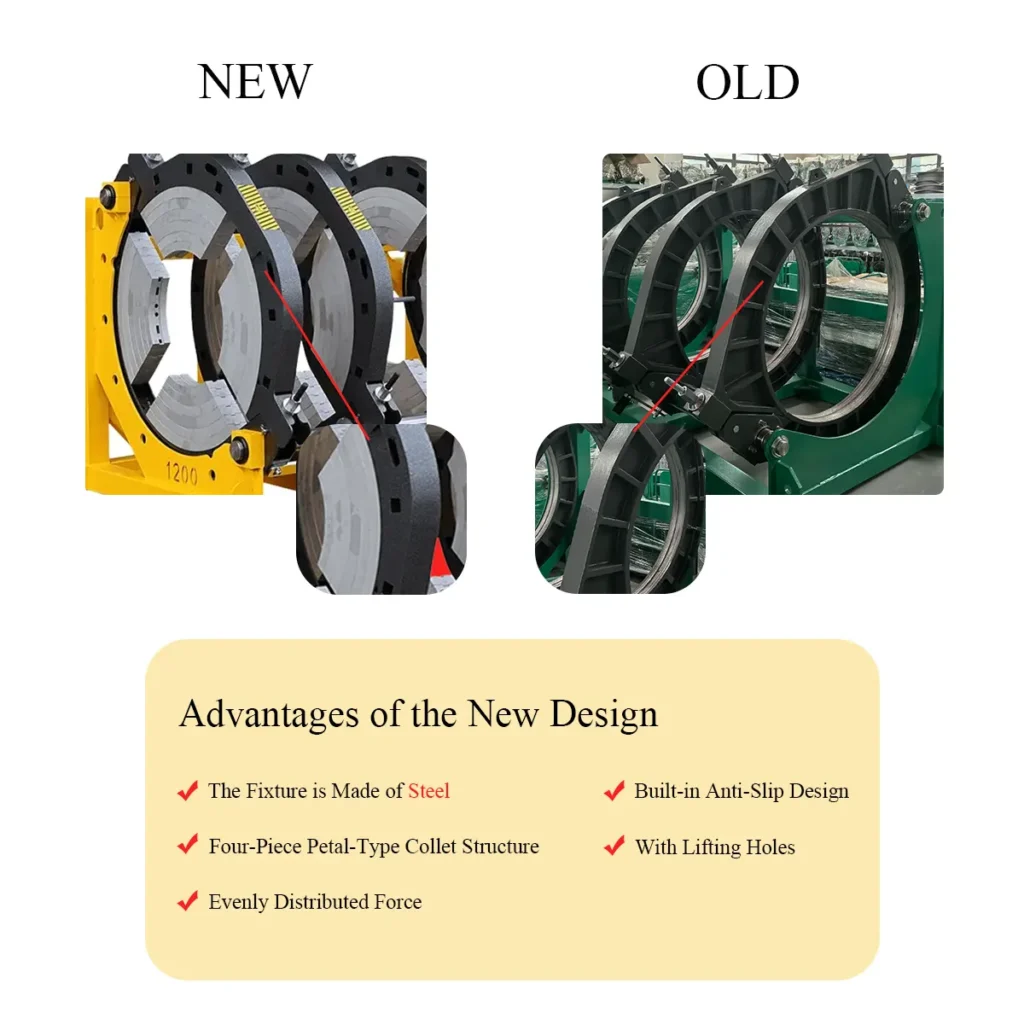
Achieving a reliable, leak-free joint in High-Density Polyethylene (HDPE) piping systems depends on one critical variable: HDPE pipe welding pressure by pipe size. The butt fusion process requires precise control of force to ensure the melted pipe ends intermix correctly, creating a homogeneous bond as strong as the pipe itself. Whether you are working on municipal water supply, gas distribution, or industrial slurry lines, calculating the correct welding pressure is not just a recommendation—it is a fundamental requirement for joint integrity and long-term system performance in accordance with global standards like ISO 21307 butt fusion procedures.
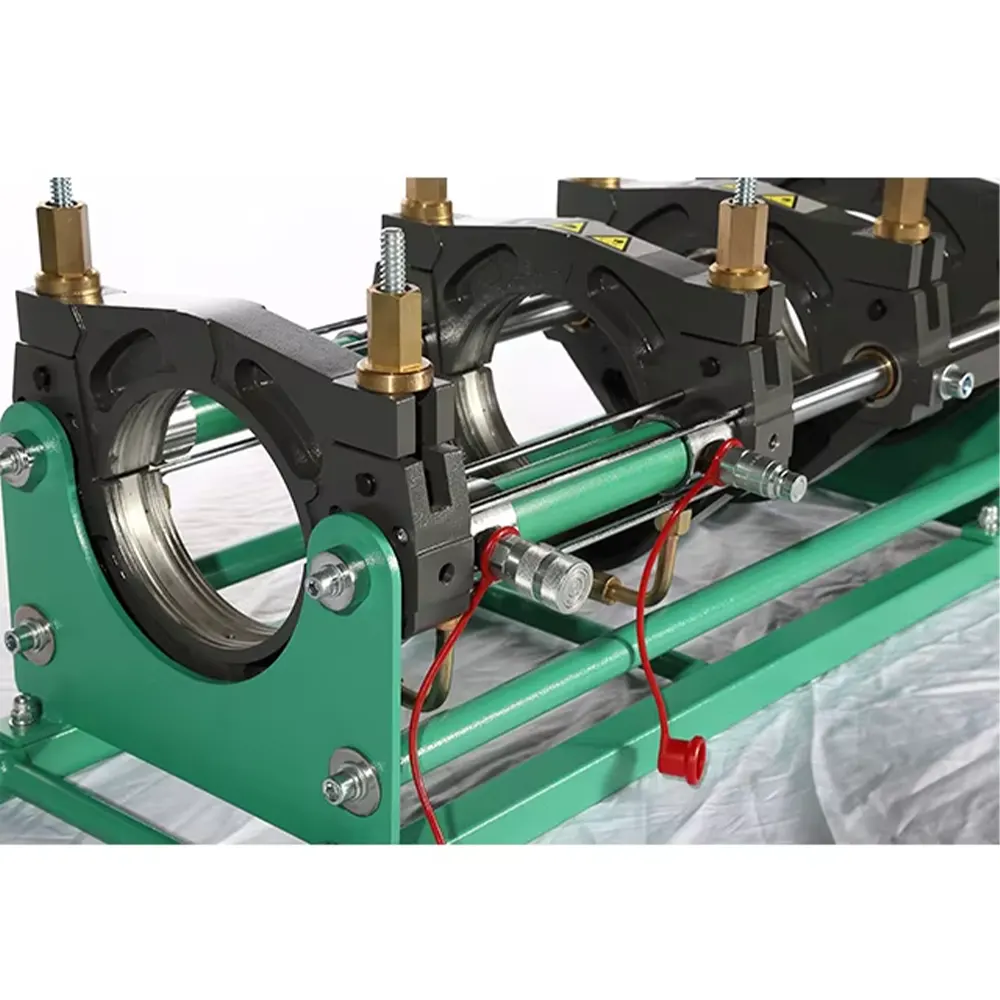
Why Accurate Welding Pressure Matters
The welding pressure in butt fusion determines the interfacial flow and mixing of molten polyethylene. Too little pressure results in insufficient mixing and a weak, brittle joint. Too much pressure squeezes out the molten material needed for bonding, creating a cold joint that is prone to failure under stress. The target pressure, often referred to as interfacial pressure, is typically 0.15 MPa (1.5 bar) to 0.22 MPa (2.2 bar) depending on the specific PE material grade, but this value must be translated into a machine-specific force. Understanding how to convert this generic standard into a real-world setting on your welding machine frame is essential for every pipeline contractor.
How to Determine HDPE Pipe Welding Pressure by Pipe Size
The hydraulic or mechanical force required at the machine is a direct function of the pipe’s cross-sectional area. The PPI technical guidance provides a standard formula for this calculation. The key steps involve calculating the pipe wall area, subtracting the drag force of the machine carriage, and applying the proper cylinder conversion. Below is a simplified breakdown of the theoretical interfacial force required for HDPE pipe welding pressure by pipe size, based on a standard dimensional ratio (SDR 11) and a target interfacial pressure of 0.15 MPa.
| Pipe Diameter (mm) | SDR 11 Wall Thickness (mm) | Weld Area (mm²) | Theoretical Weld Force (N) | Approx. Hydraulic Pressure (bar)* |
|---|---|---|---|---|
| 63 | 5.8 | 1,041 | 156 | Consult Manual |
| 110 | 10.0 | 3,140 | 471 | Consult Manual |
| 160 | 14.6 | 6,670 | 1,000 | ~ 2.0 |
| 250 | 22.7 | 16,210 | 2,432 | ~ 4.8 |
| 315 | 28.6 | 25,730 | 3,860 | ~ 7.6 |
| 400 | 36.4 | 41,560 | 6,234 | ~ 12.2 |
| 500 | 45.5 | 64,960 | 9,744 | ~ 19.1 |
| 630 | 57.3 | 103,100 | 15,465 | ~ 30.3 |
*Note: Approximate hydraulic pressure for a standard 50mm cylinder (19.63 cm² area). Actual machine pressure depends on cylinder diameter and carriage drag. Always use the manufacturer’s calculation chart or integrated software.
Key Parameters and Calculation Steps
To calculate the correct setting for your specific project, you must follow the procedure outlined in the PE butt fusion process documentation. The drag pressure of the machine must first be measured by moving the carriage with the pipes loaded but not clamped against the heater. This drag value is added to the theoretical fusion pressure to obtain the final gauge reading.
- Measure Drag Pressure: Slowly move the carriage and record the gauge reading. This compensates for friction within the machine frame.
- Calculate Weld Area: Area = (OD – wall thickness) × wall thickness × π.
- Calculate Force: Force = Weld Area (mm²) × 0.15 N/mm².
- Convert to Gauge Pressure: Gauge Pressure = (Force / Cylinder Area) + Drag Pressure.
Machine Selection for Correct Pressure Application
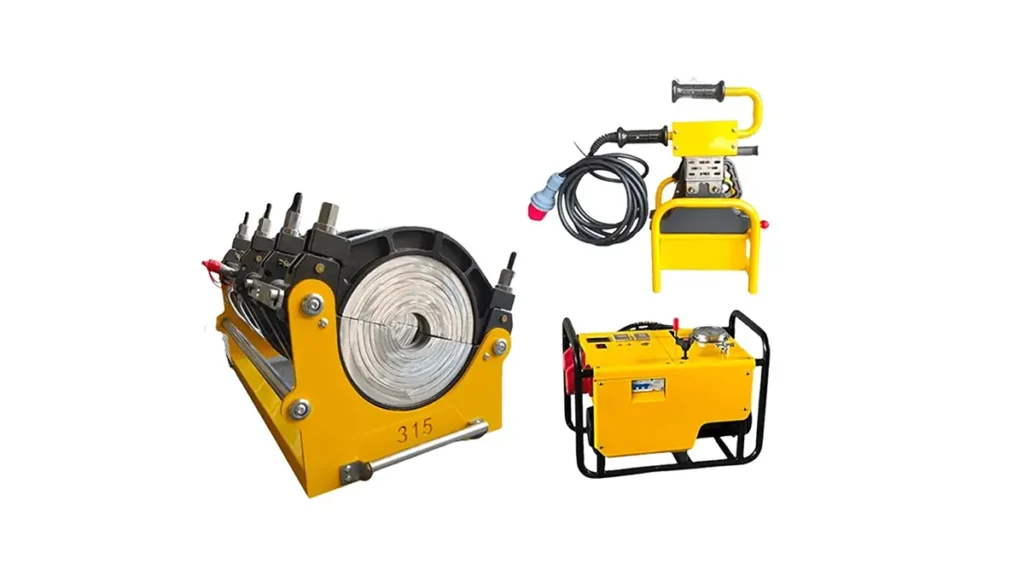
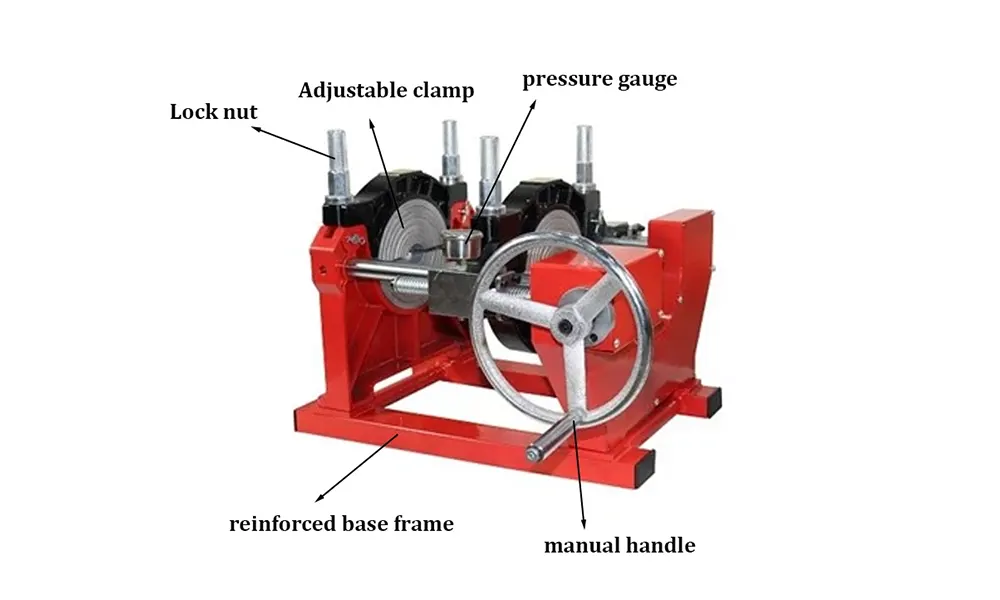
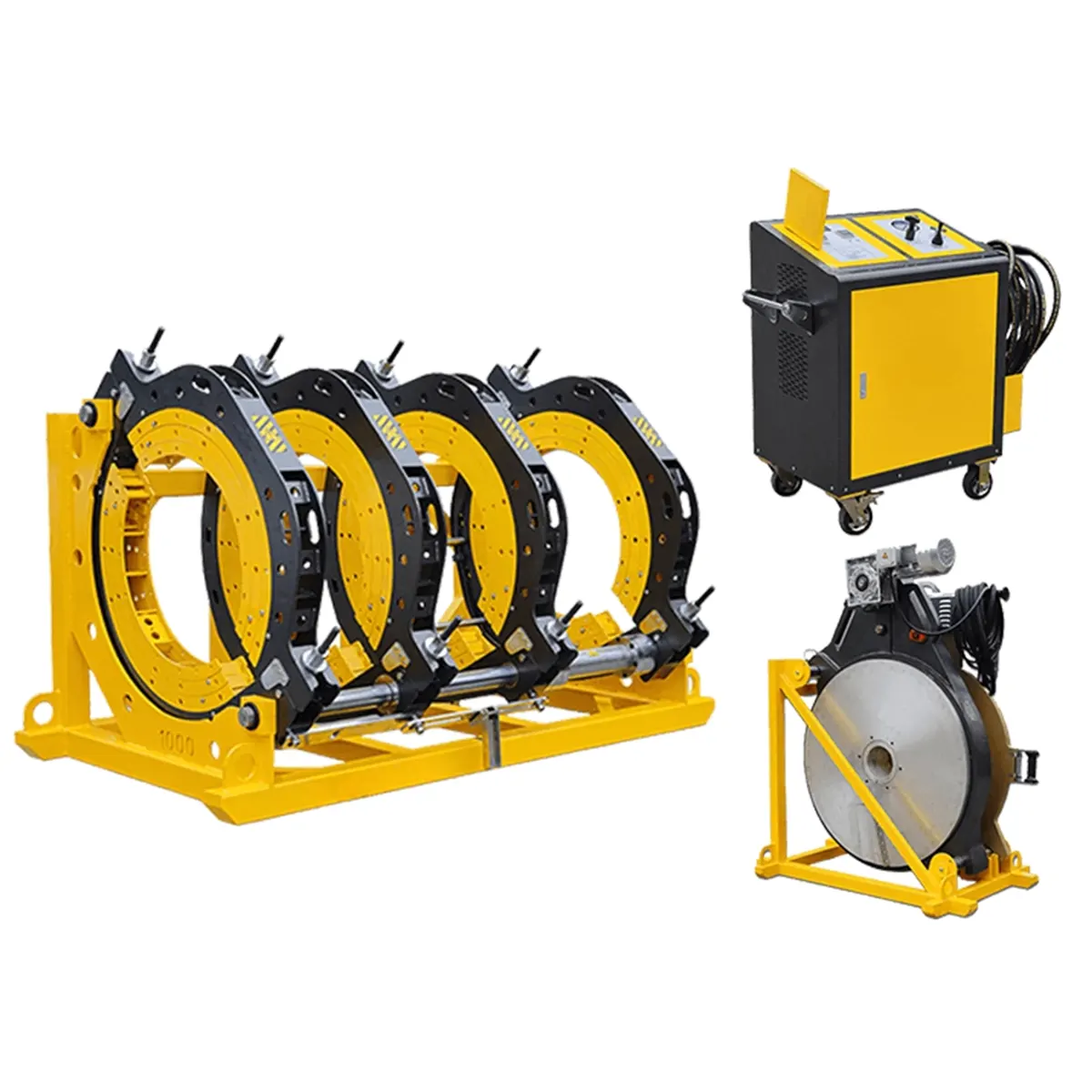
Applying the calculated HDPE pipe welding pressure by pipe size requires a machine capable of generating and holding the required force. Manual machines often use a lever arm, making exact pressure control difficult for larger sizes, though they work well for small diameter pipe (manual butt fusion welding machines). For consistent results, especially on pipe diameters above 200mm, hydraulic machines are the industry standard.
| Machine Type | Typical Size Range | Pressure Control | Best Application |
|---|---|---|---|
| Manual | 50mm – 160mm | Lever Torque | Short, small-bore service lines |
| Hydraulic | 160mm – 1200mm+ | Manual Valve & Gauge | General municipal & gas distribution |
| CNC Automatic | 160mm – 630mm+ | Automated Servo/Hydraulic | Critical infrastructure, data-logged projects |
The Role of Data Logging and Automation
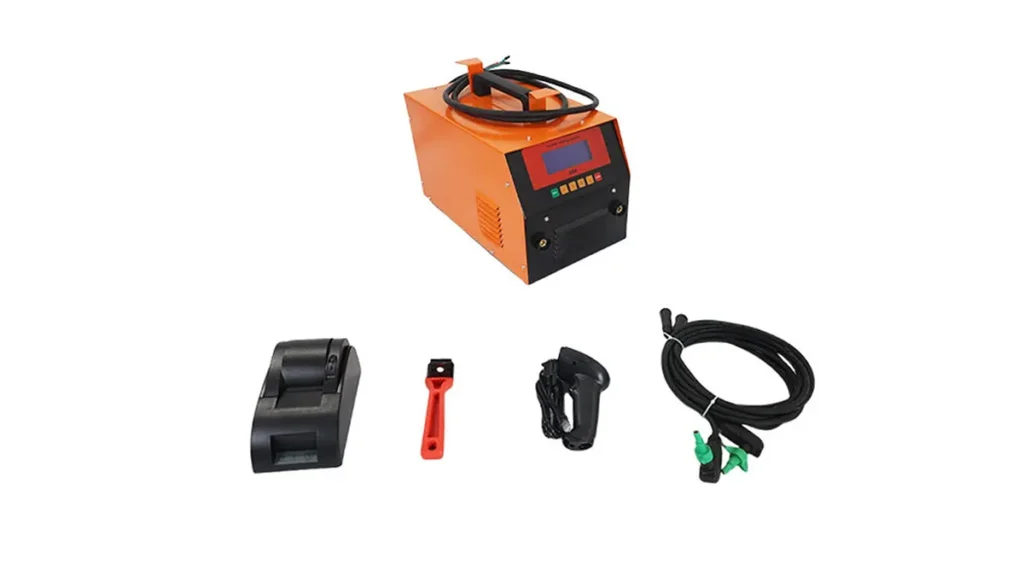
Modern infrastructure projects increasingly demand traceability. A CNC automatic butt fusion machine automatically calculates and applies the exact HDPE pipe welding pressure by pipe size, eliminating manual calculation errors. These machines monitor the fusion cycle in real-time and generate a joint report conforming to PE butt fusion equipment standard requirements. For large-diameter water mains or high-pressure gas lines, this level of control is indispensable.
Practical Tips for Field Operation
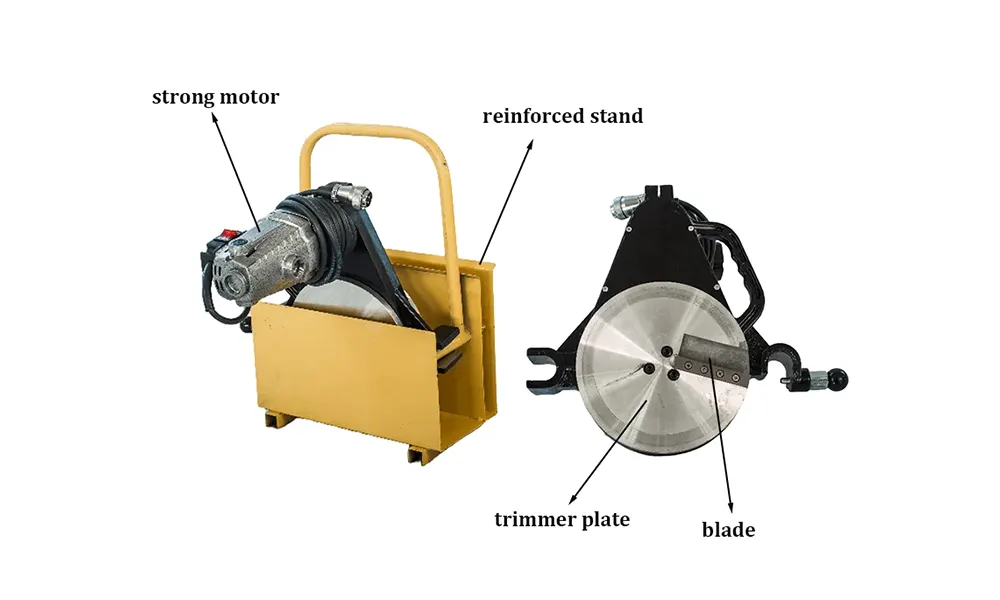
- Always check the machine calibration. A misaligned clamp or worn carriage can significantly alter the effective interfacial pressure.
- Account for ambient temperature. Welding in extreme cold may require adjustments to cool-down times and heating plate temperature, though the interfacial pressure target generally remains constant.
- Verify the pipe material. PE100 and PE4710 have specific melt flow characteristics; always refer to the pipe manufacturer’s recommendation, which is derived from ISO 4427 PE water pipes and related material standards.
Common Mistakes in Pressure Calculation
One frequent error is applying the gauge value from a previous job on a different machine. Since hydraulic cylinders vary in diameter, the same gauge reading on two different machines produces vastly different actual forces. Another mistake is neglecting carriage drag, which can be substantial on larger machines or those operating on uneven terrain. Following a strict procedure for every setup ensures the integrity of each fusion joint and compliance with the ASTM F2620 heat fusion standard.
JQ-Fusion is a professional manufacturer specializing in HDPE pipe welding machines, providing reliable butt fusion solutions for global infrastructure projects. Our product range covers manual, hydraulic, and CNC automatic systems designed to handle the precise demands of HDPE pipe welding pressure by pipe size across diameters from 63mm up to 2250mm.