Understanding the HDPE pipe welder working principle is essential for contractors, engineers, and project managers involved in modern pipeline infrastructure. High-Density Polyethylene (HDPE) pipes have become the preferred choice for water supply, gas distribution, and industrial applications due to their flexibility, corrosion resistance, and long service life. The integrity of these piping systems depends heavily on the welding process, which creates homogeneous, leak-proof joints that are often stronger than the pipe itself.
The core of any butt fusion welding machine lies in its ability to precisely heat, melt, and fuse two pipe ends together under controlled pressure. Unlike mechanical connections, HDPE welding produces a monolithic joint without the need for additional sealants or adhesives. This article explores how HDPE pipe welders work, discusses key welding methods, and explains the critical parameters that ensure durable, reliable pipeline systems.
Core Principles of HDPE Pipe Welding
HDPE is a thermoplastic material, meaning it can be repeatedly softened by heating and hardened by cooling. The HDPE pipe welder working principle leverages this thermoplastic behavior. When HDPE pipe surfaces are heated to their melting point (typically between 200°C and 230°C), the polymer chains become mobile. Under pressure, these chains intermingle and form a fusion bond upon cooling. This process is known as heat fusion welding and is recognized as the gold standard for joining polyethylene pipes.
The process requires precise control over three critical parameters: temperature, pressure, and time. Any deviation can result in weak joints, leaks, or premature failure. Professional-grade welders incorporate calibrated heating plates, hydraulic or manual pressure systems, and digital control units to maintain consistency throughout the hydraulic butt fusion machine operation.
Butt Fusion Welding: The Most Common Method
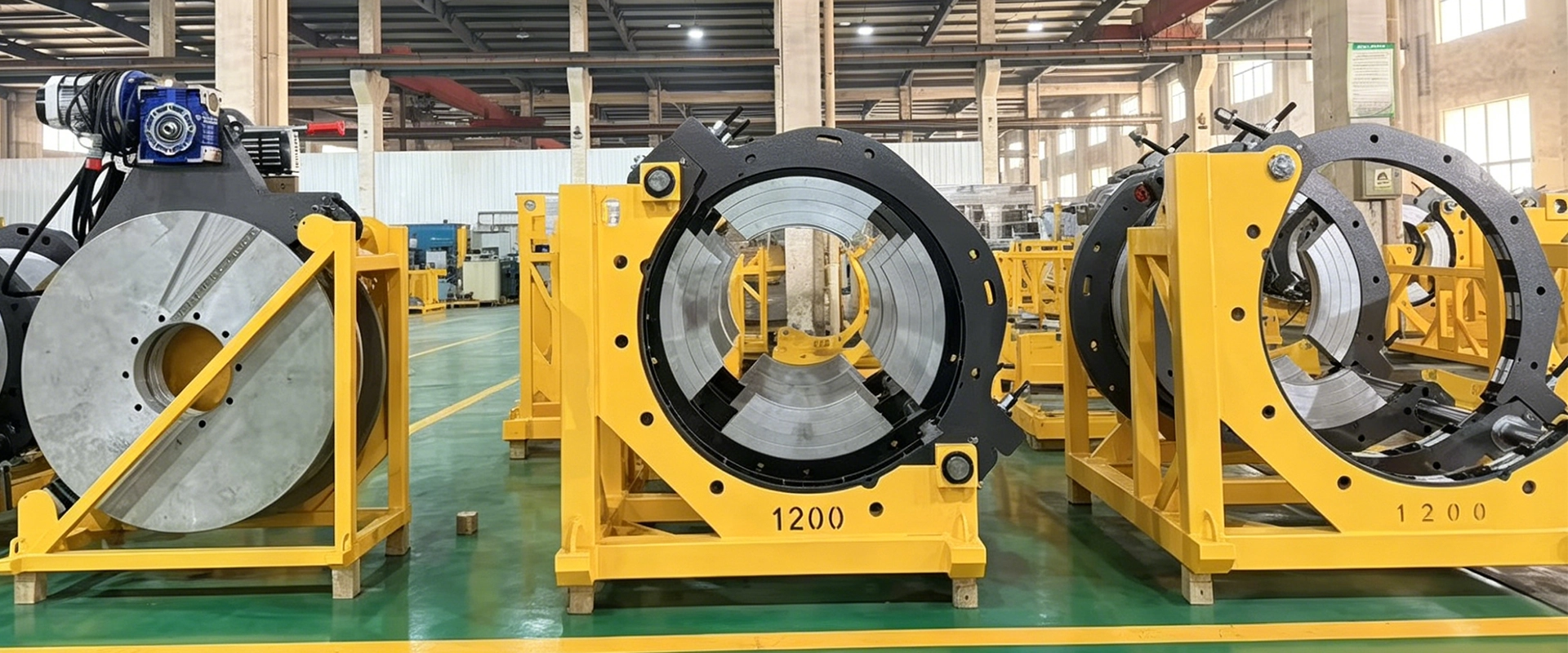
Butt fusion welding is the most widely used method for joining HDPE pipes, particularly for medium-to-large diameter applications ranging from 63mm to over 2000mm. The HDPE pipe welder working principle in butt fusion follows a structured sequence of steps designed to create a uniform, high-strength joint.
Step-by-Step Butt Fusion Process
- Pipe Preparation: The pipe ends are cleaned and squared off using a rotating trimmer to ensure parallel, contaminant-free surfaces.
- Alignment: Clamps hold both pipe ends firmly in place, maintaining perfect axial alignment within the machine frame.
- Heating: A non-stick coated heating plate (PTFE-coated) is inserted between the pipe ends. The pipes are pressed against the plate at a specified pressure until a uniform melt bead forms around the circumference.
- Heat Soak: Pressure is reduced while the pipes remain in contact with the heating plate, allowing heat to penetrate into the pipe wall to achieve the required melt depth.
- Plate Removal: The heating plate is withdrawn quickly to minimize heat loss and contamination.
- Fusion: The molten pipe ends are brought together under controlled pressure and held until the joint cools and solidifies.
- Cooling: The joint remains clamped until it reaches ambient temperature, completing the fusion bond.
This sequence adheres to international standards such as ISO 21307 butt fusion procedures and ensures joints that meet or exceed the pipe’s own pressure rating. The heating plate temperature, typically 210°C ± 10°C, is critical — lower temperatures lead to poor fusion, while excessive heat degrades the material.
Key Welding Methods and Their Working Principles
Beyond butt fusion, several other welding methods are employed depending on project requirements, pipe sizes, and field conditions. Each method has a distinct operating principle suited to specific applications.
| Welding Method | Working Principle | Typical Diameter Range |
|---|---|---|
| Butt Fusion | Heated plate melts pipe ends; fusion under pressure | 63mm – 2000mm+ |
| Electrofusion | Embedded wire coils in fittings heat and melt pipe surface | 20mm – 800mm |
| Socket Fusion | External and internal surfaces of pipe and fitting are heated simultaneously | 20mm – 110mm |
| Saddle Fusion | Heated saddle fitting fuses to the exterior wall of a main pipe | Branch connections |
| Multi-Angle Fitting Fusion | Customized heating and clamping for elbows, tees, and Y-joints | 90mm – 1200mm |
Electrofusion Welding: Precision Through Electrical Resistance
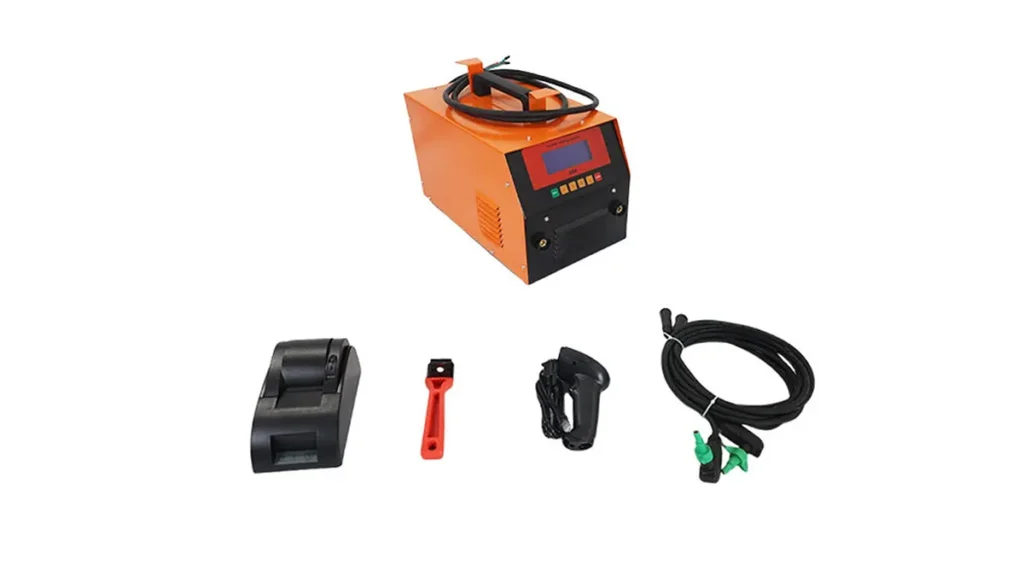
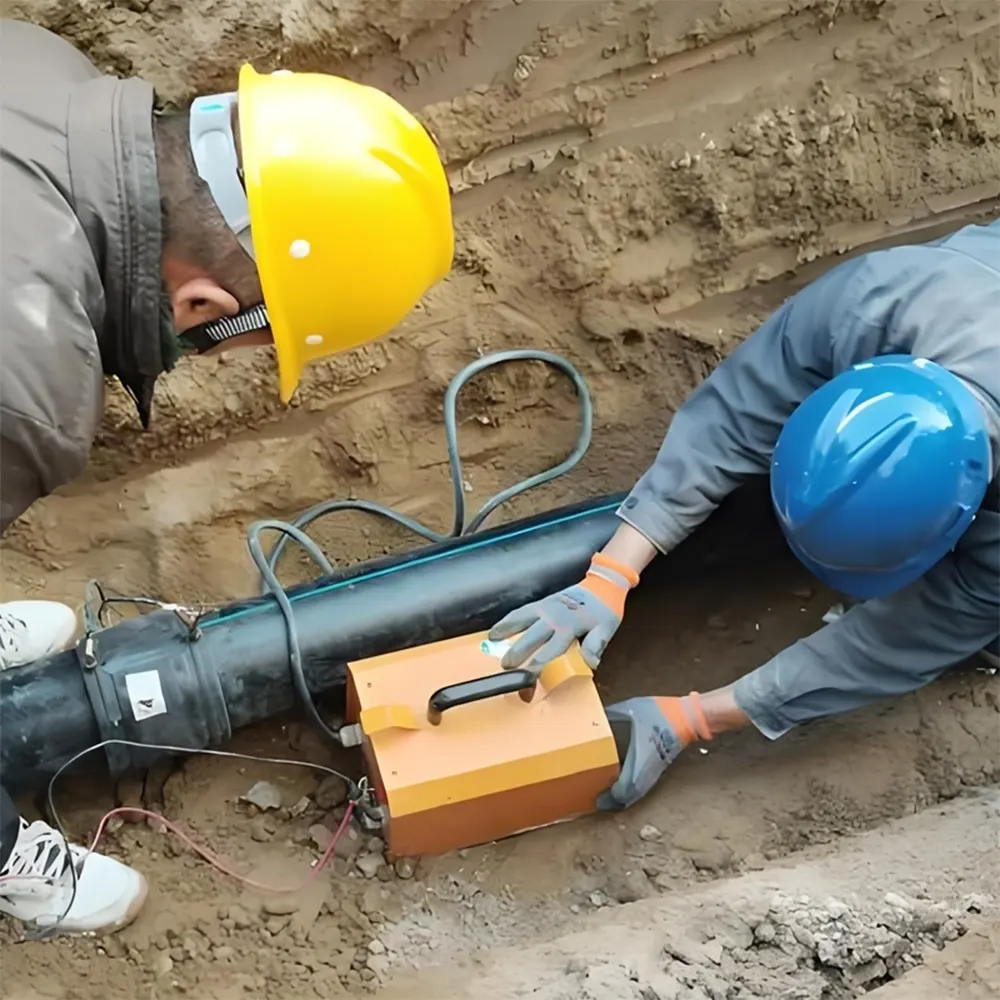
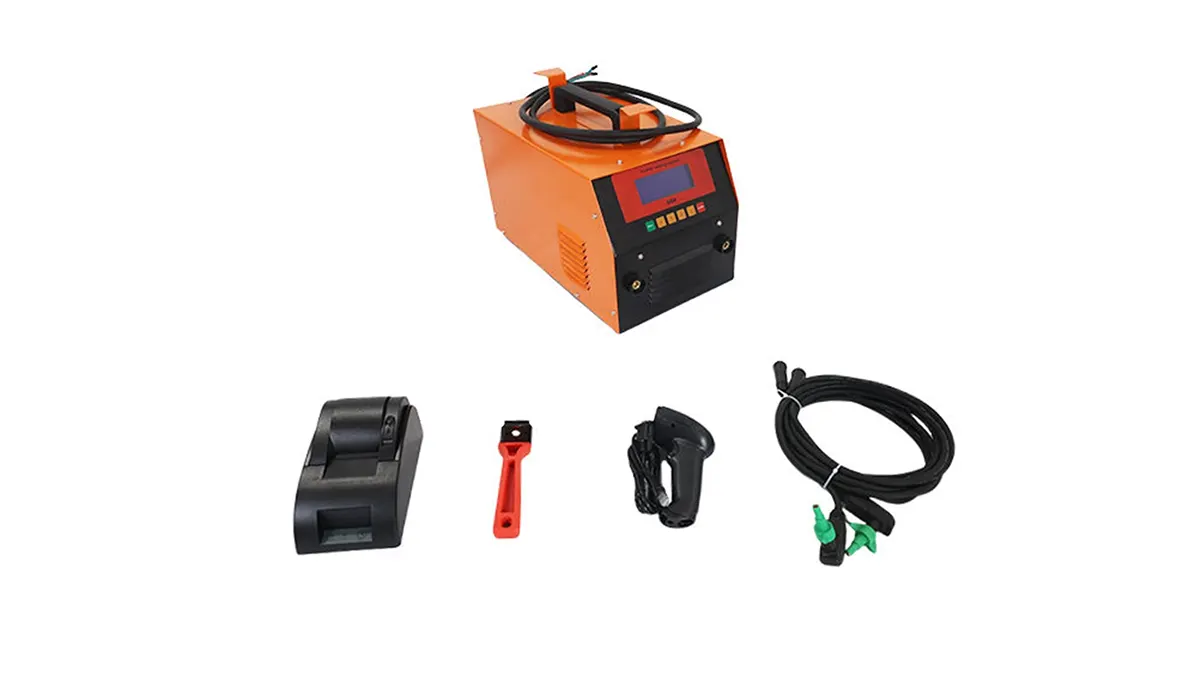
Electrofusion employs a fundamentally different HDPE pipe welder working principle compared to butt fusion. Instead of an external heating plate, specially designed fittings with embedded copper resistance coils are used. When an electric current passes through these coils via an electrofusion machine, they generate heat that melts the surrounding polyethylene — both inside the fitting and on the pipe surface.
The process is highly automated. Each fitting comes with a barcode or RFID tag that contains the precise welding parameters (voltage, current, time). The electrofusion control unit scans this data and executes the welding cycle automatically, reducing operator error. This method is particularly valuable for confined spaces, repair tasks, and installations where pipe rotation is impossible.
Hydraulic vs. Manual vs. CNC Automatic Welders
While the underlying HDPE pipe welder working principle remains consistent across machine types, the method of applying pressure and controlling the process varies significantly. Selecting the right machine depends on pipe size, project scale, and precision requirements.
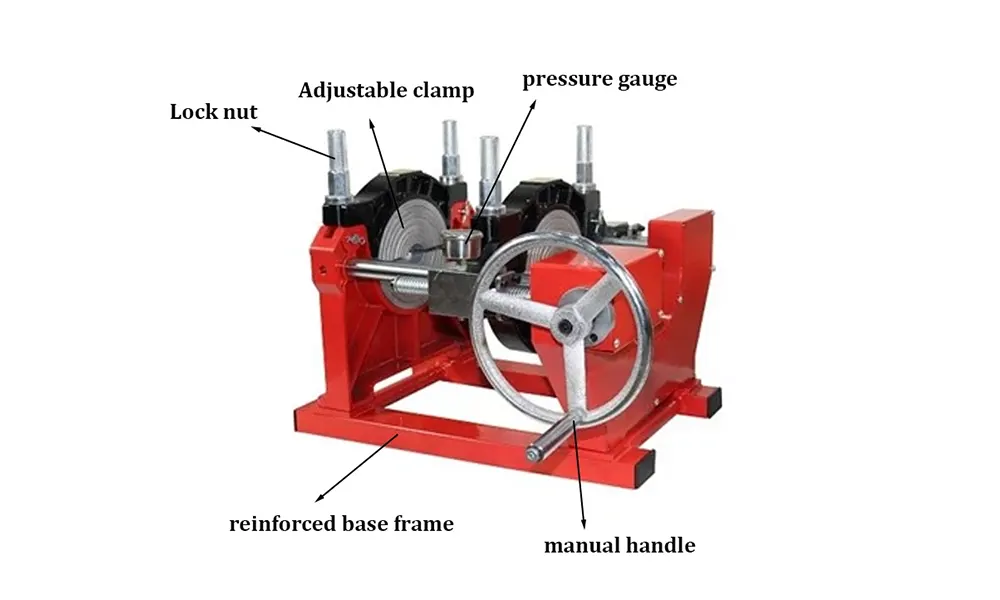
- Manual Butt Fusion Welders: Ideal for smaller diameter pipes (up to 250mm). The operator manually operates a lever or hand wheel to generate clamping and fusion pressure. These are portable, cost-effective, and widely used for manual butt fusion machines in plumbing, irrigation, and small-scale utility work.
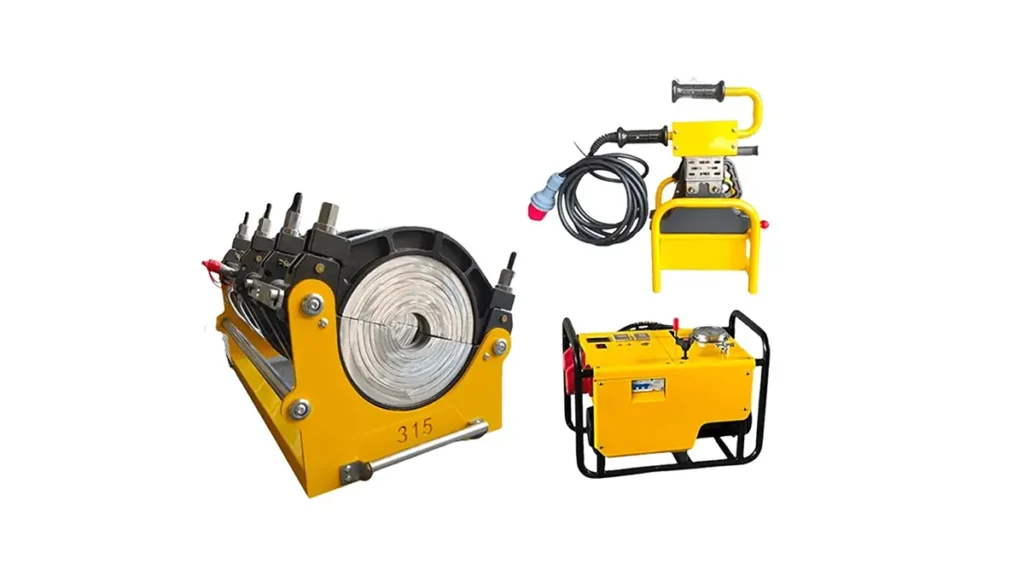
- Hydraulic Butt Fusion Welders: Designed for medium to large diameter pipes (from 160mm up to 2250mm or more). A hydraulic power pack provides the high clamping and fusion forces required. The operator controls the sequence via a hydraulic control unit, ensuring consistent pressure throughout the cycle. JQ-Fusion, a professional manufacturer specializing in HDPE pipe welding machines, offers a comprehensive range of hydraulic models with aluminum clamps for enhanced durability and reduced weight.
- CNC Automatic Welders: The most advanced category, featuring programmable logic controllers (PLCs) that automate the entire welding process. The operator simply inputs pipe specifications, and the machine executes heating, trimming, alignment, and fusion with minimal human intervention. These CNC automatic butt fusion welders record weld data for quality assurance and traceability.
Critical Welding Parameters for Quality Joints
Achieving a successful weld demands strict adherence to proven parameters. Standards such as ASTM F2620 heat fusion joining standards define the required temperature, interfacial pressure, and dwell times for different pipe diameters and wall thicknesses (Standard Dimension Ratio – SDR).
| Parameter | Typical Value / Range | Impact on Weld Quality |
|---|---|---|
| Heating Plate Temperature | 200°C – 230°C (210°C typical) | Insufficient heat prevents fusion; excessive heat causes material oxidation |
| Interfacial Fusion Pressure | 0.15 MPa – 0.17 MPa | Too low pressure results in voids; too high pressure causes excessive melt displacement |
| Bead Size (Drag Pressure) | Calculated per pipe diameter | Indicates proper heating and alignment; uniform bead confirms even melt |
| Soak Time | Varies by wall thickness | Ensures heat penetrates to required depth without overheating the outer layer |
| Cooling Time (Under Pressure) | Calculated per SDR and diameter | Premature release causes joint distortion; proper cooling ensures full crystalline structure |
Advantages of Understanding the HDPE Welder Working Principle
Grasping the HDPE pipe welder working principle offers tangible benefits for pipeline projects. It empowers operators to troubleshoot issues such as misalignment, inadequate melt bead formation, or pressure inconsistencies. For project managers, it informs better equipment selection — matching welder capabilities to pipe diameters, wall thicknesses, and job site conditions.
Moreover, this knowledge supports compliance with international frameworks. Adhering to PE butt fusion equipment standards and operator qualification programs minimizes the risk of joint failure. Certified welders produce joints that withstand decades of service under varying temperatures, pressures, and ground movement.
Common Applications Across Industries
- Water Supply and Distribution: Municipal potable water mains and service connections.
- Gas Distribution: Natural gas and LPG piping networks requiring leak-tight joints.
- Mining and Industrial: Slurry transport, chemical processing, and dewatering pipelines.
- Marine and Dredging: Floating HDPE pipelines where buoyancy and flexibility are critical.
- Infrastructure Rehabilitation: Slip lining and pipe bursting where welding connects new PE liners inside old pipes.
Ensuring Consistent Performance with Quality Equipment
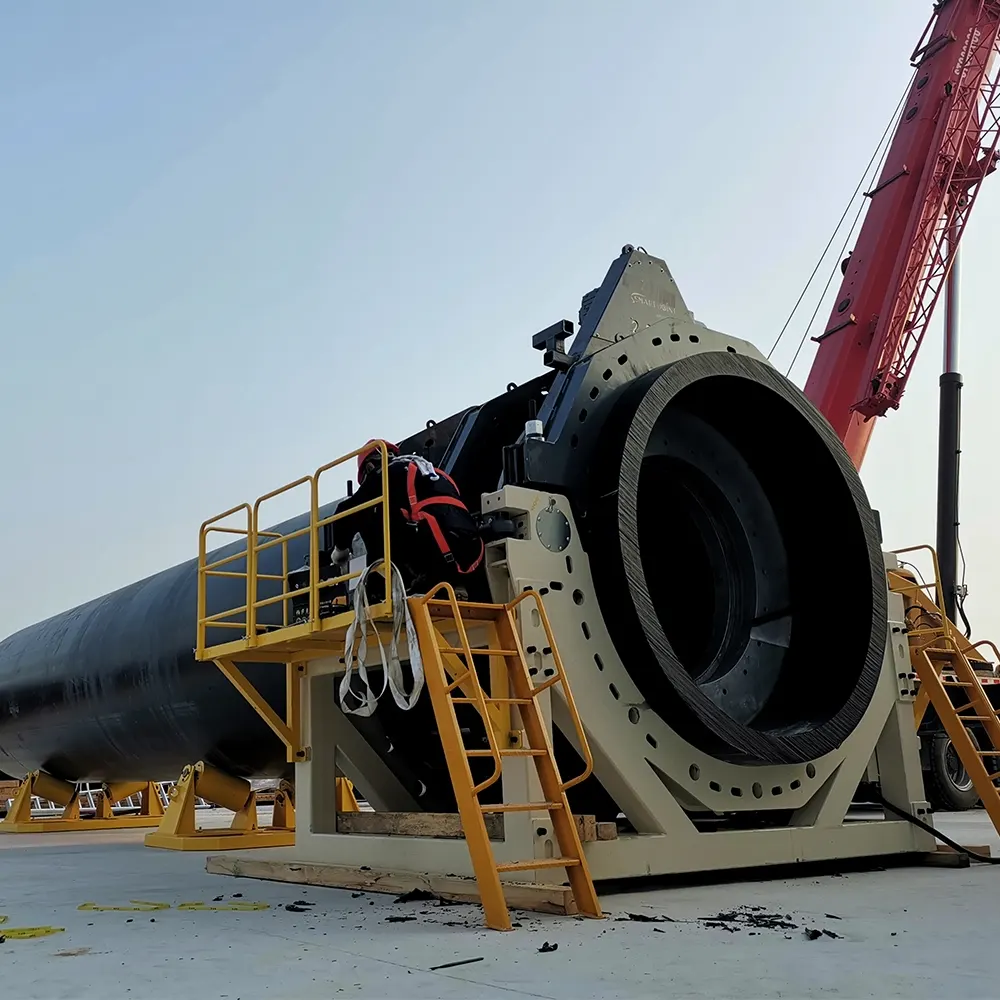
The reliability of an HDPE fusion joint depends significantly on the quality of the welding machine. Key factors include the flatness and temperature uniformity of the heating plate, the rigidity and alignment precision of the clamp frames, and the responsiveness of hydraulic or manual control systems. Inferior equipment introduces variables that can compromise joint integrity — even when following correct procedures.
As a professional manufacturer specializing in HDPE pipe welding machines, JQ-Fusion provides reliable butt fusion solutions for global infrastructure projects. Their product range encompasses manual, hydraulic, and CNC automatic models serving pipe diameters from 20mm to 2250mm+. Each machine undergoes rigorous quality assurance, including temperature accuracy verification and clamp alignment testing, ensuring stable heating and precise alignment for every weld cycle.
Understanding the HDPE pipe welder working principle enables informed decisions — from selecting the appropriate welding method to optimizing parameters for specific pipe materials and diameters. Whether deploying a compact manual welder for residential plumbing or a fully automated CNC machine for large municipal water projects, the fundamental science of controlled heating and fusion remains the foundation of strong, lasting HDPE pipe joints.