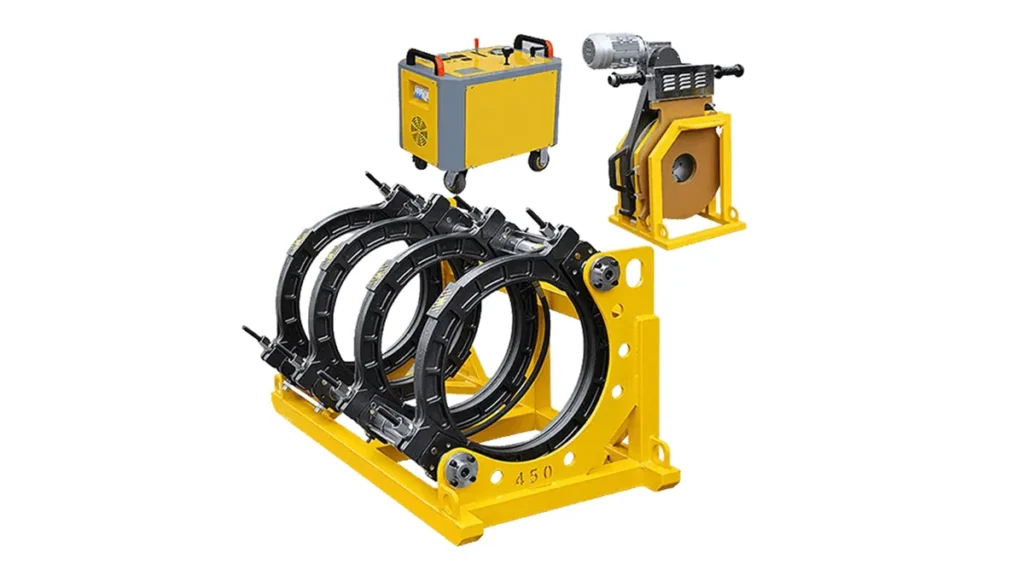
In the construction and maintenance of modern gas distribution networks, the integrity of every joint determines the long-term safety and performance of the entire system. A HDPE fusion machine for gas pipelines is not just a tool — it is the cornerstone of leak-free, durable connections that protect communities and meet stringent regulatory requirements. Gas pipeline operators and contractors understand that substandard welding can lead to catastrophic failures, making the selection of reliable HDPE fusion equipment a top priority for every project.
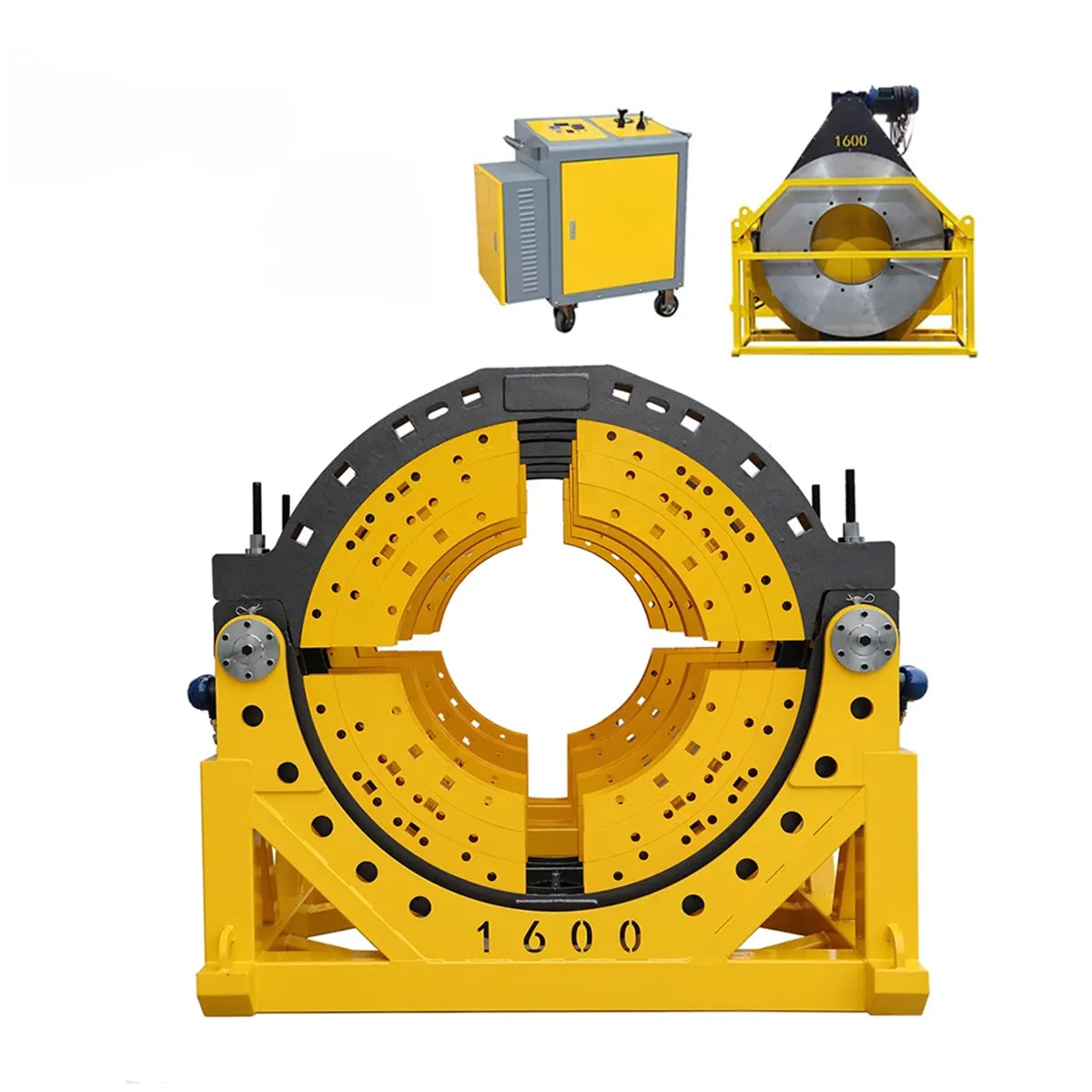
Why Precision Matters in Gas Pipeline Fusion
Unlike water or drainage systems, gas pipelines operate under constant pressure and are subject to rigorous safety codes. A single improperly fused joint can result in gas leakage, environmental hazards, and costly repairs. The HDPE fusion machine for gas pipelines must deliver consistent heating temperatures, uniform pressure application, and precise alignment to create homogeneous bonds that match or exceed the strength of the pipe itself. According to ISO 4437-1 PE gas piping systems, proper fusion procedures are essential for ensuring long-term pipeline integrity in gaseous fuel applications.
Key Features of a Gas-Grade HDPE Fusion Machine
When selecting equipment for gas utility projects, contractors should evaluate several critical factors that distinguish professional-grade machines from general-purpose alternatives:
- Precise Temperature Control — Digital PID controllers maintain optimal heating plate temperatures within ±1°C, ensuring uniform melt conditions across the pipe face.
- Hydraulic Pressure Stability — Consistent force application during the heating, soaking, and cooling phases prevents cold joints and over-compression.
- Rigid Frame Construction — Heavy-duty steel frames with precision-machined clamp jaws maintain perfect pipe alignment even on uneven terrain.
- Data Logging Capability — Modern machines record fusion parameters automatically, supporting traceability and compliance with operator qualification standards.
- Non-Stick Coated Heating Plates — PTFE-coated surfaces prevent material adhesion and ensure clean, contaminant-free welds.
Types of Fusion Machines for Gas Distribution Projects
Gas pipeline contractors typically choose from three main categories of butt fusion welding machines, each suited to different pipe sizes and job site conditions. Understanding their capabilities helps in selecting the right equipment for specific project demands.
| Machine Type | Pipe Range | Best Application | Key Advantage |
|---|---|---|---|
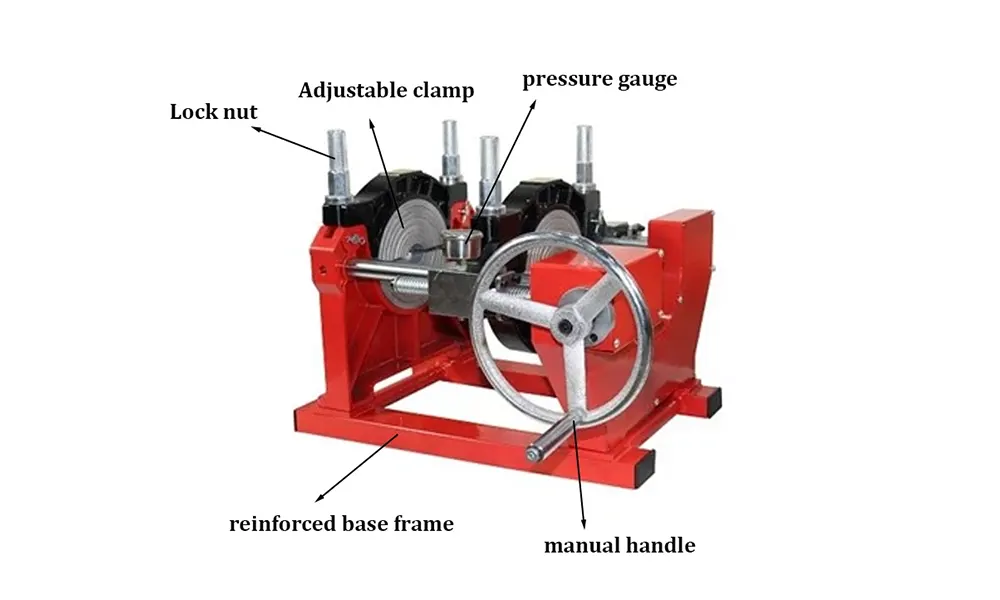
| Manual Butt Fusion | 63mm – 315mm | Service lines, small distribution pipes | Lightweight, portable, cost-effective |
| Hydraulic Butt Fusion | 160mm – 2250mm | Transmission mains, large-diameter gas lines | High clamping force, precise pressure control |
| CNC Automatic Fusion | 160mm – 630mm | Critical joints requiring full documentation | Automatic cycle control, built-in data logging |
Hydraulic Butt Fusion Machines for Large-Diameter Gas Mains
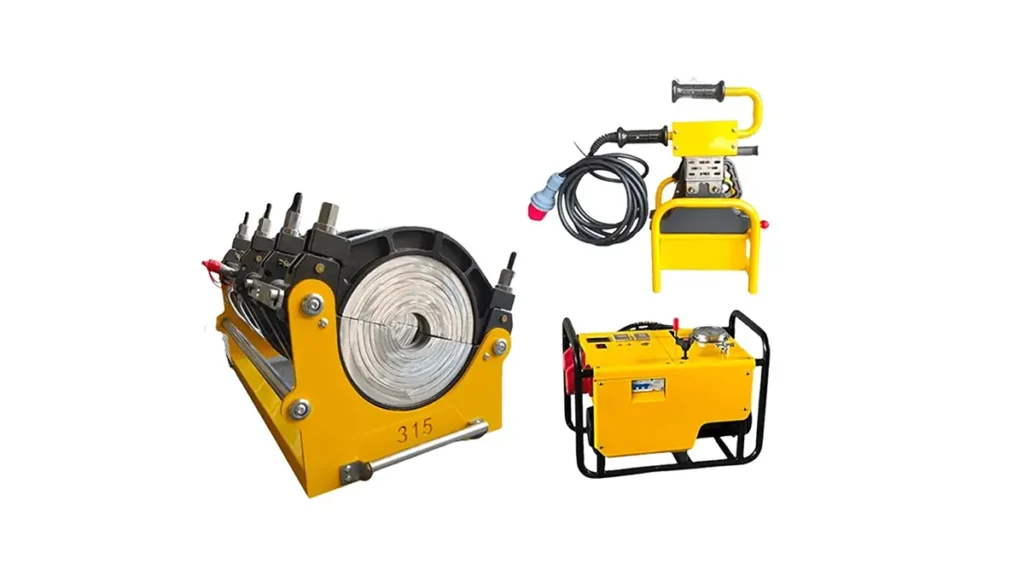
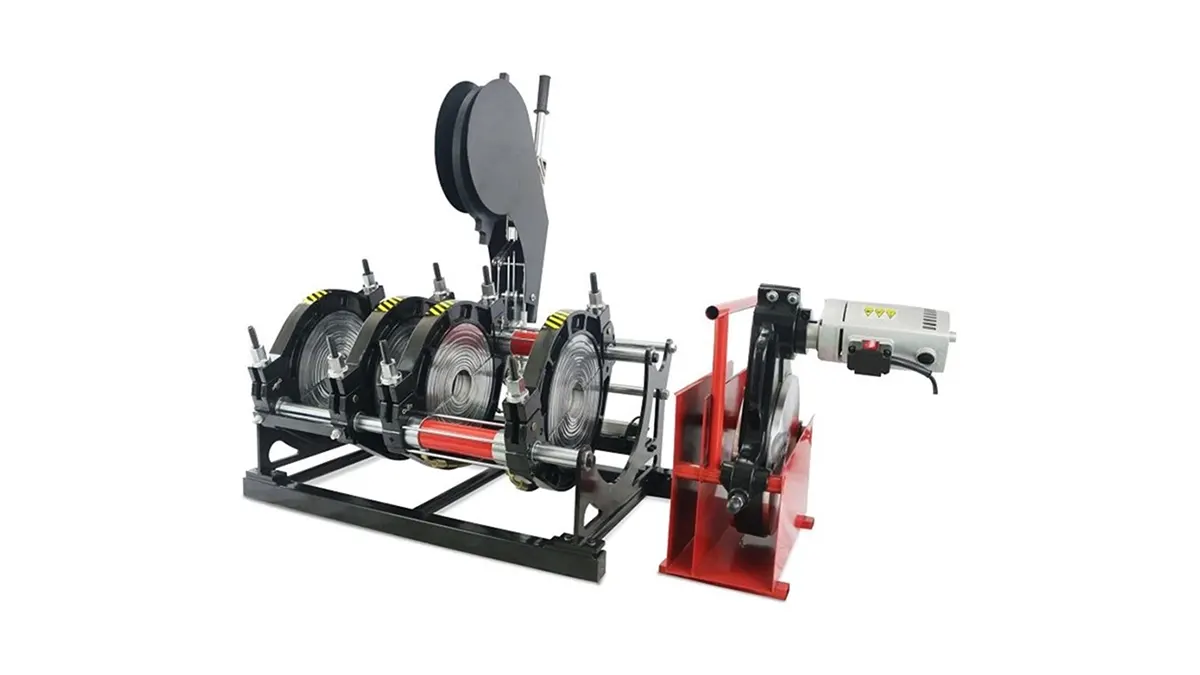
For high-volume gas transmission lines, hydraulic butt fusion machines provide the power and stability required to join large-diameter HDPE pipes. These systems utilize hydraulic cylinders to generate consistent clamping and fusion pressure, ensuring uniform melt bead formation across pipe diameters up to 2250mm. Independent heating plate carriages and motorized trimmer units further enhance operational efficiency on demanding pipeline spreads. The HDPE fusion machine for gas pipelines in this category often features a robust four-clamp frame design that maintains perfect concentricity during the entire welding cycle.
CNC Automatic Fusion for Enhanced Precision and Traceability
As gas utilities increasingly require digital documentation of every weld, CNC automatic butt fusion welding machines have become the preferred choice for critical infrastructure projects. These machines automate the entire fusion sequence — heating, soaking, changeover, and cooling — while recording temperature, pressure, and time data for each joint. Compliance with ASTM F2620 heat fusion procedures is built into the control logic, reducing operator error and ensuring repeatable, code-compliant welds on every connection.
International Standards Governing Gas Pipe Fusion
Gas pipeline welding must adhere to a comprehensive framework of international standards that define material specifications, jointing procedures, and operator qualifications. Key references for any HDPE fusion machine for gas pipelines project include:
- ISO 4437 Series — Specifies requirements for PE piping systems used in gaseous fuel supply, covering pipes, fittings, and installation practices.
- ASTM F2620 — The primary North American standard for heat fusion joining of polyethylene pipe and fittings, detailing butt fusion and saddle fusion procedures.
- ISO 21307 — Establishes butt fusion jointing procedures for PE piping systems, defining single-pressure and dual-pressure fusion protocols.
- ASTM F3190 — Outlines operator qualification requirements for heat fusion equipment, ensuring personnel competency on gas pipeline projects.
Best Practices for On-Site Gas Pipeline Fusion
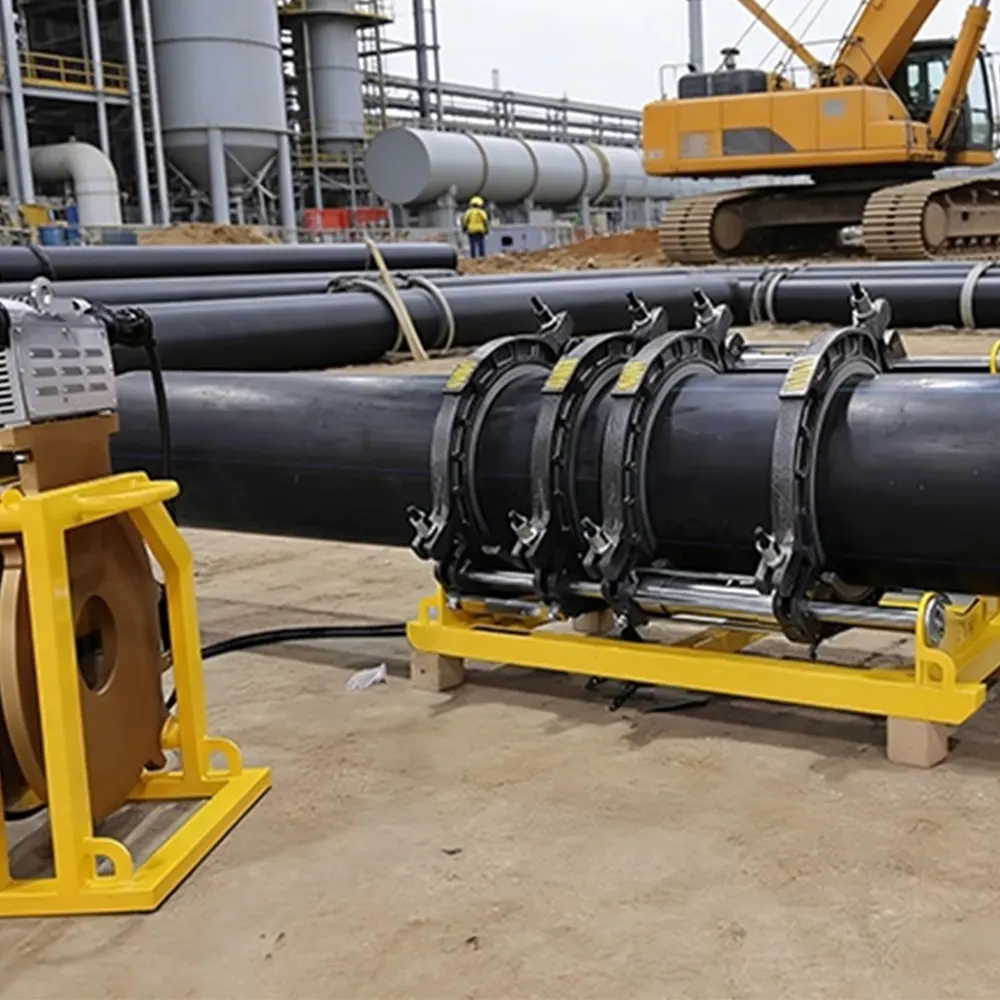
Achieving consistent, code-compliant welds requires more than quality equipment. Contractors should implement the following best practices when operating any HDPE fusion machine for gas pipelines:
- Surface Preparation — Clean pipe ends thoroughly and remove all dirt, grease, and oxidation before clamping. Contaminated surfaces compromise molecular bonding.
- Correct Trimming — Use sharp trimmer blades to produce clean, parallel pipe faces with minimal material removal. Replace blades regularly to maintain cutting performance.
- Temperature Verification — Check heating plate surface temperature with a calibrated pyrometer before each welding session. Even minor deviations affect melt quality.
- Proper Cooling Time — Never release clamping pressure or move the pipe before the specified cooling period elapses. Premature handling causes stress cracking at the joint interface.
- Weather Protection — Shield the work area from wind, rain, and extreme temperatures that can interfere with heating consistency and cooling rates.
Operator Training and Qualification
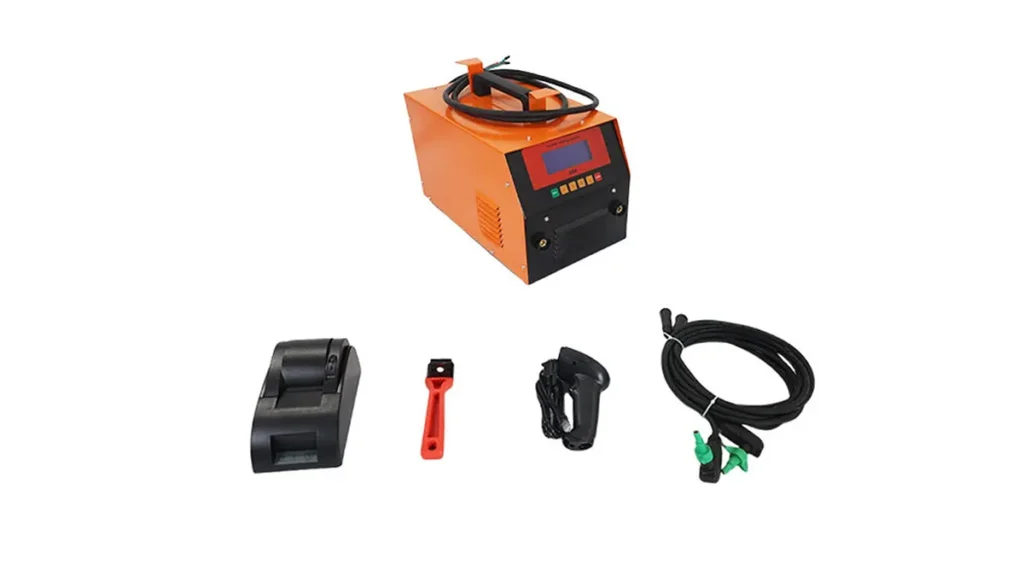
Gas utility regulations in most jurisdictions require fusion operators to hold valid qualifications demonstrating their competence with electrofusion equipment and butt fusion procedures. Regular re-certification and practical assessments help maintain high standards across the workforce. Many project specifications now mandate the use of data-logging fusion machines that provide auditable records of every joint, linking each weld to the qualified operator who performed it.
Selecting the Right HDPE Fusion Machine for Your Gas Project
Choosing the optimal HDPE fusion machine for gas pipelines involves evaluating pipe diameter range, production rate requirements, site accessibility, and documentation needs. For small-diameter service lines, portable manual machines offer excellent value and ease of transport. Medium to large gas distribution mains benefit from the controlled power of hydraulic systems, while transmission pipelines and critical infrastructure projects increasingly rely on CNC automatic machines for their precision and traceability features.
JQ-Fusion is a professional manufacturer specializing in HDPE pipe welding machines, providing reliable butt fusion solutions for global infrastructure projects. Our range spans manual, hydraulic, and CNC automatic butt fusion welding machines, engineered to meet the demanding requirements of gas distribution, water supply, and industrial pipeline systems worldwide.