Modern irrigation relies on seamless water distribution, and at the heart of a leak-free network lies the quality of pipe connections. A polyethylene welding machine for irrigation is essential for creating robust HDPE pipelines that withstand pressure surges, soil movement, and ultraviolet exposure. Whether you are installing a small orchard drip system or a multi-kilometer mainline transfer, understanding the capabilities and differences in butt fusion technology ensures your project’s long-term success.
Understanding Butt Fusion in Irrigation Systems
Polyethylene welding, often called butt fusion, is the process of heating pipe ends against a temperature-controlled plate and pressing them together to form a monolithic joint. Unlike mechanical couplings, this method produces a connection that is leak-proof and as strong as the pipe itself. In irrigated agriculture, this is critical for delivering precise water volumes without wasting resources. The procedure follows strict international guidelines, including ISO 21307 butt fusion procedures, ensuring consistent weld integrity even in challenging field conditions.
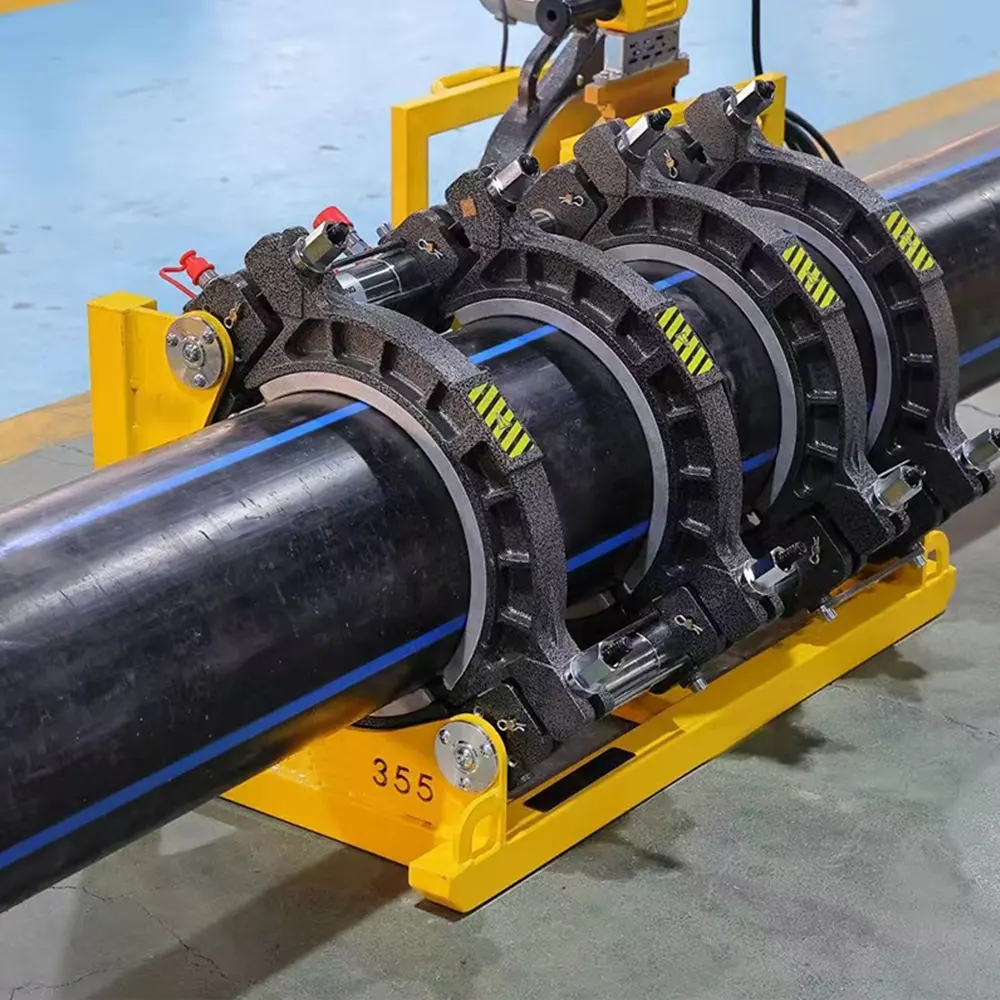
Types of Polyethylene Welding Machines for Irrigation
Selecting the right equipment starts with matching the machine type to your pipe diameter and operational scale. Three primary categories dominate the market, each with distinct advantages for specific agricultural applications.
Manual Butt Fusion Welders
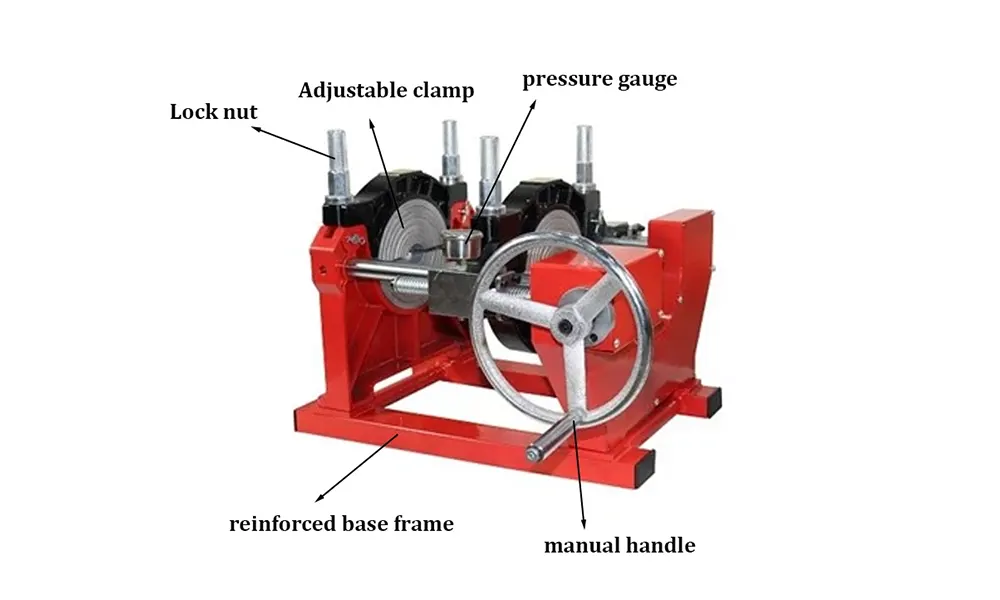
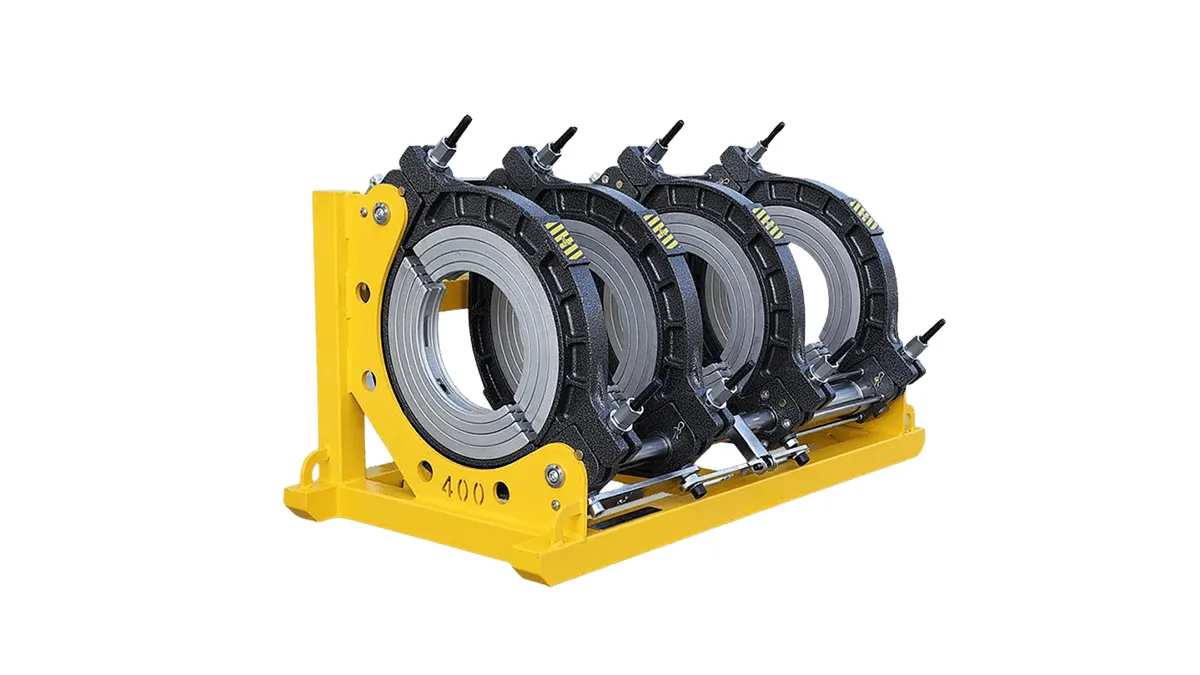
Manual polyethylene welding machines for irrigation are lightweight, highly portable, and require no external hydraulic power. They are ideal for small-to-medium diameter pipes (typically 50mm to 315mm) commonly found in lateral lines and smallholder farms. The operator manually cranks the clamps to generate fusion pressure. This simplicity makes manual machines the preferred choice for rapid on-site repairs and short-distance laterals.
Hydraulic Butt Fusion Welders
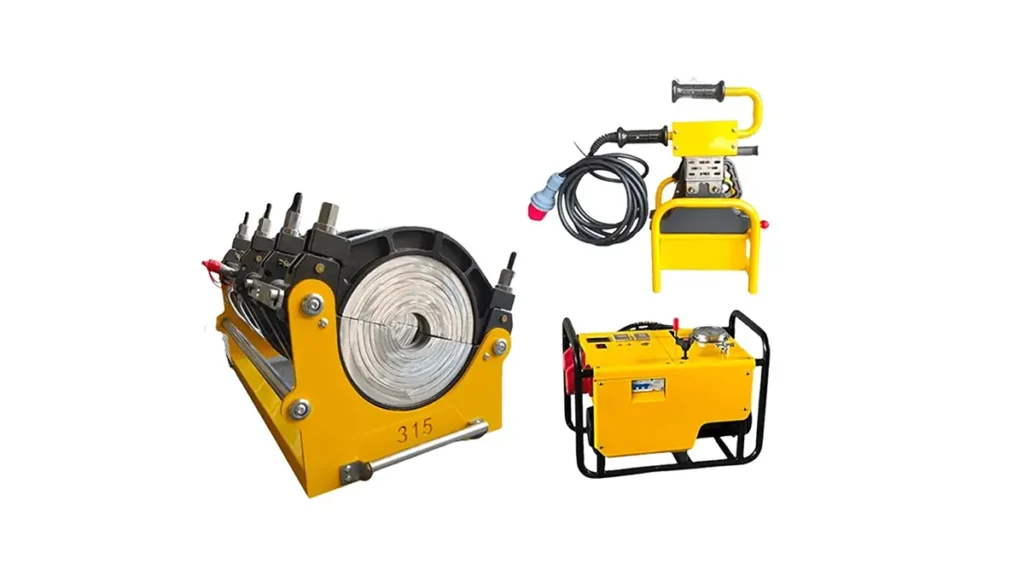
For large-scale agriculture, hydraulic butt fusion welding machines handle diameters from 90mm up to 2000mm. An external hydraulic pump provides the high, consistent force required to align heavy pipe walls and maintain joint pressure during cooling. These machines are indispensable for main irrigation arteries where large flow rates are necessary. Their rigid frames reduce misalignment in heavy-wall pipes, preventing premature joint failure.
CNC Automatic Butt Fusion Welders
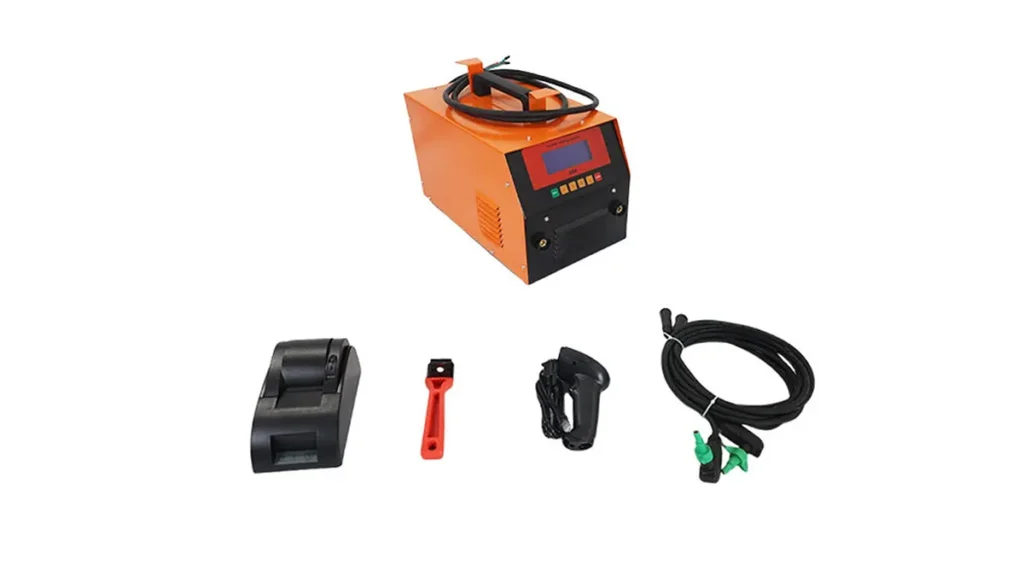
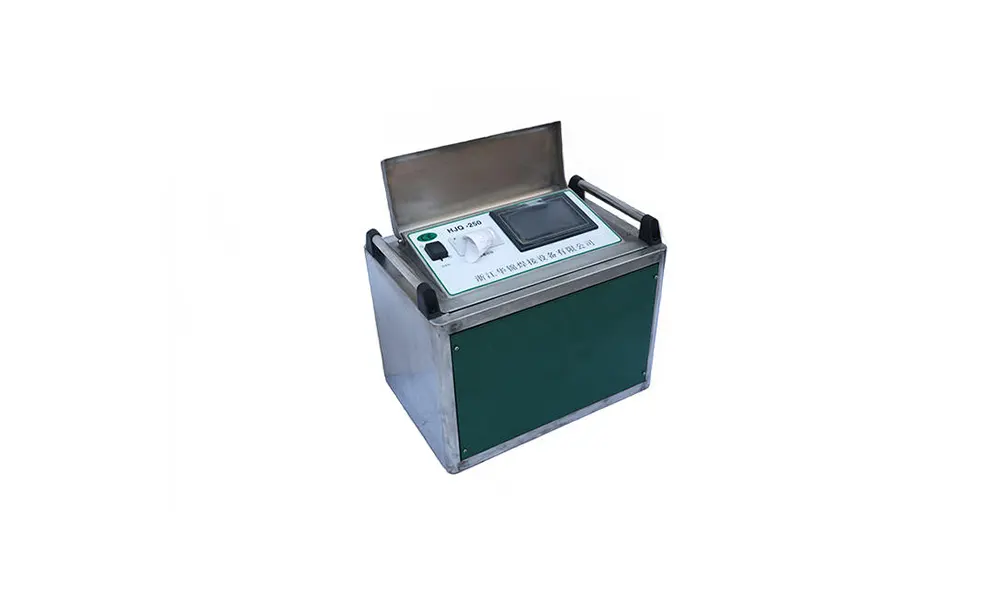
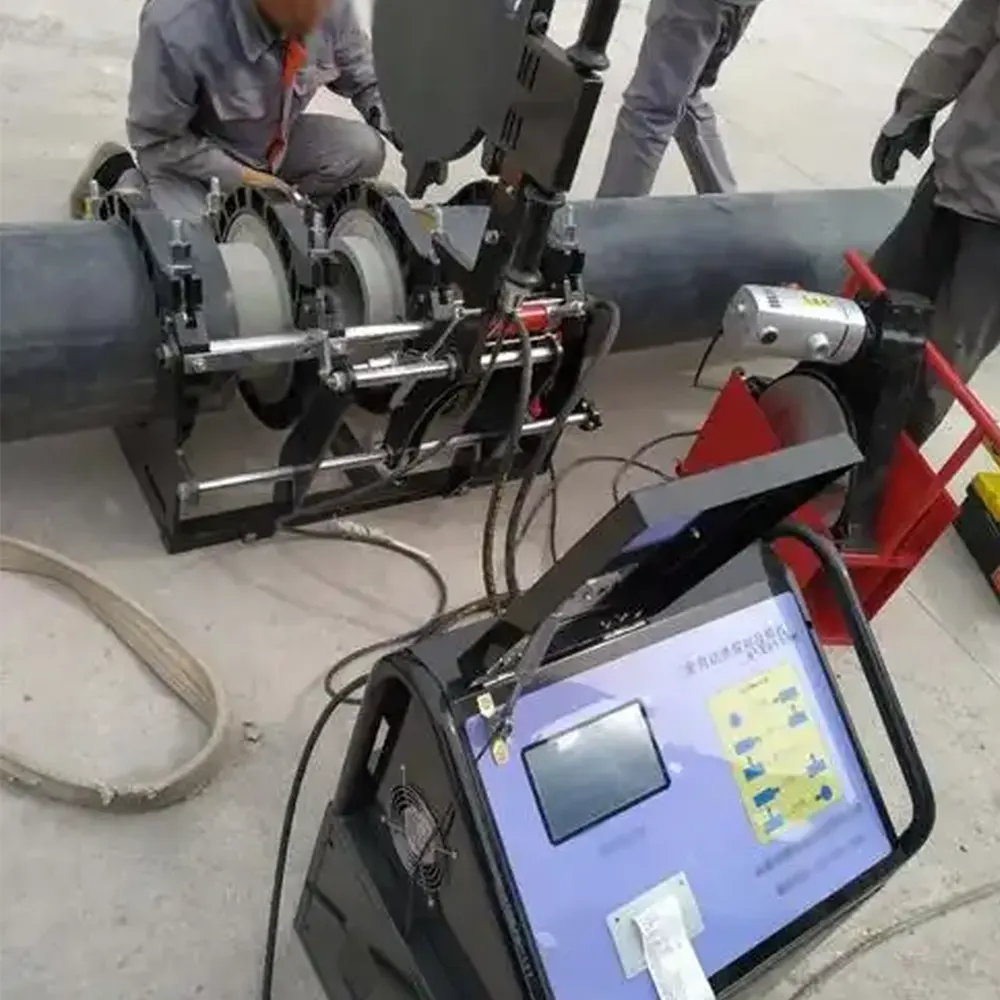
When precision and traceability are non-negotiable, CNC automatic systems set the standard. These machines digitize the entire fusion cycle, automatically controlling soak times, drag pressure compensation, and ambient temperature adjustments. Many models log data for every joint to guarantee compliance with PE butt fusion equipment standard requirements, a crucial feature for government-funded irrigation schemes.
| Feature | Manual | Hydraulic | CNC Automatic |
|---|---|---|---|
| Pipe Range | 50mm – 315mm | 90mm – 2000mm | 160mm – 1200mm |
| Power Source | Manual Gear | Hydraulic Pump | Electric/Hydraulic |
| Data Logging | No | Optional | Standard |
| Best Use | Small plots, laterals | Mainlines, large-scale | Audited municipal systems |
Critical Applications in Agricultural Irrigation
High-density polyethylene pipes joined by a polyethylene welding machine for irrigation offer measurable advantages over traditional PVC or metal piping systems across various applications:
- Drip and Micro-irrigation: Welded manifolds and submains prevent blowouts caused by high-pressure flushing cycles. The seamless inner diameter reduces scaling and emitter clogging.
- Center Pivot Sprinkler Systems: The ground movement of heavy pivots imposes dynamic stress on supply lines. Butt-fused joints flex with the soil without shearing, minimizing costly downtime.
- Surface Water Transfer: Floating intake pipelines and long-distance canal bypasses rely on PE butt fusion process jointing to prevent leakage that could erode canal banks.
- Subsurface Irrigation: Buried HDPE systems use fused joints to eliminate root intrusion, one of the most common maintenance headaches in permanent irrigation installations.
Purchasing Guide for Irrigation Welding Machines
Investing in a butt fusion machine requires balancing field demands with budget. Evaluate these factors before finalizing a polyethylene welding machine for irrigation:
Pipe Diameter and Wall Thickness
Choose a machine whose clamping range comfortably covers your intended pipe size. Overloading a small machine on heavy-wall pipes leads to uneven bead formation and cold joints. For diameters exceeding 400mm, a hydraulic unit is mandatory to develop sufficient interfacial pressure.
Mobility and Frame Rigidity
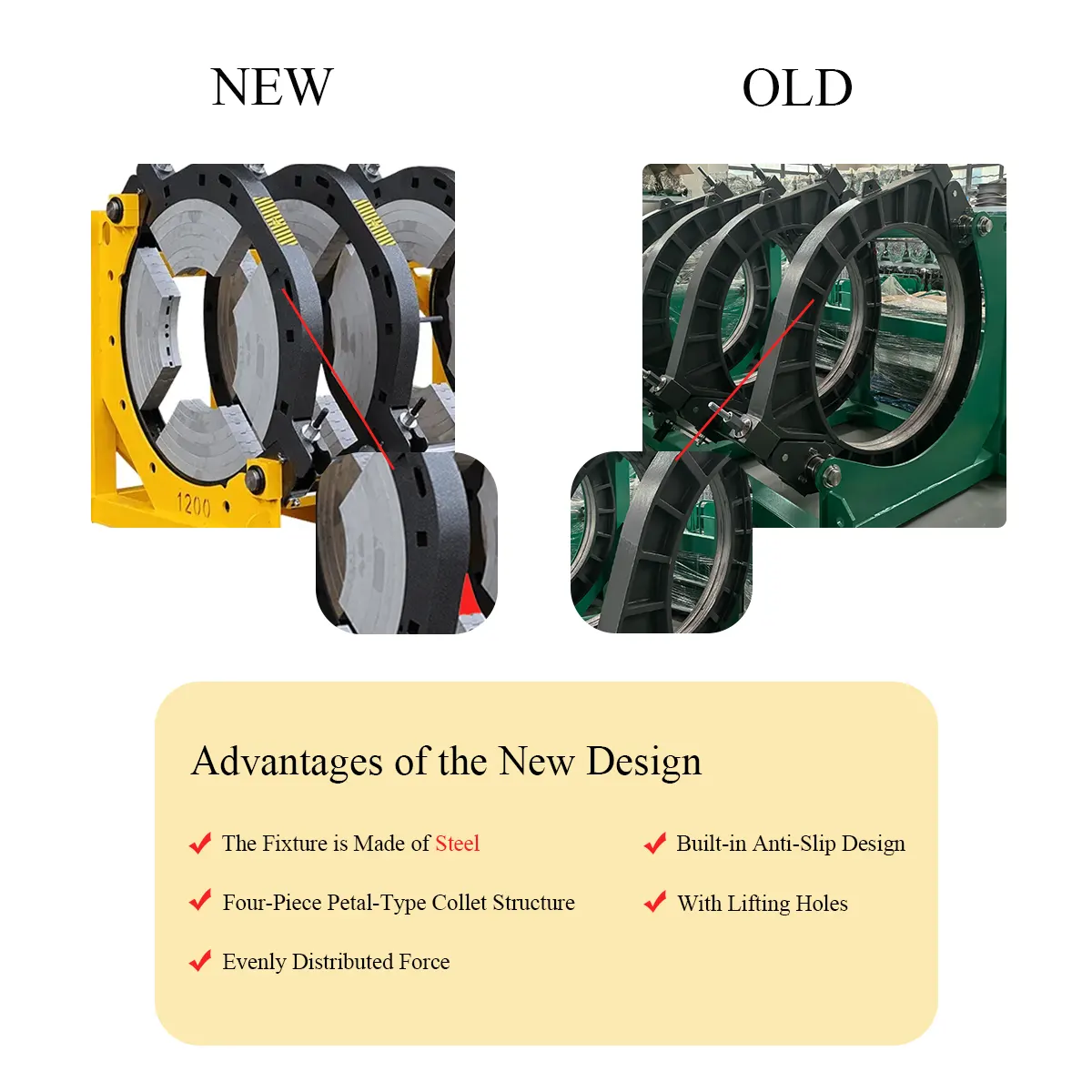
Irrigation projects often span remote locations. Machines with integrated rollers or lightweight dolly kits improve mobility between installations. However, the frame must still resist flex; a rigid frame guarantees that the pipe ends remain perfectly parallel during the facing and fusion stages.
Trimmer and Heater Plate Quality
The electric trimmer must create a clean, continuous ribbon simultaneously from both pipe ends. Dual-latched heating plates with accurate digital temperature controllers ensure uniform melt surface creation. Non-stick PTFE coating on the heater plate is essential to prevent burned polyethylene residue.
Standards Compliance
Ensure the equipment manufacturer follows established norms. Adherence to ISO 12176-1 and the principles outlined in the PPI Handbook of Polyethylene Pipe provides assurance that the machine dimensions and performance criteria match globally recognized safety and quality benchmarks.
Ensuring Long-Term Reliability in Irrigation Networks
The lifespan of an irrigation pipeline frequently exceeds 50 years, but only if the initial welds are executed flawlessly. Operator training and machine calibration are equally vital. Regular checks on hydraulic oil levels, heater plate temperature offset, and trimmer blade sharpness prevent systematic joint defects. For contractors managing multiple sites, switching to data-logging CNC butt fusion welding equipment standardizes quality and reduces costly rework caused by human error.
Partnering with an experienced manufacturer significantly simplifies the selection process. For example, JQ-Fusion provides a range of manual, hydraulic, and CNC automatic butt fusion solutions specifically engineered for global infrastructure and irrigation projects, helping contractors achieve precise, durable pipe connections across diverse field environments.
Maintenance and Operator Practices
Proper daily maintenance extends the working life of any polyethylene welding machine for irrigation:
- Clean the heater plate while hot using non-abrasive cloth to remove dust and polymer residue.
- Lubricate guide rods and clamps to ensure smooth carriage travel.
- Inspect hydraulic hoses for cuts or swelling, especially when working in rough farm terrain.
- Calibrate the thermocouple monthly to avoid overheating, which degrades the inner pipe wall.
- Protect electric controls from moisture ingress when not in use.
By combining routine upkeep with the right welding machine choice, irrigation engineers secure a network that delivers water efficiently season after season.