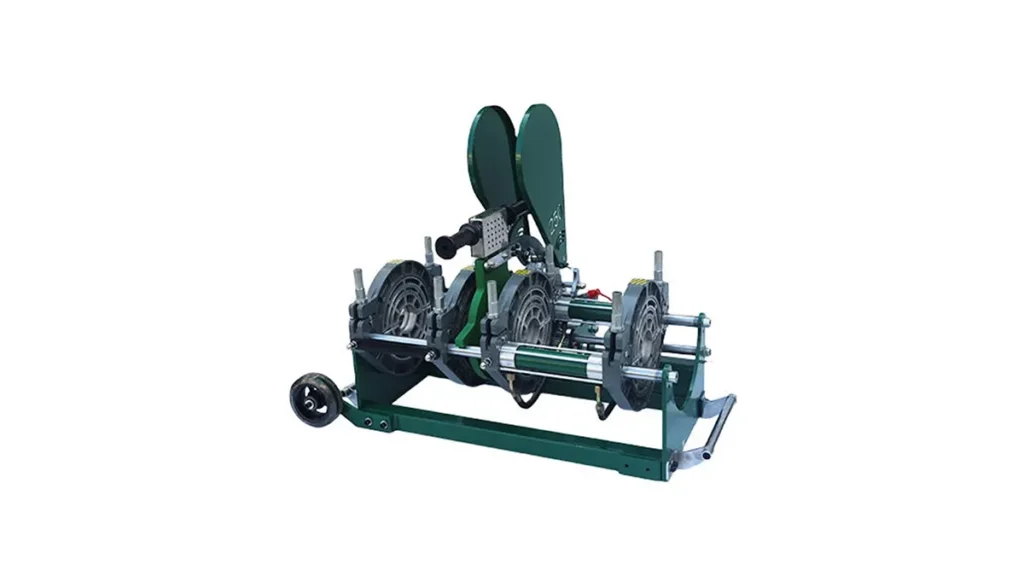
Understanding the Role of HDPE in Modern Sewage Infrastructure
High-Density Polyethylene (HDPE) has become the material of choice for sewage and drainage systems worldwide. Its exceptional chemical resistance, flexibility, and leak-proof jointing capabilities make it superior to traditional materials like concrete or PVC. The integrity of a sewage network, however, hinges not just on the pipe quality but critically on the fusion joints. A poorly executed weld can lead to catastrophic leaks, environmental contamination, and costly repairs. Therefore, investing in a specialized HDPE pipe jointing machine for sewage systems is not an operational expense—it is a long-term safeguard for public health and infrastructure resilience.
Butt Fusion vs. Electrofusion: Which Jointing Method Prevails in Sewage Applications?
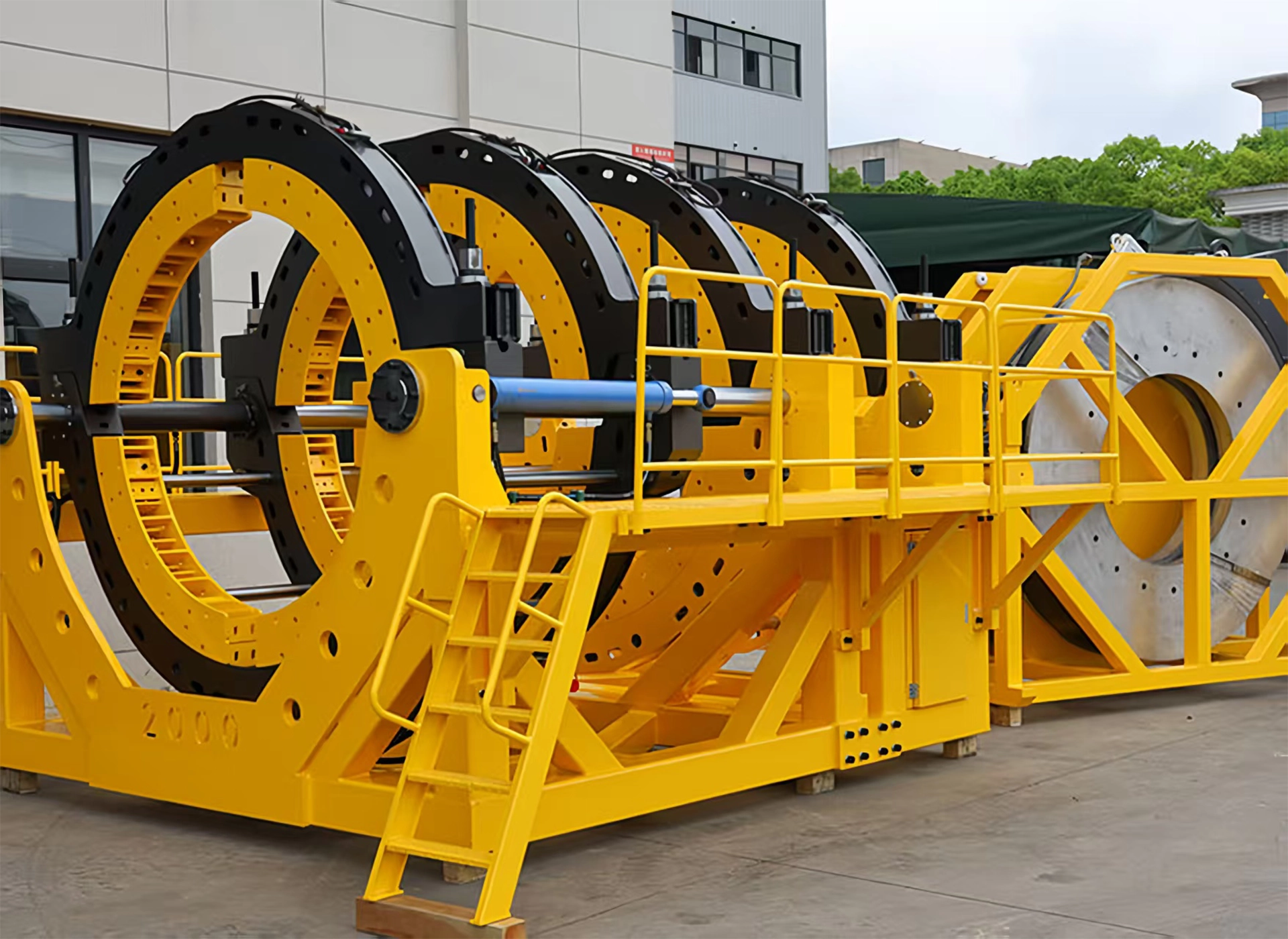
Selecting the right HDPE pipe jointing machine for sewage systems begins with understanding the core technologies. The two primary methods are butt fusion and electrofusion, and each has a distinct place in wastewater projects.
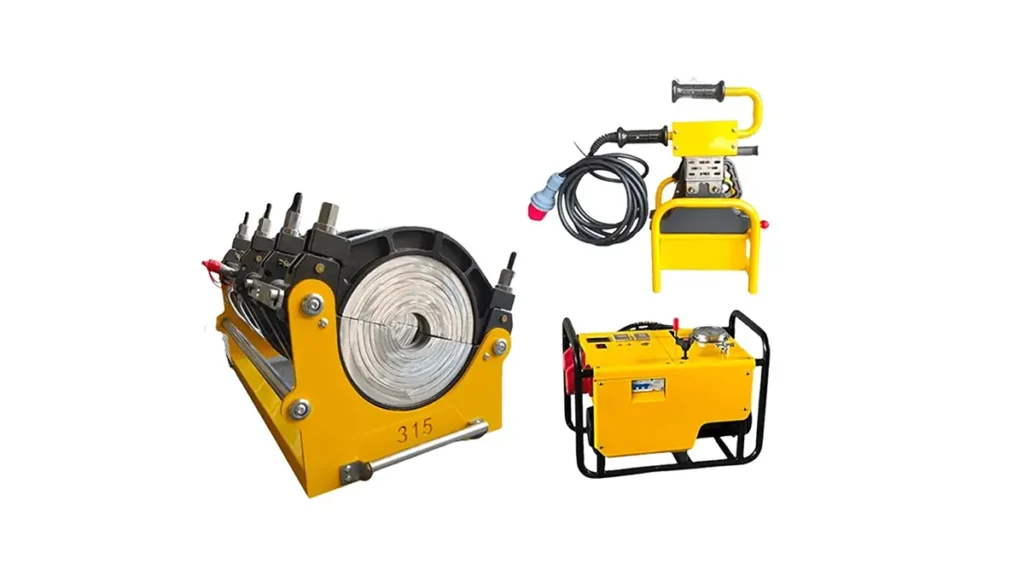
- Butt Fusion Welding: This method is the industry standard for joining straight lengths of HDPE pipe above 110mm in diameter. It involves heating the pipe ends against a precision hot plate and then pressing them together under controlled pressure. The result is a homogenous joint that is often as strong as the pipe itself. For main sewer lines and gravity-fed systems, hydraulic butt fusion machines are essential for handling the heavy wall thicknesses and large diameters typical of municipal sewage projects.
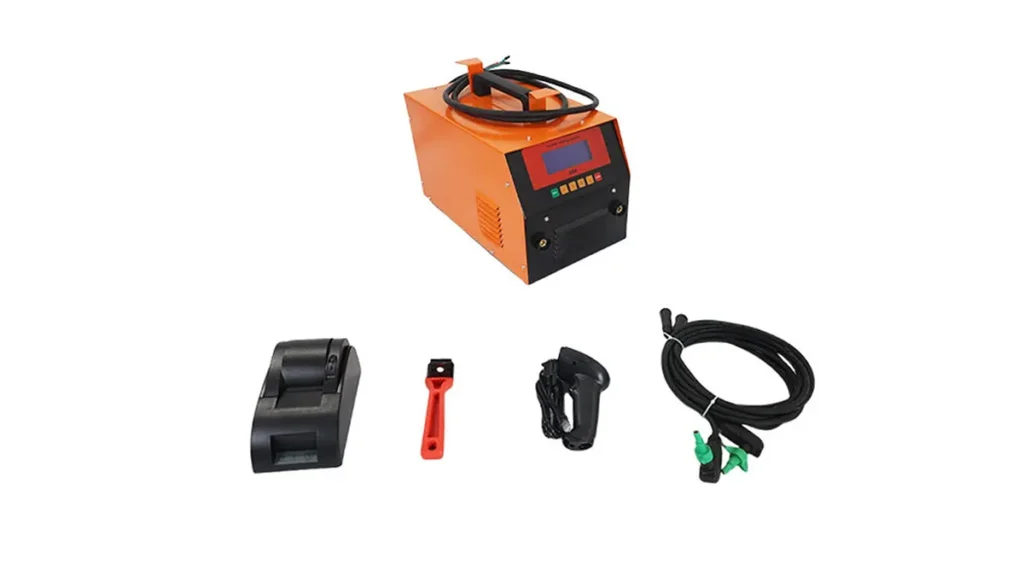
- Electrofusion Welding: Ideal for repairs, tight trenches, or joining fittings in confined spaces, electrofusion uses specialized fittings with embedded heating coils. While extremely reliable, butt fusion remains the more cost-effective and widely adopted technique for long pipeline runs in sewage treatment plants and main drainage lines.
Critical Factors When Selecting Your Jointing Equipment
Not all welding machines are engineered to handle the aggressive demands of wastewater environments. To ensure consistent, high-quality joints, your HDPE pipe jointing machine for sewage systems must meet specific rigorous criteria:
- Pipe Diameter and SDR Range: Sewage systems frequently use pipes ranging from 200mm to over 1600mm. Ensure the machine’s clamping range and hydraulic force accommodate your specific project scope. You must verify that the machine can handle the Standard Dimension Ratio (SDR) of your pipes to apply the correct interfacial pressure.
- Clamping Rigidity and Alignment: Misalignment is a primary cause of joint failure. High-quality machines feature rigid frames and precisely machined clamps, often made of aluminum, to prevent pipe slippage during the high-pressure fusion cycle.
- Heating Plate Accuracy: The machine must maintain a precise temperature across the entire plate surface, with minimal deviation. Look for non-stick PTFE-coated plates with an integrated digital thermostat, which are vital for achieving the correct melt pattern required by ISO 21307 butt fusion procedures.
- Hydraulic System Reliability: For large-diameter sewage pipes, a powerful and smooth hydraulic unit is non-negotiable. It must deliver consistent pressure without pulsation to form a perfect, uniform weld bead.
- Trimming Tool Efficiency: A robust rotary trimmer is required to face the pipe ends squarely and remove oxidized material, creating clean, parallel surfaces essential for a contaminant-free bond. Dull or poorly designed trimmers can lead to joint contamination.
Manual, Hydraulic, or CNC: Matching Automation to Your Project Scale
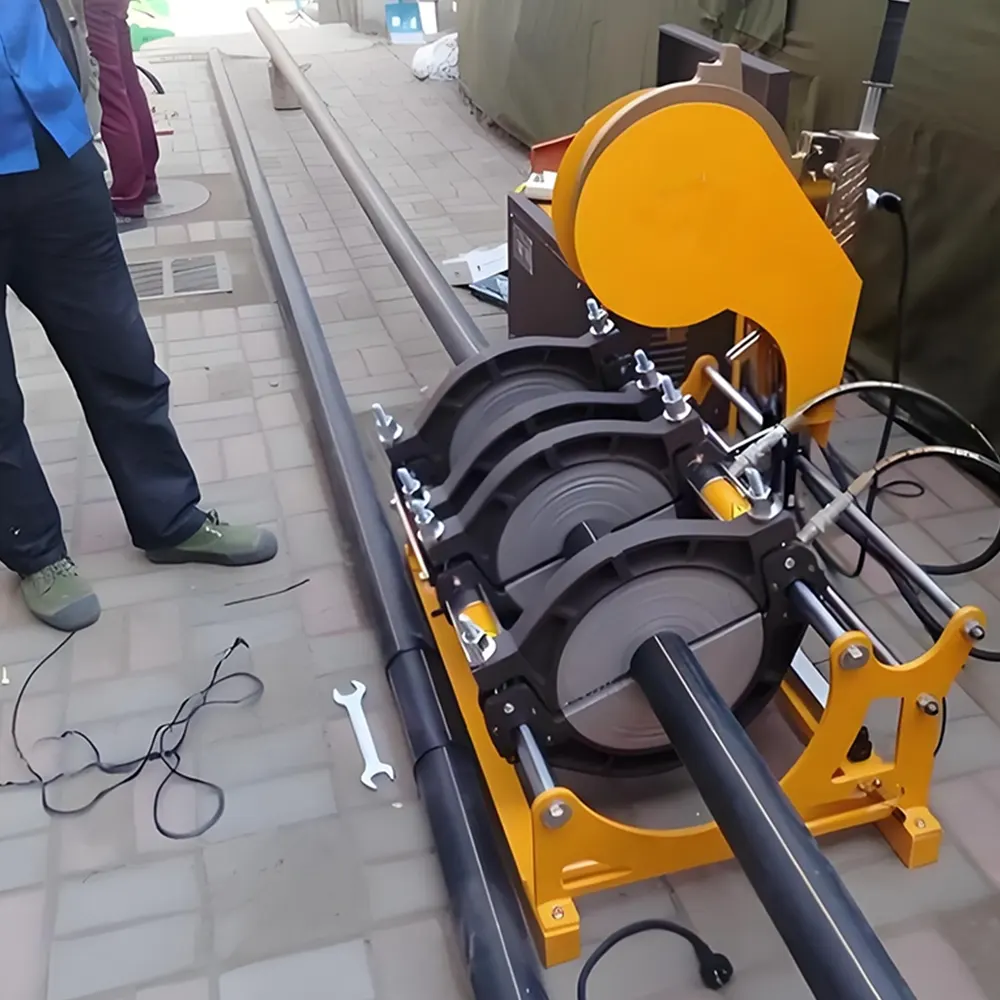
The operating environment of a sewage project dictates the automation level required.
| Machine Type | Best Application | Key Advantage |
|---|---|---|
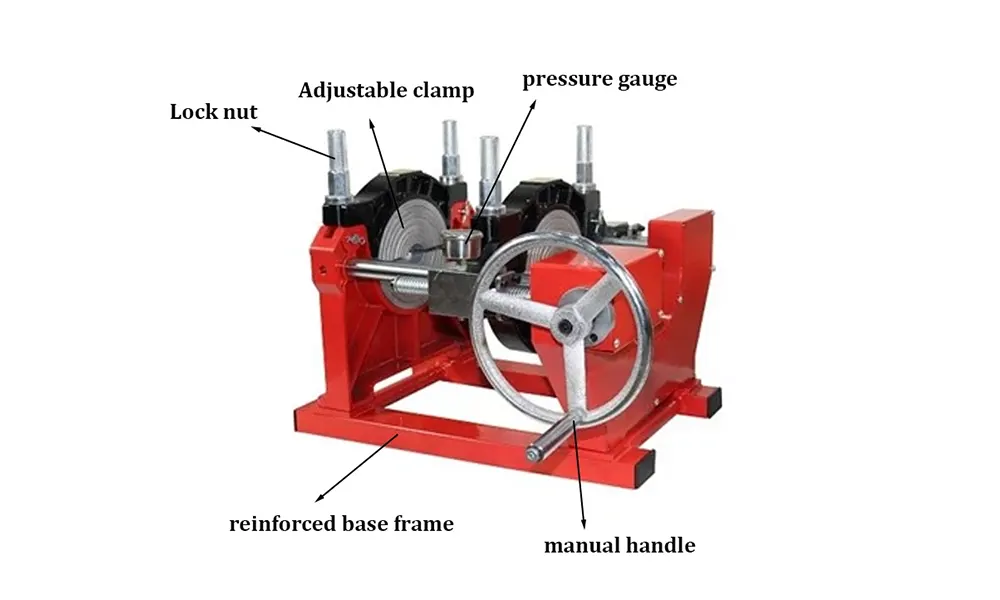
| Manual Fusion Machines | Small diameter laterals and house connections | Portability and low cost |
| Hydraulic Fusion Machines | Main sewer collectors and large pumping mains | High force for thick walls and large diameters |
| CNC Automatic Machines | Treatment plants and critical infrastructure | Total process control and data logging |
For municipal sewage mains, the hydraulic HDPE pipe jointing machine provides the necessary force and precise control. In contrast, CNC automatic butt fusion welding machines are invaluable when traceability is paramount, as they record every welding parameter for quality assurance documentation, a requirement increasingly written into tender specifications for modern sewage treatment facilities.
Data Logging and Traceability in Wastewater Networks
Modern sewage infrastructure demands accountability. Advanced HDPE pipe jointing machine for sewage systems models now feature integrated data logging that automatically records critical parameters like pressure, temperature, and time for each joint. This data can be transferred via USB and printed, providing verifiable compliance with standards such as ASTM F2620 heat fusion specifications. Choosing a machine with this capability transforms the welding process from a manual craft into a documented science, greatly simplifying third-party inspection and ensuring the long-term asset management of the sewer network. You can learn more about the specific procedures by reviewing the PPI generic butt fusion procedure which outlines best practices for achieving reliable joints.
Ensuring Operator Safety and Machine Durability
Sewage pipe installation can occur in harsh, unpredictable field conditions. The ideal HDPE pipe jointing machine for sewage systems must be built to withstand these environments. Durability features to look for include corrosion-resistant frames, robust wheels for rough terrain mobility, and safety guards around hot surfaces. Operator safety is non-negotiable; machines should be equipped with emergency stop buttons and clear, intuitive controls that reduce the risk of human error even when wearing protective gloves. The machine’s construction must also protect its hydraulic hoses and sensitive components from mud, grit, and moisture commonly found in drainage construction sites.
Understanding Local Standards for Sewage System Welding
Compliance often dictates your equipment choice. While many countries adopt ISO standards, specific regional regulations influence the features required on a HDPE pipe jointing machine for sewage systems. For instance, projects following PE butt fusion equipment standards emphasize strict calibration and temperature uniformity. Before purchasing, confirm that the machine’s control system, hydraulic unit, and heating mechanism meet the local codes applicable to your sewage project. This due diligence prevents delays in project approval and ensures your joints pass all inspections. Utilizing properly certified equipment from a reputable source is the most direct path to meeting these exacting standards.
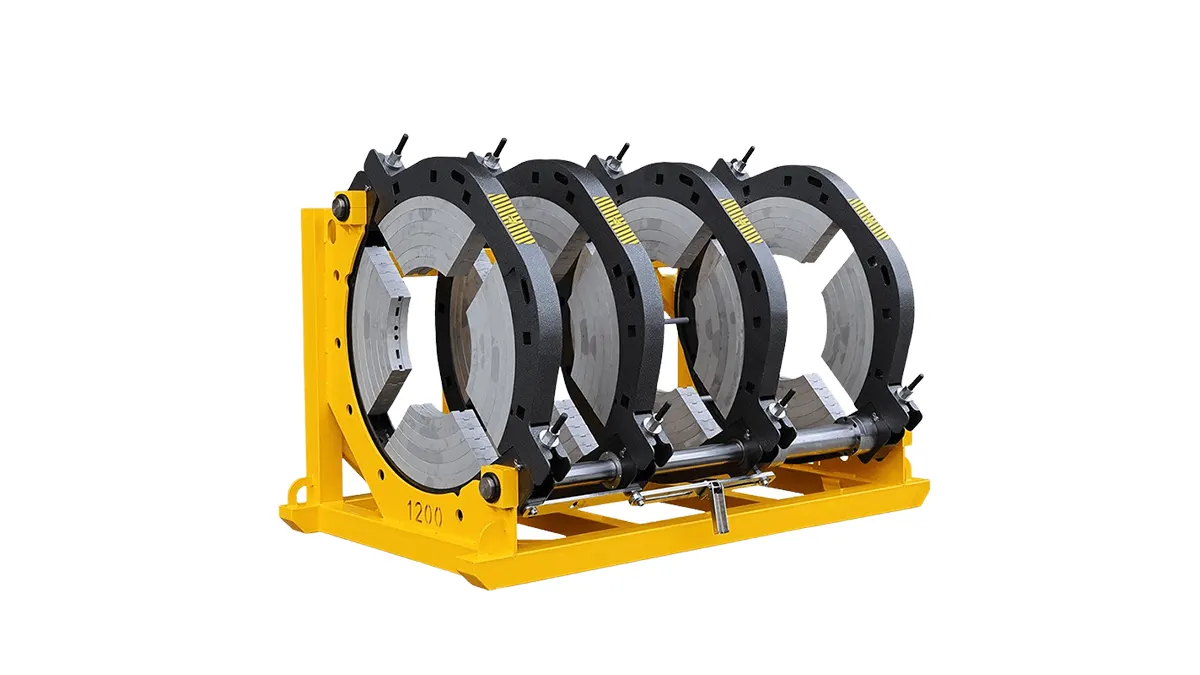
When sourcing a reliable HDPE pipe jointing machine for sewage systems, it is beneficial to partner with manufacturers who understand the specific nuances of wastewater applications. JQ-Fusion specializes in hydraulic and CNC automatic butt fusion equipment engineered for these demanding environments, providing machines that prioritize precise alignment and long-term durability. Their range, which includes machines capable of handling the substantial wall thicknesses and diameters found in sewage networks, reflects a deep understanding of what contractors and municipalities actually need in the field.
The Lifecycle Cost of Your Equipment Decision
Selecting a cheaper, low-quality machine often results in premature failure, inaccurate heating, and a high rate of defective welds. In a sewage system, the cost of excavating and repairing a failed joint far exceeds the initial savings on substandard equipment. A high-quality HDPE pipe jointing machine for sewage systems is characterized by:
- Long service life and availability of spare parts.
- Lower risk of costly rework.
- Greater efficiency, with faster heating and facing times.
- Comprehensive support and operator training from the supplier.
By prioritizing performance and reliability, you protect not only the physical sewage pipe network but also your project budget and timeline against unforeseen failures.
Key Questions to Ask Before You Buy
Making the final procurement decision requires rigorous vetting. To ensure you secure the correct HDPE pipe jointing machine for sewage systems, here is a final checklist of questions to pose to equipment suppliers:
- Can this machine precisely maintain fusion pressure for extended weld cycles on SDR11 and SDR17 pipes typical in sewage applications?
- Does the heating plate have an independent digital display and a calibration certificate traceable to national standards?
- Is the hydraulic system powerful enough to handle the maximum pipe diameter and SDR on your project without stalling?
- What data logging formats are supported, and is the interface user-friendly for onsite technicians?
- What kind of on-the-ground support, training, and warranty is provided, particularly for projects in remote or developing regions?
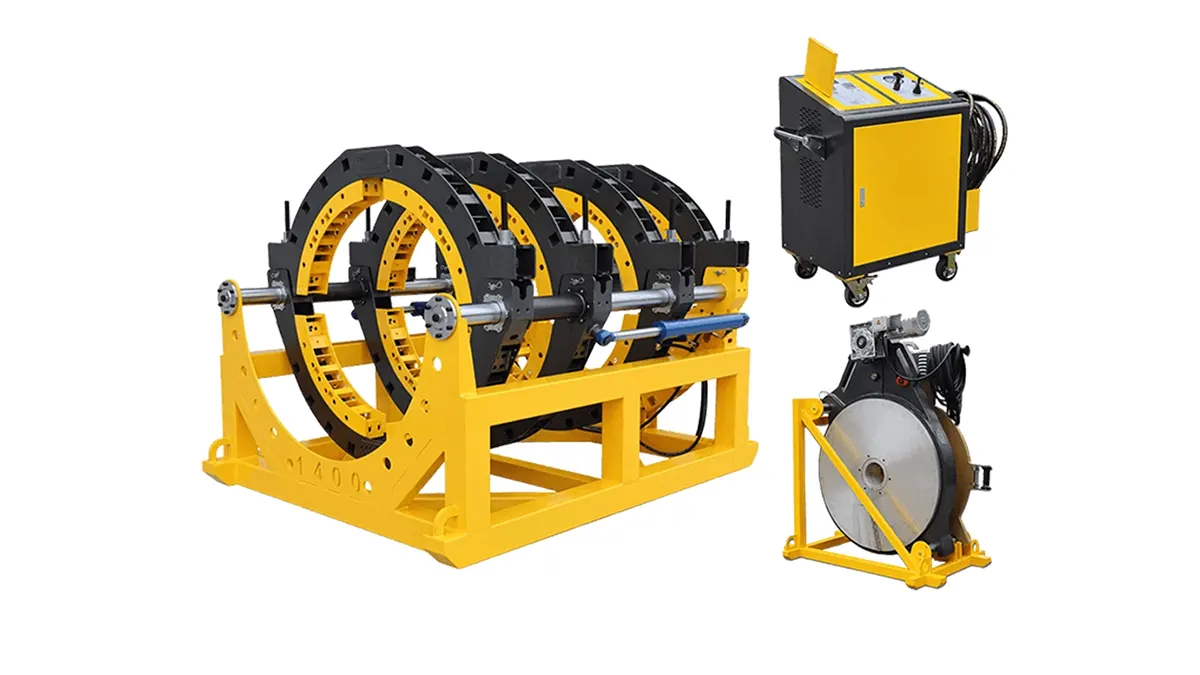
Equipping your crew with the right technology is the first and most crucial step in building a sewage system that will perform reliably for generations. By focusing on clamping power, heating accuracy, and digital traceability, you ensure that every joint is a permanent solution, not a future liability. Integrating these principles with equipment built to PE pipe jointing best practices guarantees infrastructure integrity.