
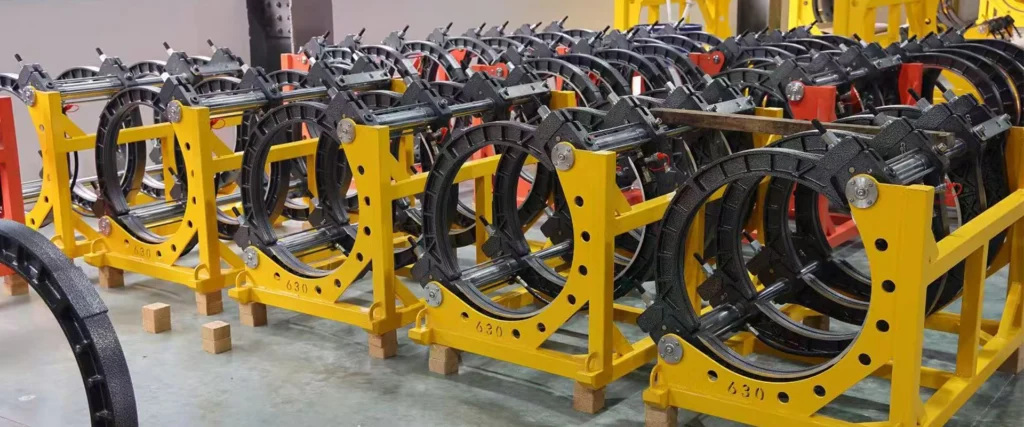
Understanding the HDPE pipe jointing machine working principle is essential for professionals in water supply, gas distribution, and industrial pipeline sectors. These machines create permanent, leak-proof connections by applying precise heat and pressure to fuse pipe ends together. Unlike traditional mechanical couplings, butt fusion welding delivers a monolithic joint that often matches or exceeds the strength of the original pipe. This article explores the core working theory, machine classifications, step-by-step operational procedures, and the tangible benefits of adopting the right fusion technology.
Core Working Principle of HDPE Pipe Jointing
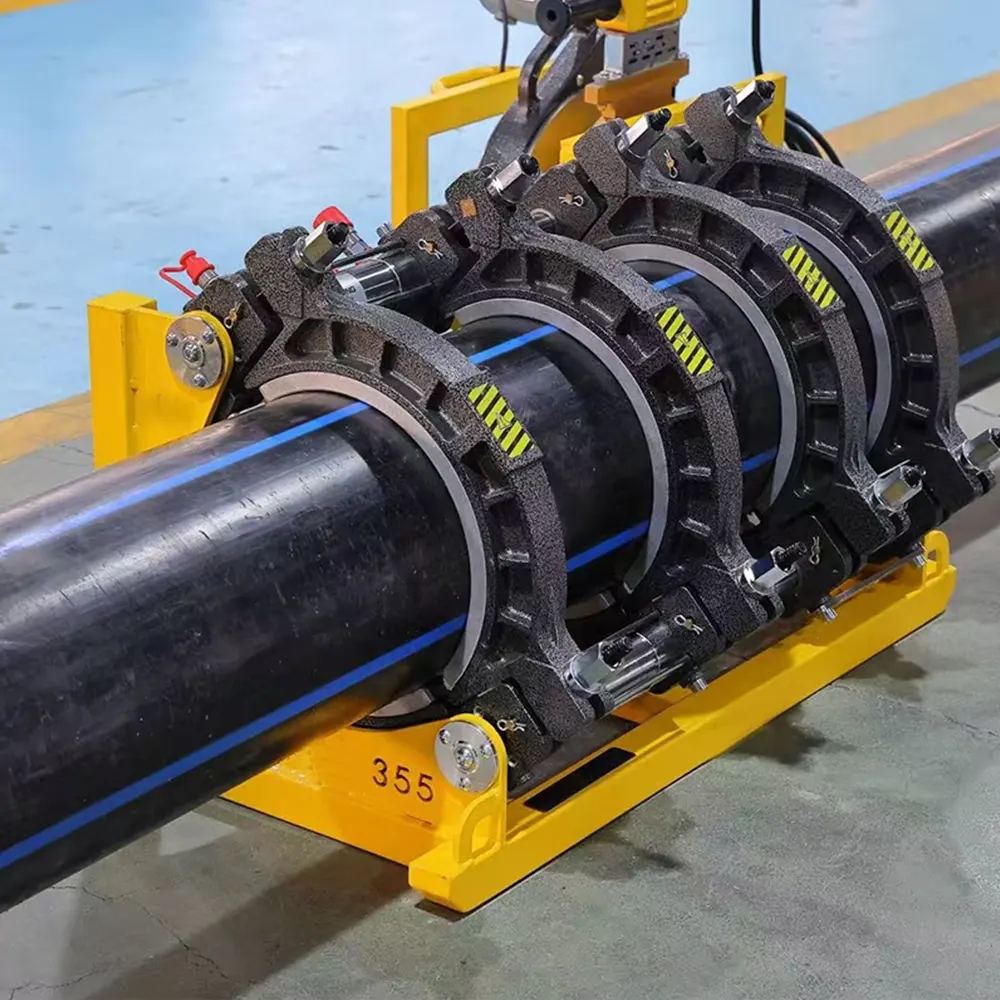
The fundamental HDPE pipe jointing machine working principle revolves around butt fusion, a thermofusion process. This technique simultaneously heats and melts the prepared ends of two pipe segments using a precisely temperature-controlled heating plate. Once the material reaches a molten state, the heating element is swiftly removed, and the softened ends are pressed together at a controlled force. The polymer chains intermingle and recrystallize under pressure as the material cools, forming a homogeneous, pressure-tight bond. This entire sequence relies on three critical parameters: temperature, time, and pressure, all governed by standards such as ISO 21307 butt fusion procedures.
Variations of this principle apply to electrofusion and multi-angle fitting machines. Electrofusion uses embedded heating coils within the fitting to melt the interface, while multi-angle pipe fitting machines adapt the heating and clamping concept for elbows, tees, and Y-junctions. Regardless of the method, the goal is uniform molecular bonding without oxidation or contamination at the weld zone.
Main Types of HDPE Pipe Jointing Machines
Selecting the appropriate equipment depends on pipe diameter, wall thickness, and project environment. The following table summarizes the primary categories based on the HDPE pipe jointing machine working principle.
| Machine Type | Operation Mode | Typical Diameter Range | Key Feature |
|---|---|---|---|
| Manual Butt Fusion | Hand-lever clamping / mechanical | 63mm – 315mm | Portable, cost-effective for small sites |
| Hydraulic Butt Fusion | Hydraulic power unit assist | 160mm – 2250mm+ | High clamping force, large diameter capability |
| CNC Automatic Butt Fusion | Programmable logic controller | 160mm – 630mm | Data logging, automated heating/pressure cycles |
| Electrofusion | Electrical resistance heating | 20mm – 1200mm | Fittings with built-in heating wires |
| Multi-Angle Fitting Machine | Manual or hydraulic | 315mm – 1600mm | Welds elbows, tees, and custom angles |
For medium-scale municipal projects, hydraulic butt fusion welding machines provide the ideal balance of power and portability. When absolute repeatable precision is required, CNC automatic butt fusion machines eliminate operator guesswork by following pre-programmed fusion routines compliant with ASTM F2620.
Step-by-Step Butt Fusion Process
The workflow below translates the HDPE pipe jointing machine working principle into practical field operations. Adhering to these steps ensures a joint that meets PE100+ technical guidance.
1. Preparation and Clamping
Clean the pipe ends and surrounding surfaces. Align the pipes in the machine clamps, ensuring minimal high-low mismatch. The clamps must hold the pipes securely to resist the fusion force.
2. Facing
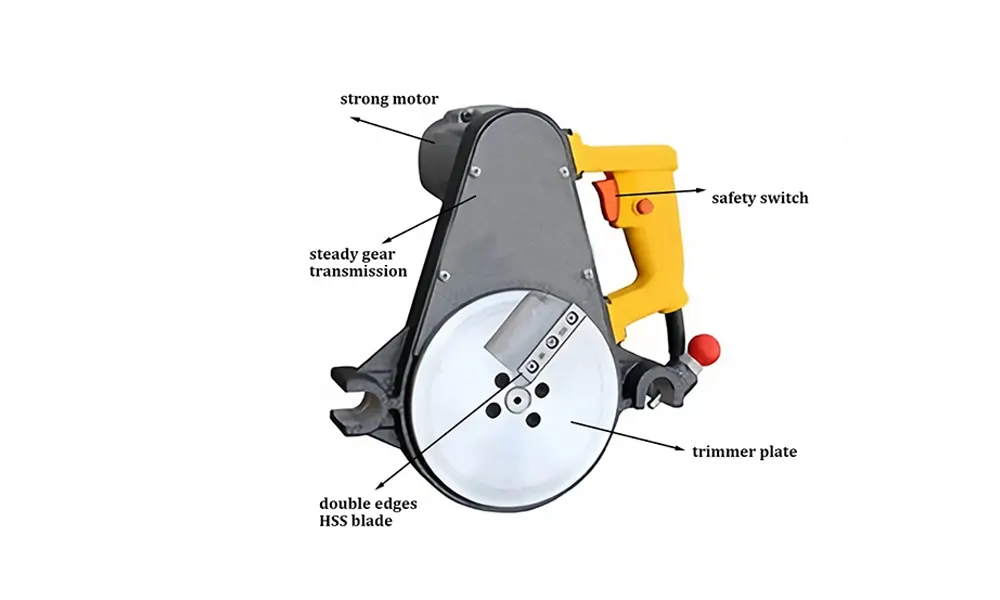
Use the rotating trimmer to shave off oxidized layers, creating fresh, parallel, and smooth faces. The shavings should be continuous ribbons, indicating proper alignment and sharp blades.
3. Heating
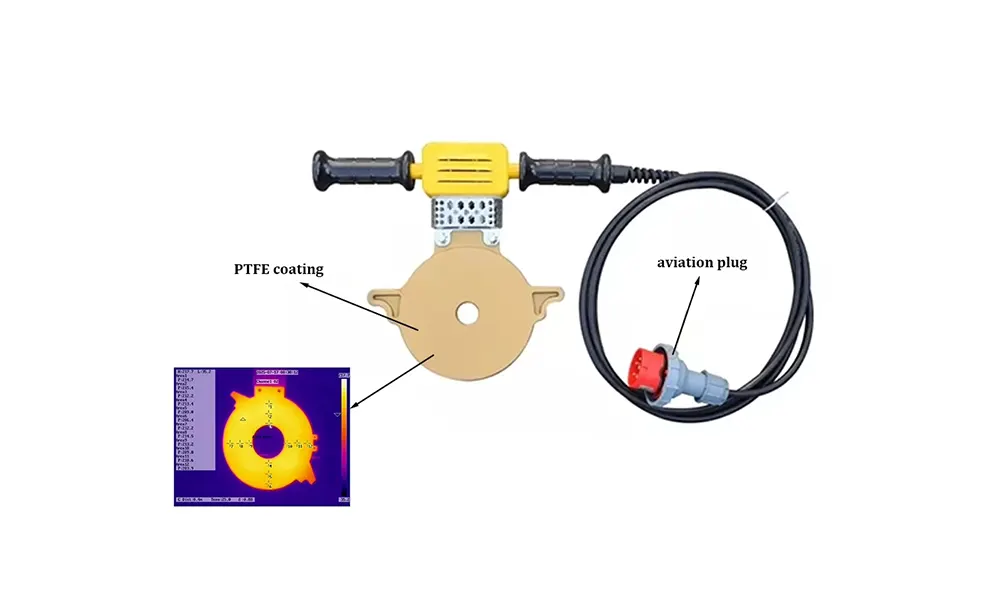
Insert the non-stick coated heating plate at the calibrated temperature (typically 200°C – 220°C). Apply initial bead-up pressure, then reduce to heat soak pressure to allow heat to penetrate the pipe wall without overheating.
4. Changeover
Quickly withdraw the heating plate and close the carriage. This dwell time must be minimized (usually within seconds) to prevent the molten ends from cooling prematurely.
5. Fusion Joining
Apply the specified fusion pressure steadily. The melt fronts flow together under controlled force, forming a double melt bead. Hold this pressure throughout the cooling phase without disturbance.
6. Cooling and Inspection
Allow the joint to cool completely under residual pressure. Visually inspect the external bead size and symmetry. Any cracking, excessive offset, or underbead indicates a compromised joint.
Hydraulic vs. CNC Automatic: Control Deep Dive
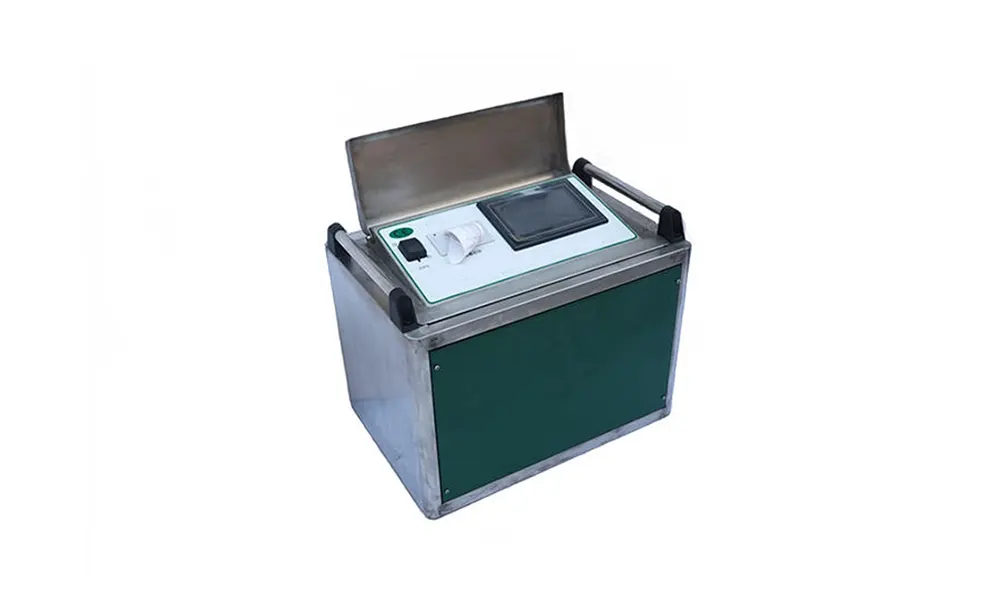
While both share the identical HDPE pipe jointing machine working principle, their control philosophies differ markedly. A hydraulic system relies on an operator to manually regulate pressure via a directional valve and observe a dial gauge. This demands skillful interpretation of fusion standards. In contrast, a CNC automatic machine utilizes sensors, encoders, and PID controllers to execute each phase. It records parameters such as drag pressure, melt temperature, and actual fusion force, generating a traceable joint report. For critical gas pipelines following PPI technical guidance, this data log is invaluable for quality assurance.
Key Components Supporting the Working Principle
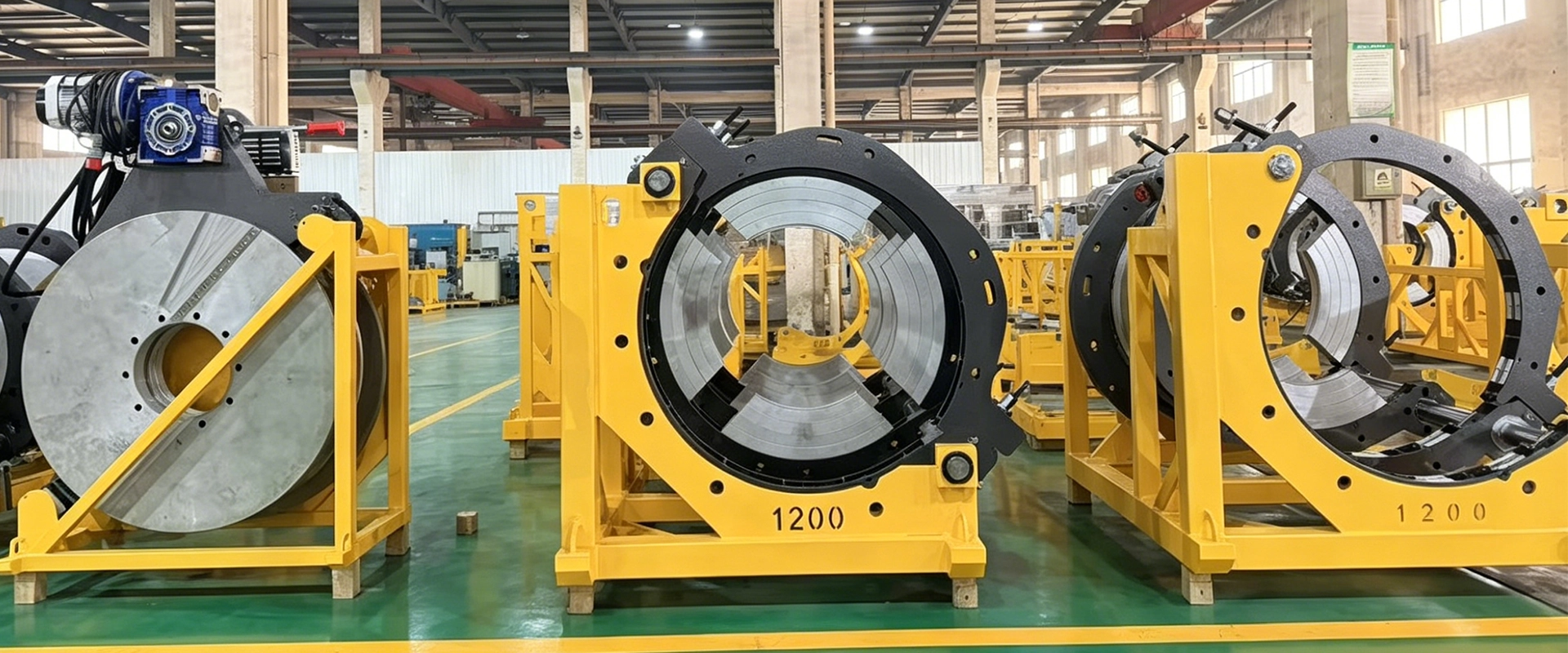
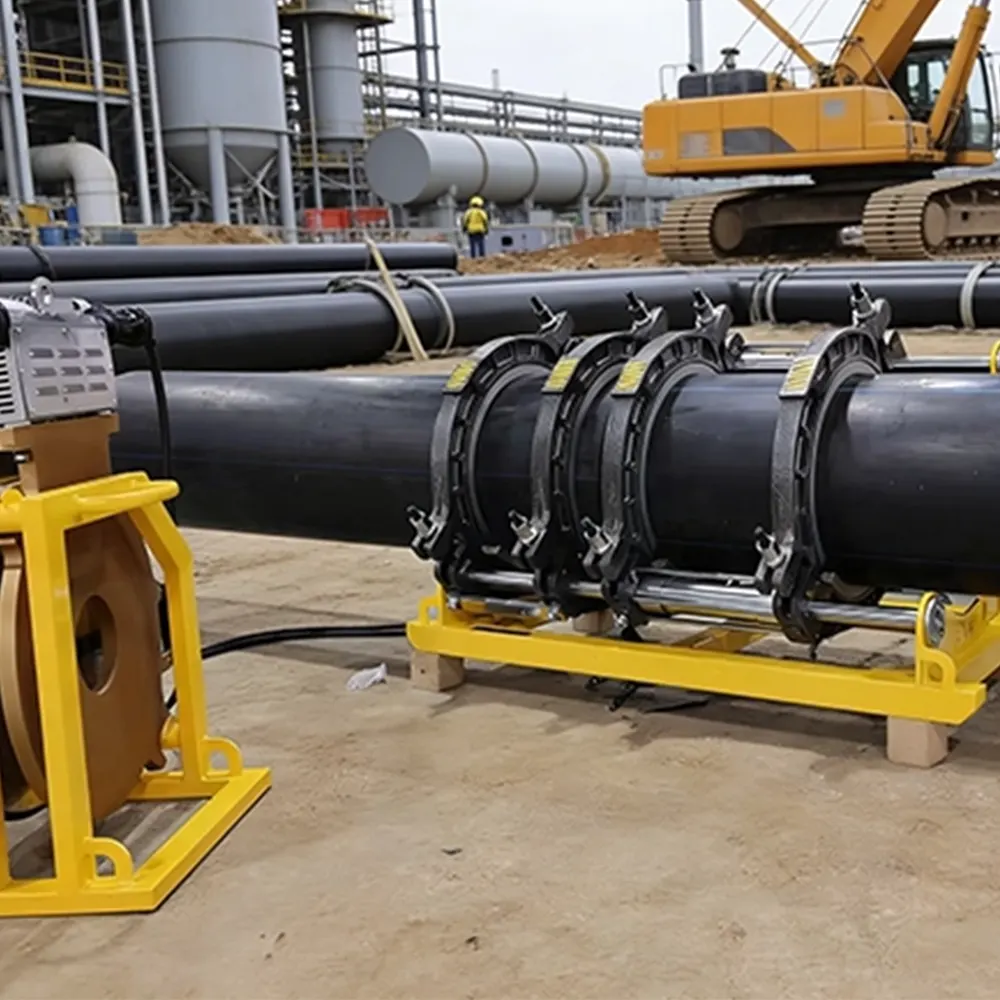
- Frame and Clamps: Provide rigid alignment and resist axial forces during fusion.
- Heating Plate: PTFE-coated aluminum or steel plate with precise digital thermostat ensuring uniform surface temperature.
- Trimmer (Facing Tool): Dual-sided cutting blades that plane both pipe ends simultaneously to maintain parallelism.
- Hydraulic Power Pack: Delivers regulated oil flow to the cylinders, controlling carriage movement and fusion pressure.
- Control System: In CNC models, a PLC with touchscreen interface manages the entire sequence and data logging.
Benefits of Correct Machine Selection and Operation
Applying the correct HDPE pipe jointing machine working principle yields operational and long-term performance advantages.
Homogeneous Joint Integrity
Butt fusion eliminates gaskets and leak paths, creating a monolithic pipeline network with constant pressure rating across the joint.
Zero Maintenance Connection
A properly fused PE joint requires no future retightening or replacement, dramatically reducing lifecycle costs compared to mechanical couplings.
Enhanced Flow Characteristics
The internal weld bead can be removed for gravity sewers, but even with a controlled external/internal bead, the smooth bore minimizes head loss.
Seismic and Soil Movement Resistance
Fused HDPE systems are flexible and can accommodate ground displacement, making them ideal for earthquake-prone areas and unstable soils.
As a specialist in pipeline connection technology, JQ-Fusion engineers and manufactures a full spectrum of machines that embody this proven working principle. From compact manual butt fusion welding machines for rural water networks to large-capacity hydraulic rigs for industrial outfalls, the equipment is designed for stable heating and precise alignment. Supported by rigorous quality control and global distribution, the company ensures that operators worldwide can achieve repeatable, high-strength welds project after project.
Essential Operational Checklist
To maintain the integrity of the HDPE pipe jointing machine working principle on site, always verify these points:
- Heating plate temperature is verified with a digital pyrometer before each joint.
- Trimmer blades are sharp and free of resin buildup.
- Pipe surface is scraped to remove oxidized skin immediately before clamping.
- Fusion pressure is recalculated based on actual pipe OD and wall thickness.
- Joint is protected from wind, rain, and rapid cooling during solidification.
Mastering the HDPE pipe jointing machine working principle transforms pipeline construction into a predictable, high-quality engineering process. By combining the right machine type, disciplined procedural adherence, and validated international standards, contractors guarantee a fusion joint built to perform for decades.



