
HDPE welding is the backbone of modern piping, tank fabrication, and industrial systems that demand leak-free, long-lasting joints. From municipal water mains and gas distribution to mining and chemical storage, choosing the right welding solution ensures durability, safety, and efficient installation. Below is a practical guide to HDPE welding solutions, equipment types, applications, and selection tips to help project managers, contractors, and fabricators get reliable results.
Why HDPE Welding Matters for Pipes, Tanks, and Fabrication
HDPE (High-Density Polyethylene) offers excellent chemical resistance, flexibility, and long-term performance. Proper welding creates homogeneous joints that match or exceed pipe strength, eliminating potential leak points from fittings or mechanical couplings. For infrastructure projects, this translates to fewer maintenance interruptions and longer service life.
Common Applications
HDPE welding is widely used in:
- Water supply networks and sewer systems
- Gas distribution and controlled-pressure pipelines
- Mining slurry lines and industrial chemical transfer
- Storage tanks, outfall piping, and fabricated manifolds
- Prefabricated skid systems and modular HDPE assemblies
Types of HDPE Welding Machines
Selecting the correct machine depends on pipe diameter, wall thickness, on-site conditions, and production volume. The main categories are:
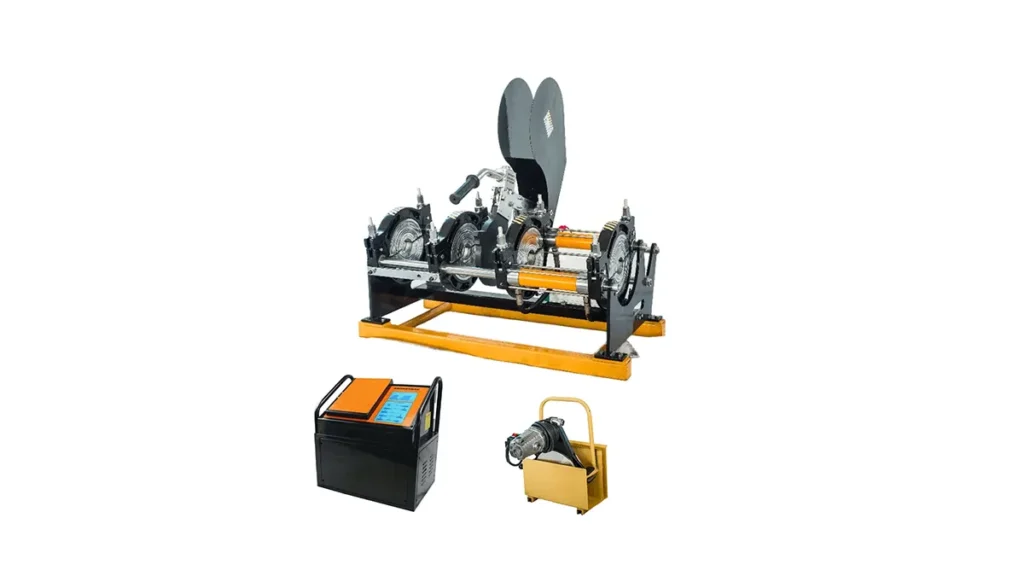
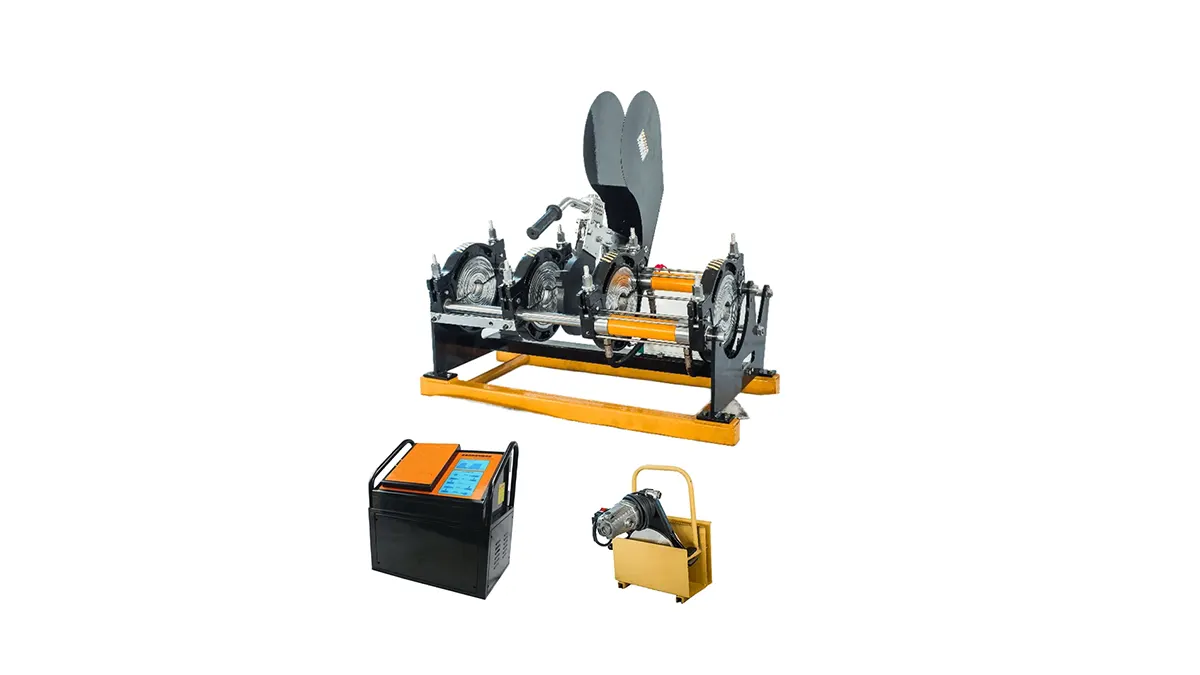
Manual Butt Fusion
Portable and cost-effective for small-diameter pipes and remote jobs. Ideal for repair work and low-volume installations.
Hydraulic Butt Fusion
Offers stronger clamping and controlled pressure — suitable for medium to large diameters where consistent force is needed to meet standards.
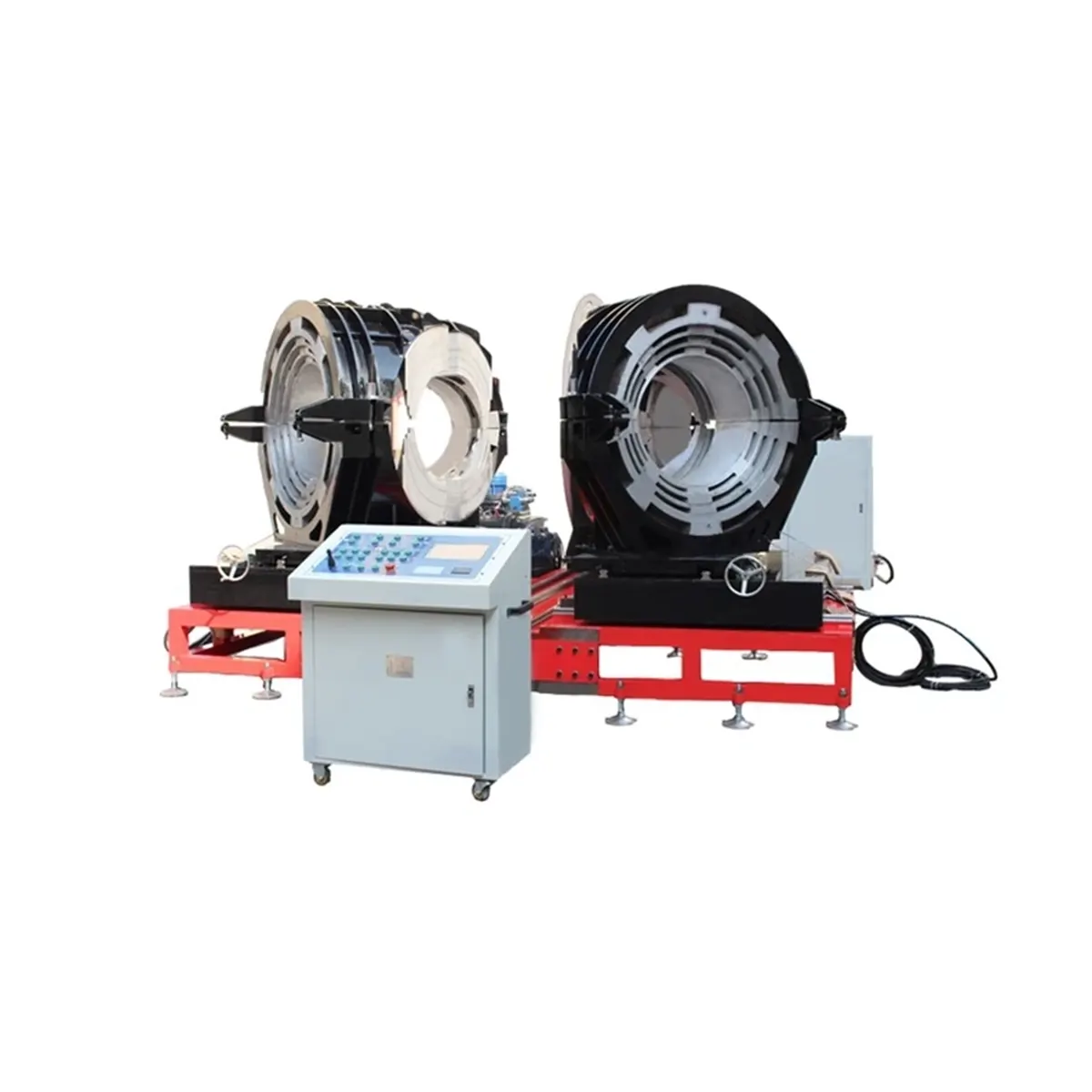
Automatic & CNC Butt Fusion
Provides precise, programmable cycles for high-volume or critical pipelines. Minimizes operator error and ensures repeatable weld quality for large projects.
Multi-Angle Fitting & Electrofusion Machines
Specialized for fittings and complex joints: multi-angle machines streamline fabrication of tees, bends, and manifolds; electrofusion is the preferred method for certain repairs and specialty fittings.
Quick Comparison: Machine Types
| Type | Typical Pipe Range | Ideal For | Key Benefit |
|---|---|---|---|
| Manual Butt Fusion | 20–110 mm | Repairs / Small jobs | Portable, low cost |
| Hydraulic Butt Fusion | 110–800 mm | Medium–large pipelines | Stable pressure, robust clamps |
| Automatic / CNC | 160–2000+ mm | Large projects / prefabrication | Precision and repeatability |
| Multi-Angle / Electrofusion | Varies (fittings-focused) | Complex fittings, custom fabrications | Fabrication speed and versatility |
Key Considerations for Reliable HDPE Welding
Material & Preparation
Clean, cut-square pipe ends and proper facing/trimming are essential. Remove debris, oxidation, and moisture before fusion. Use suitable scrapers and clamping fixtures for alignment.
Procedure & Parameter Control
Temperature, pressure, and dwell time must follow material and standard specifications. Automated systems reduce human variability, but trained operators are still critical for setup and verification.
Quality Assurance
Implement visual checks, destructive tests (where applicable), and nondestructive techniques like ultrasonic or peel tests for verification. Record welding logs and maintain traceability for critical infrastructure projects.
Tips for Project Managers and Contractors
Plan for the environment (cold or hot weather affects fusion), ensure spare parts and consumables are on site, and schedule operator training ahead of critical weld runs. For urban water or gas projects, coordinate shutdowns and pressure tests well in advance.
Why Invest in the Right Equipment
Correct equipment selection reduces rework, increases joint reliability, and speeds up installation. For contractors focused on repeatable quality and faster turnaround, automated and multi-angle solutions deliver measurable ROI on large programs.
Trusted Manufacturer
JQ-Fusion provides a range of HDPE welders — from manual and hydraulic models to advanced automatic and multi-angle machines — engineered for global infrastructure and fabrication needs. Visit JQ-Fusion for product details, technical specs, and local distributor information.



