
Lebanon’s infrastructure projects increasingly depend on durable, leak-free pipe systems — from municipal water networks and irrigation for the Bekaa Valley to coastal and industrial pipelines around Beirut and Tripoli. HDPE pipe welding delivers long-term reliability, corrosion resistance, and cost-effective installation for the varied terrain and climate challenges across the country.
Expert HDPE Pipe Welding Services for Lebanese Projects
Professional butt fusion and electrofusion techniques ensure seamless joints for HDPE pipelines used in potable water, wastewater, gas distribution, and industrial installations. Local contractors and engineering firms benefit from robust welding solutions that minimize maintenance and downtime in Lebanon’s urban, mountainous, and coastal environments.

Core Welding Methods
Butt fusion is ideal for creating uniform, high-strength joints on HDPE mains and large-diameter lines, while electrofusion offers precise, controlled connections for fittings and repair work. Both methods comply with international best practices and are well-suited for Lebanon’s mixed infrastructure needs.
Services Tailored to Lebanon’s Needs
Whether you are upgrading municipal water mains, installing irrigation distribution in agricultural zones, or constructing industrial pipelines near ports and factories, on-site welding capability and trained operators are essential. Services typically include site assessment, machine deployment, qualified welders, and quality testing to verify joint integrity under local pressure and environmental conditions.
Why HDPE Is a Smart Choice in Lebanon
HDPE offers several advantages for regional projects: excellent chemical and corrosion resistance against coastal saline conditions, flexibility for seismic areas, low hydraulic friction for efficient water delivery, and a long service life that reduces the need for disruptive repairs in dense urban districts.
Common Applications
- Municipal water supply — replacement and extension of water mains across cities and villages.
- Irrigation & agriculture — reliable networks for the Bekaa and other agricultural regions.
- Drainage & wastewater — robust systems for resilient sanitation infrastructure.
- Industrial and port pipelines — chemical-resistant solutions for coastal industries.
Machine Types & Project Fit
| Machine Type | Best For | Key Benefit |
|---|---|---|
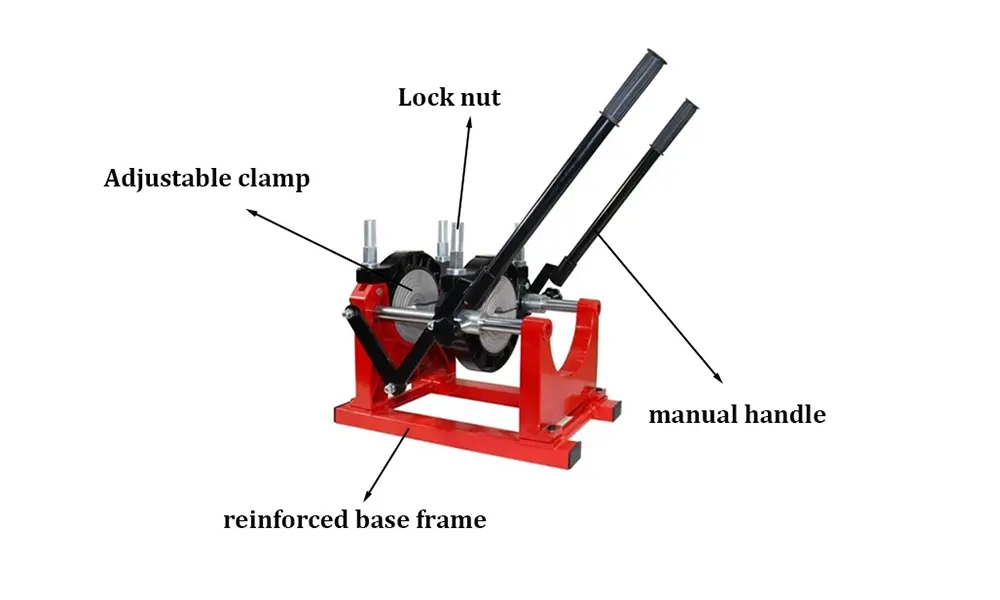
| Manual Butt Fusion | Small sites, remote repairs | Portable and cost-effective |
| Hydraulic Butt Fusion | Large diameter pipelines | High clamping force for heavy-duty joints |
| CNC Automatic Butt Fusion | Long production runs, utility networks | Consistent, recorded weld parameters |
| Electrofusion Units | Fittings, repairs, and branch connections | Precision heating for reliable small-joint integrity |
Quality Control & Standards
Proper welding requires trained operators, calibrated equipment, and post-weld testing such as visual inspection, dimensional checks, and, where applicable, non-destructive testing. Adopting international fusion procedures helps ensure durable networks that meet municipal and contractor expectations in Lebanon.
Project Support for Local Contractors
From on-site machine training to spare parts and technical troubleshooting, professional support reduces delays and improves weld consistency. Local project managers appreciate partners who can adapt fusion solutions to Lebanon’s logistics and seasonal working conditions.
Get Reliable HDPE Welding Solutions
For global and regional infrastructure needs, equipment and service providers who understand HDPE welding workflows can make the difference between a resilient pipeline and repeated repairs. Learn more about available butt fusion and electrofusion options, machine specifications, and on-site service support by visiting the manufacturer’s site linked below.


