
Plastic pipe welding machine in Ukraine is a critical tool for modern infrastructure projects — from municipal water networks and district heating repairs to gas distribution and industrial pipelines. This guide explains the types, selection criteria, local considerations, and practical buying tips for Ukrainian contractors, wholesalers, and municipal procurement teams looking for reliable HDPE and PE welding solutions.
Why Ukraine needs reliable plastic pipe welding machines
Ukraine’s ongoing infrastructure investments and maintenance work require welding equipment that performs in varied climates and field conditions. High-quality butt-fusion and electrofusion machines deliver leak-free joints, long service life, and faster installation times. For contractors working in urban centers like Kyiv or in colder northern regions, machine reliability, service access, and spare-part availability are top priorities.
Common applications across Ukraine
HDPE and PP pipes are widely used for potable water, sewage, stormwater, gas mains, irrigation, and industrial process lines. In urban rehabilitation and new-build projects, welding machines allow teams to perform robust on-site joins with minimal excavation time, supporting rapid restoration and network expansion.
Types of plastic pipe welding machines — quick buyer overview
Choosing the right machine depends on pipe diameter, jobsite mobility, automation level, and budget. Below is a concise comparison to help you identify options commonly required by Ukrainian buyers.
| Machine Type | Ideal for | Pipe diameter range | Key advantages |
|---|---|---|---|
| Manual Butt Fusion | Small teams, repair jobs, rural sites | 20mm – 315mm | Affordable, portable, simple maintenance |
| Hydraulic Butt Fusion | Municipal projects, medium–large pipelines | 63mm – 1600mm+ | High clamping force, consistent fusion, fast cycle |
| Automatic / CNC Butt Fusion | Large projects, factory pre-fabrication | 90mm – 2250mm | Precise control, data logging, minimal operator error |
Selecting by pipe material & size
Match the machine to the pipe polymer (HDPE, MDPE, PP, PVDF) and wall thickness. For gas distribution or pressure applications, ensure the machine supports the required fusion parameters and certification traceability for each joint.
Power, portability and automation — trade-offs
Portable manual units are best for tight access and low-volume work. Hydraulic and automatic machines suit high-volume, quality-critical projects where repeatability and documentation matter. Ukrainian logistics and site access often favor compact hydraulic units that can be truck-mounted and quickly deployed.
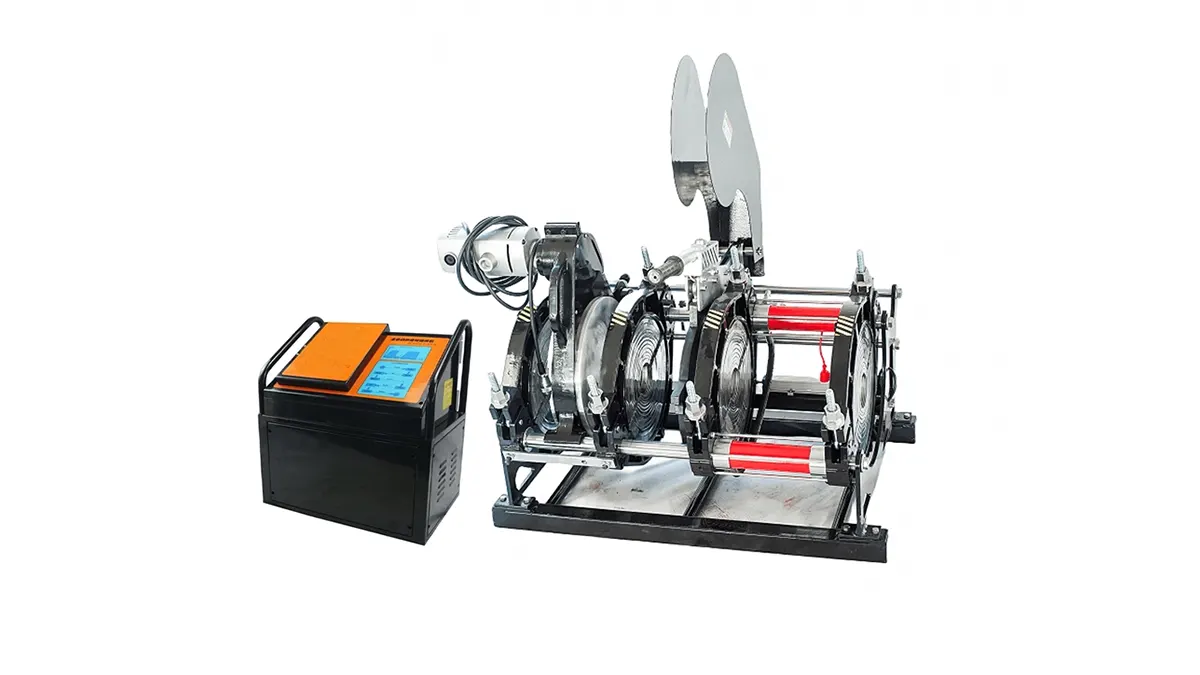
Key technical features to check before purchase
When evaluating suppliers, look for these essential specifications:
- Heating plate quality: even temperature distribution and durable coating to prevent sticking.
- Clamping range and alignment: secure fixture system for concentric alignment during fusion.
- Hydraulic power and pressure control for consistent weld force.
- Control systems with clear displays and data logging for quality records.
- Availability of local spare parts, consumables, and consumable tool kits.
Buying tips for Ukrainian contractors and procurement teams
Local conditions shape buying decisions — cold winters, varied terrain, and repair urgency require practical solutions.
Consider service, language, and documentation
Prefer machines with manuals and software available in English and, where possible, Russian or Ukrainian. Ensure the supplier or distributor offers training for Ukrainian crews and fast spare-part shipping to reduce downtime.
Certifications and traceability
Ask vendors for welding procedure documentation and quality traceability for critical pipelines. For gas and potable water projects, joint records and calibration certificates are often required during project acceptance.
Cost, ROI and financing considerations
Initial price is only part of the picture. Calculate total cost of ownership: consumables, operator training, maintenance, and downtime. Investing in a higher-grade hydraulic or semi-automatic machine can reduce rework and provide faster payback on large projects through higher throughput and fewer failures.
Maintenance and safety best practices
Regular inspection of heaters, hydraulic lines, and clamps extends machine life. Follow safety protocols for pressure systems and electrical components, and ensure operators are trained in proper warm-up, fusion, and cooling cycles. Consistent record-keeping improves traceability and reduces liability on public contracts.
Warranty & spare parts
Confirm warranty coverage terms and lead times for spare parts. Consider stocking common consumables locally to maintain uptime during busy seasons or emergency repairs.
How to source the right machine in Ukraine
Evaluate suppliers based on product range, technical support, and local logistics capabilities. For a reliable manufacturing partner with a wide range of HDPE butt fusion, hydraulic, and automatic welding machines, consider exploring JQ-Fusion’s product lines and support options at https://jq-fusionwelding.com/.
Final checklist for buyers
- Define pipe materials, diameters and daily welding targets.
- Choose between portability vs. automation based on site needs.
- Verify training, manuals, and spare-part availability in Ukraine.
- Ensure documentation and testing procedures meet project standards.
- Compare total cost of ownership, not just purchase price.
With the right selection, a plastic pipe welding machine becomes a long-term asset that improves project speed, joint quality, and network reliability across Ukraine’s demanding infrastructure landscape.



