
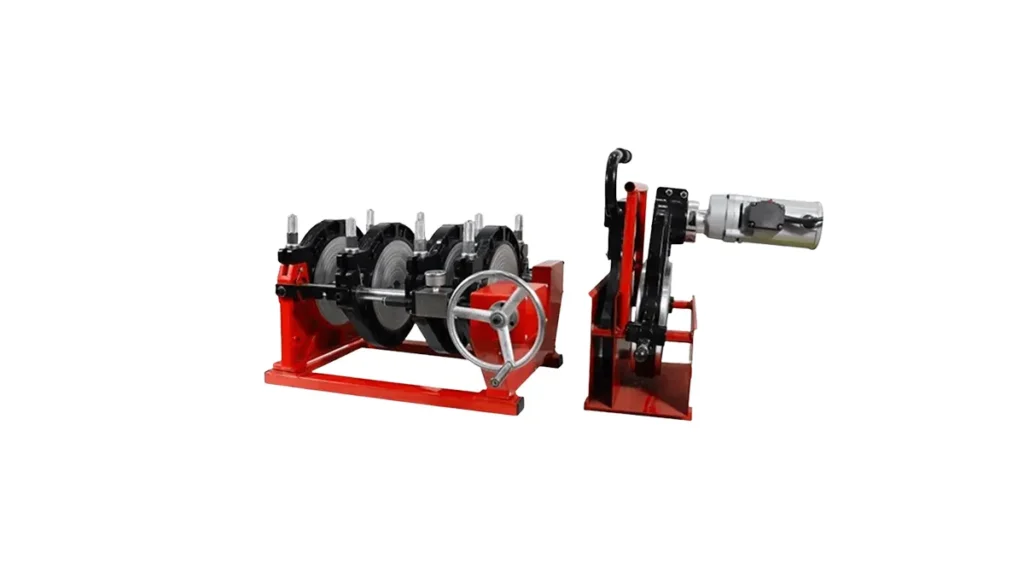
When people in the pipeline industry ask about a butt fusion machine, they often focus on power, pipe range, or automation. But there is another factor that can decide whether a machine performs well in the field or creates costly problems: quality certification. For HDPE welding machines, quality certification is not just a label on paper. It is a practical signal that the equipment has been tested, controlled, and built to deliver stable welding results under real project conditions. In water supply networks, gas distribution systems, mining sites, and industrial pipelines, one poor weld can affect the safety and service life of the entire line. That is why quality certification matters so much.
HDPE pipe welding depends on precision. Temperature must be accurate, pressure must remain stable, and the alignment of the pipe ends must be correct. If the machine fails to keep these factors consistent, the fusion joint may look acceptable but still contain hidden weaknesses. Certification helps buyers reduce that risk. It shows that the manufacturer follows recognized production and inspection rules, and that the machine has passed testing related to performance, reliability, and safety. For contractors, distributors, and project managers, this is a major advantage because it makes purchasing decisions easier and more trustworthy.
In today’s global market, buyers are not only looking for a machine that works once in a workshop. They need equipment that can handle repeated use on projects in different climates, with different operators, and with different pipe sizes. Quality certification supports this expectation by confirming that the machine has been designed and manufactured with traceable standards. This is especially important for international projects where engineering specifications are strict and documentation matters. A certified machine is often easier to approve for procurement, easier to compare against competitors, and more likely to satisfy end users who need long-term reliability.
Key point: quality certification is not only about compliance. It is about reducing welding risk, improving project confidence, and protecting the value of the entire pipeline installation.
What Quality Certification Means for HDPE Welding Machines
Quality certification is a structured proof that a product meets certain requirements. For HDPE welding machines, this usually includes assessment of manufacturing quality, safety controls, welding performance, and consistency across production batches. In many cases, third-party organizations or testing bodies examine whether the machine can perform according to declared standards. This is particularly important for butt fusion equipment because the machine directly affects joint strength. If a heater plate is unstable, a hydraulic system is unreliable, or a clamping unit is misaligned, the entire welding process may be compromised.
For example, a hydraulic butt fusion welding machine must maintain pressure in a stable and controlled way. An automatic butt fusion welding machine must execute heating, joining, and cooling stages with precision. A certified machine gives the buyer more confidence that these functions have been verified rather than simply promised. In practical terms, certification helps ensure that the equipment can deliver repeatable results, which is essential for projects where every joint must meet engineering expectations.
Manufacturers like JQ-Fusion emphasize strict quality control because the market demands dependable performance. Their machines are used in projects that require accuracy and durability, and certification helps prove that the equipment is suitable for those applications. When quality control is combined with certification, the result is not only better product confidence but also fewer project delays, less rework, and lower maintenance costs.
Why Certification Matters in Real Project Conditions
On paper, many HDPE welding machines may look similar. In the field, the differences become obvious. A certified machine is more likely to perform consistently when operators work in harsh environments, long shifts, or changing weather conditions. For pipeline contractors, consistency is critical because a single weak joint can stop progress, require excavation, and increase labor costs. Quality certification matters because it helps reduce that uncertainty before the machine ever reaches the job site.
Another important reason is safety. HDPE fusion involves heat, hydraulic force, and mechanical movement. If these systems are not engineered properly, they can create operational hazards. Certification usually requires checks that help reduce such risks. It can also give project owners and procurement teams more confidence that the machine complies with the expectations of modern industrial applications. In sectors like gas distribution, safety cannot be treated as optional. Certification provides an additional layer of assurance.
Important benefit: certified equipment supports smoother acceptance by buyers, engineers, and project supervisors because it demonstrates proven performance and controlled manufacturing.
Common Elements Checked During Certification
Although certification systems may differ from one market to another, several factors are commonly reviewed. These include temperature accuracy, hydraulic pressure stability, clamp alignment, material quality, and the reliability of key components. For HDPE welding machines, these tests are meaningful because each factor affects final weld quality. If the heater plate does not reach or maintain the right temperature, fusion may be incomplete. If pressure control is unstable, the pipe ends may not join correctly. If alignment is off, the fusion bead may be uneven and the joint may lose strength.
Testing also helps confirm that the machine is suitable for the intended pipe diameter range. JQ-Fusion, for example, produces machines for small to large pipe sizes, including manual, hydraulic, and CNC automatic models. Certification can support confidence that each model has been manufactured with the expected precision. This is especially valuable for customers who need one supplier for multiple project types, from municipal water systems to mining pipelines.
It is also common for quality certification to include inspection of production processes. This means not only the final machine but also the way it is assembled, calibrated, and tested. A stable manufacturing process is usually a strong indicator that the product will remain reliable over time. For customers, this reduces the risk of receiving machines that vary in quality from batch to batch.
How Certification Supports Better Purchasing Decisions
When buyers compare suppliers, they often want to know which manufacturer can provide the strongest combination of quality, support, delivery speed, and customization. Certification helps simplify this comparison. It gives buyers a clear, externally supported reference point. Instead of relying only on product brochures or sales promises, they can review certification documents and understand whether the machine has been tested to recognized requirements.
This is especially helpful for distributors and international buyers who need to protect their own market reputation. If they sell non-certified or poorly tested machines, customer complaints may rise and after-sales service costs may increase. A certified machine can strengthen brand credibility and improve long-term customer satisfaction. In addition, certification can help with export processes, project tenders, and compliance documentation, all of which are common in global pipeline procurement.
JQ-Fusion’s focus on OEM and ODM customization also makes certification valuable. When a machine is customized for color, voltage, design, or project-specific features, buyers want assurance that the modified product still meets quality expectations. Certification and internal testing work together here. They show that customization does not mean reduced reliability. Instead, customization can be delivered while still preserving stable welding performance and safety.
The Relationship Between Certification and Long-Term Value
Some buyers look only at the initial price of an HDPE welding machine. However, the total cost of ownership matters more over time. A machine with certification may cost more at purchase than an uncertified alternative, but it often saves money through fewer breakdowns, fewer rejected welds, better stability, and lower maintenance demand. In other words, certification supports long-term value.
For project managers, long-term value also includes schedule reliability. When a machine performs consistently, teams can maintain workflow and avoid unnecessary inspection problems. For contractors working on tight deadlines, this can make a significant financial difference. Certified equipment is also easier to train operators on because it usually follows clearer design and control standards. That means less confusion, faster onboarding, and better daily efficiency.
Worth remembering: a cheaper machine without certification can become more expensive after repeated repairs, failed welds, project delays, and reputational damage.
Why JQ-Fusion Emphasizes Quality Assurance
JQ-Fusion positions itself as a professional butt fusion welding machine manufacturer with more than 20 years of industry experience. That kind of background matters because practical experience often shapes stronger quality systems. The company’s focus on manual, hydraulic, and CNC automatic machines shows that it serves a broad range of customers and project needs. To support such a market, quality certification becomes a natural part of the manufacturing strategy.
According to its company profile, JQ-Fusion performs comprehensive testing on each machine, including temperature accuracy, hydraulic pressure stability, and clamp alignment inspection. This approach is directly connected to certification because it demonstrates control over the most critical welding variables. The company also highlights global support, fast shipping, and technical guidance, which matter even more when customers expect reliable machines backed by documented quality.
For buyers looking for a trusted supplier, it is not enough to ask whether the machine is available. The better question is whether it has been built and verified for real project use. That is where quality certification adds value. It turns a product into a dependable solution.
Practical Signs of a Trustworthy Certified Supplier
If you are evaluating an HDPE welding machine supplier, there are several signs that suggest the company takes quality seriously. First, the supplier should be transparent about certification documents and testing procedures. Second, it should provide clear technical specifications and explain how the machine performs under different conditions. Third, it should show an ability to customize equipment without losing consistency. Fourth, it should offer technical support after the sale, because quality is not only about the machine itself but also about the service behind it.
It is also helpful when the supplier maintains stock and can deliver quickly. In pipeline projects, delays are expensive. A manufacturer that combines certification, testing, inventory control, and responsive support is often a safer choice than one that only competes on price. This is one reason many global buyers value established manufacturers with strong production capacity.
When reviewing options, keep in mind that certification should be part of a broader evaluation. Look at the company’s factory capability, production consistency, customer service, and real project experience. Together, these factors reveal whether the machine is truly suitable for demanding use.
Frequently Asked Questions
Q1: What is the main purpose of quality certification for HDPE welding machines?
It helps prove that the machine has been tested for performance, safety, and manufacturing consistency, giving buyers confidence in its welding reliability.
Q2: Does certification guarantee perfect welds every time?
No. Certification cannot replace proper operation, maintenance, or operator training, but it significantly improves the chance of stable and reliable results.
Q3: Why do international buyers care so much about certification?
Because it supports procurement approval, compliance requirements, and product trust across different markets and project environments.
Q4: Is a certified machine always better than a cheaper non-certified one?
In most professional applications, yes, because certification reduces risk, improves consistency, and usually lowers long-term operating costs.
Q5: What should I check before buying a certified butt fusion machine?
Review the certification details, testing standards, pipe size range, support services, customization options, and the manufacturer’s real project experience.



