
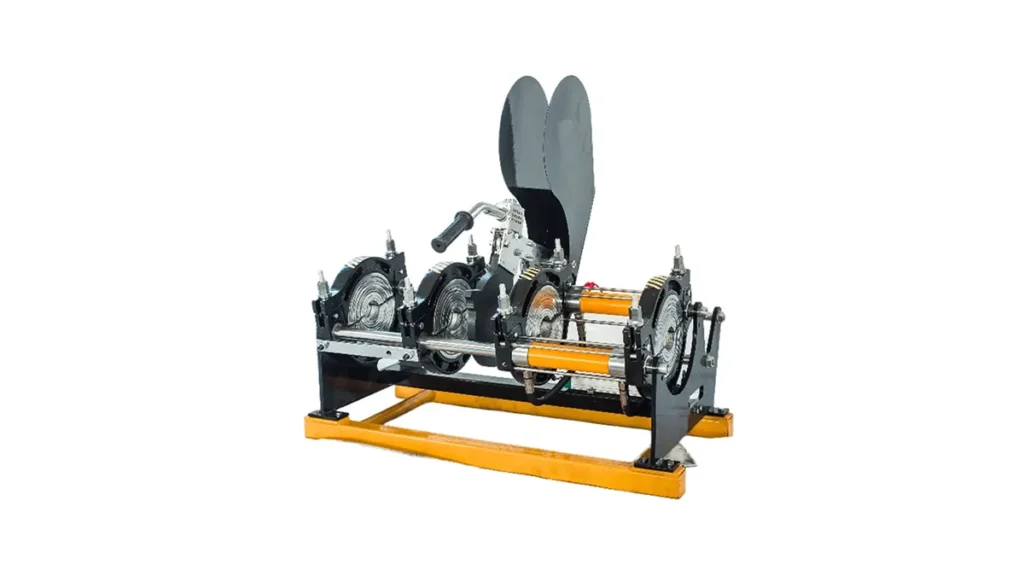
When people ask, “What are the ISO standards for pipe welding equipment?” they are usually looking for one clear thing: how to choose equipment that can consistently produce safe, durable, and repeatable welds. In pipeline construction, water supply, gas distribution, mining, and industrial systems, pipe welding is not just about joining two sections together. It is about creating a long-lasting connection that can withstand pressure, temperature changes, vibration, and years of service. That is why ISO standards matter so much. They give manufacturers, contractors, and inspectors a shared language for quality, performance, and safety.
For buyers and engineers, ISO compliance is not only a technical detail. It is also a practical business decision. Equipment built to recognized standards is easier to trust, easier to inspect, and easier to deploy across different projects and regions. This is especially important when sourcing from a global supplier such as butt fusion machine provider, where consistency, durability, and certification can directly affect project outcomes.
Why ISO Standards Matter in Pipe Welding Equipment
ISO standards are developed to reduce uncertainty. In pipe welding, uncertainty can lead to weak joints, misalignment, overheating, poor fusion, and costly rework. A machine may look robust on the outside, but if it cannot control temperature, pressure, clamping force, and cycle timing correctly, the final weld may fail in service. ISO standards help define what acceptable equipment performance looks like, so manufacturers can design to a benchmark and buyers can compare options more fairly.
For industrial projects, standards also support procurement. Engineers and project managers often need equipment that can be qualified, documented, and supported by test records. A machine that follows recognized international requirements is easier to integrate into a project quality plan. It also helps with cross-border trade, because many distributors and contractors work in multiple markets where consistency is essential.
Key idea: ISO standards do not just tell you how to weld; they help ensure that the equipment used for welding is capable of producing reliable results every time.
Common ISO Standards Related to Pipe Welding Equipment
There is no single ISO document that covers every type of pipe welding machine in one place. Instead, several standards and related frameworks are used together depending on the technology, material, and application. The most relevant ones typically address welding quality, equipment safety, process control, and operator competence. In the case of thermoplastic pipe welding and butt fusion systems, manufacturers often align their machines with ISO-based requirements for performance, testing, and quality management.
For example, standards in the ISO 21307 family are widely referenced in the thermoplastic pipe fusion field. These documents help define fusion procedures for polyethylene and other plastic pipes. They are important because the machine settings must match the pipe material and diameter to achieve a proper bond. In addition, ISO quality management systems such as ISO 9001 often support the manufacturing process itself, ensuring the equipment is built under controlled and traceable conditions.
Other standards may address safety, electrical design, hydraulic performance, and general machine conformity. When evaluating a supplier, it is important to ask not only whether the product is “ISO compliant,” but also which specific ISO standards apply and how compliance has been verified.
What ISO Compliance Means for Butt Fusion Equipment
In butt fusion welding, pipe ends are heated, pressed together, and held under controlled pressure to form a molecular bond. This process demands precise control. A good machine must maintain accurate heating plate temperature, stable hydraulic pressure, correct clamp alignment, and proper timing through the full fusion cycle. If any of these variables drift, the joint quality can be affected.
That is why machine design is so important. A compliant butt fusion machine should support repeatable operation across a wide range of pipe sizes. It should also allow the operator to follow standardized procedures without guesswork. Features like digital temperature control, robust hydraulic systems, and well-machined clamps can all contribute to better results. This is one reason why many contractors choose experienced manufacturers that specialize in fusion technology and understand the demands of real-world pipeline work.
At JQ-Fusion, for example, the product range is built around manual, hydraulic, and CNC automatic systems that serve different project needs. Whether a crew is working on water supply lines or industrial pipelines, the goal is the same: stable welding performance and dependable field operation.
Important Performance Areas Covered by Standards
Temperature accuracy is critical because underheating leads to weak fusion, while overheating can damage the pipe surface and reduce joint strength.
Hydraulic pressure stability ensures the pipe ends are pressed together with the correct force during the fusion and cooling stages.
Clamp alignment helps the pipe ends meet evenly, reducing stress points and improving the integrity of the final weld.
Repeatability matters because a machine must perform consistently across many welds, not just one successful test joint.
These performance areas are not theoretical. In a real project, they directly affect installation speed, inspection results, and long-term service reliability. Contractors often prefer machines that include clear control interfaces, strong structural components, and reliable calibration support. That is especially true for large-diameter pipeline work, where errors become more expensive as pipe size increases.
How ISO Standards Connect to Manufacturer Quality Control
A well-built welding machine begins with a controlled manufacturing process. ISO-oriented quality systems help manufacturers monitor design, production, inspection, and final testing. This is important because pipe welding equipment is only as reliable as the process used to build it. If the machine frame is weak, the guide rails are inaccurate, or the hydraulic assembly is unstable, the weld results will suffer no matter how skilled the operator is.
Strict quality control often includes temperature testing, pressure verification, clamp inspection, and component alignment checks. These steps help confirm that the equipment will perform reliably under working conditions. For buyers, this means less downtime and fewer unexpected failures. For project managers, it means greater confidence in the welding process from start to finish.
Reputable manufacturers also provide documentation, user guidance, and technical support. This support is especially useful when a contractor is working in multiple regions or needs equipment configured for specific voltages, designs, or branding. Customization can be a major advantage, but only if quality remains stable across all variants.
Practical takeaway: ISO standards are most valuable when they are supported by real factory testing, traceable production methods, and responsive after-sales service.
How to Evaluate a Supplier of Pipe Welding Equipment
When selecting a supplier, buyers should look beyond marketing claims. Ask for product certifications, test records, and details about the standards used during manufacturing. Review whether the supplier can support your pipe diameter range, voltage requirements, and project environment. If the equipment will be used in harsh conditions, robustness and ease of maintenance become even more important.
It is also wise to assess the supplier’s production capacity and inventory. Fast delivery can be critical when a project schedule is tight. A supplier with strong engineering capability and a large stock of core models can help reduce delays. This is one reason global contractors often prefer manufacturers with established export experience and technical support teams.
For example, JQ-Fusion highlights more than 20 years of industry experience, OEM and ODM customization, and worldwide support for pipeline projects. Its product line includes hydraulic butt fusion welding machines, automatic butt fusion welding machines, electrofusion welding machines, and multi-angle pipe fitting welding machines. For buyers seeking dependable field performance, those capabilities can make the sourcing process much easier.
The Role of Standards in Different Welding Applications
Different applications place different demands on equipment. Water supply systems often require high reliability and clean, consistent joints. Gas distribution networks may demand additional control and traceability because safety margins are strict. Mining and industrial pipelines can involve abrasive environments, heavy-duty operation, and remote installation sites. In each case, the standards used to evaluate the equipment help ensure that the machine is suitable for the intended job.
For thermoplastic fusion, especially HDPE pipe work, the machine must support the correct pressure and heating cycle for the pipe material. For metal pipe welding systems, other ISO and related standards may be more relevant, including those covering welding procedures, operator qualification, and equipment safety. That is why the first step is always to identify the exact application before comparing standards or machine models.
Standards are not a substitute for engineering judgment, but they are a strong foundation. They create a common baseline that helps engineers, inspectors, and end users communicate clearly about expectations and results.
Why Global Projects Rely on Standardized Welding Equipment
International projects bring together teams from different countries, languages, and technical backgrounds. Standardized equipment reduces the chance of misunderstanding. If a machine follows recognized requirements, operators can be trained faster and quality audits become more straightforward. This is especially helpful for distributors and contractors who manage multiple projects at the same time.
Another advantage is scalability. When a company expands into new markets, standardized welding equipment makes it easier to replicate success. A crew that knows how to operate one compliant system can often adapt quickly to another machine in the same family. That lowers training time and improves operational efficiency.
In the long term, compliance also supports reputation. Companies that deliver reliable welds build trust with clients, engineers, and project owners. That trust often leads to repeat business and stronger market positioning.
What Buyers Should Remember Before Purchasing
Before purchasing pipe welding equipment, buyers should confirm the following: the applicable ISO standards for the specific pipe material and process, the machine’s tested performance ranges, the manufacturer’s quality system, and the availability of technical support. They should also verify whether the supplier can provide customization if the project requires non-standard voltage, branding, or control features.
In many cases, the best choice is not simply the cheapest machine, but the one that offers the most reliable performance over time. That means looking at build quality, spare parts support, service response, and the supplier’s track record. A properly selected machine can reduce waste, improve productivity, and help ensure safe welds throughout the life of the project.
If you are comparing options for HDPE pipeline work, a trusted manufacturer with strong engineering capability, stable stock supply, and global support can provide a major advantage. In that context, ISO standards become more than paperwork. They become a practical way to protect project quality.
Frequently Asked Questions
Q1: Are ISO standards mandatory for all pipe welding equipment?
Not always, but they are widely used as the benchmark for quality, safety, and performance. Many projects require compliance as part of procurement or inspection rules.
Q2: What ISO standards are most relevant for HDPE butt fusion machines?
Standards related to thermoplastic pipe fusion, process control, and manufacturing quality are typically the most relevant. The exact standard depends on the material, pipe size, and application.
Q3: Does ISO compliance guarantee a perfect weld?
No. It improves the chances of consistent results, but proper operator training, correct procedure settings, and good site conditions are also essential.
Q4: How can I confirm whether a supplier truly follows ISO requirements?
Ask for certificates, test reports, production quality documentation, and details on which standards apply to the equipment you want to buy.
Q5: Why is supplier support important if the machine is ISO compliant?
Because even compliant equipment needs installation guidance, maintenance help, and after-sales support to perform well in real projects.
In short, ISO standards for pipe welding equipment provide a framework for safer design, better manufacturing, and more reliable field performance. For buyers and contractors, they are one of the clearest indicators that a machine is built for professional use and long-term value.



