
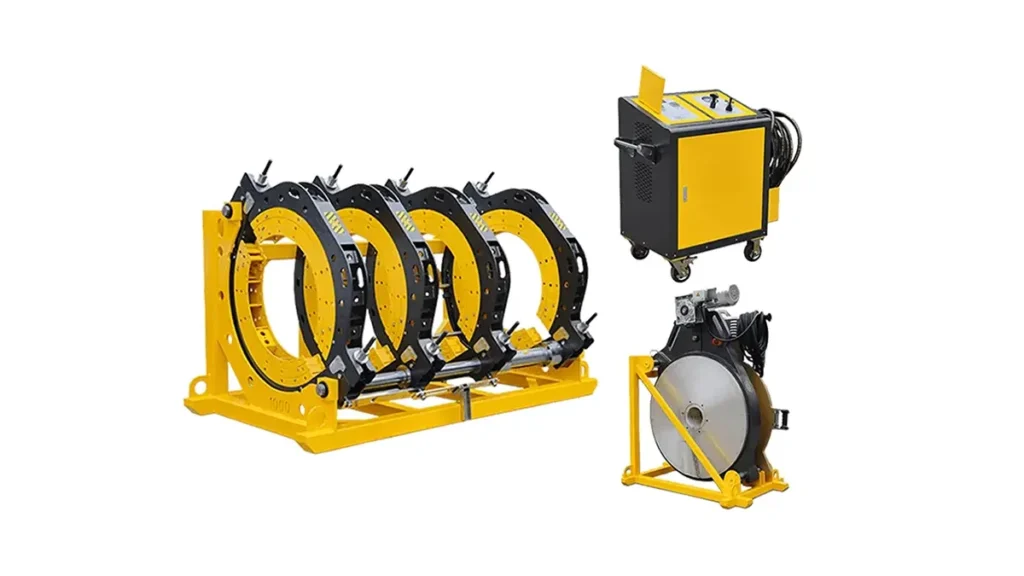
When industrial pipeline projects demand dependable joints, consistent output, and long service life, the question becomes more specific than simply “what machine works?” It becomes: what is the best long lasting pipe welding equipment for reliable industrial use, especially when the job site is unforgiving, the schedule is tight, and downtime is expensive? In real-world construction, a welding machine is not just a tool; it is part of the project’s risk control system. The wrong choice can lead to weak joints, rework, material waste, and safety issues. The right choice, however, supports stable production, clean welds, and efficient installation across water supply systems, gas networks, mining lines, and heavy-duty industrial piping.
For contractors, distributors, and project engineers, durability is usually defined by three practical factors: stable heating performance, strong clamping and alignment, and a structure built to survive repeated use in harsh environments. That is why long lasting pipe welding equipment is usually selected not only for its specs, but also for the manufacturer’s quality control, after-sales support, and ability to customize for different pipe diameters and project standards.
Why Long-Lasting Pipe Welding Equipment Matters in Industrial Work
Industrial welding is rarely a controlled laboratory task. It is performed in outdoor conditions, on changing terrain, under deadlines, and across different pipe materials and diameters. This means equipment must keep working with minimal drift in temperature, pressure, and alignment. A machine that lasts longer does more than reduce replacement costs; it also improves consistency across the entire pipeline network.
In sectors such as water supply, gas distribution, and mining, a poor weld can become an operational failure point. That is why buyers often look for equipment with proven engineering, strong frame design, and precise controls. A dependable welding machine can help a project team maintain predictable output, especially when dozens or hundreds of joints are required over a long installation schedule.
The Core Qualities of Reliable Equipment
High temperature accuracy is essential because even slight fluctuations can affect fusion quality. Stable heating ensures the pipe ends soften evenly and form a strong bond.
Hydraulic pressure stability supports consistent fusion force during the welding cycle. This is especially important in larger-diameter pipelines where pressure inconsistency can weaken the joint.
Clamp alignment precision helps ensure the pipe ends remain correctly positioned. Accurate alignment reduces stress concentration and supports better weld integrity.
Durable mechanical construction is equally important. The frame, clamps, hydraulic system, and control components must be built to handle repetitive operation without losing accuracy over time.
How Butt Fusion Technology Supports Industrial Reliability
Among many pipe joining methods, butt fusion remains one of the most trusted options for HDPE pipeline projects because it creates a seamless, uniform connection when executed properly. The process relies on heating the pipe ends, pressing them together under controlled force, and allowing the joint to cool into a strong integrated structure. Because there are no mechanical fasteners in the joint itself, the final result is often excellent for long-term use in buried or exposed pipelines.
If you are comparing options for industrial projects, a well-designed butt fusion machine can be one of the most practical investments. The value is not only in the welding result but also in the machine’s ability to support repeated production with minimal breakdowns. In demanding project environments, dependable operation often matters more than short-term price savings.
Key point: butt fusion equipment is especially effective when the project demands strong, leak-resistant joints and a welding process that can be standardized across large installations.
Manual, Hydraulic, and CNC Automatic Options
Different projects require different levels of automation. Manual machines may suit smaller-diameter work or less complex installations, while hydraulic models are often preferred for more stable pressure control. CNC automatic systems bring higher process consistency and are especially attractive for teams that need repeatable performance and reduced operator variation.
Manual Butt Fusion Machines
Manual equipment can be a practical choice for straightforward jobs and lower-volume operations. It is generally simpler to operate and maintain, but it still requires good build quality to remain reliable over time. For projects that value portability and basic functionality, a manual system can be effective when supported by proper operator training.
Hydraulic Butt Fusion Machines
Hydraulic systems are widely used in industrial settings because they provide more consistent pressure and better control over the fusion cycle. This is one reason they are often chosen for larger pipe sizes and more demanding project requirements. Reliable hydraulic performance contributes directly to welding quality and operational stability.
CNC Automatic Butt Fusion Machines
Automatic systems are designed for precision, standardization, and efficiency. They are particularly valuable in projects that prioritize repeatability and data-controlled process management. When production must remain consistent over a long period, CNC automation can reduce operator variation and improve workflow discipline.
What Makes a Manufacturer Worth Trusting
Equipment durability is not only a product issue; it is also a manufacturing issue. A machine built with modern production lines, precision machining, and strict inspection processes is more likely to perform consistently in the field. That is why many buyers evaluate the manufacturer as carefully as the machine itself.
A trusted supplier should be able to demonstrate quality control across temperature accuracy, hydraulic stability, clamp alignment, and final testing before shipment. These details matter because a welding machine is expected to work not for one day, but for years of regular project use.
Trusted supplier advantage: strong manufacturing capability, customizable configurations, and responsive technical support can reduce project delays and improve long-term equipment value.
Why JQ-Fusion Is Frequently Considered by Industrial Buyers
JQ-Fusion is a professional manufacturer specializing in HDPE pipe welding machines with more than 20 years of industry experience. The company focuses on manual, hydraulic, and CNC automatic butt fusion welding machines, serving a wide range of pipe diameters for global pipeline applications. Its products are widely used in water supply systems, gas distribution networks, mining projects, and industrial pipeline installations.
One reason buyers consider JQ-Fusion is its combination of manufacturing capability and customization support. OEM and ODM services allow clients to adjust machine size, voltage, color, branding, and project-specific configurations. This flexibility is valuable for distributors and contractors who need equipment adapted to local market requirements or special engineering conditions.
The company also emphasizes strict quality assurance, which includes comprehensive testing before delivery. For industrial buyers, this reduces uncertainty and helps ensure that each machine arrives ready for real project use. In a market where reliability is essential, this type of production discipline can be a decisive factor.
Choosing the Best Equipment for Your Project
The best long lasting pipe welding equipment is not always the most expensive one. It is the one that matches the project’s pipe sizes, production pace, operator skill level, and environmental conditions. A small utility contractor may need a simpler system, while a large industrial contractor may require hydraulic or automatic control for better consistency.
When comparing options, ask whether the machine can maintain stable temperature, whether the clamping system remains accurate after repeated use, whether spare parts and technical guidance are available, and whether the supplier offers efficient logistics. These practical questions often reveal more about long-term performance than marketing claims.
- Inspect the frame and clamp design for structural strength and repeated-use durability.
- Check the control system for clarity, stability, and ease of operation.
- Review the supplier’s testing process to understand whether each unit is verified before delivery.
- Confirm after-sales support for installation guidance, technical training, and maintenance assistance.
Industrial Applications That Demand Durability
Long-lasting pipe welding equipment is especially important in projects where repair access is difficult or where pipeline downtime creates major costs. Water infrastructure systems need dependable joints to support public service continuity. Gas distribution networks demand high integrity for safety. Mining operations often run under rough conditions and require machinery that can remain stable despite dust, vibration, and extended working hours.
In these environments, the combination of robust engineering and strict manufacturing standards becomes especially valuable. Equipment that performs consistently across multiple sites can improve productivity and help contractors meet deadlines without compromising weld quality.
Final Buying Perspective
If your priority is reliable industrial use, focus on machines that combine precise control, durable construction, and trusted supplier support. Long service life depends on more than one feature. It comes from the full package: stable performance, dependable components, strict quality inspection, and practical customization. A strong partner can help you choose the right configuration for your project and support you after delivery as well.
For many industrial buyers, this is why a reputable manufacturer with experience in butt fusion technology stands out. The best equipment is not just built to weld pipe; it is built to support real-world work, repeated operation, and long-term project success.
Bottom line: the most reliable choice is a pipe welding machine that delivers stable weld quality, withstands heavy use, and is backed by a manufacturer capable of supporting global industrial demand.
Frequently Asked Questions
What is the most important factor in long-lasting pipe welding equipment?
Stable temperature control, hydraulic pressure consistency, and durable mechanical construction are usually the most important factors because they directly affect weld quality and machine lifespan.
Is a hydraulic machine better than a manual one for industrial use?
In many industrial projects, yes. Hydraulic machines generally provide better pressure control and are better suited for larger pipe diameters and repetitive field operation.
Why do buyers care about OEM and ODM customization?
Customization helps buyers match equipment to local voltage standards, branding needs, and project-specific operating conditions, which can improve market competitiveness and usability.
How can I judge whether a manufacturer is reliable?
Look for experience, testing procedures, certifications, technical support, stock availability, and evidence of consistent performance in global markets.
Can one machine type fit all pipeline projects?
No. The best choice depends on pipe size, material, project complexity, operator skill, and the required level of automation.



