
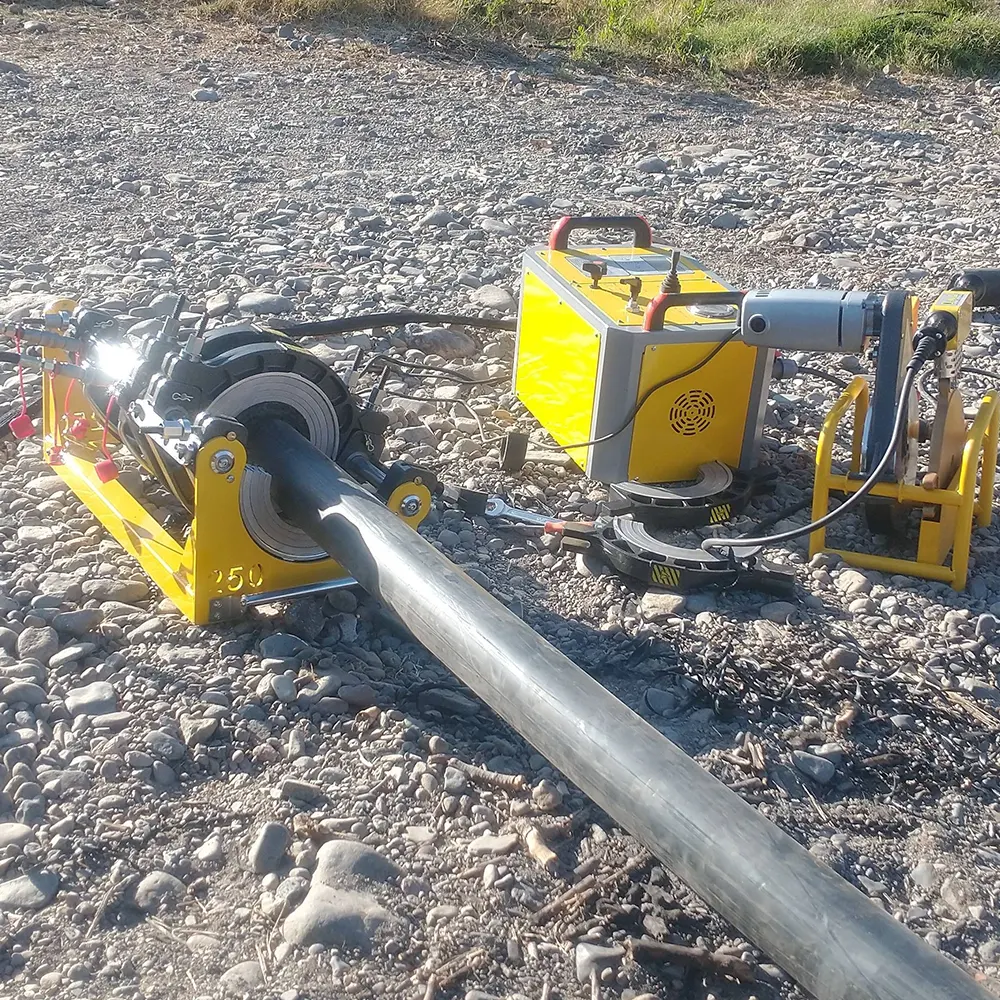
In pipe welding, alignment is not a small setup detail. It is one of the most important factors that determines whether a weld will perform reliably in the field or fail under pressure. When two pipe ends are not held in the correct position, the joint can develop uneven fusion, excessive stress, poor bead formation, and long-term weakness. A well-designed butt fusion machine helps create the right conditions, but the clamp alignment process is what truly makes strong and safe welds possible.
For contractors, pipeline operators, and welding teams, alignment affects more than appearance. It affects joint integrity, pressure resistance, installation speed, and overall project reliability. Whether the application is water supply, gas distribution, mining, or industrial piping, the same rule applies: if the pipe ends are not aligned correctly, the weld is already at a disadvantage before heating even begins.
Why alignment matters: It ensures the pipe surfaces meet evenly, the heating plate transfers energy consistently, and the fused material cools into a uniform, durable joint. In practical terms, good alignment reduces rework, prevents leakage risks, and supports long service life.
What Pipe Welding Clamp Alignment Actually Does
Clamp alignment holds both pipe ends on the same centerline so the surfaces can be prepared, heated, and fused under controlled conditions. In butt fusion welding, this means the pipes must not shift vertically, horizontally, or rotationally during the entire process. Even a small offset can create a non-uniform fusion zone, which may look acceptable at first but become a failure point later.
A precise clamp system also supports consistent face milling and heating. When the pipe ends are centered properly, the facing tool removes material evenly, and the heating plate contacts both surfaces uniformly. This creates symmetrical melt beads and better molecular bonding across the joint.
Key point: Alignment is not just about keeping pipes steady. It is about controlling geometry, pressure distribution, and heat transfer so the fusion process produces a joint with maximum strength.
Why Poor Alignment Weakens Welds
Poor alignment creates uneven stress in the joint. When one side of the pipe sits higher or lower than the other, the molten material does not distribute evenly during fusion. This can lead to thin spots, weak edges, or internal defects that reduce the effective load-bearing area of the weld.
Misalignment also increases the chance of contamination. If the pipe ends do not meet correctly, gaps and offsets may trap debris, dust, or moisture. These contaminants can interfere with bonding and compromise the weld’s long-term reliability.
Another issue is mechanical stress. A pipe joint that starts out crooked will continue to carry uneven forces after installation. Over time, vibration, ground movement, internal pressure, and temperature changes can cause the weak point to grow worse. In critical infrastructure, that is a risk no project can afford.
Misalignment can lead to: poor bead symmetry, reduced fusion area, increased residual stress, higher leak risk, and shorter joint life.
The Relationship Between Clamp Accuracy and Weld Quality
Clamp accuracy directly affects weld quality because the clamp is responsible for positioning the pipe before and during the fusion cycle. If the clamp structure is rigid, stable, and precisely machined, the pipe stays where it should. If the clamp is loose or worn, even a careful operator may struggle to maintain correct alignment.
This is one reason high-quality equipment matters. A reliable machine is designed not only for heating and pressure control, but also for stable pipe holding. In professional pipeline projects, the clamp system must support the entire process from setup to cooling without introducing movement or distortion.
For manufacturers like JQ-Fusion, clamp alignment is part of a larger commitment to precision engineering. That includes stable hydraulic systems, accurate temperature control, and strict inspection methods that help ensure every machine performs consistently in real projects.
Tip: Before every weld, check that the clamps grip the pipe evenly and that the pipe faces meet without visible offset. Small corrections at this stage save major problems later.
How Alignment Supports Stronger and Safer Welds
A stronger weld begins with equal contact. When both pipe ends are aligned precisely, the fusion process produces a more uniform heat-affected zone. This improves the structural continuity of the joint and helps it handle pressure and environmental stress more effectively.
A safer weld is one that is less likely to fail unexpectedly. In pipeline systems carrying water, gas, slurry, or industrial fluids, joint failure can result in shutdowns, safety hazards, and expensive repairs. Correct alignment reduces the chance of hidden defects that might only appear after the system is in service.
Alignment also improves repeatability. When the setup is stable, operators can produce consistent welds across multiple joints, which is essential for large projects with many connections. This consistency is especially valuable in projects where inspection standards are strict and downtime must be minimized.
Common Causes of Clamp Misalignment
Clamp misalignment can happen for several reasons. Worn clamp surfaces, poor calibration, dirty contact points, and improper pipe preparation are common causes. In some cases, the problem comes from using equipment that is not suited to the pipe diameter or project requirement.
Operator error also plays a role. If the pipe is not inserted fully, or if the clamps are not tightened evenly, the pipe can shift when facing or heating begins. In field conditions, uneven ground or rushed setup can make this even more likely.
This is why training and equipment quality should go hand in hand. A machine with better structure and clearer controls gives operators a better chance of achieving proper alignment every time. That is also why many teams choose equipment from experienced suppliers with strong technical support.
Practical Steps to Improve Alignment Before Welding
Start by inspecting the machine and clamps before each use. Look for damage, wear, or debris that could affect contact. Clean the clamp surfaces and make sure all moving parts operate smoothly.
Next, prepare the pipe ends carefully. The pipe should be cut square, free of burrs, and positioned correctly in the clamp. If the pipe is oval, contaminated, or out of tolerance, alignment will be more difficult and the weld may be compromised.
Then verify centerline positioning. The pipe ends should line up horizontally and vertically with no visible mismatch. If required, use the machine’s adjustment features to fine-tune the fit before facing begins.
Finally, check alignment again after facing and before heating. Pipes can shift during preparation, especially on larger diameters. A second inspection helps catch small changes before they become a welding defect.
Checklist icon: Clean clamps, square pipe cut, correct pipe insertion, centerline verification, and final pre-heat inspection are all essential steps for stable fusion welding.
Why Equipment Quality Matters in Alignment Control
Not all welding machines provide the same level of alignment control. High-quality machines are built with precision-machined components, stable frames, and dependable hydraulic or manual clamping systems. These features help hold the pipe securely without unnecessary movement.
For large-scale pipeline work, especially in demanding environments, equipment quality can affect both productivity and weld integrity. A machine that maintains clamp stability under pressure reduces operator fatigue and improves consistency across multiple welds.
This is where manufacturers with strong production capability and strict quality control stand out. JQ-Fusion, for example, focuses on stable performance, custom solutions, and tested welding equipment for global projects. That kind of support helps contractors meet demanding technical requirements while maintaining safety and efficiency.
Learn more about product options such as hydraulic butt fusion welding machine systems, automatic butt fusion welding machine models, and other solutions designed for reliable pipe joining.
Alignment in Real-World Pipeline Projects
In water supply systems, a poorly aligned weld can create leakage issues that are costly to locate and repair. In gas distribution, the safety consequences are even more serious because a weak joint may become a hazard. In mining and industrial systems, pipes often face vibration, abrasion, and pressure changes that make joint quality even more important.
That is why alignment should be treated as a core quality control step, not an optional adjustment. When crews make alignment a standard part of the welding workflow, they reduce risk and improve confidence in every completed joint.
Professionals who manage large project timelines also benefit from faster inspection and fewer repairs. Good alignment shortens troubleshooting time and supports better jobsite efficiency, which helps keep the entire project on schedule.
How JQ-Fusion Supports Better Welding Results
JQ-Fusion provides butt fusion solutions designed for stable performance, strict quality control, and global project use. With more than 20 years of industry experience, the company focuses on building machines that help contractors achieve reliable alignment, accurate fusion, and durable results.
Its product range includes manual, hydraulic, and CNC automatic butt fusion welding machines, along with other pipe welding solutions for different project needs. This flexibility makes it easier for buyers to select equipment that matches their pipe diameter, operational environment, and production goals.
The combination of manufacturing capability, OEM and ODM customization, and professional support creates value for global distributors and contractors who need dependable welding equipment that can perform under real working conditions.
Conclusion
Pipe welding clamp alignment is essential because it directly affects weld strength, safety, and long-term reliability. A precise setup ensures proper heat transfer, even fusion, and reduced stress in the joint. In contrast, poor alignment introduces defects and weak points that can cause costly failures.
For teams working on critical pipeline systems, alignment should always be treated as a priority. With the right machine, proper training, and careful inspection, welders can produce stronger joints and safer results across a wide range of applications.
FAQ
1. Why is clamp alignment so important in butt fusion welding?
It keeps the pipe ends centered so heat, pressure, and fusion occur evenly, which improves joint strength and reduces defects.
2. What problems can poor alignment cause?
Poor alignment can cause uneven bead formation, weak fusion, stress concentration, contamination, and a higher risk of leaks or failure.
3. How can operators check alignment before welding?
They should inspect the clamps, verify centerline positioning, ensure the pipe ends meet evenly, and confirm alignment again after facing.
4. Does machine quality affect alignment accuracy?
Yes. A rigid, well-built machine with accurate clamps and stable hydraulics makes it much easier to maintain proper alignment during welding.
5. Where can I learn more about butt fusion welding equipment?
You can explore professional machine options and technical support through JQ-Fusion’s official website for project-specific solutions.



