
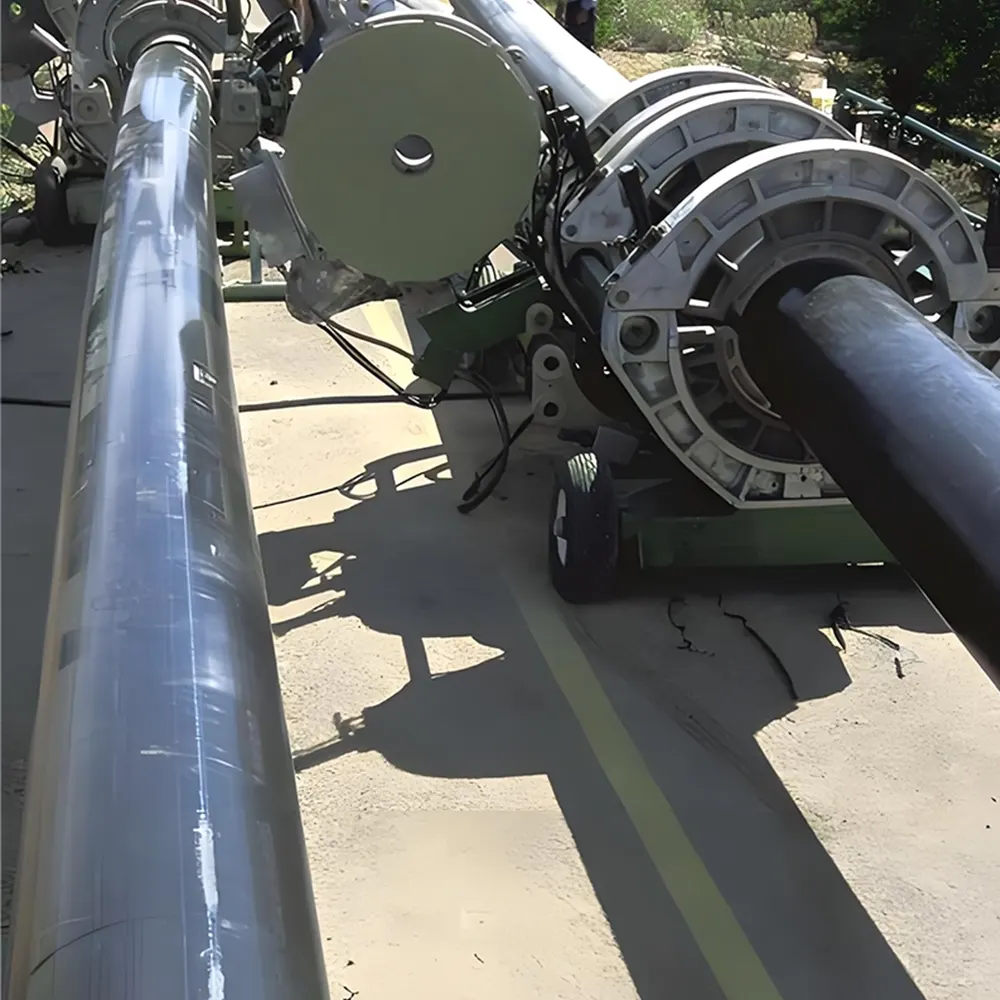
Finding a truly useful free pipe welding checklist PDF can be harder than it looks. Many templates are either too generic to pass real inspection workflows or too complicated for field crews to use consistently. This guide shows where to download a free checklist, how to verify it fits inspection and quality control needs, and how to use it across fabrication yards and pipeline sites for repeatable weld quality.
What a “Free Pipe Welding Checklist PDF” Should Include (So It’s Actually Useful)
A good checklist doesn’t just list steps—it captures the inspection evidence needed to prove compliance. Whether you’re dealing with HDPE butt fusion, electrofusion, or metallic pipe welding processes, your PDF should cover the following categories in a way that can be ticked, signed, and archived.
✔ Must-have sections in a field-ready checklist
- Project and weld identification (line number, joint ID, location, date/time, weather, crew)
- Material traceability (pipe/fitting SDR, size, batch/heat, certificates, storage condition)
- Machine readiness (calibration, heater plate temperature, pressure stability, clamp alignment)
- Process parameters (setpoints, actuals, soak time, heating time, changeover, fusion/cool time)
- Visual acceptance criteria (bead shape/size, misalignment, contamination, surface defects)
- Nonconformance handling (reject/repair decision, corrective action, rework verification)
- Sign-off (operator, inspector/QC, client/third-party witness when required)
Where Can You Download a Free Pipe Welding Checklist PDF?
There are three practical sources, and each one suits a different need. If your goal is fast deployment, templates work; if your goal is audit readiness, you’ll want a checklist tied to your procedure and equipment capability.
1) Equipment manufacturers and technical suppliers (best for process accuracy)
Manufacturers who build and test welding equipment often publish guidance or provide checklists aligned to real machine controls. If you’re running HDPE projects, working with a specialized supplier can help you match your checklist to machine behavior (temperature accuracy, pressure stability, clamp alignment) rather than using a generic form.
For example, if your projects rely on a reliable butt fusion machine, you can request or build a checklist around the actual controls and verification steps used in butt fusion operations (heater plate checks, facing quality, fusion pressure verification, cooling discipline). This increases the chance that the “free PDF” becomes a consistent QC record rather than a paper exercise.
2) Contractor internal QA libraries (best for site execution)
Many contractors maintain internal “standard forms” folders (often in SharePoint/Google Drive). If you already have a welding procedure specification (WPS) or butt fusion procedure, the fastest option is to convert your most-used daily QC sheet into a printable PDF. This gives field crews something familiar while still meeting inspection sign-off needs.
3) Certification and compliance training packages (best for audit evidence)
Some training providers bundle checklists with course materials. These are usually structured for traceability and are closer to what auditors like to see. Even if they’re not perfectly matched to your job, they can serve as a strong baseline—especially for sign-off structure and acceptance criteria sections.
🔎 Quick reality check before you download
If the PDF has no place for actual measured values (temperature/pressure/times) and only has “Yes/No” boxes, it may be too weak for quality control, especially on regulated pipeline work.
How to Choose the Right Checklist for Inspection and Quality Control
The best checklist is the one that matches your welding method, your inspection scope, and your documentation rules. Use the criteria below to decide whether a free PDF is acceptable as-is or needs editing.
Match the checklist to the welding process
- Butt fusion (HDPE): prioritize heater plate temperature control, facing quality, alignment, fusion pressure, cooling time discipline, bead inspection.
- Electrofusion: barcode traceability, scrape depth/coverage, clamp stability, fusion time/voltage, cooling, control box logs.
- Metal arc/GTAW/SMAW: WPS variables, consumable control, preheat/interpass temperature, fit-up and bevel, NDT hold points.
Make sure it captures traceability (not just “done/not done”)
Inspection and QC is about proving what happened. Your PDF should include fields for:
- Pipe/fitting manufacturer, batch/lot numbers, size, SDR/class
- Machine ID, calibration/verification date, operator name/ID
- Environmental conditions that affect work (wind, rain, temperature, dust control)
- Hold points (client/third-party witness signature if required)
Check that it reflects real acceptance criteria
“Looks good” isn’t a criterion. A usable checklist references objective checks: misalignment limits, bead uniformity expectations, contamination rejection rules, and documentation for repair actions. If your free template does not define what “pass” means, it’s likely to create disputes later.
A Practical Pipe Welding Checklist Structure You Can Copy Into a PDF
Even if you download a free PDF, you’ll often need a version tailored to your workflow. Below is a clean structure that works well for inspection and QC, especially for HDPE projects using butt fusion equipment.
Section A: Pre-Weld Inspection (Before Any Heating/Fusion)
- Documents: approved procedure available on site; drawing revision confirmed; joint list updated.
- Material condition: ends protected; no UV/heat damage; clean storage; correct size/SDR.
- Fit-up: correct alignment; roundness acceptable; clamps sized properly; no forced fit.
- Cleaning: surfaces dry and free of oil, mud, sand; wipes/gloves controlled.
- Machine verification: heater plate clean; temperature indicator stable; pressure gauge readable; facing tool sharp.
Section B: Parameter Recording (The QC “Proof” Section)
This is where many free templates fail. If the form doesn’t force the operator/inspector to write the numbers, you lose the strongest QC evidence.
🧾 Record at least these values
- Heater plate setpoint vs. actual (before each weld or per defined interval)
- Drag pressure (if applicable) and calculated fusion pressure
- Heating/soak time, changeover time, fusion time, cooling time
- Any deviations and disposition (stop work / continue with approval / rework)
Section C: In-Process Inspection (During Fusion and Cooling)
- Facing result acceptable (full clean cut, no ridges, no torn surfaces)
- Heater plate contact and heating pattern consistent
- Changeover completed within allowed time
- Fusion pressure maintained stable (no spikes, no sudden drops)
- Cooling protected (no movement, shock, or premature unclamping)
Section D: Post-Weld Visual Inspection (Acceptance and Rejection)
For QC, make the visual portion specific and repeatable. Your checklist should prompt the inspector to look for consistent beads and clear reject conditions (contamination, severe mismatch, incomplete fusion indicators).
- Bead uniformity: even around circumference; no gaps; no flattened/over-rolled areas.
- Alignment: mismatch within project limit; no obvious step or angular offset.
- Surface condition: no burn marks (where not permitted), no embedded dirt, no void indications.
- Documentation: joint photo reference number (if your system uses photos), remarks, disposition.
Section E: QC Sign-Off and Traceability
To make a free checklist audit-friendly, include clear accountability:
- Operator name/ID and signature
- QC/Inspector name and signature
- Client/consultant witness (when required)
- NCR number and corrective action reference (if applicable)
How to Use a Checklist to Improve Weld Quality (Not Just Paperwork)
A checklist becomes quality control only when it drives consistent behavior. These practices help make the form “alive” on site and reduce rework.
Turn it into a repeatable routine
Assign the checklist to a workflow moment: before facing, before heating, before fusion pressure, and before unclamping. If the form is only filled at the end, it becomes memory-based and unreliable.
Use “stop points” for high-risk items
⛔ Suggested stop points include: heater plate temperature out of tolerance, contamination observed after facing, excessive changeover time, unstable fusion pressure, or movement during cooling.
Standardize what “good” looks like across crews
Many weld defects happen because different crews interpret “acceptable” differently. Add brief cues inside the checklist (short, objective reminders) so that acceptance criteria are applied consistently—especially if you have rotating teams or multiple subcontractors.
Why Equipment Capability Matters to Inspection and QC Records
Inspection forms are only as credible as the process behind them. If your welding equipment has unstable temperature control, inconsistent hydraulic pressure, or clamp misalignment, the checklist will surface repeated deviations. On the other hand, stable equipment performance reduces exceptions and makes QC documentation cleaner.
JQ-Fusion, as a manufacturer focused on HDPE welding solutions, emphasizes production consistency and testing—such as temperature accuracy, hydraulic pressure stability, and clamp alignment inspection—which aligns directly with what inspectors typically want verified and recorded. If you’re building or updating your checklist, it’s worth aligning the form with the verification points that your machine can support in real operation.
Common Mistakes When Downloading a “Free Checklist PDF”
- Mistake: Using a metal-welding checklist for HDPE butt fusion. Fix: ensure the form includes fusion-specific parameters and bead inspection prompts.
- Mistake: No place to record numbers (only tick boxes). Fix: add fields for temperature/pressure/times and machine ID.
- Mistake: No traceability (no batch/lot, no joint ID). Fix: add a header section that ties every weld record to materials and location.
- Mistake: Checklist not aligned to your inspection plan. Fix: add hold points and required witness signatures where the ITP demands.
Frequently Asked Questions (FAQ)
1) Can a free pipe welding checklist PDF be used for official inspections?
Yes, if it matches your approved procedure/ITP and captures traceability, measured parameters, acceptance criteria, and signatures. If it’s generic, treat it as a draft and revise it before use.
2) What’s the single most important field to add to a free template?
Joint identification plus recorded actual parameters (temperature/pressure/times). Without those, the record is hard to defend during audits or failure investigations.
3) How often should I verify heater plate temperature and machine condition?
At minimum per your procedure and project QC plan; many teams verify at the start of shift and whenever conditions change (weather, power source, machine moved), then record the result in the checklist.
4) Should operators or QC inspectors fill out the checklist?
Both works best: the operator records process values, while QC verifies critical steps, reviews acceptance criteria, and signs the final disposition.
5) Can one checklist cover butt fusion and electrofusion?
It’s possible, but usually cleaner to use separate checklists or a modular checklist with process-specific sections so you don’t miss key controls unique to each method.



