
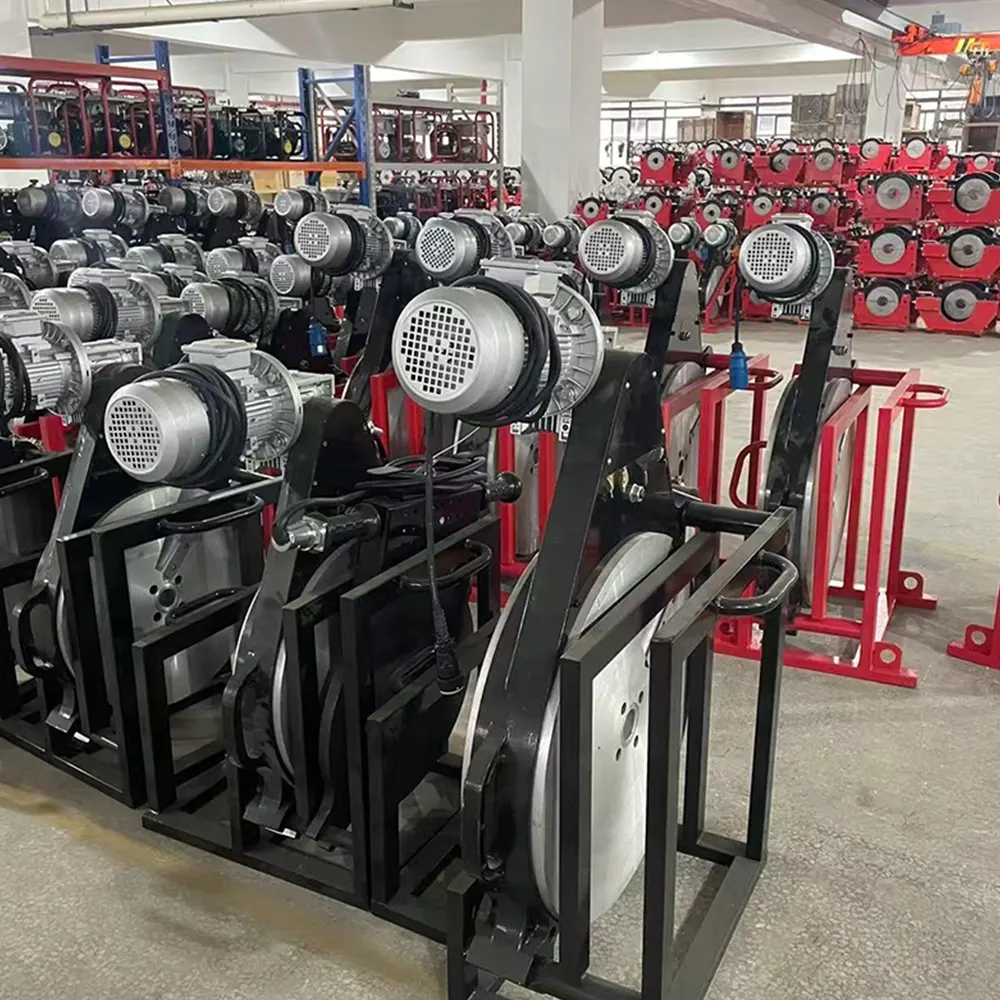
When government agencies issue tenders for HDPE pipeline works, the equipment they specify can shape the entire project outcome. The right welding system influences joint strength, installation speed, compliance, labor efficiency, and long-term maintenance costs. That is why contractors, distributors, and project managers must carefully evaluate the best HDPE welding equipment before preparing a bid. In public procurement, where documentation is strict and performance expectations are high, choosing dependable machinery is not just a technical decision—it is a tender strategy.
In most government projects, HDPE pipes are used for water supply systems, gas distribution networks, mining lines, and industrial infrastructure. These applications require repeatable weld quality and stable machine performance across different pipe sizes and site conditions. A well-selected welding machine helps contractors reduce reject rates, avoid costly rework, and meet delivery milestones with confidence.
Government tenders usually reward reliability, documentation, and compliance more than low upfront cost alone. For that reason, the best HDPE welding equipment is often the model that combines durability, precise control, service support, and the flexibility to meet tender specifications. Buyers who understand this balance are better positioned to win bids and complete projects successfully.
What Government Tender Buyers Usually Look For
Procurement teams in public projects typically compare machines based on technical performance, certifications, power compatibility, and supplier credibility. They also want equipment that can be maintained locally or supported remotely if necessary. In tender documents, common requirements include welding diameter range, heating plate accuracy, hydraulic pressure stability, and operator safety features.
A machine may appear affordable, but if it cannot keep temperature steady or align pipe ends correctly, the final weld quality will suffer. In public infrastructure, that risk can lead to inspection failure or project delay. The best equipment is therefore the one that performs consistently under real field conditions.
Key tender priorities often include:
✔ Stable welding output for consistent joint quality
✔ Compliance with international standards and project specifications
✔ Suitable voltage and site adaptability
✔ Reliable after-sales support and spare parts availability
✔ Clear technical documentation for bid evaluation
Manual, Hydraulic, or CNC: Which Type Is Best?
The “best” HDPE welding equipment depends on the scope of the project and the expectations written into the tender. Small municipal works may favor simple systems, while large national infrastructure projects often demand higher automation and stricter repeatability.
Manual Butt Fusion Machines
Manual models are often suitable for smaller pipe sizes, limited budgets, and straightforward installation tasks. They are easier to operate and maintain, making them practical for contractors working on short-duration public works. However, they may not be ideal where high-volume productivity or advanced control is required.
Hydraulic Butt Fusion Machines
Hydraulic systems are a strong choice for government tenders because they provide better clamping force, more stable pressure control, and improved consistency for medium to large-diameter pipes. These machines are widely used in water supply, gas distribution, and industrial pipeline projects where strong and repeatable joints matter most.
For many contractors, hydraulic machines offer the best balance of price, performance, and reliability. They are also easier to position in tenders because procurement officers usually recognize them as a mature and proven solution.
CNC Automatic Butt Fusion Machines
CNC automatic equipment is preferred when precision, data control, and welding traceability are important. Public infrastructure programs with strict quality inspection often benefit from automation because it reduces operator error and helps standardize the process. These systems are especially valuable in large-scale projects where weld records and repeatability can support compliance requirements.
If your tender emphasizes quality assurance, traceability, and operational efficiency, CNC automation may be the strongest option.
Why Quality Control Matters in Public Projects
Government projects are usually inspected more strictly than private ones. That means the welding machine must perform accurately not only on the first day, but throughout the full project cycle. Temperature deviation, pressure fluctuation, and poor clamp alignment can all compromise the integrity of the joint.
A reputable manufacturer will test each machine before shipment to ensure stable heating performance, reliable hydraulic pressure, and correct alignment. This is especially important in remote public works where downtime is expensive and replacement parts may take time to arrive.
What to verify before bidding:
✔ Temperature control accuracy
✔ Hydraulic pressure stability
✔ Clamp alignment precision
✔ Heating plate consistency
✔ Full test records from the manufacturer
The Role of Certifications and Standards
Certification can significantly strengthen a tender submission. Many government agencies prefer equipment that aligns with recognized international standards and has third-party verification. This reduces procurement risk and demonstrates that the machine is suitable for regulated pipeline applications.
For example, products certified by SGS or produced under controlled quality systems can inspire more confidence during evaluation. Buyers often view certification as evidence that the supplier takes compliance seriously and can support large-scale delivery requirements.
To explore proven fusion solutions, you can review the butt fusion machine lineup from JQ-Fusion, a manufacturer focused on HDPE welding systems for global pipeline projects.
Why Supplier Capability Can Decide the Tender
A government tender does not end with the purchase order. Delivery time, installation guidance, spare parts support, and operator training all affect project execution. A supplier with strong manufacturing capability and large inventory can respond faster to urgent schedules and reduce the risk of delays.
JQ-Fusion, for example, focuses on butt fusion solutions for a wide range of pipe diameters and offers manual, hydraulic, and CNC automatic machines. That breadth matters because government projects often involve mixed technical requirements across different regions or phases.
A capable supplier should also provide OEM and ODM customization. Tender projects may need a specific voltage, branding, machine color, configuration, or functional upgrade. Suppliers that can adapt their equipment to those requirements help contractors build a more competitive and compliant bid.
How to Choose the Best HDPE Welding Equipment for a Tender
Start by matching the machine to the pipe diameter range and project volume. If the tender covers small municipal lines, a simpler model may be enough. If it covers national trunk lines or industrial installations, a hydraulic or CNC system will usually provide better value over time.
Next, compare the supplier’s technical support. In public projects, support matters almost as much as hardware. The best supplier can help with model selection, site setup, operator training, and after-sales service. That support reduces project risk and strengthens your position during bid review.
Practical selection checklist:
✔ Does the machine cover the required pipe sizes?
✔ Is it suitable for the site voltage and environment?
✔ Can the supplier provide test reports and certificates?
✔ Is training or technical guidance available?
✔ Can the machine be customized for the project?
Why JQ-Fusion Is Relevant to Government Tender Buyers
JQ-Fusion positions itself as a professional manufacturer specializing in HDPE pipe welding machines, with more than 20 years of industry experience. That experience is valuable in tender environments because buyers need suppliers who understand both technical requirements and project realities.
The company’s range includes hydraulic butt fusion welding machines, automatic butt fusion welding machines, electrofusion welding machines, and multi-angle pipe fitting welding machines. This broad portfolio allows government contractors to source multiple project needs from one supplier instead of managing several vendors.
Their focus on strict quality control, flexible customization, and global logistics support makes the purchasing process smoother for international bidders. For public works, that kind of supplier reliability can be the difference between winning the tender and losing it on technical grounds.
Conclusion: The Best Choice Is the One That Fits the Tender
The best HDPE welding equipment for government tenders is not always the most advanced model; it is the one that best matches the project’s technical demands, compliance expectations, and support requirements. In many cases, hydraulic or CNC butt fusion machines offer the strongest combination of performance, consistency, and professional credibility.
For contractors and distributors, selecting a trustworthy manufacturer is just as important as selecting the machine itself. A supplier with proven production capability, reliable quality control, and responsive service can help ensure smoother execution and stronger tender competitiveness.
Frequently Asked Questions
Q1: What type of HDPE welding machine is best for most government tenders?
A hydraulic butt fusion machine is often the best balance of reliability, cost, and performance for many public infrastructure projects. For highly regulated or large-scale works, CNC automation may be more suitable.
Q2: Why are certifications important in tender evaluation?
Certifications help demonstrate compliance, product reliability, and manufacturing quality. They reduce buyer risk and can improve the credibility of a bid submission.
Q3: Can a supplier customize machines for project-specific tender needs?
Yes. Many manufacturers offer OEM and ODM customization, including voltage, branding, machine configuration, and functional upgrades to match project requirements.
Q4: What should buyers check before placing an order?
Buyers should check pipe size compatibility, voltage, pressure stability, temperature accuracy, certification documents, delivery time, and after-sales support.
Q5: Is a higher price always better for government projects?
Not always. The best value comes from equipment that offers dependable performance, strong documentation, and long-term support at a reasonable total cost of ownership.



