
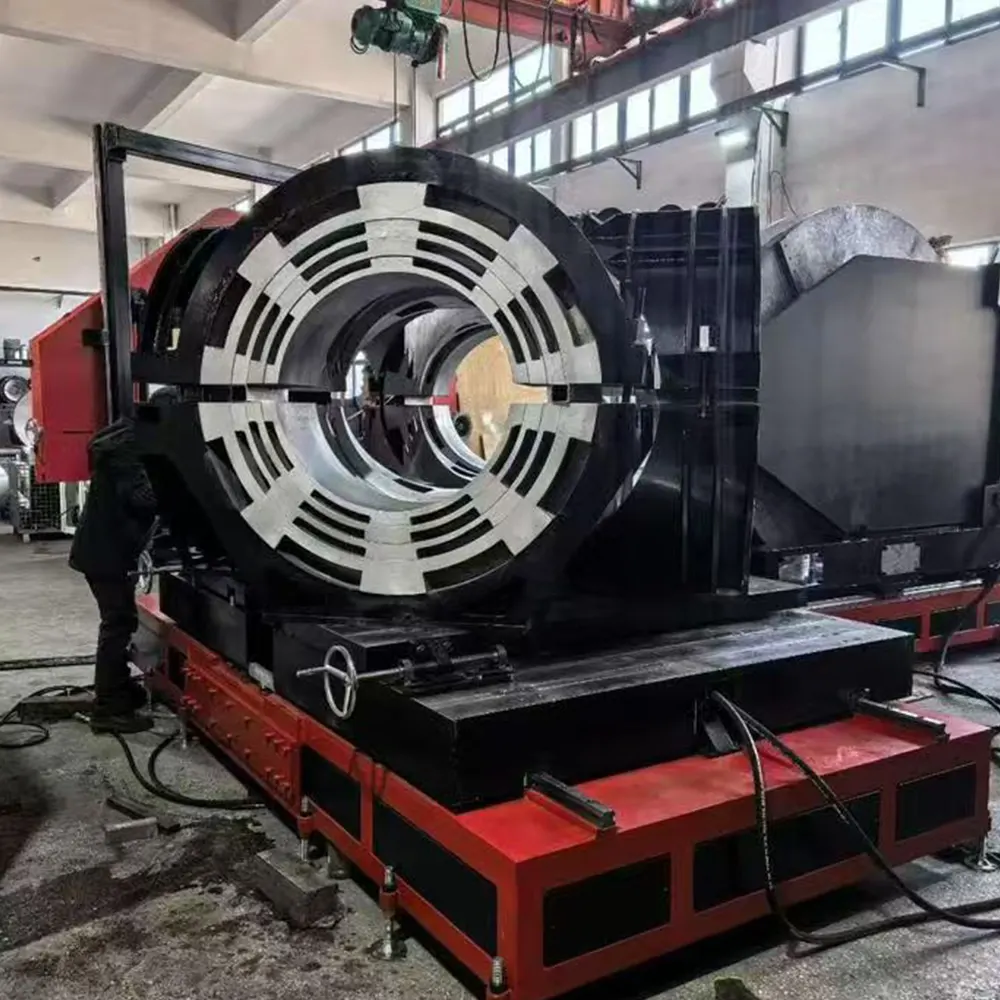
For infrastructure contractors, choosing the right HDPE pipe welding method is not just a technical decision; it directly affects project quality, installation speed, long-term reliability, and total lifecycle cost. In water supply, gas distribution, mining, and industrial pipeline projects, the welding process determines whether a pipeline system can maintain leak-free performance under demanding site conditions. Among the available joining methods, the most widely trusted solution for large-scale projects is butt fusion machine technology, especially when consistent strength, repeatability, and compliance with project specifications are required.
HDPE pipes are valued for their corrosion resistance, flexibility, long service life, and ease of transportation. However, these advantages can only be fully realized when the joints are welded correctly. A poor connection can create weak points in an otherwise durable pipeline. That is why contractors must evaluate the welding method based on pipe diameter, site environment, labor skill, project timeline, and required joint performance. In most infrastructure applications, butt fusion welding remains the preferred method because it creates a joint that is as strong as the pipe itself.
In simple terms, HDPE welding methods can be grouped into butt fusion, electrofusion, and mechanical joining. Each method has a place in the field, but not every method is suitable for every project. For long-distance pipelines, municipal water systems, or high-volume construction work, butt fusion often delivers the best balance of quality and efficiency. It is especially effective when contractors need stable output across many joints and want to reduce the risk of rework.
Key Point: The best HDPE pipe welding method for infrastructure contractors is usually butt fusion, because it provides a continuous, homogeneous joint with excellent strength and long-term reliability.
Why Butt Fusion Is the Preferred Method
Butt fusion works by heating the ends of two HDPE pipes until they reach a molten state, then pressing them together under controlled pressure. After cooling, the joint becomes a single fused structure. This creates a connection with excellent mechanical strength and very low leakage risk. For contractors working on critical infrastructure, this is a major advantage because it reduces maintenance needs and improves system longevity.
Compared with other joining techniques, butt fusion is highly suitable for straight pipe runs and large-diameter installations. It does not require couplings, adhesives, or additional sealing materials. That means fewer consumables, fewer potential failure points, and a cleaner installation process. In projects where thousands of meters of pipe must be installed efficiently, those benefits can translate into substantial cost savings.
Why contractors like it: high joint strength, excellent sealing performance, fast field execution, and proven durability across demanding applications.
When Electrofusion Becomes a Better Choice
Although butt fusion is the top choice for many infrastructure projects, electrofusion has important advantages in specific conditions. It uses fittings with embedded heating coils, making it useful when access is limited or when the pipe layout includes complex connections. For example, electrofusion can be a practical option for repairs, tie-ins, and constrained spaces where large fusion equipment cannot easily operate.
Infrastructure contractors often select electrofusion for branch connections, renovation work, or areas where precision alignment is difficult. However, electrofusion fittings can be more expensive than butt fusion joints, and the process depends heavily on proper cleaning and surface preparation. If field crews are not carefully trained, the quality of the weld can suffer. That is why many project managers still prefer butt fusion for primary pipeline runs and reserve electrofusion for special cases.
Practical rule: use butt fusion for mainline installation and electrofusion for repairs, transitions, or locations with limited working space.
Mechanical Joining: Fast, But Limited
Mechanical joints, such as compression fittings or flange connections, can be installed quickly and require less specialized equipment. This makes them useful in temporary systems or low-pressure applications. Yet for infrastructure contractors, they are generally not the first choice for permanent HDPE pipeline systems. Mechanical joints may introduce sealing limitations and can require more maintenance over time.
In large civil projects, the pipeline must perform reliably for years or even decades. Mechanical joints may still have a role at transitions, equipment interfaces, or areas requiring frequent disassembly, but they are rarely the best option for long continuous runs. Contractors focused on durability and low total cost of ownership usually treat mechanical joints as a supporting solution, not the main welding strategy.
What Infrastructure Contractors Should Evaluate Before Choosing a Method
The best HDPE pipe welding method depends on the demands of the project. Contractors should look at pipe diameter, wall thickness, installation environment, and required service life. A small rural water line does not have the same needs as a city-wide utility network or a mining slurry pipeline. Larger diameters and higher performance expectations usually make butt fusion the strongest candidate.
Working conditions also matter. If the site is open and stable, butt fusion machines can be deployed efficiently. If the project involves narrow trenches, internal repairs, or awkward geometry, electrofusion may offer more flexibility. In all cases, the contractor should consider operator training, machine reliability, and the ability to maintain welding consistency throughout the project.
Decision factors include: pipe size, pressure rating, site access, welding speed, operator skill, inspection requirements, and long-term maintenance expectations.
Why Machine Quality Matters as Much as the Welding Method
Even the best welding method will produce poor results if the equipment is inconsistent. For butt fusion, the machine must deliver stable heating, accurate temperature control, reliable hydraulic pressure, and correct clamp alignment. If any of these variables drift, the joint quality can be compromised. This is why contractors and distributors often focus on the manufacturing quality of the fusion machine itself, not only the joining process.
JQ-Fusion, for example, is a professional manufacturer specializing in HDPE pipe welding machines with over 20 years of industry experience. Its product range includes manual, hydraulic, and CNC automatic butt fusion welding machines for different pipe diameters and project requirements. In infrastructure projects, a dependable machine can reduce downtime, improve joint consistency, and help crews work more confidently in the field.
Contractors looking for scalable project support often prefer manufacturers with strong technical service, OEM and ODM customization, and fast shipping capability. These factors can be especially important when working on international infrastructure schedules where delivery delays can affect the entire project timeline.
Important note: the welding method is only as good as the equipment and training behind it. Reliable machines help produce reliable joints.
Applications Where Butt Fusion Delivers the Best Value
Butt fusion is widely used in water supply systems, gas distribution networks, industrial plants, and mining projects. These environments demand strong, leak-free connections that can withstand pressure changes, ground movement, chemical exposure, and long-term service. Because butt fusion creates a seamless joint, it is well suited to these applications.
For municipal water networks, the main priorities are safety and low maintenance. For gas pipelines, joint integrity is even more critical due to pressure and safety standards. In mining, pipelines often face abrasive media and harsh conditions. In all of these areas, butt fusion provides a strong technical advantage. Contractors also appreciate that it supports long-term standardization across large projects.
Best-fit applications: water transmission, gas distribution, industrial process lines, and mining pipelines.
The Role of Training and Site Procedure
No welding method can perform well without proper procedure. For butt fusion, the pipe ends must be cleaned, aligned, heated for the correct time, pressed together with the right force, and allowed to cool undisturbed. If workers rush the process or skip preparation steps, weld quality will decline. That is why contractor training is a key part of project success.
Site supervision matters too. A project team should verify machine calibration, inspect pipe preparation, and record welding parameters where required. This improves traceability and helps the contractor maintain consistent quality across the job site. Well-trained crews usually complete welds faster and with fewer defects, which improves overall productivity.
JQ-Fusion supports customers with technical guidance, testing, and installation assistance, which can help teams adopt the correct welding workflow more effectively. For infrastructure contractors, this kind of support can make a direct difference in field performance and project confidence.
How to Decide on the Best Method for Your Project
If the project is a long, permanent pipeline with standard alignment and significant diameter, butt fusion is usually the best choice. If the project involves complex joints, maintenance work, or limited access, electrofusion may be more suitable. If the connection is temporary or must be frequently disconnected, mechanical joining may be acceptable. In practice, many infrastructure projects use a combination of methods, with butt fusion handling the main pipeline and other techniques used for special sections.
The best procurement strategy is to match the welding method to the application instead of forcing one method into every situation. Contractors that make this decision carefully can reduce failure risk, improve productivity, and protect the overall value of the project.
Simple takeaway: choose the method based on project function, site conditions, and required service life—not just initial price.
Choosing a Reliable Supplier Matters
For infrastructure contractors, the supplier is part of the welding solution. A dependable manufacturer should provide stable quality, customization support, fast delivery, and after-sales service. JQ-Fusion offers hydraulic butt fusion welding machines, automatic butt fusion welding machines, electrofusion welding machines, and multi-angle pipe fitting welding machines. The company also emphasizes SGS-certified manufacturing, strict testing, and global support for customers in diverse markets.
When contractors source from a reliable supplier, they reduce equipment-related delays and improve operational confidence. This is especially important for large-scale jobs where machine uptime, spare parts availability, and technical response speed can influence project outcomes. In other words, the right machine partner supports not only welding quality but also construction efficiency.
Conclusion
For most infrastructure contractors, the best HDPE pipe welding method is butt fusion because it delivers strong, permanent, and highly reliable joints for critical pipeline systems. Electrofusion is valuable for special conditions, and mechanical joining has niche uses, but butt fusion remains the most practical and cost-effective solution for major civil projects. By combining the correct welding method with high-quality equipment, proper training, and dependable technical support, contractors can achieve better results on every job.
FAQ 1: Is butt fusion better than electrofusion for large pipelines?
Yes. For long straight runs and larger diameters, butt fusion is usually faster, more economical, and highly reliable.
FAQ 2: Can HDPE pipes be welded in challenging field conditions?
Yes, but the method must match the site. Butt fusion works best in open, accessible areas, while electrofusion is often better in tight spaces.
FAQ 3: What causes poor HDPE weld quality?
Common causes include incorrect temperature, poor alignment, dirty pipe ends, rushed cooling, and poorly maintained equipment.
FAQ 4: Why should contractors invest in a high-quality butt fusion machine?
A reliable machine improves consistency, reduces rework, and supports long-term project performance.
FAQ 5: When should mechanical joints be used?
They are best for temporary systems, equipment interfaces, or situations where frequent disassembly is required.



