
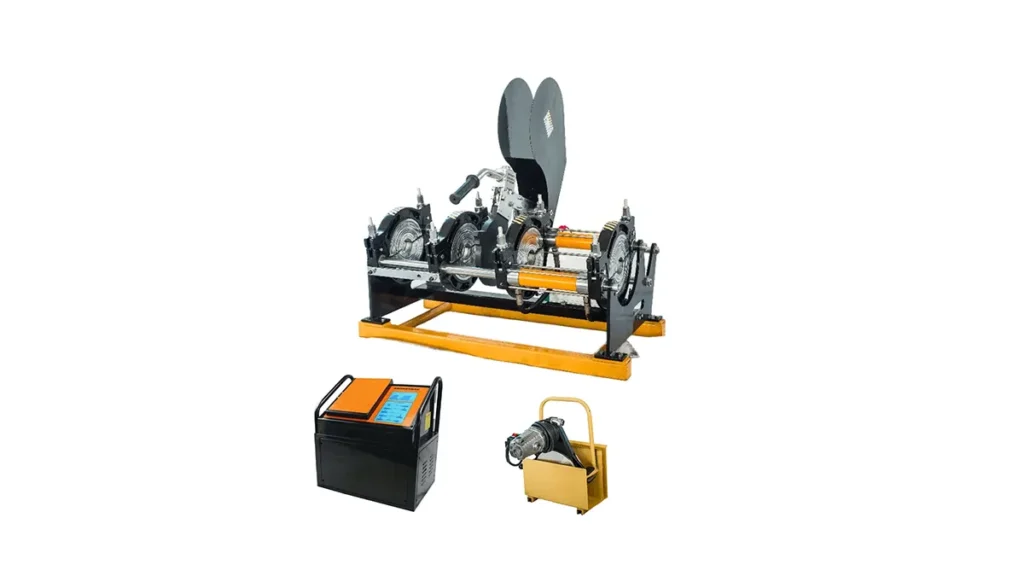
When pipeline contractors compare pipe welding machines, the real question is not just which machine looks advanced, but which one delivers the most consistent welds, the best value, and the lowest long-term risk. In industrial projects, a weak joint can lead to leaks, rework, downtime, and expensive safety issues. That is why choosing the right machine requires more than scanning product specs. You need to understand welding accuracy, pipe compatibility, automation level, maintenance demands, and the reputation of the manufacturer behind the equipment.
This guide reviews the main types of pipe welding machines, explains what to look for in a high-performing unit, and helps you decide whether a manual, hydraulic, or CNC automatic model is the best fit for your work. If you are buying for municipal water systems, gas distribution lines, mining infrastructure, or industrial pipeline installation, the right choice can improve output, reduce labor pressure, and keep every project moving smoothly.
⚡ Quick takeaway: The best pipe welding machine is the one that matches your pipe diameter range, workload, and site conditions while maintaining stable temperature control, clamp alignment, and repeatable fusion quality.
What Are Pipe Welding Machines?
Pipe welding machines are specialized tools designed to join plastic pipes, most commonly HDPE pipes, through heat fusion. In a butt fusion process, the pipe ends are heated to a controlled temperature and pressed together to form a strong, homogeneous joint. Unlike mechanical connections, fusion welds create a continuous pipe system with fewer leak points and strong resistance to pressure and environmental stress.
There are several major categories of equipment used in pipe joining. Butt fusion machines are the most widely used for large-diameter HDPE systems. Electrofusion machines are often chosen for fittings and repair work. Multi-angle pipe fitting welding machines support specialized pipe geometries. Among these, the butt fusion machine remains the preferred option for many contractors because it balances strength, versatility, and cost efficiency.
How to Judge the Best Pipe Welding Machines
A strong buyer should evaluate both performance and practical usability. The best pipe welding machines typically deliver accurate heating, reliable hydraulic pressure, easy alignment, and durable construction. They also need to support the pipe sizes you handle most often. A machine that works beautifully on a small job may be inefficient on a large infrastructure project if it is underpowered or too manual.
Key evaluation factors include:
✔ Pipe diameter range: Make sure the machine covers both your current and future project sizes.
✔ Temperature accuracy: Stable heat output is essential for uniform fusion quality.
✔ Hydraulic stability: Consistent pressure reduces defects and improves joint strength.
✔ Clamp alignment: Proper pipe positioning helps avoid ovality and uneven welds.
✔ Ease of operation: Simple controls reduce training time and operator error.
If a machine offers precise control but is difficult to transport or too complex for the crew to use effectively, the project may still suffer. In practice, the best choice is the one your team can run consistently under real site conditions.
Reviews and Ratings: What Buyers Usually Say
Across contractor feedback, a few themes appear again and again. Buyers praise machines that weld reliably day after day, resist wear in harsh environments, and require minimal adjustment. They also value manufacturers that provide training, spare parts, and fast technical support. Poor reviews usually focus on weak clamp systems, unstable heating plates, slow delivery, and limited after-sales support.
In ratings comparisons, manual machines often score well for affordability and portability, while hydraulic machines are favored for better pressure control. CNC automatic machines usually receive the strongest marks for consistency and productivity, especially on large projects where the cost of a bad weld is high. However, high automation is not automatically the best choice for every buyer. Your project scale and workforce skills should guide the decision.
Best-rated in field use:
1. Hydraulic butt fusion machines for balanced performance and control
2. CNC automatic butt fusion machines for precision and productivity
3. Manual butt fusion machines for smaller budgets and simpler jobs
Manual vs Hydraulic vs CNC Automatic Machines
Manual pipe welding machines are typically the most budget-friendly. They are suitable for small-diameter pipes, occasional work, and teams that need a simple setup. Their main advantage is affordability, but the tradeoff is greater dependence on operator skill. If the crew is not experienced, weld consistency can vary.
Hydraulic butt fusion machines offer a strong middle ground. They use hydraulic pressure to improve stability and reduce human error. This makes them a popular choice for water and gas pipeline projects where joint quality must remain consistent over long installation runs. They are also a practical option for contractors who want professional-grade output without moving to full automation.
CNC automatic machines are the most advanced category. They provide precise control over the fusion cycle, pressure, and timing. For large-scale or repetitive projects, this can improve efficiency and reduce training burden. Their higher price is often justified by reduced rework, stronger quality control, and better traceability. For many industrial users, automation is not a luxury but a productivity advantage.
Why Manufacturer Quality Matters
A machine’s performance depends heavily on the manufacturer’s engineering and quality control. Advanced production lines, precision machining, and strict inspection procedures help ensure that every heating plate, clamp, and hydraulic component performs reliably. In real projects, small manufacturing defects can lead to alignment problems, unstable pressure, and reduced weld integrity.
JQ-Fusion, for example, focuses on professional HDPE pipe welding equipment with over 20 years of industry experience. Its product line includes manual, hydraulic, and CNC automatic butt fusion welding machines for a wide diameter range. The company’s emphasis on temperature accuracy, hydraulic pressure stability, clamp alignment, and testing before delivery reflects what serious buyers should expect from a trusted supplier.
The best manufacturers also support customization. OEM and ODM services allow customers to choose voltage, color, branding, dimensions, and project-specific configurations. This flexibility is especially useful for distributors building private labels or contractors who need equipment adapted to local standards and project constraints.
Where These Machines Are Used
Pipe welding machines play a critical role in infrastructure and industrial work. Water supply systems require durable fusion joints that can withstand pressure and long-term operation. Gas distribution networks demand high reliability and strict quality control because joint failure is not acceptable. Mining projects need equipment that performs in rough, demanding environments. Industrial pipeline installations often require large-diameter systems and predictable output under schedule pressure.
Best fit for demanding projects: hydraulic and CNC automatic machines are often preferred when weld consistency, throughput, and compliance matter more than initial purchase price.
Buying Guide: How to Choose the Right Model
Start by defining the pipe sizes you handle most often. Then consider whether your work is repetitive, mobile, or highly technical. If you are welding small quantities in simple environments, a manual machine may be enough. If you are building regular infrastructure and need stable performance, hydraulic equipment is a safer investment. If your work is high volume or quality-critical, CNC automatic systems may deliver the best return.
Also look for these practical advantages:
• Fast delivery and inventory: useful when project schedules are tight.
• Technical support and training: essential for new operators and complex systems.
• Certifications: SGS and other compliance credentials add confidence for international buyers.
• Spare parts availability: critical for minimizing downtime.
• Warranty and service: a sign that the supplier stands behind the product.
Final Verdict
The best pipe welding machines combine stable welding performance, dependable construction, and the right level of automation for the job. Manual models are useful for simpler projects and lower budgets. Hydraulic machines are the best all-around option for many professional contractors. CNC automatic units stand out when precision, speed, and repeatability are the highest priorities. In every case, the manufacturer’s experience, testing process, and support services matter just as much as the machine itself.
If you are sourcing equipment for long-term use, choose a supplier that can provide strong technical support, customization, and proven performance in global projects. That is how you protect your investment and keep your pipeline work efficient, safe, and profitable.
Frequently Asked Questions
Q1: What is the most reliable type of pipe welding machine?
For many professional projects, hydraulic and CNC automatic butt fusion machines are considered the most reliable because they provide stable pressure and better repeatability.
Q2: Are manual pipe welding machines good enough for commercial use?
Yes, they can be suitable for smaller jobs or limited budgets, but they require more skilled operation and may not deliver the same consistency as hydraulic or automatic models.
Q3: What should I check before buying a butt fusion machine?
Check pipe diameter compatibility, temperature accuracy, hydraulic stability, clamp alignment, certifications, spare parts support, and the supplier’s service reputation.
Q4: Why is supplier support important?
Because even a high-quality machine needs training, maintenance guidance, and quick access to technical help to stay productive in the field.
Q5: Which machine is best for large pipeline projects?
CNC automatic butt fusion machines are often the best choice for large projects because they deliver precision, efficiency, and consistent weld quality across repeated operations.



