
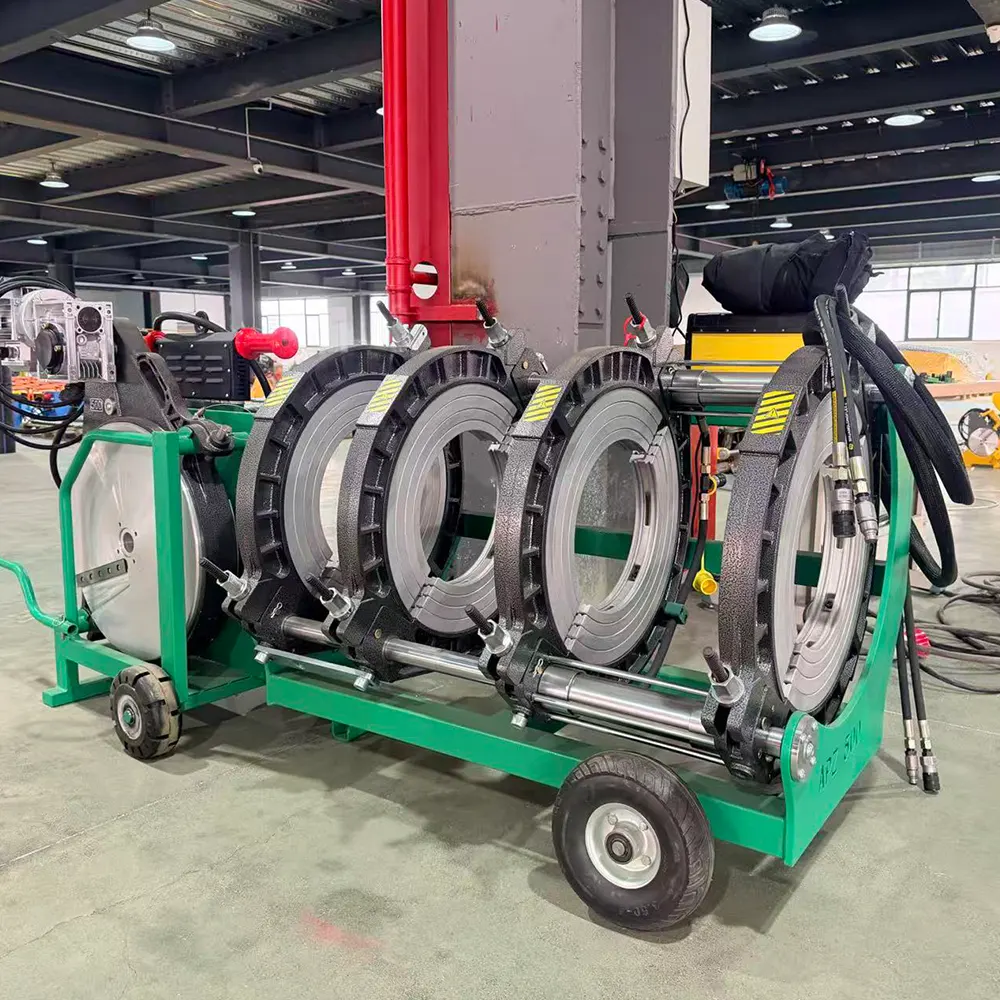
When people first search for an HDPE welding machine, they often focus on welding temperature, hydraulic pressure, pipe diameter range, or the type of fusion process. However, one practical detail is just as important in real projects: the weight and dimensions of the machine. These specifications affect transportation, installation, workspace planning, operator handling, and even the overall efficiency of the job site. In many cases, choosing the right model is not only about performance, but also about whether the machine can fit the project environment and be moved safely from one location to another.
For contractors, distributors, and project managers, understanding machine size and weight is especially valuable when preparing for pipeline work in water supply systems, gas distribution networks, mining projects, and industrial installations. A machine that is too large may be difficult to store or transport, while a machine that is too light for the application may not provide the stability needed for reliable welds. This is why technical planning should always include both performance and physical specifications.
At JQ-Fusion, we design and manufacture a wide range of HDPE pipe welding equipment, including manual, hydraulic, and CNC automatic models. Each machine is built with the needs of global pipeline projects in mind, and the structure, weight, and dimensions vary depending on pipe size capacity and working configuration. If you want to explore more product information, you can visit our butt fusion machine page to learn how different models are used in practical applications.
Why Weight and Dimensions Matter in HDPE Welding Projects
In real construction environments, an HDPE welding machine is not a piece of equipment that simply stays in one place forever. It may need to be loaded into trucks, carried to remote sites, moved around a project zone, or positioned in a limited workspace. That is why its physical size matters as much as its technical capability.
⚠ Key point: The correct machine size helps reduce transport cost, improves site safety, and makes daily operation more efficient.
Weight also influences the stability of the welding process. A heavier machine often provides a stronger and more stable structure, which can be especially useful for larger pipe diameters and demanding industrial jobs. On the other hand, compact machines are easier to move and can be ideal for smaller projects, maintenance tasks, or locations with limited access.
In short, there is no single “best” weight or dimension for every application. The right choice depends on the pipe size, working conditions, power supply, and the mobility required on site.
Typical Factors That Determine Machine Weight
The weight of an HDPE welding machine depends on several design elements. These include the main frame material, the hydraulic system, the clamp structure, the heating plate, the facer, and the control unit. As the pipe diameter range increases, the machine usually becomes heavier because it must support larger and more powerful clamping and heating components.
For example, a manual butt fusion machine designed for smaller pipe sizes will usually be more compact and lighter than a large hydraulic or CNC automatic model. The same principle applies to machines with additional accessories or advanced automation functions. More functional parts usually mean more total weight.
At JQ-Fusion, we pay close attention to both structure and performance during production. Our advanced manufacturing technology and precision machining equipment help ensure each machine has a stable frame and a practical design. This balance is especially important for customers who need reliable equipment for long-term use in harsh project conditions.
Important: A machine should be heavy enough to remain stable during welding, but not so bulky that it becomes difficult to transport or operate.
Common Dimension Considerations for Different Machine Types
The dimensions of an HDPE welding machine are usually determined by its pipe capacity and working structure. Smaller machines are designed with compact frames so they can be used in confined spaces or moved quickly between job sites. Larger machines, especially those used for high-diameter pipes, require a wider footprint and more space for clamping, heating, and alignment.
Below are some typical dimension-related concerns that buyers should evaluate before purchasing:
Working Space
The machine must have enough room for the operator to load and unload pipes, prepare the fusion joint, and complete the heating and joining cycle. If the machine is too large for the available workspace, productivity can suffer and safety risks may increase.
Transport Size
Some projects require machines to be transported frequently. In these cases, the overall length, width, and height matter just as much as the working capacity. A design that is easier to load onto a vehicle can save time and reduce logistics costs.
Storage and Handling
After the job is done, the machine may need to be stored in a warehouse or maintenance area. Compact dimensions make storage easier and help distributors manage inventory more efficiently.
📦 Practical tip: Before ordering, confirm not only the machine’s welding capacity, but also the available transport and storage space at your site.
How Weight Affects Operation and Stability
In butt fusion welding, precision is essential. The pipe ends must be aligned accurately, heated evenly, and joined under controlled pressure. A machine with a stable structure helps keep the pipe in the correct position throughout the process. This is one reason why weight can be an advantage in certain applications.
For larger-diameter HDPE projects, a heavier machine can reduce vibration and support a more secure fusion cycle. This is particularly valuable in industrial pipelines, utility networks, and mining operations where welding quality must remain consistent over many joints.
However, the best result is not simply “more weight.” The structure should be engineered properly. A well-designed machine uses the right balance of strength, rigidity, and usability. At JQ-Fusion, every unit undergoes strict quality control, including temperature accuracy testing, hydraulic pressure stability checks, and clamp alignment inspection, ensuring that the physical design supports reliable welding performance.
Weight and Dimensions in Manual, Hydraulic, and CNC Models
Different machine types naturally have different physical specifications. Manual models usually offer a simpler structure and lower total weight, which makes them suitable for smaller projects and easier transportation. Hydraulic machines include a hydraulic power system that adds weight but improves control and clamping force. CNC automatic models generally have the most advanced functions, and their dimensions may be larger because of automation components and control systems.
This is why buyers should always compare machines based on application, not just appearance. A smaller model may be perfect for municipal maintenance work, while a larger hydraulic or CNC unit may be necessary for major infrastructure projects.
JQ-Fusion offers a complete product range, including Hydraulic Butt Fusion Welding Machine, Automatic Butt Fusion Welding Machine, Electrofusion Welding Machine, and Multi-Angle Pipe Fitting Welding Machine. Each product category supports different installation scenarios and project requirements, allowing customers to select the most suitable solution.
Choosing the Right Size for Your Project
To choose the right HDPE welding machine, start by identifying the pipe diameter range and the job site conditions. Then consider whether the machine will be used in a fixed workshop, a mobile field setup, or a remote project location. Once you know these details, it becomes easier to decide whether compact dimensions or stronger structural weight are more important.
If your project requires frequent relocation, a lighter and more compact machine may be more practical. If your application involves larger pipes and long-term use in a stable location, a heavier and more robust model may be the better choice.
Checklist before purchase:
- Confirm the pipe diameter range
- Measure available workspace
- Check transportation and lifting capacity
- Review power supply requirements
- Ask about customization options
Customization Options for Size and Structure
One of the major advantages of working with a professional manufacturer is the ability to customize machine size and structure. JQ-Fusion provides flexible OEM and ODM services, including machine size, voltage, color, design, branding, and project-specific configurations. This is very useful for distributors who want to build their own market advantage or contractors who need a machine adapted to a special project environment.
For example, some clients may need a more compact frame for overseas shipping, while others may request a reinforced structure for demanding industrial work. In both cases, the goal is to deliver equipment that matches the real operating conditions instead of forcing the project to adapt to the machine.
Our engineering team works closely with customers to develop customized solutions based on specific pipeline needs. This level of support helps ensure that the final machine is practical in size, efficient in performance, and durable in long-term use.
Quality Control and Engineering Value
Weight and dimensions are not only about physical size. They also reflect the engineering quality behind the machine. A well-designed butt fusion machine should have a strong frame, stable motion, and balanced internal layout. Poorly designed equipment may be too heavy without offering real stability, or too compact without providing enough durability.
That is why quality control matters. Our production process includes careful inspection at every stage, supported by experienced technicians and modern manufacturing lines. This helps us maintain consistent product quality and ensure that every machine delivered to customers meets international requirements.
Our products are manufactured in compliance with international standards and certified by SGS, providing added confidence for global buyers who need dependable equipment for critical infrastructure work.
Why Global Buyers Choose JQ-Fusion
Many customers choose JQ-Fusion because we combine manufacturing experience, technical support, and practical customization. With over 20 years of industry experience, we understand how important it is for buyers to get machines that are not only reliable, but also suitable for real-world handling and deployment.
Our advantages include:
✔ Stable welding performance for consistent and precise results
✔ Customized solutions for different pipeline projects
✔ Strict quality assurance before delivery
✔ Fast delivery and global shipping for urgent project timelines
✔ Professional technical support from selection to after-sales service
We also maintain a large inventory of key models to support quick delivery for both small and bulk orders. This is especially helpful for distributors and contractors who need to meet tight project schedules without sacrificing equipment quality.
Final Thoughts
The weight and dimensions of an HDPE welding machine are far more important than many buyers initially realize. These specifications affect transport, storage, installation, stability, and even the quality of the welding process itself. By choosing a machine that matches the project environment, you can improve efficiency, reduce risk, and achieve better long-term results.
Whether you need a compact machine for mobile work or a larger, more stable system for major pipeline installation, the key is to balance size, weight, and performance. JQ-Fusion is committed to helping customers find the right butt fusion solution for their needs, supported by strong engineering capability, strict quality control, and responsive global service.
Frequently Asked Questions
1. Does a heavier HDPE welding machine always mean better quality?
Not always. A heavier machine may offer better stability for certain projects, but quality depends on overall design, materials, precision, and control systems. The best machine is the one that fits your application.
2. Why are machine dimensions important before purchase?
Dimensions affect transportation, workspace arrangement, storage, and site safety. If the machine is too large for your job site, it can slow down operations and create handling problems.
3. Can JQ-Fusion customize machine size?
Yes. We provide OEM and ODM customization, including machine size, voltage, color, design, branding, and project-specific configurations.
4. Which machine type is better for frequent movement on site?
For frequent movement, a more compact and lighter model is often more practical. However, the exact choice depends on pipe size, project duration, and working conditions.
5. How can I choose the right model for my project?
Start by confirming your pipe diameter range, work location, transport conditions, and required productivity. Then compare the available models and select the one that balances size, weight, and performance best.



