
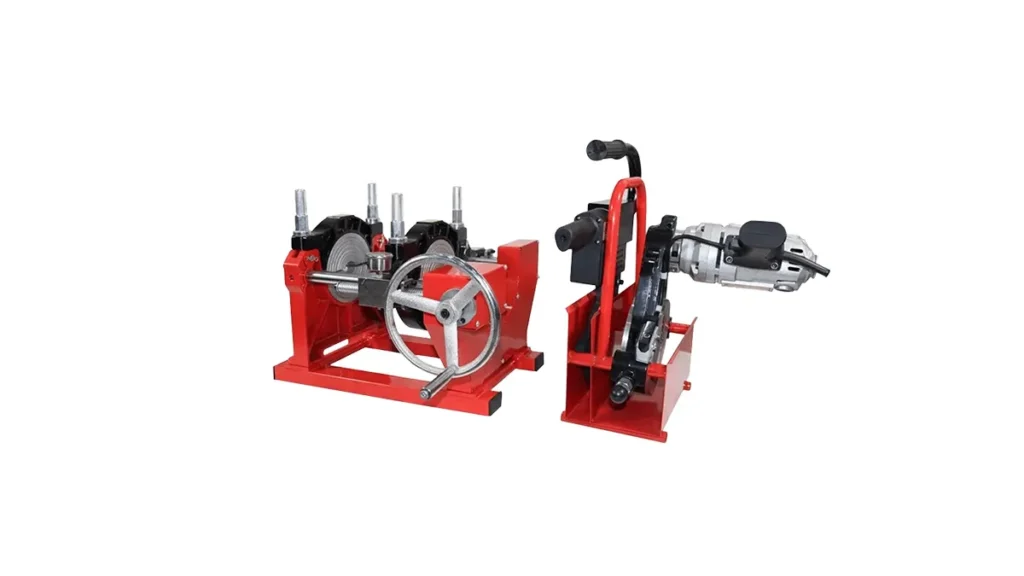
Pipe welding is a critical skill in pipeline construction, industrial fabrication, water supply systems, and gas distribution networks. Whether a welder is working on HDPE pipe installations, field repairs, or large-scale infrastructure projects, the quality of every joint can directly affect safety, durability, and long-term performance. One of the most common methods used in modern pipe joining is the butt fusion machine, which helps create strong and reliable fusion joints when used correctly. However, beginners often make avoidable mistakes that reduce weld quality, waste material, and cause costly project delays.
Understanding these early mistakes is the fastest way to improve results. Pipe welding is not only about melting two ends together; it is about preparation, alignment, temperature control, pressure management, cleanliness, and timing. A small error in any one of these areas can weaken the final joint. For beginners, the learning curve can feel steep, especially when working under jobsite pressure or with different pipe materials, diameters, and environmental conditions. The good news is that most beginner errors follow predictable patterns, and they can be prevented with proper training and disciplined procedure.
Many new welders focus too much on speed and not enough on process. In pipe fusion work, speed without control often leads to poor results. The best welds come from patience, repeatable steps, and a clear understanding of how each stage affects the next. This is especially true in projects involving water supply systems, mining pipelines, gas networks, and industrial installations where reliability matters more than convenience.
1. Poor Pipe End Preparation
One of the most common beginner mistakes is failing to prepare the pipe ends properly before welding. The pipe surface must be clean, square, and free from damage. If the ends are uneven, contaminated, or scratched, the fusion area will not bond evenly. Beginners sometimes rush this step because it looks simple, but pipe preparation is the foundation of the entire weld.
🔶 Key point: A fusion joint is only as strong as the surface preparation behind it. Dirt, moisture, oxidation, grease, and uneven cutting can all reduce weld quality.
Before welding, the pipe ends should be trimmed cleanly, aligned correctly, and protected from contamination. Even a small amount of dust or grease can interfere with bonding. Beginners should also avoid touching the prepared fusion surface with bare hands, because skin oils can leave residue that affects the weld. Good preparation saves time later by reducing rework and preventing joint failure.
2. Ignoring Alignment Errors
Pipe alignment is another area where beginners often struggle. If the pipes are not held in exact alignment, the molten surfaces will not meet evenly, resulting in a weak or distorted joint. Misalignment may seem minor during setup, but once the fusion process begins, it becomes difficult to correct.
Proper clamp setup, accurate centering, and stable support are essential. Beginners should always check that both pipe ends are positioned correctly before heating begins. Uneven support or loose clamping can allow the pipe to shift, especially on larger diameters or in windy outdoor conditions. The result may be a weld bead that looks acceptable on the outside but lacks structural consistency inside.
💡 Practical tip: Always recheck alignment after loading the pipe into the machine and before each major fusion step. Small movements during setup can create big problems later.
3. Using the Wrong Temperature
Heat control is one of the most important parts of pipe welding, and beginners often underestimate how sensitive the process can be. If the temperature is too low, the pipe ends may not melt sufficiently, causing weak fusion. If the temperature is too high, the material can degrade, over-soften, or create an overly wide bead that indicates poor control.
Different pipe materials and environmental conditions may require careful adjustment. For example, cold weather can affect heating behavior, while windy jobsite conditions can reduce surface stability. Beginners should follow the recommended temperature range for the pipe material and equipment being used. A machine with stable temperature accuracy can make this much easier, which is why many contractors value modern equipment from experienced manufacturers.
When temperature is not controlled properly, the weld may appear acceptable at first but fail under pressure later. This is especially dangerous in gas and water systems, where a hidden defect can have serious consequences. Good welders learn to respect temperature as a technical variable, not just a machine setting.
4. Applying Incorrect Pressure
Pressure management is another area where beginners often make mistakes. In fusion welding, pressure must be applied consistently and at the correct level during the heating, joining, and cooling stages. Too much pressure can force molten material out too aggressively and create stress in the joint. Too little pressure can lead to incomplete contact and poor bonding.
Beginners sometimes assume that more pressure means a stronger weld, but this is not true. The correct pressure depends on pipe size, machine type, and material characteristics. Hydraulic systems and automated controls can help reduce operator error, but the welder still needs to understand the basic principles. If pressure is inconsistent, the final joint may look irregular, with uneven bead formation or signs of distortion.
⚠️ Warning: Incorrect pressure can create hidden weld defects that may not be visible during a quick inspection. Never guess pressure settings; use the correct procedure for the material and machine.
5. Rushing the Cooling Process
Another common beginner mistake is moving or disturbing the joint before it has fully cooled. Even if the weld bead looks solid on the surface, the internal bond may still be developing. If the pipe is shifted too early, the joint can weaken or become misaligned.
Cooling time should never be treated as wasted time. It is part of the welding process. Beginners sometimes remove clamps too soon or test the joint too aggressively because they want to move to the next step. That impatience can ruin an otherwise good weld. The pipe should remain undisturbed until the recommended cooling period is complete, especially in larger diameter applications where heat retention is higher.
In professional project settings, disciplined cooling procedures help ensure consistent results across multiple joints. A strong welding process includes not only how the joint is formed, but also how it is allowed to settle.
6. Poor Understanding of Material Behavior
Beginners often treat all plastic or pipe materials as if they respond the same way to heat and pressure. In reality, different materials behave differently, and even the same material may respond differently based on wall thickness, diameter, and environmental conditions. This is especially important in HDPE pipe fusion, where precise control matters.
Without understanding the specific material being welded, a beginner may use the wrong settings, the wrong timing, or the wrong preparation approach. Learning the material properties before starting the job is a major step toward consistent quality. Professional manufacturers often support operators with guidance, machine matching, and technical training to make this process easier.
For beginners working on projects with different pipe sizes and system requirements, equipment selection also matters. Modern product lines such as hydraulic butt fusion welding machine solutions and automatic butt fusion welding machine systems can help reduce variation and improve repeatability when used correctly.
7. Failing to Inspect Equipment Before Use
Another beginner mistake is starting work without inspecting the machine. Weld quality depends heavily on the condition of the equipment. If heating plates, clamps, hydraulic components, or alignment systems are not functioning correctly, the weld may fail even if the operator follows the process carefully.
Pre-use inspection should include temperature accuracy, pressure stability, clamp movement, power supply condition, and general cleanliness. This is especially important on busy job sites where equipment may be transported frequently. A well-maintained machine helps reduce errors that are not caused by the operator but still affect the final result. Professional manufacturers with strict quality control typically test temperature accuracy, hydraulic stability, and clamp alignment before delivery, which gives users more confidence in field operation.
Beginners should build the habit of checking equipment before each job. This simple step can prevent downtime, reduce repair costs, and improve weld consistency over time.
8. Overlooking Environmental Conditions
Outdoor pipe welding is affected by weather, dust, moisture, and temperature changes. Beginners often focus only on the machine and the pipe, forgetting that the surrounding environment also influences weld quality. Strong wind can cool the pipe unevenly, moisture can contaminate the fusion surface, and extreme temperatures can affect heating and cooling behavior.
To improve results, welders should protect the work area whenever possible. Simple measures such as using shelters, keeping surfaces dry, and minimizing exposure to contamination can make a major difference. Field conditions are not always ideal, but awareness helps the operator adjust procedure instead of assuming the machine is at fault.
Project environments vary widely, especially in infrastructure and industrial applications. That is why reliable support, flexible configuration, and equipment that can perform consistently under real-world conditions are highly valued by contractors and distributors worldwide.
9. Not Following a Standard Procedure
Beginners sometimes develop habits by copying others or improvising when a step seems unnecessary. This is risky in pipe welding. A standard procedure exists because each step has a purpose, and skipping or changing one part can affect the whole joint. Consistency is the key to repeatable quality.
A good welding routine includes setup, cleaning, alignment, heating, joining, pressure control, and cooling. When every job follows the same basic workflow, mistakes become easier to identify and correct. Standardization is especially useful for teams working on large projects where multiple welders must produce similar results. It also helps supervisors maintain quality assurance across many installation points.
Professional systems such as electrofusion welding machine and multi-angle pipe fitting welding machine options can support different project needs, but the operator still needs discipline and procedural consistency.
How Beginners Can Improve Faster
Improvement in pipe welding comes from practice, observation, and correction. Beginners should focus on learning one process at a time instead of trying to master everything at once. Careful attention to surface preparation, alignment, temperature, pressure, and cooling will produce noticeable gains. Keeping a checklist can also help reduce repetition of the same mistakes.
✅ Best habit: Review every finished joint and ask what could have been improved. This self-check habit is one of the fastest ways to build skill and confidence.
Training, machine familiarity, and proper technical support all contribute to better outcomes. For businesses that install pipelines at scale, choosing reliable equipment and working with experienced suppliers can reduce training difficulty and improve productivity. Reliable support is not just a convenience; it is part of quality control.
Frequently Asked Questions
Q1: What is the most common beginner mistake in pipe welding?
The most common mistake is poor pipe end preparation, including contamination, uneven cutting, and incorrect alignment. These errors often lead to weak or inconsistent welds.
Q2: Why does temperature matter so much in pipe fusion?
Temperature controls how well the pipe ends melt and bond. If it is too low, fusion may be incomplete; if too high, the material can be damaged or weakened.
Q3: Can beginners improve without advanced equipment?
Yes, but reliable equipment makes consistency easier. Beginners still need to learn the process, follow standard procedures, and inspect results carefully.
Q4: How can beginners reduce weld defects quickly?
They should focus on cleanliness, alignment, correct pressure, proper temperature, and full cooling time. A checklist and regular inspection can also help.
Q5: Is training more important than the machine?
Both matter, but training is essential. Even the best machine cannot compensate for poor technique, while proper training helps operators get consistent results from any suitable equipment.
Beginner mistakes in pipe welding are common, but they are also preventable. With better preparation, careful control, and consistent procedures, new welders can dramatically improve joint strength and reliability. In real pipeline work, quality is built step by step, and every correct action contributes to a safer, more durable system.



