
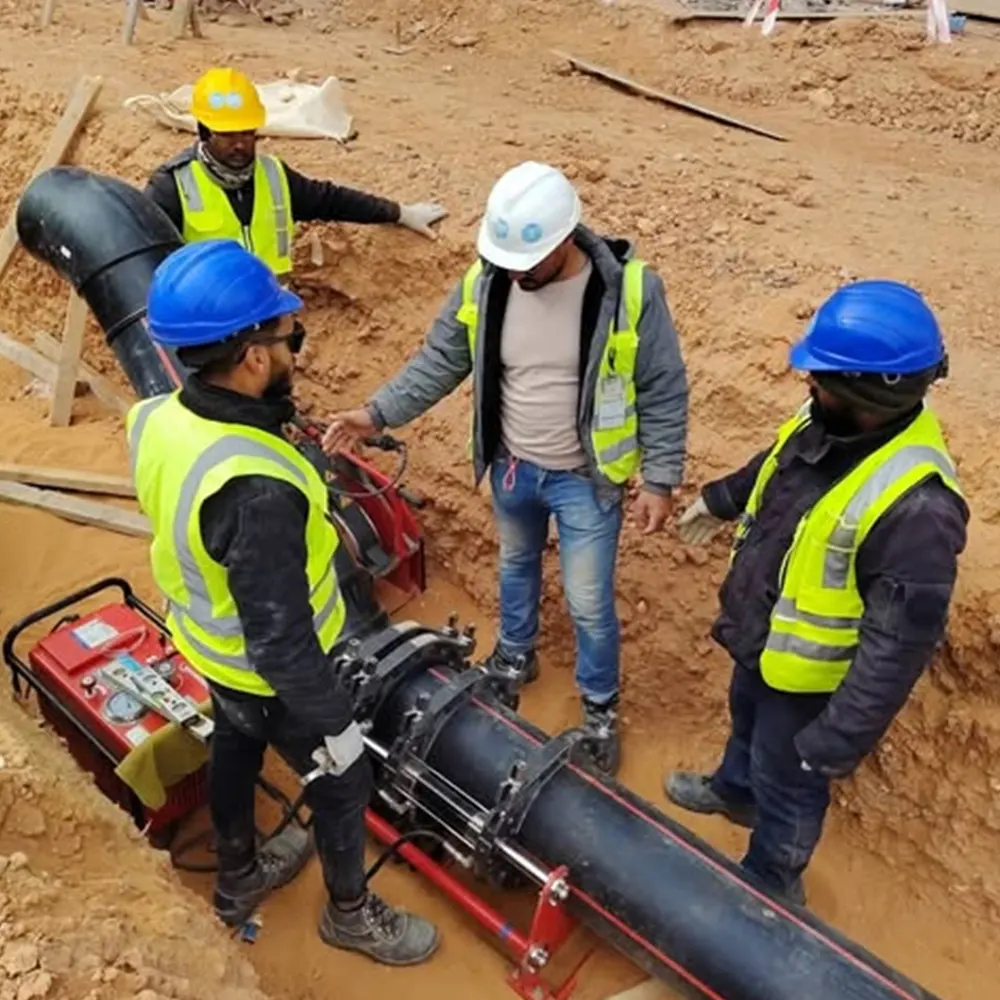
When a pipeline project moves from the planning stage to the field, welding support equipment becomes just as important as the welding machine itself. The quality of a joint depends not only on heat and pressure, but also on how well the pipe is held, aligned, cleaned, powered, and monitored during the process. For contractors, choosing the right support equipment can improve weld consistency, reduce rework, increase safety, and keep the project on schedule.
In large-scale pipeline construction, especially in water supply, gas distribution, mining, and industrial installations, every detail matters. A stable setup helps welders work faster and with greater precision, while poor support tools can lead to misalignment, uneven fusion, and costly downtime. That is why professionals often evaluate the complete welding system instead of focusing on a single device.
For projects that demand dependable performance, many teams choose equipment from experienced manufacturers such as butt fusion machine suppliers that can offer integrated solutions, technical support, and customization for different pipeline conditions.
Why Welding Support Equipment Matters in Pipeline Projects
Pipeline welding is a precision task. The pipe ends must be cleaned, heated, aligned, and fused under controlled conditions. Support equipment provides the structure and stability needed to make each step reliable. Without proper support, even a high-quality welding machine may not deliver the expected result.
Key benefit: support equipment helps reduce human error by keeping the pipe and machine setup stable throughout the welding cycle.
For long-distance pipeline work, this stability is essential. Pipe sections are often large, heavy, and difficult to manage manually. Equipment such as pipe rollers, lifting devices, clamps, and alignment tools helps operators handle these materials safely and efficiently. In addition, support tools improve repeatability, which is especially valuable when multiple welds must meet the same quality standard.
Another important factor is compliance. Many project owners expect welding results that meet international standards, and the right support tools make it easier to achieve those results consistently. When a project involves high-pressure lines or critical infrastructure, support equipment is not optional—it is part of the quality system.
Best Welding Support Equipment Options for Pipeline Projects
1. Pipe Rollers and Pipe Stands
Pipe rollers and pipe stands are among the most practical support tools for pipeline welding. They hold the pipe at a workable height and allow smooth movement during positioning. This is especially helpful for long pipe sections that need to be rotated or adjusted before welding.
In the field, rollers reduce friction and make handling easier, which helps prevent surface damage and improves operator efficiency. Adjustable stands can also be used to match different pipe diameters and working heights, making them suitable for diverse project requirements.
Best for: long pipe handling, alignment preparation, and repetitive field welding tasks.
2. Pipe Alignment Clamps
Alignment clamps are essential for ensuring that both pipe ends are centered and level before fusion begins. A small misalignment can create stress points in the weld and reduce joint strength. By holding the pipes firmly in place, these clamps support accurate weld preparation and better final results.
There are different types of clamps available, including internal and external alignment systems. The best choice depends on pipe size, material type, and welding method. For many contractors, a reliable clamp system is one of the most valuable investments because it directly affects weld quality.
Field tip: always verify that the clamps match the pipe diameter range used on the project to avoid instability or unnecessary adjustment time.
3. Beveling and Facing Tools
Before welding, pipe ends often need to be prepared with beveling or facing tools. These tools remove irregularities, create clean contact surfaces, and improve the fit between sections. Proper pipe preparation helps achieve a stronger and more uniform weld.
In pipeline projects, surface preparation is often overlooked, yet it has a major influence on the final joint. A well-prepared pipe end allows heat to distribute more evenly and supports a better fusion process. Facing tools are especially important in situations where precision is required and the pipe material must meet strict technical standards.
4. Pipe Lifting and Handling Equipment
Heavy pipe sections require safe and efficient lifting support. Cranes, lifting straps, pipe lifters, and mechanical handling devices help reduce manual strain and improve jobsite safety. These tools are particularly important in large-diameter pipeline projects where pipe segments are too heavy to reposition by hand.
Using the right lifting equipment also protects the pipe surface from damage. Scratches, dents, or deformation can affect the welding process and may lead to rejection during inspection. Proper handling equipment therefore supports both productivity and quality.
Safety note: lifting tools should always be selected based on pipe weight, diameter, and site conditions to prevent accidents and equipment failure.
5. Power Generators and Stable Power Supply Systems
Many pipeline projects take place in remote areas where grid power is limited or unavailable. In these environments, generators become a critical part of the welding support system. A stable power source ensures that heating elements, hydraulic systems, and control units operate properly throughout the welding cycle.
If power fluctuates, weld quality can suffer. Temperature instability may lead to incomplete fusion or uneven heating. For this reason, contractors should choose generators and power systems that match the demands of the welding equipment and field conditions.
Reliable power support is not just about convenience; it is about maintaining process control and protecting the consistency of every weld.
6. Cleaning Tools and Surface Preparation Accessories
Cleaning equipment is another important part of the welding workflow. Dust, moisture, grease, and debris can weaken a weld if they remain on the pipe surface. Brushes, cloths, scrapers, alcohol wipes, and other preparation accessories help create the clean conditions needed for dependable fusion.
In some pipeline applications, cleaning is performed repeatedly throughout the day because the environment is harsh and contamination risk is high. Having the right cleaning tools on hand helps maintain workflow speed while supporting weld integrity.
7. Measuring and Inspection Tools
Accurate measurement tools help verify pipe diameter, ovality, alignment, and joint preparation before welding begins. Inspection tools may include calipers, gauges, thermometers, pressure indicators, and visual inspection accessories. These instruments help operators confirm that the setup meets project requirements before committing to the weld.
In quality-focused projects, measurement is part of risk control. When dimensions are checked carefully, the chance of weld rejection is reduced, and rework becomes less likely. This saves time and materials while improving overall project efficiency.
Important: measuring tools should be calibrated regularly to ensure accurate readings on site.
How to Choose the Right Support Equipment
The right equipment depends on pipe size, material type, working environment, and project schedule. A small municipal water line does not require the same setup as a large industrial gas pipeline. Contractors should evaluate the entire work process, from pipe handling to final inspection, before purchasing support tools.
One practical approach is to prioritize equipment that improves both quality and efficiency. For example, if the team often works with long pipe runs, pipe rollers and lifting systems may deliver the greatest value. If the main challenge is consistent joint quality, alignment clamps and surface preparation tools should come first.
Selection rule: match support equipment to the project’s pipe diameter range, installation environment, and required welding accuracy.
It is also wise to work with suppliers who can provide technical guidance and customization. Manufacturers with strong engineering capability can recommend the right combinations of machines and accessories for specific pipeline conditions. This is especially useful when the project requires non-standard voltage, special configurations, or OEM branding support.
The Advantage of Working With a Professional Manufacturer
A professional manufacturer can provide more than just equipment. They can help contractors build a more efficient welding workflow by offering machines, support tools, and after-sales service in one package. This reduces compatibility issues and improves the overall reliability of the system.
Companies with over 20 years of industry experience, modern production lines, and strict quality control are often better positioned to support global pipeline projects. They understand how different applications demand different machine types, including manual, hydraulic, and CNC automatic solutions. They also understand that support equipment must perform consistently under field conditions.
For contractors working across water supply, gas distribution, mining, and industrial sectors, a dependable supplier can become a long-term partner rather than just a vendor.
Why JQ-Fusion-Type Solutions Fit Pipeline Projects
In real-world pipeline work, teams need equipment that is durable, customizable, and easy to use. A supplier with strong manufacturing capability can provide stable welding performance, fast delivery, and professional technical support. That combination helps contractors reduce downtime and maintain project progress.
High-quality butt fusion systems are often paired with practical support tools to create a complete welding solution. This is why many buyers prefer to source from experienced companies that can supply the full ecosystem, from machine selection to technical training. The result is better welding consistency and fewer field problems.
When the project scope is complex, equipment compatibility becomes even more important. Matching the welding machine with the right accessories, clamps, generators, and handling tools can greatly improve productivity and reduce risk.
Practical Tips for Better Welding Support on Site
Before starting work, inspect all support equipment for damage, wear, and calibration status. Even minor issues can affect the accuracy of the setup. Make sure the work area is level and stable, and confirm that the pipe supports are positioned correctly before any heat is applied.
Training is also important. Operators should understand how to use each piece of support equipment properly, especially when working with large-diameter or heavy pipe sections. Good training lowers the risk of accidents and improves daily output.
Finally, keep a clear maintenance schedule. Support tools are used repeatedly in rough conditions, so routine checks can extend service life and prevent unexpected failures during critical welding operations.
Performance reminder: the best welding result usually comes from a complete system, not a single machine or accessory.
Conclusion
For pipeline projects, welding support equipment is a foundation for quality, safety, and productivity. Pipe rollers, alignment clamps, lifting tools, preparation accessories, generators, and inspection instruments all contribute to a smoother workflow and stronger welds. Choosing the right combination depends on pipe specifications, site conditions, and project goals.
Contractors who invest in reliable support equipment are better prepared to meet deadlines, reduce rework, and produce consistent results. In demanding pipeline environments, that advantage can make a major difference.
Frequently Asked Questions
What is the most important support equipment for pipeline welding?
The most important equipment often includes pipe alignment clamps and stable pipe supports because they directly affect joint accuracy and weld consistency.
Do all pipeline projects need a generator?
No. A generator is mainly needed when grid power is unavailable or unstable. Remote construction sites usually depend on portable power systems.
Can support equipment improve weld quality?
Yes. Proper support equipment helps control alignment, cleanliness, handling, and stability, all of which contribute to better weld quality.
How do I choose the right pipe roller or stand?
Choose equipment based on pipe diameter, pipe weight, height requirements, and the type of welding work being performed.
Why work with a professional supplier?
A professional supplier can provide matched solutions, technical guidance, quality assurance, and customization options that improve project efficiency and reduce risk.



