
The welding industry is changing fast, and automation is no longer a future idea—it is already shaping how fabrication shops, pipeline contractors, and manufacturers work every day. In 2025, the latest automation trends are not only improving speed and consistency, but also helping companies reduce labor pressure, improve safety, and achieve better weld quality across a wider range of applications. From intelligent control systems to robotic welding cells and data-driven inspection, automation is becoming the new standard for competitive welding operations.
One of the strongest drivers behind this shift is the need for repeatable quality. Welding is highly sensitive to process variation, and even small mistakes in heat input, alignment, or timing can lead to weak joints and costly rework. Automated systems reduce human error by controlling critical parameters with precision. In industries such as pipeline construction, industrial fabrication, energy, and infrastructure, this consistency is especially valuable because failure is not an option. Automation is now seen as a quality strategy, not just a productivity upgrade.
1. Smart Welding Control Systems Are Becoming the New Standard
Modern welding machines are increasingly equipped with smart control systems that monitor and regulate temperature, pressure, travel speed, and timing in real time. These systems can detect deviations and help operators correct them before a defect occurs. Compared with traditional manual settings, smart controls bring greater stability, especially in environments where multiple operators or multiple shifts are involved.
This trend is especially important in thermoplastic joining and pipeline projects, where accuracy directly affects the long-term reliability of the installation. Manufacturers are now focusing on digital interfaces, touch-screen controls, and pre-programmed welding procedures to simplify operation while maintaining professional-grade results. The result is a safer workflow and fewer chances of inconsistency between operators.
2. Robotic Welding Cells Are Expanding Beyond Heavy Manufacturing
Robotic welding once belonged mainly to automotive production and large-scale metal fabrication. Today, it is expanding into smaller workshops and specialized industrial environments. Advances in robot programming, vision systems, and flexible fixtures have made robotic welding more accessible and easier to integrate into existing production lines.
These systems are particularly effective for repetitive welds and high-volume production. When a task must be performed thousands of times with almost identical results, robots offer a major advantage in speed and uniformity. They can also work in hazardous conditions, reducing exposure to heat, fumes, and sparks. This is a significant safety improvement, especially for companies looking to protect workers while increasing throughput.
At the same time, robotics is not replacing skilled welders entirely. Instead, it is changing the nature of the job. Welders are becoming system operators, process supervisors, and quality controllers who manage automated equipment. This shift creates new opportunities for higher-value technical roles in the industry.
3. Collaborative Robots Are Making Automation More Flexible
Collaborative robots, often called cobots, are one of the most notable automation trends in welding. Unlike traditional industrial robots that require dedicated safety zones, cobots are designed to work alongside human operators with easier deployment and lower infrastructure requirements. This makes them appealing for small and medium-sized businesses that want automation without building a fully isolated robotic line.
Cobots are useful for tasks such as welding small assemblies, handling part positioning, and assisting with repetitive operations. Their greatest advantage is flexibility. Shops that produce multiple product types in smaller batches can reprogram cobots quickly and adapt to changing orders. For many businesses, this means automation becomes practical even when production volumes are not extremely high.
Key point: Flexible automation is becoming more valuable than full-scale hard automation because modern manufacturers need both efficiency and adaptability.
4. Data Collection and Predictive Maintenance Are Improving Uptime
Another major trend is the integration of data analytics into welding equipment. Machines can now collect operational data such as cycle counts, temperature patterns, fault history, and component wear. This information helps companies monitor machine health and schedule maintenance before a failure occurs.
Predictive maintenance is especially valuable for businesses that depend on continuous production. Instead of waiting for a machine to break down, operators can replace parts or perform service based on actual usage data. This reduces downtime, improves planning, and lowers the risk of unexpected project delays. In industries where deadlines are tight, these savings can be substantial.
Digital traceability is also becoming more important. Companies increasingly want to know exactly when a weld was made, by whom, under what parameters, and on which machine. This level of documentation supports quality audits, compliance requirements, and project accountability. It is particularly useful in critical infrastructure work and regulated industries.
5. Welding Automation Is Moving Toward Industry 4.0 Connectivity
Industry 4.0 is transforming welding by connecting machines, sensors, software, and operators into a unified digital environment. Welding systems are no longer isolated tools; they are becoming part of a broader production network. This allows managers to monitor performance remotely, analyze output across multiple locations, and optimize operations using live data.
Connectivity also supports better production planning. If welding machines can communicate with ERP or MES platforms, companies can coordinate material flow, labor scheduling, and quality reporting more efficiently. In larger operations, this reduces bottlenecks and improves overall productivity.
For companies working on pipeline systems and field installations, digital connectivity can also support remote technical assistance. Engineers can review machine status and help troubleshoot problems without needing to be physically on-site. This is especially useful for projects in remote locations or regions with limited local technical support.
6. Safer Workplaces Are a Major Reason Companies Invest in Automation
Safety remains one of the most compelling reasons to automate welding processes. Welding environments often involve high heat, bright arcs, fumes, noise, and heavy materials. Automation can reduce direct exposure to these hazards by moving workers away from the most dangerous parts of the process.
Automated handling systems can also reduce lifting injuries and repetitive strain. When robots, clamps, and positioning devices take over the most physically demanding tasks, workers can focus on supervision, inspection, and setup. This improves not only safety but also workforce retention, since less physically exhausting jobs are often easier to sustain over time.
Important: Automation does not remove the need for skilled welders. It increases the value of skilled supervision, machine setup, and quality assurance.
7. Portable and Field-Friendly Automation Is Gaining Attention
Not all welding automation happens in a factory. A growing trend is the development of more portable systems for construction sites, pipeline projects, and remote industrial installations. These solutions are designed to bring automation benefits into challenging field conditions where traditional fixed automation may not be practical.
This is especially relevant in pipeline joining applications. Contractors want equipment that can travel easily, set up quickly, and deliver stable results even under changing site conditions. For this reason, butt fusion systems and other field-oriented welding technologies continue to evolve toward better automation, easier operation, and improved traceability.
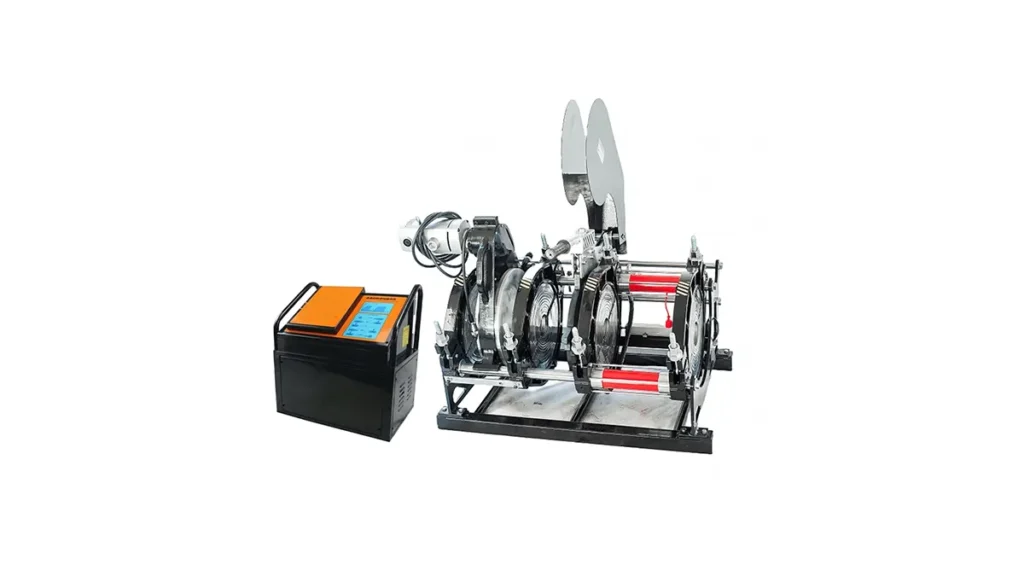
If you are looking for a reliable butt fusion machine for pipeline projects, automation features such as digital control, pressure stability, and data recording can make a significant difference in project quality and efficiency.
8. Customization Is Becoming a Competitive Advantage
As automation spreads, many buyers are no longer looking for generic equipment. They want machines that can be tailored to specific materials, pipe sizes, voltage requirements, climate conditions, and project workflows. This demand for customization is driving manufacturers to offer more OEM and ODM options.
Customized automation systems are especially useful for international contractors and distributors who serve different markets. A machine that works well in one region may need design changes for another due to power standards, transport needs, or local industry practices. Flexibility in design is therefore becoming an important selling point.
For buyers, this means selecting a partner that can provide both reliable engineering and practical customization support. Manufacturers with strong development capabilities are better positioned to deliver automation solutions that match real-world requirements rather than forcing customers to adapt to fixed equipment limitations.
9. Quality Assurance Remains at the Core of Automation Value
Despite all the exciting technology, the real value of welding automation still comes down to quality assurance. Automated machines are only useful if they produce strong, repeatable, and compliant welds. That is why testing, calibration, and inspection remain essential parts of the process.
Leading manufacturers now invest heavily in production testing, temperature verification, hydraulic pressure stability checks, and clamp alignment inspection. These quality steps help ensure that automation delivers what it promises: fewer defects, longer service life, and more reliable field performance. In projects where failure can be extremely costly, this level of assurance is critical.
Companies such as JQ-Fusion demonstrate how strong manufacturing capability can support automation trends in practical ways. With experience in manual, hydraulic, and CNC automatic solutions, a supplier can help contractors choose the right level of automation for different project sizes and budgets. This balance between technology and application is what modern buyers are looking for.
Automation in welding is not about replacing craftsmanship. It is about improving consistency, reducing waste, and making advanced performance available to more users. Businesses that embrace the latest trends are better equipped to compete in markets where quality, speed, and accountability matter more than ever.
Frequently Asked Questions
Q1: What is the biggest automation trend in welding today?
Smart welding control systems and data-driven automation are leading the market because they improve quality, consistency, and traceability.
Q2: Are robotic welding systems only for large factories?
No. Smaller shops can now use collaborative robots and flexible automation tools that are easier to install and reprogram.
Q3: Does automation reduce the need for skilled welders?
It changes the role of skilled welders rather than eliminating it. Welders become operators, supervisors, and quality specialists.
Q4: Why is predictive maintenance important in welding automation?
It helps reduce unexpected downtime by identifying machine issues early and supporting planned maintenance.
Q5: What should buyers look for in an automated welding machine?
They should look for stable performance, quality control, customization options, data features, and strong technical support.



