
When pipeline projects move from planning to field execution, welding quality often becomes the deciding factor between long-term reliability and expensive rework. Large scale pipeline welding is not only about joining pipes; it is about maintaining consistency across hundreds or even thousands of joints, under changing weather, terrain, crew shifts, and production pressure. In that environment, case studies matter because they reveal what really works, what fails, and what the project team should do differently next time.
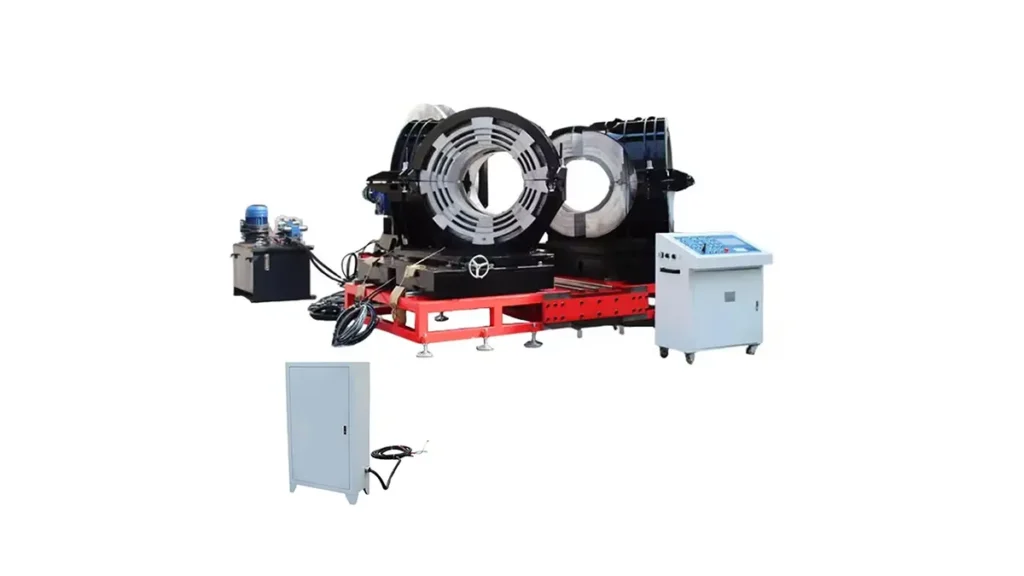
Across water transmission, gas distribution, mining, and industrial pipeline construction, the most successful teams treat welding as a controlled engineering process rather than a fast mechanical task. That mindset is especially important for HDPE and thermoplastic pipelines, where butt fusion quality can directly affect leak resistance, service life, and overall project safety. For contractors looking for dependable equipment and field-proven performance, a reliable butt fusion machine can make a measurable difference in output stability and weld consistency.
Why Large Scale Pipeline Welding Needs Case Studies
Large projects have a way of exposing weak points that are invisible on smaller jobs. A welding setup that works well on a short rural water line may struggle on a long transmission corridor where crews must repeat the same operation under strict schedule pressure. Case studies provide a practical mirror of the field, showing how equipment selection, operator training, environmental control, and inspection routines affect the final result.
They also help teams avoid expensive assumptions. For example, some project managers focus heavily on pipe procurement while underestimating the importance of temperature control, clamp alignment, or cooling time. Others may assume that any welding machine can handle all diameters equally well. In reality, large scale projects require matching the machine specification with the pipe size range, project pace, and site conditions. That is where lessons learned become operational value.
Key takeaway: In large scale pipeline welding, the best results come from combining proven equipment, trained operators, and disciplined process control rather than relying on speed alone.
Case Study 1: Long-Distance Water Supply Pipeline
In a long-distance water supply project, the construction team faced a familiar challenge: a high number of identical joints had to be completed efficiently while maintaining strict quality standards. The pipeline route crossed open land with significant daily temperature swings. Early in the project, the crew noticed that weld appearance varied from shift to shift, even when the same machine settings were used.
After reviewing the workflow, the engineering team discovered that the issue was not the machine alone. The real problem came from inconsistent surface preparation, insufficient cleaning between cycles, and uneven cooling time under changing ambient conditions. The project adopted a stricter pre-weld checklist, standardized pipe end cleaning, and required the crew to verify alignment before every fusion cycle. As a result, weld repeatability improved significantly, and rejected joints dropped.
This case highlights an important lesson: when a project covers many kilometers, small process errors accumulate quickly. A minor deviation on each joint can become a major quality risk by the end of the line. Consistency is the real productivity metric.
Lesson Learned
Standardization wins. Even experienced teams need a fixed sequence for cleaning, heating, joining, and cooling. When every shift follows the same method, the pipeline benefits from uniform weld integrity.
Case Study 2: Gas Distribution Network in Dense Urban Conditions
Urban gas distribution projects often combine tight schedules with limited workspace. In one large city project, the contractor had to perform multiple welding operations in narrow trenches while coordinating deliveries, traffic limitations, and safety requirements. The team initially faced delays because the welding station setup took too long and the equipment was not optimized for quick relocation.
The solution was to reorganize the field plan. The crew used a more compact welding setup, improved material staging, and separated pipe preparation from fusion execution. This allowed the welding unit to remain focused on joining while support staff handled cleaning and pipe movement. Once the workflow changed, productivity improved without sacrificing quality.
The project also revealed the value of technical support. When a temperature fluctuation problem appeared during a cold morning shift, the team worked with the equipment supplier to verify calibration and update operating parameters. That quick response prevented a series of defective welds and kept the schedule intact.
Operational insight: In dense urban environments, welding success depends as much on logistics and workflow design as on the machine itself.
Case Study 3: Mining Pipeline Across Harsh Terrain
Mining pipelines are known for demanding conditions. Heavy dust, vibration, uneven ground, and remote access all place extra stress on welding operations. In one mining project, the team had to install a large pipe network to transport slurry across a rugged site. The environment was harsh enough that the crew could not afford repeated equipment failures or delayed repairs.
The project team selected welding equipment with stable hydraulic performance and strong clamp alignment control, because even a minor deviation could cause a weak joint under long-term vibration. They also established a preventive maintenance schedule for the machine and kept critical spare parts on site. That decision reduced downtime and protected the installation sequence from unexpected interruptions.
The most important lesson from this project was that remote jobs need redundancy. A high-performance welding machine is valuable, but only when supported by maintenance readiness, spare components, and trained operators who can recognize early warning signs. In remote industrial work, prevention is cheaper than recovery.
Lesson Learned
Durability matters more in remote sites. For mining and industrial pipelines, the best equipment is not just precise; it is also easy to maintain, reliable under stress, and supported by accessible service.
What the Best Projects Have in Common
Although the projects above differ in scale and environment, their success patterns are surprisingly similar. The strongest case studies usually share five qualities: disciplined process control, proper equipment selection, operator training, environmental awareness, and timely inspection. When one of these is missing, quality losses appear quickly.
One of the biggest misconceptions in pipeline welding is that output speed and quality are always in conflict. In reality, the best projects use quality systems to increase speed indirectly. When welds are consistent, inspection time drops, rework decreases, and field teams move more confidently. That means the schedule becomes more predictable, not less.
Another common pattern is the importance of machine capability. A manufacturer with strong manufacturing control, strict testing, and flexible customization can support complex project demands better than a generic supplier. This matters especially when buyers need different voltages, configurations, or branding for regional distribution. For more product background and project-oriented solutions, contractors often review manufacturers with a broad range of equipment such as hydraulic, automatic, and electrofusion systems.
Important reminder: A welding machine is only one part of the system. The full result depends on preparation, calibration, operator behavior, and field discipline.
Lessons Learned from Project Execution
Large scale pipeline welding teaches several practical lessons that apply across industries. First, training should be continuous rather than one-time. Operators often improve significantly when they are shown how small actions affect weld quality, such as cleaning depth, timing, and pressure verification. Second, inspection should be built into the workflow. Waiting until the end of the job to discover systematic problems is too late.
Third, project teams should select equipment based on actual job requirements rather than only on purchase price. A low-cost machine that struggles with temperature consistency or clamp stability can create expensive rework. Fourth, suppliers should be evaluated on service and technical support as well as product specifications. In real projects, fast guidance can prevent downtime and protect delivery dates.
Finally, large scale projects benefit from records. Weld logs, machine settings, inspection results, and maintenance notes help teams identify trends and correct problems early. Over time, these records become a valuable internal database for future jobs.
Practical Checklist
- Verify pipe alignment before each weld cycle.
- Keep heating plates clean and properly calibrated.
- Control cooling time according to site temperature.
- Record machine settings for traceability and review.
- Use trained operators who understand both process and safety.
Why Equipment Quality Changes the Outcome
High-volume pipeline work puts enormous pressure on the machine itself. The equipment must deliver stable heating, accurate pressure control, and consistent clamp alignment across many repeated cycles. If one of these functions drifts, weld quality becomes harder to manage. This is why manufacturers with advanced machining, comprehensive testing, and strict quality control are often preferred for large projects.
In global pipeline construction, buyers also value customization and logistical support. A contractor working across multiple regions may need different voltage settings, machine sizes, or design configurations. A supplier with OEM and ODM capability can adapt to those needs more efficiently. That flexibility can be just as important as the machine’s base specification.
For organizations working in water supply, gas networks, mining, and industrial installations, the ideal solution is a welding partner that combines performance, reliability, and service. The best case studies show that when the equipment is matched well to the job, the entire project becomes easier to manage.
How Contractors Can Apply These Lessons
Contractors should start by defining project priorities: diameter range, site environment, production target, inspection standard, and maintenance capability. With those factors clear, equipment selection becomes much more accurate. Teams should also create a field procedure that includes machine setup, pipe preparation, weld execution, visual inspection, and documentation.
When possible, it helps to work with suppliers that offer technical training and after-sales support. This is especially useful during project ramp-up, when crews are learning a new machine or facing a new material specification. Fast support can prevent small issues from becoming major delays.
The strongest large scale welding programs are not improvisational. They are built on repeatable systems, measurable quality checks, and equipment that can perform reliably day after day.
Frequently Asked Questions
Q1: What is the most common cause of weld failure in large scale pipeline welding?
The most common cause is usually inconsistency in preparation or process control, such as poor cleaning, alignment errors, incorrect pressure, or uneven cooling time.
Q2: Why is training so important if the machine is already automated?
Automation improves precision, but operators still need to prepare the pipe correctly, monitor the process, and respond to site conditions. Skilled use still matters.
Q3: How do teams maintain weld quality on long projects?
They use standardized procedures, regular calibration, detailed records, and inspection checkpoints throughout the work rather than only at the end.
Q4: What should buyers look for in a welding machine supplier?
They should look for stable product quality, technical support, customization options, fast shipping, and proven experience in global pipeline projects.
Q5: Can the right welding machine reduce project delays?
Yes. A reliable machine with stable performance helps reduce rework, downtime, and calibration issues, which supports a smoother construction schedule.



