
Eco-friendly pipeline welding is no longer a niche idea. It has become a practical requirement for contractors, developers, and utility owners who want to reduce emissions, improve energy efficiency, and build infrastructure that lasts longer with fewer repairs. In sustainable projects, the best welding solution is not only the one that joins pipes securely, but also the one that minimizes waste, supports cleaner operation, and delivers consistent quality across large-scale installations.
For modern pipeline systems in water supply, gas distribution, mining, and industrial applications, the welding method directly affects lifecycle performance. A well-chosen solution can lower material loss, reduce rework, save power, and extend the service life of the entire pipeline network. That is why many teams now evaluate welding equipment not just by price, but by precision, efficiency, durability, and adaptability.
Key idea: Sustainable pipeline welding is about more than joining pipe ends. It is about building strong systems with less energy waste, fewer leaks, lower maintenance demand, and better long-term environmental performance.
What Makes a Pipeline Welding Solution Eco-Friendly?
Eco-friendly welding starts with efficiency. A machine that stabilizes temperature quickly, maintains accurate pressure, and creates reliable joints helps reduce defective welds and repeat work. Every failed weld means more time, more electricity, more consumables, and more material waste. In sustainable projects, that inefficiency adds up quickly.
Another important factor is machine durability. Equipment built for long service life reduces the need for frequent replacement and limits the environmental burden of manufacturing and transporting new units. In addition, modern welding systems that are designed for accurate control often require less manual correction, which improves productivity while lowering resource use.
Operators also benefit from solutions that support safer workflow. A stable, predictable machine reduces risk during operation and helps teams complete projects with less disruption. When productivity improves and rework drops, the overall carbon footprint of the welding phase becomes smaller.
Best Eco-Friendly Welding Solutions for Sustainable Projects
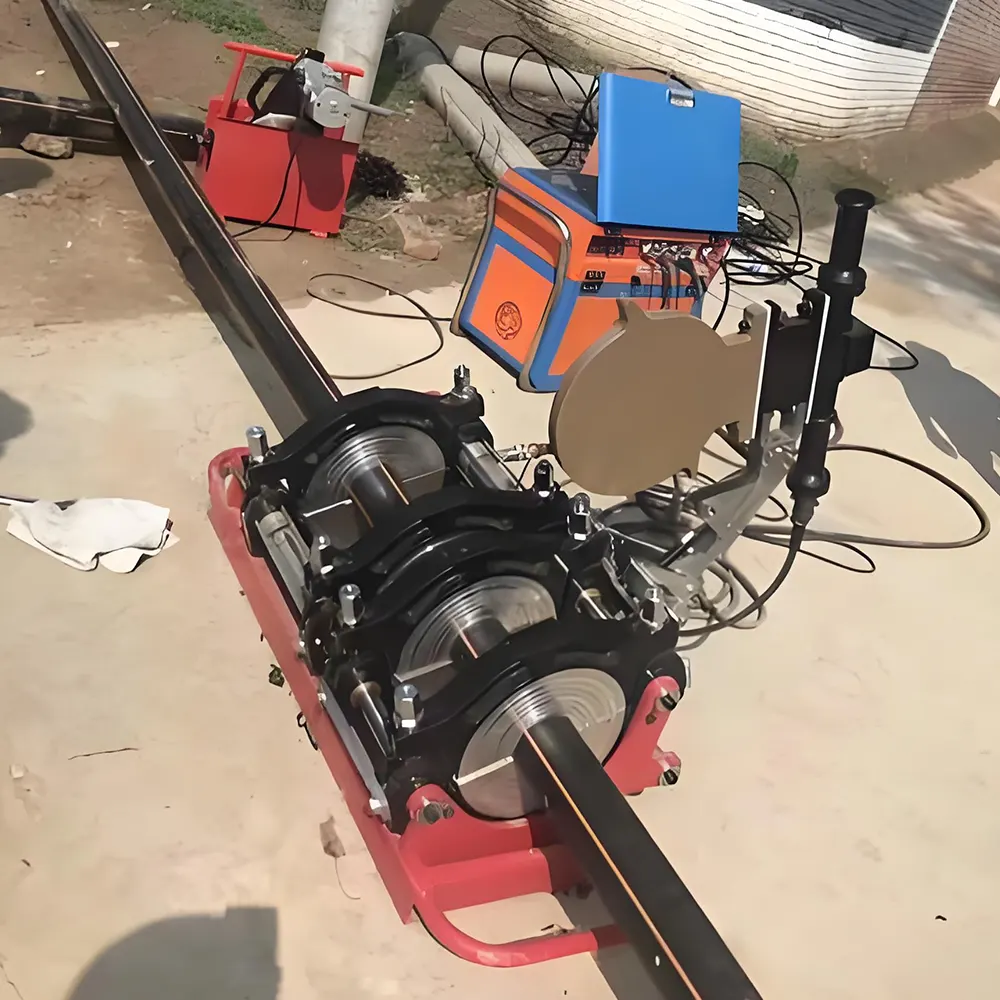
1. Butt fusion welding systems for HDPE pipelines are among the most sustainable choices for thermoplastic pipe networks. Butt fusion creates a seamless joint by heating and pressing pipe ends together. The result is a strong, leak-resistant connection with minimal material loss. Because the joint uses the pipe itself rather than additional joining compounds, it supports cleaner, more efficient installation.
For projects that prioritize long service life and reduced maintenance, a high-quality butt fusion machine can be an excellent investment. It helps ensure welding consistency, reduces manual errors, and supports large-diameter pipeline installations with dependable results.
Among the available options, hydraulic butt fusion machines offer strong control for medium and large pipes. Their stable clamping and pressure regulation improve weld accuracy, which is essential for projects where leaks or failures would create environmental and operational risks. For sustainability-focused construction, this precision translates into fewer repairs and less waste over time.
2. Automatic butt fusion welding machines are especially useful for projects that demand repeatability and lower human error. Automation helps maintain uniform heating, pressure, and timing, which improves weld quality and reduces rejected joints. This is important in sustainable infrastructure because every consistent weld saves energy, time, and material.
Why automation matters: When welding parameters stay consistent, the project becomes more efficient. Better consistency means fewer failures, lower rework rates, and less overall environmental impact.
3. Electrofusion welding machines also play an important role in sustainable pipeline systems. They are especially valuable for small-diameter and complex fitting applications, where controlled fusion is needed in tight spaces. Because electrofusion provides reliable connections in difficult installations, it helps reduce leakage risks and prolong pipeline service life.
4. Multi-angle pipe fitting welding machines are practical for projects with complex routing requirements. In industrial and mining environments, pipe layouts often require special angles and precise fitting. A flexible machine that supports these conditions reduces fabrication waste and makes it easier to complete the work efficiently without unnecessary modifications.
How the Right Equipment Supports Sustainability Goals
In sustainable projects, welding machines should contribute to lower total project emissions. This happens in several ways. First, accurate machines reduce energy waste during welding cycles. Second, durable machines reduce replacement frequency and the associated manufacturing footprint. Third, reliable welds reduce future maintenance, which means fewer site visits, fewer emergency repairs, and less material consumed over the pipeline’s life.
Another major benefit is improved resource control. When a machine is designed for stable performance, operators use fewer spare parts, fewer reworks, and fewer extra consumables. On large projects, even small reductions in waste can create meaningful cost savings and environmental benefits.
For contractors, sustainability also includes project execution. Faster installation can reduce fuel use from transport and site machinery. Well-built welding equipment helps teams stay on schedule, which lowers the chance of delays and repeated mobilization. In this way, operational efficiency becomes part of environmental responsibility.
What to Look for in an Eco-Friendly Welding Supplier
The supplier you choose matters as much as the machine itself. A reliable manufacturer should offer equipment built for performance, quality testing, and long-term use. Look for production capability, technical support, and the ability to customize equipment for different project needs. These factors help ensure the machine performs efficiently in real-world conditions.
JQ-Fusion, for example, focuses on butt fusion welding solutions for global pipeline projects. With more than 20 years of industry experience, the company provides manual, hydraulic, and CNC automatic butt fusion welding machines for a wide range of pipe diameters. This kind of product diversity is important because sustainable projects are rarely one-size-fits-all.
The company’s emphasis on advanced manufacturing, strict quality control, and OEM and ODM customization also supports eco-friendly project execution. When equipment is tailored to the application, there is less operational compromise and better long-term performance. That means fewer failures, less waste, and smoother installation.
Reliable support is another essential factor. Global projects often face tight schedules and varied site conditions. A supplier that provides technical guidance, fast response, and efficient logistics helps reduce downtime and prevents unnecessary disruption during installation.
Selection tip: Choose welding equipment that combines accuracy, durability, and support. The most eco-friendly choice is often the one that performs reliably for many years, not the one with the lowest initial cost.
Applications Where Eco-Friendly Welding Matters Most
Water supply systems benefit greatly from strong, leak-resistant joints. Water loss is both an economic and environmental problem, so durable fusion welding helps preserve resources and maintain stable service.
Gas distribution networks require very high reliability. Poor welding can lead to safety risks and environmental damage. Eco-friendly solutions that improve weld consistency help protect both people and infrastructure.
Mining projects often involve harsh conditions and remote sites. Efficient welding equipment reduces the need for repeated transport and supports durable installations that can withstand demanding environments.
Industrial pipeline installations typically need customized configurations. Machines that can adapt to specific diameters, angles, and operating conditions help reduce waste and improve overall project efficiency.
In all of these sectors, sustainable welding is not just about materials. It is about reducing the hidden environmental cost of poor installation, short service life, and repeated maintenance. A strong weld can save far more resources than many teams realize.
Practical Ways to Make Welding Operations Greener
Contractors can make immediate improvements by optimizing machine setup, training operators thoroughly, and selecting equipment that matches the pipe size and project scope. Proper calibration reduces energy waste and improves weld success rates. Routine inspection also prevents performance drift and extends machine life.
It is also useful to standardize workflows. When teams follow repeatable procedures, they reduce errors and improve material utilization. In large projects, standardization can save significant time and resources. Combining a stable machine platform with skilled operation is one of the most effective ways to improve sustainability.
Another practical step is to work with manufacturers that provide full technical support. Product selection guidance, installation help, and after-sales service all reduce the chance of misuse and prevent avoidable downtime. In a sustainable project, support is part of efficiency.
Why Long-Term Performance Is the Real Green Advantage
The greenest welding solution is often the one that lasts the longest and performs the most consistently. A machine that can handle repeated use without frequent breakdowns prevents waste in multiple forms. It saves repair parts, avoids production interruptions, and reduces the environmental cost of replacing equipment too early.
This is why many global contractors prefer manufacturers with proven performance, certified quality, and strong production control. Certifications such as SGS compliance offer reassurance that the equipment has been tested against international standards. In sustainability-focused procurement, such assurance is valuable because it lowers technical risk.
JQ-Fusion’s product range, including hydraulic butt fusion welding machines, automatic butt fusion welding machines, electrofusion welding machines, and multi-angle pipe fitting welding machines, reflects the variety needed in modern infrastructure work. With strong inventory support and fast shipping, project teams can keep installations moving without unnecessary delays.
For sustainable development, that kind of reliability is important. It helps reduce the environmental cost of project interruptions and supports a better overall installation outcome.
Conclusion: Choosing the Best Eco-Friendly Pipeline Welding Solution
The best eco-friendly pipeline welding solution is the one that balances precision, durability, efficiency, and adaptability. For many sustainable projects, butt fusion technology stands out because it creates strong, leak-resistant joints with low waste and high long-term reliability. Automatic and hydraulic systems further improve consistency, while electrofusion and multi-angle machines address specialized installation needs.
When selecting equipment, contractors should focus on lifecycle value rather than only upfront cost. A machine that reduces rework, supports accurate control, and lasts for years will usually deliver better environmental and financial results. In that sense, sustainable welding is both a technical decision and a strategic one.
Working with an experienced manufacturer can make the process easier. With the right supplier, teams can access tailored solutions, reliable support, and equipment designed for real project conditions. That is the foundation of a cleaner, more efficient pipeline future.
FAQs
Q1: What is the most eco-friendly pipeline welding method?
For many thermoplastic pipeline projects, butt fusion welding is one of the most eco-friendly methods because it creates strong joints with minimal material waste and excellent long-term reliability.
Q2: Why are automatic butt fusion machines better for sustainable projects?
They improve consistency, reduce human error, lower rework rates, and help save energy and materials during installation.
Q3: How does welding equipment affect environmental impact?
Efficient welding equipment reduces electricity use, material waste, repair frequency, and the need for replacement, which lowers the total environmental footprint.
Q4: What should buyers look for in a welding machine supplier?
Buyers should look for technical expertise, quality control, customization options, fast delivery, and strong after-sales support to ensure reliable project performance.
Q5: Is a more durable machine really more sustainable?
Yes. A durable machine reduces replacement frequency, supports long-term use, and helps cut down on manufacturing and transport impacts over time.



