
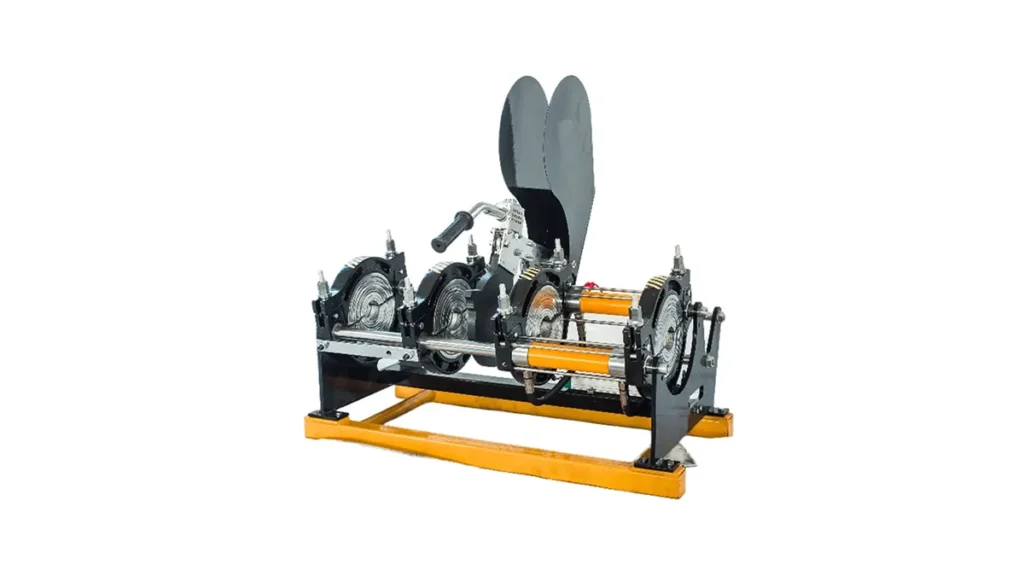
When project managers evaluate HDPE pipeline installation, the first question is often not whether fusion welding is reliable, but how much it really costs and where savings can be achieved. In practice, the answer is rarely found in a single number. The total cost of an HDPE welding project depends on machine selection, labor efficiency, energy consumption, downtime, material waste, inspection quality, and the long-term stability of the welded joints. That is why cost optimization is not simply about buying the cheapest equipment; it is about making every stage of the welding process more efficient, more predictable, and less risky.
In many construction and infrastructure projects, HDPE welding is a critical line item. Water supply systems, gas distribution networks, mining pipelines, industrial fluid transport, and municipal installations all require strong, leak-free joints. A poor welding decision can create hidden expenses far beyond the initial purchase price. Rework, delay penalties, failed inspections, and premature joint failure can quickly outweigh any upfront savings. For this reason, experienced contractors look at welding cost optimization as a lifecycle strategy, not a one-time purchase decision.
In a typical HDPE project, the cost structure is influenced by several factors. Equipment investment is one of the most visible. Manual machines may cost less initially, but on large projects they can increase labor time and reduce consistency. Hydraulic systems offer better pressure control and improve repeatability, while CNC automatic models can dramatically improve efficiency for demanding or high-volume jobs. Alongside equipment, operators need to consider pipe diameter range, climate conditions, welding standards, project volume, and the technical skill level of the crew. The right balance between these elements determines whether a project remains profitable or becomes expensive to manage.
Where the Real Savings Come From
Cost optimization begins by identifying the biggest cost drivers. In many cases, the largest savings do not come from cutting material prices, but from reducing errors and eliminating delays. A well-calibrated welding machine can lower the probability of joint defects, which means fewer repairs and less wasted pipe. Stable heating plates, accurate hydraulic pressure, and precise clamp alignment all contribute to stronger joints and fewer interruptions. That stability is especially important on projects where every hour of downtime creates scheduling pressure and additional labor expense.
Key point: The cheapest machine is not always the lowest-cost solution. In HDPE welding, accuracy, repeatability, and uptime often save more money than a lower purchase price ever could.
Another major source of savings is labor optimization. A machine that reduces setup time, simplifies alignment, or automates pressure control can help one crew complete more welds per day. In large pipeline projects, even a small improvement in cycle time can translate into substantial labor savings over weeks or months. This is why many contractors compare not only purchase price, but also output per shift and the consistency of each weld cycle. When production improves, labor, fuel, and rental costs often decrease at the same time.
The Hidden Cost of Rework
Rework is one of the most overlooked expenses in HDPE fusion projects. A failed weld may seem like a single isolated issue, but the actual cost includes removed sections, extra material, additional machine time, extra inspection, and schedule disruption. In safety-sensitive environments such as gas distribution or mining applications, a failure can also trigger stricter inspections and project delays. If the weld quality is inconsistent, the project team may need to slow down operations to protect quality, which reduces overall productivity.
Good cost optimization therefore depends on equipment reliability. Stable temperature control, proper hydraulic pressure, and accurate clamp positioning reduce the chance of operator error and inconsistent fusion. Many contractors also invest in operator training because a skilled operator can help prevent waste and improve machine performance. The combination of reliable equipment and skilled labor is usually more cost-effective than relying on low-cost tools without technical support.
Tip: If a project has strict inspection requirements, invest in better process control early. A small upgrade in equipment quality can reduce rework costs dramatically.
How Machine Selection Impacts Budget
The type of fusion machine has a direct influence on project economics. Manual butt fusion equipment is often suitable for smaller pipelines, short installations, or budget-conscious operations. It has a lower entry cost and can be practical when the workload is limited. However, once pipe sizes increase or the number of joints rises, manual operation may become slower and less consistent, increasing labor costs.
Hydraulic butt fusion machines offer a stronger balance of control and productivity. They are widely used in mid-size and large projects because they improve pressure stability and reduce the physical workload on the operator. For contractors focused on efficiency, this often leads to faster completion and fewer quality issues. Automatic or CNC systems may require a larger initial investment, but they can be highly valuable in projects where precision, traceability, and high output are essential.
For buyers seeking practical information about equipment options, it is often useful to review a trusted butt fusion machine source that offers multiple configurations for different pipe diameters and project requirements. Matching the machine to the actual project scope is one of the smartest forms of cost control.
Energy, Maintenance, and Long-Term Operating Costs
Many teams focus only on purchase price and forget operating cost. Over time, maintenance, power usage, replacement parts, and service response can have a major effect on total project spending. A machine with poor durability may require frequent calibration or component replacement. If spare parts are difficult to source, the project could experience longer downtime and higher logistics expenses. This is why durability matters as much as price.
Advanced manufacturing quality also contributes to long-term savings. Machines built with precision machining and strict testing usually maintain more stable performance. When temperature accuracy and hydraulic stability remain consistent, the machine can work longer with fewer interruptions. This reliability is especially important for contractors managing multiple sites or distributed pipeline networks, where equipment downtime can quickly affect several schedules at once.
Practical insight: A better-built machine often reduces service calls, extends equipment life, and improves welding consistency, making it a smart investment for long-term project control.
Why Customization Can Save Money
Customization is another valuable cost-saving strategy. Instead of buying an oversized or poorly matched machine, contractors can choose equipment configured for their actual voltage, diameter range, project standards, and operational environment. This is particularly useful in international projects where power supply conditions, site access, and job specifications can vary significantly. When the equipment is tailored to the project, teams can work more efficiently and avoid paying for unnecessary functions.
For distributors and contractors, OEM and ODM customization can also create commercial advantages. Branding, machine color, functional upgrades, and project-specific configurations help businesses build stronger market identity while meeting exact customer needs. A customized machine may reduce installation friction, improve field usability, and support faster adoption by the crew. In a competitive market, these operational advantages can be just as important as direct cost savings.
Quality Control and Project Risk Reduction
Strict quality control is a major factor in project cost optimization. Every machine should be checked for temperature accuracy, hydraulic pressure stability, and clamp alignment before deployment. These details determine how well the machine performs under real field conditions. If a machine passes factory testing consistently, the contractor is less likely to face unexpected failures on-site.
In HDPE pipeline projects, risk reduction is financial protection. A single unreliable joint can affect entire pipeline sections. Therefore, certified equipment that complies with international standards helps reduce project uncertainty. When contractors know that the machine has been tested by competent manufacturing teams and certified by recognized organizations, they can plan labor and delivery schedules with greater confidence.
Important: Savings are not only measured in money spent, but also in the money not lost through failures, delays, and inspection problems.
How Contractors Can Estimate Savings More Accurately
To estimate savings accurately, contractors should compare total project cost under different machine scenarios. This means evaluating initial purchase price, expected output per day, number of welds, labor hours, maintenance frequency, and likely rework rate. A machine that completes more welds per shift with fewer errors may be significantly cheaper over the project lifecycle, even if its purchase price is higher.
It also helps to consider stock availability and delivery speed. When equipment can be shipped quickly, project delays are reduced. If the supplier has a large inventory and strong logistics support, contractors can respond faster to urgent schedules and avoid costly downtime. In time-sensitive projects, speed of delivery can be a direct savings factor.
Reliable technical support is equally important. If the supplier can guide installation, troubleshooting, and after-sales service, the project team spends less time solving technical issues. This support is especially useful for international buyers who need efficient communication and practical assistance across different regions and standards.
What JQ-Fusion Brings to Cost Optimization
JQ-Fusion focuses on HDPE pipe welding machines designed for stable performance, long service life, and practical project use. With more than 20 years of industry experience, the company provides manual, hydraulic, and CNC automatic butt fusion welding machines for a wide range of pipe diameters. This flexibility makes it easier for contractors to select the right equipment instead of overpaying for features they do not need.
The company’s manufacturing capability also supports cost efficiency through quality control and technical consistency. Modern production lines, precise machining equipment, and strict testing procedures help ensure that each machine performs reliably. In real project terms, that means fewer errors, better weld consistency, and lower risk of expensive downtime. JQ-Fusion also offers OEM and ODM services, helping customers tailor machine size, voltage, design, and branding to specific market and project needs.
For companies operating in water supply systems, gas networks, mining projects, and industrial installations, this type of support can improve both project performance and long-term return on investment. Reliable global support, fast response, and efficient logistics all contribute to smoother operations and lower overall friction.
FAQ
Q1: Is a more expensive HDPE welding machine always better?
Not always. The best machine is the one that matches the project scale, pipe diameter, technical requirements, and operator capability. A higher-priced model can save money if it reduces rework and increases productivity.
Q2: What is the biggest hidden cost in HDPE welding projects?
Rework is often the biggest hidden cost. Failed welds lead to wasted material, extra labor, longer schedules, and potential inspection issues.
Q3: How can contractors reduce welding project costs without sacrificing quality?
Choose reliable equipment, train operators well, match the machine to the project, and use suppliers that provide strong technical support and fast delivery.
Q4: Does automation always reduce total cost?
Automation can reduce labor time and improve consistency, but it is most cost-effective in larger or more demanding projects. For small jobs, a manual or hydraulic model may be more practical.
Q5: Why is supplier support important for cost optimization?
Good supplier support helps prevent downtime, speeds up troubleshooting, and improves machine utilization. That support can save both time and money across the entire project.



