
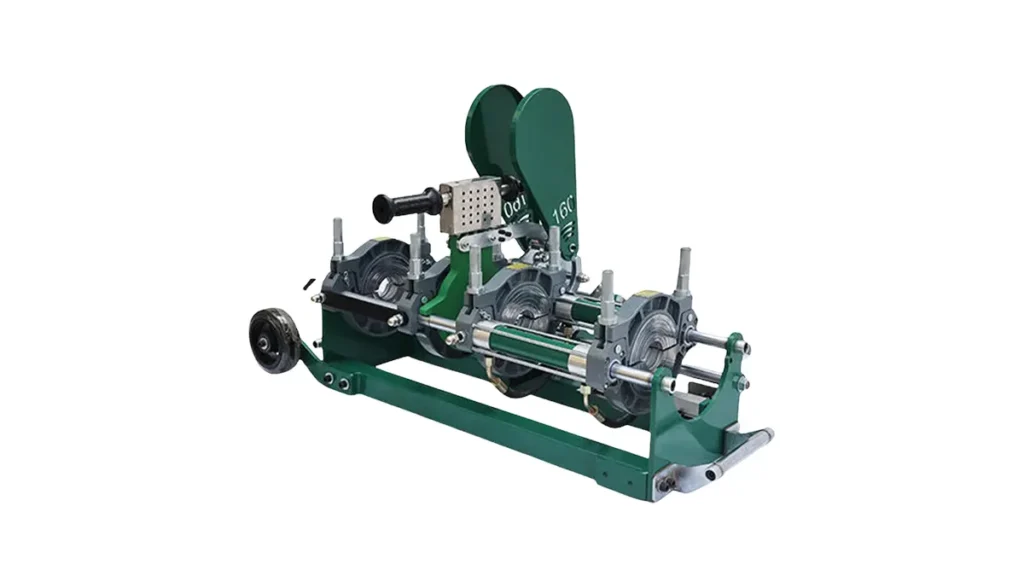
Choosing the right HDPE welding machine supplier is a business decision that affects welding quality, project efficiency, delivery schedules, and long-term operating costs. For buyers working on water supply, gas distribution, mining, or industrial pipeline systems, the supplier is not just a vendor; it is a partner in project success. A low-cost machine may seem attractive at first, but if it cannot maintain temperature stability, clamp alignment, or hydraulic pressure consistency, the real cost appears later in rework, downtime, and warranty claims.
A strong supplier should provide more than equipment. They should offer engineering knowledge, reliable manufacturing, customization options, fast shipping, and after-sales support that helps your team use the machine correctly from the first day. If you are comparing manufacturers, a practical checklist can help you separate serious suppliers from trading companies or low-quality factories. The goal is simple: buy a machine that performs consistently, fits your pipeline requirements, and remains dependable over many years of field use.
✔ Key point: the best supplier is not always the cheapest. It is the one that can demonstrate technical capability, stable quality, and proven support for your type of project.
When evaluating a supplier, think in five layers: product quality, manufacturing strength, customization ability, service support, and commercial reliability. If a supplier performs well in all five, the risk of project failure drops significantly.
1. Check the Supplier’s Industry Experience
Experience matters because butt fusion welding is a precision process. A supplier with years of focus on HDPE pipe welding machines will usually understand real site conditions better than a general machinery seller. Ask how long they have been manufacturing HDPE welding equipment, what markets they serve, and which industries use their machines most often. A supplier with over 20 years of experience, for example, is more likely to understand the demands of water networks, gas pipelines, and remote industrial sites.
Look for signs of industry depth: a complete product range, technical documents, clear operating instructions, and the ability to recommend the right machine model for specific pipe diameters. Suppliers with real expertise can explain the difference between manual, hydraulic, and automatic systems in a practical way, instead of using only marketing language.
2. Review the Product Range and Application Fit
A reliable supplier should offer a product range that matches different job requirements. Some projects only need a compact manual machine for small-diameter pipe work, while others require hydraulic or CNC automatic equipment for larger and more complex installations. If the supplier only offers one model, you may not get the best fit for your project.
A strong lineup usually includes hydraulic butt fusion machines, automatic butt fusion machines, electrofusion welding machines, and multi-angle pipe fitting welding machines. This variety shows that the manufacturer understands different welding tasks and can advise buyers based on pipe size, site environment, operator skill level, and required welding accuracy.
Best practice: ask the supplier to recommend the machine according to pipe diameter, project timeline, and expected workload. A good supplier will ask questions before giving a quote.
3. Evaluate Manufacturing Capability
The quality of a butt fusion machine depends heavily on manufacturing capability. Modern production lines, precision machining equipment, and experienced technicians all contribute to stable machine performance. When a supplier has strong factory capability, the machine frame, heating plate, hydraulic system, and clamping components are more likely to meet the required tolerance and alignment standards.
Ask about their factory setup, production stages, and quality management process. Good manufacturers are usually transparent about how they build, assemble, and test machines. They can explain how they control accuracy during production and how they maintain consistency across different batches.
Important: stable production capacity is especially valuable for distributors and contractors who need repeated orders, spare parts supply, and long-term cooperation.
4. Ask About Quality Control Standards
Quality control is one of the most important factors when selecting a supplier. A machine may look professional on the outside, but if the temperature control is inaccurate or the hydraulic pressure is unstable, welding results will suffer. A trustworthy supplier should perform testing before delivery and be able to describe their inspection process clearly.
Useful testing items include temperature accuracy, pressure stability, clamp alignment, electrical safety, and repeated operation performance. You should also ask whether the machines comply with international standards and whether they have certifications such as SGS. Certifications do not replace field testing, but they do show that the supplier follows a more serious production discipline.
Checklist item: request photos, test records, or inspection reports before shipment. Professional suppliers will usually provide them without hesitation.
5. Confirm Customization Possibilities
Every buyer has different needs. Some projects require a specific voltage, power standard, or machine color. Others need a modified structure, branding support, or special configuration for site conditions. This is where OEM and ODM capability becomes valuable. A supplier with flexible customization services can help you create a product that fits your market or your internal engineering standards.
Customization may include machine size, voltage, control system, heating plate design, branding, or packaging. If you are a distributor, customized branding can improve market recognition. If you are a contractor, project-specific configuration can make operation easier and reduce unnecessary features that increase cost.
Tip: a supplier that can adapt to your technical needs is usually more valuable than one that only sells standard stock models.
6. Evaluate Technical Support and After-Sales Service
Even a high-quality machine needs technical support. Before you buy, ask what kind of after-sales service is available. Will the supplier help with machine setup, operator training, troubleshooting, and spare parts supply? Can they respond quickly if a project has an urgent issue? These questions are essential because welding jobs often happen on tight deadlines.
Reliable technical support reduces downtime and helps teams use the machine correctly. This is particularly important when your workforce includes operators with different skill levels. A good supplier should be able to explain operation steps, maintenance needs, and safety precautions in clear language.
If a supplier offers full technical support from product selection to installation and after-sales service, they are more likely to become a long-term partner rather than a one-time seller.
7. Look at Delivery Speed and Inventory Strength
Project delays can be expensive. That is why delivery speed should be part of your supplier evaluation. A strong manufacturer usually maintains a large inventory of key models and has an organized supply chain that supports both small and bulk orders. This matters when you need fast shipping for urgent projects or replacement equipment.
Ask about lead time, stock availability, and export experience. A supplier that ships globally and handles logistics efficiently can save you valuable time. For contractors, this can mean keeping a project on schedule. For distributors, it can mean faster market response and better customer satisfaction.
8. Compare Pricing with Real Value
Price comparison is necessary, but it should never be the only factor. A very low quote may hide weak materials, poor quality control, or limited after-sales support. On the other hand, a higher price may be justified if the machine includes better components, stronger warranty terms, and more dependable service. The real question is whether the machine gives you a low total cost of ownership.
To compare value fairly, ask each supplier to explain the material grade, heating plate performance, hydraulic system quality, service life expectation, and spare parts availability. This will help you see whether the price difference is actually meaningful.
Remember: the cheapest machine can become the most expensive one if it causes repeated repairs or welding failures.
9. Check Global Market Experience and Export Support
If your project or business operates internationally, the supplier’s export experience becomes very important. A company that regularly serves global markets is usually better prepared for packaging, documentation, voltage differences, customs needs, and shipping coordination. This reduces the risk of misunderstandings and delivery problems.
Suppliers with a proven presence in overseas pipeline projects often understand the expectations of contractors and distributors in different regions. They can also help you avoid common mistakes related to machine specification, accessories, and operational standards.
10. Verify Reputation Through Proof, Not Promises
A supplier’s website may say all the right things, but buyers should look for proof. Ask for customer references, project examples, certificates, inspection records, and clear company information. If possible, review whether the supplier has a real factory, a visible engineering team, and a stable product catalog. These details are often more trustworthy than promotional language.
You can also check whether the supplier provides useful online resources such as product guides, technical explanations, or company pages that describe their manufacturing process. For example, a dedicated butt fusion machine resource can help buyers understand product options and company capabilities before starting a formal inquiry.
A trustworthy supplier welcomes questions. If the answers are vague, inconsistent, or delayed, that is often a warning sign.
Buyer’s Final Evaluation Checklist
Use this short checklist before placing an order:
- Does the supplier have real HDPE welding machine manufacturing experience?
- Do they offer the right machine type for your pipe diameter and project needs?
- Can they explain quality control and testing procedures clearly?
- Do they provide OEM or ODM customization if needed?
- Is technical support available before and after the sale?
- Can they ship quickly and support global delivery?
- Do they offer evidence of certifications, customer feedback, or project experience?
If the answer to most of these questions is yes, the supplier is worth serious consideration. If several answers are unclear, continue comparing. The right supplier should make your job easier, not harder.
Why Many Buyers Choose JQ-Fusion
For buyers seeking a dependable partner, JQ-Fusion stands out through its manufacturing experience, stable production capability, broad product range, and strong support for global customers. The company focuses on HDPE pipe welding machines and provides manual, hydraulic, and CNC automatic solutions for different project scales. With modern production lines, strict inspection, OEM and ODM flexibility, and proven export support, it offers a practical example of what a serious supplier should look like.
This matters because buyers do not just need a machine; they need consistent welding performance, project reliability, and confidence in long-term service. A supplier that can support all three is far more valuable than one that only provides a low initial price.
Strong suppliers help buyers reduce risk, improve output, and maintain welding quality across every job site.
FAQ
What is the most important factor when choosing an HDPE welding machine supplier?
The most important factor is overall reliability, including manufacturing quality, technical support, and the ability to supply the correct machine for your project. Price matters, but performance and service matter more in the long run.
How can I tell if a supplier is a real manufacturer?
Ask about their factory, production lines, testing process, and customization capability. Real manufacturers can usually explain how they build and inspect machines in detail.
Should I choose a manual, hydraulic, or automatic butt fusion machine?
It depends on pipe size, project complexity, and operator experience. Manual machines suit simpler jobs, hydraulic machines support more stable welding, and automatic machines are ideal for higher precision and efficiency.
Why are certifications and test reports important?
They show that the supplier follows a structured quality process. Certifications and test reports do not replace field evaluation, but they help reduce risk and confirm product consistency.
How do I avoid buying a low-quality welding machine?
Compare several suppliers, ask for technical details, review testing procedures, and check after-sales support. Avoid making a decision based only on the lowest price.



