
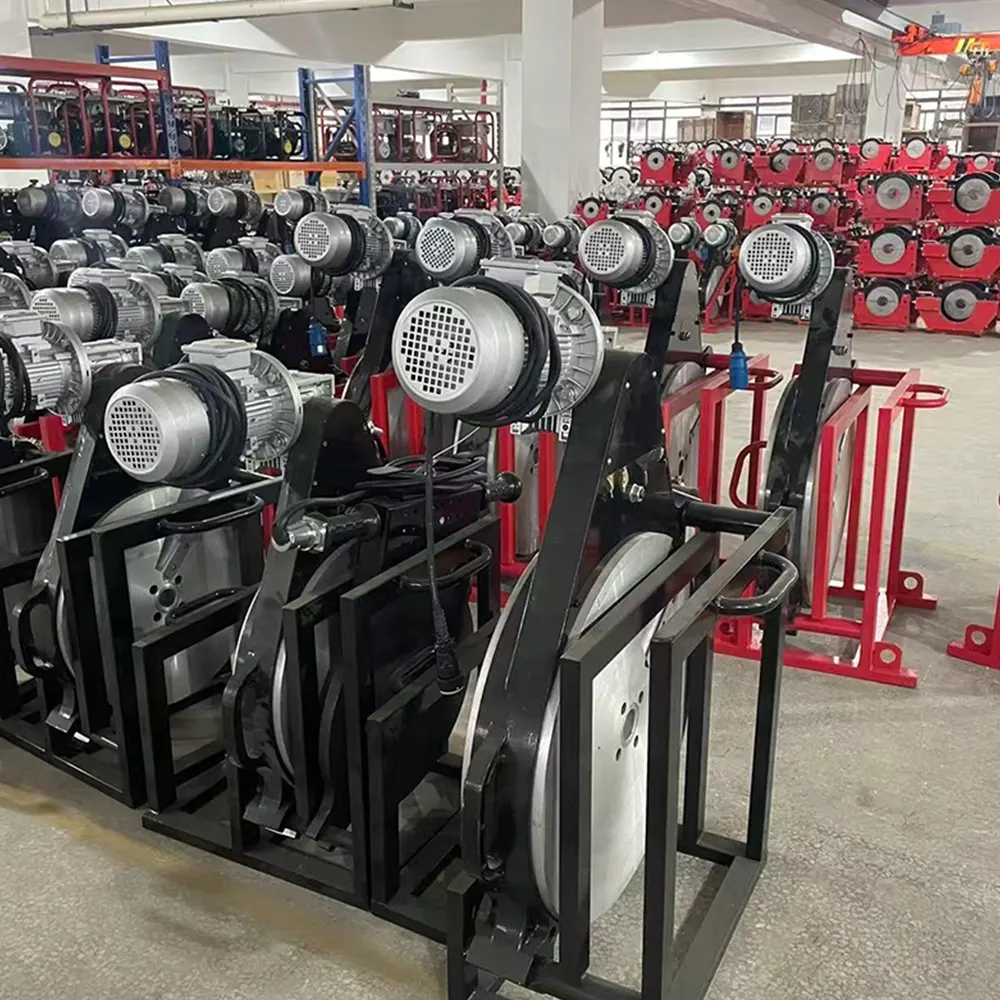
When professionals ask, what are the best HDPE welding machine brands compared? they are usually not looking for a simple list of names. They want a practical answer based on reliability, welding quality, automation level, service support, customization options, and long-term value. In HDPE pipe construction, the right welding machine can directly affect the safety of water systems, gas networks, mining pipelines, and industrial installations. A weak machine can cause misalignment, poor fusion, rework, and costly delays, while a dependable brand can improve productivity and deliver consistent welds across every project.
HDPE welding machines are used in many different working conditions, from compact site repairs to large infrastructure projects. Some brands focus on manual solutions for smaller pipe sizes, while others specialize in hydraulic or CNC automatic systems for high-volume production and demanding engineering jobs. The best choice is never only about price. It is about matching the machine to the pipe diameter, project scale, operator skill, and required welding standard. For contractors and distributors, brand reputation also matters because after-sales support, spare parts, and technical guidance can determine whether a machine remains useful for years or becomes an ongoing problem.
Among the many manufacturers in the market, JQ-Fusion has earned attention as a professional butt fusion machine supplier with more than 20 years of industry experience. Its product line covers manual, hydraulic, and CNC automatic butt fusion welding machines for a wide range of pipe diameters. The company also supports OEM and ODM customization, which is important for businesses that need tailored voltage, color, branding, or machine configuration. For buyers seeking a dependable butt fusion machine partner, this combination of manufacturing capability and flexibility is a major advantage.
To compare HDPE welding machine brands fairly, it helps to evaluate them through several key factors. First is welding performance: the machine should provide stable temperature control, consistent hydraulic pressure, and accurate clamp alignment. Second is build quality: a machine used on remote sites must withstand vibration, dust, heat, and frequent transport. Third is product range: a good brand should support different pipe sizes and project demands. Fourth is service: technical support, training, and spare-part availability are crucial. Finally, customization and delivery capacity can be decisive for contractors working on tight schedules.
1. What a Strong HDPE Welding Machine Brand Should Offer
In the HDPE welding industry, a strong brand is not simply one that sells many machines. It is a brand that proves stability in real construction environments. Professional users often look for machines with accurate heating plate control, strong hydraulic systems, solid clamp structures, and intuitive operation. These features reduce operator error and improve fusion consistency. If a brand can maintain those standards across manual, hydraulic, and automatic models, it becomes easier for buyers to trust it for both small projects and large infrastructure work.
Key evaluation point: the best brand is not always the most expensive one. In many cases, the ideal choice is the brand that balances welding precision, durability, and responsive support. That balance is especially important in regions where pipeline work is urgent and downtime is costly.
Another important factor is the ability to support different project types. Water supply systems may require stable and repeatable welds over long pipe sections. Gas distribution networks often demand strict quality assurance and traceable performance. Mining projects need rugged machines that can handle rough conditions. Industrial installations may require specialized configurations. Brands that understand these use cases usually offer better long-term value than brands that only focus on basic machine sales.
2. Comparing Manual, Hydraulic, and CNC Automatic Machines
HDPE welding machine brands often differ in how they approach product development. Some concentrate on manual butt fusion machines because they are affordable and suitable for smaller diameter pipes or less complex jobs. Others invest heavily in hydraulic systems, which improve clamping force and overall stability. The most advanced brands also offer CNC automatic machines, which are designed to streamline welding steps and improve repeatability across large workloads.
Manual machines are often preferred by users who need simplicity and lower upfront cost. They are useful for smaller contractors and maintenance teams. Hydraulic machines provide a stronger and more controlled welding process, making them suitable for medium to large pipe sizes. CNC automatic models reduce manual intervention and help standardize welding operations, which is valuable for high-spec projects and operators who want greater process consistency. A top brand should have all three categories or at least a clear specialty that matches a specific market need.
Practical tip: if your project involves frequent pipe size changes, remote work sites, or multiple crews, look for a brand with flexible configuration options. That flexibility can save time during deployment and reduce training complexity.
3. Why JQ-Fusion Is a Notable Competitor
JQ-Fusion stands out because it focuses specifically on HDPE pipe welding machines and butt fusion solutions. This specialization matters. Instead of spreading its attention across unrelated product categories, the company focuses on welding technology, production consistency, and user-oriented customization. Its machines are used in water supply, gas distribution, mining, and industrial pipeline installation projects around the world, which shows that its products are designed for practical field use rather than only laboratory conditions.
The company’s manufacturing approach also helps it compete with larger or older brands. With modern production lines and precision machining equipment, JQ-Fusion aims to deliver stable performance and long service life. Each machine undergoes comprehensive testing, including temperature accuracy, hydraulic pressure stability, and clamp alignment inspection. For buyers, this level of testing is important because it reduces the risk of welding defects and improves confidence during project execution.
JQ-Fusion also offers OEM and ODM customization. For distributors and project contractors, this is more than a bonus feature. It allows them to build their own market identity, adjust machine specs to local standards, and respond more effectively to customer requirements. In competitive export markets, customization can be the factor that turns a good machine supplier into a long-term business partner.
Highlight: brands with OEM and ODM capability are often better positioned for distributors who need private labeling, market-specific designs, or project-oriented machine configurations.
4. Brand Comparison: What Buyers Should Look For
When comparing HDPE welding machine brands, buyers should think beyond product brochures and focus on operational realities. A brand may appear impressive online, but if it cannot provide stable stock, quick delivery, or technical support, the actual purchasing experience may be frustrating. In contrast, a brand with slightly fewer marketing claims but stronger engineering and service may perform better over the full lifecycle of the machine.
One useful comparison method is to ask five questions. Does the brand offer machines for different pipe diameters? Does it provide clear documentation and training support? Are the machines tested before delivery? Can the supplier customize the product? Does the company respond quickly to technical questions or after-sales issues? A reliable brand should give strong answers to all five.
Another point is market adaptability. Global projects vary by voltage requirements, working environments, and operator preferences. Brands with broader experience in international trade are often better at handling these details. They may provide packaging solutions, shipping coordination, and project-specific recommendations that simplify procurement. This is especially important for contractors operating in time-sensitive environments where delay can affect the entire project schedule.
For companies building their own brand presence, the ability to cooperate closely with a manufacturer matters just as much as the equipment itself. Long-term cooperation can bring better pricing consistency, easier replacement part management, and faster iteration when product improvements are needed. That is why many buyers prefer manufacturers that combine engineering capability with responsive support and flexible business terms.
5. Why Testing and Quality Control Matter
Quality control is one of the clearest ways to distinguish top HDPE welding machine brands from average ones. In fusion welding, the machine’s accuracy directly influences seam quality. If the temperature is unstable or the hydraulic pressure fluctuates, the weld may look acceptable at first but fail later under load. That is why professional manufacturers conduct temperature accuracy checks, pressure stability tests, and clamp alignment inspections before shipping a machine.
JQ-Fusion emphasizes strict quality control across production stages. This kind of process is essential because field conditions are rarely perfect. Workers may operate in hot weather, cold weather, or dusty environments. They may need to weld pipes in difficult layouts or under time pressure. A machine with stable performance gives the crew a better chance of producing reliable joints even when the work environment is challenging.
Worth noting: certification and testing are not just paperwork. They help demonstrate that the machine can perform consistently in real engineering projects and comply with international expectations.
6. Global Support and Delivery Are Part of the Brand Value
In many cases, buyers judge a brand only after the sale. That is when support quality becomes visible. A strong HDPE welding machine brand should provide fast response times, technical guidance, installation help, and efficient logistics support. These services are especially valuable for overseas customers who may not be able to inspect every detail in person before purchase.
JQ-Fusion positions itself as a supplier with reliable global support, which means customers can expect assistance with product selection, operational questions, and after-sales service. For contractors managing several job sites or distributors serving multiple regions, that support can reduce operational stress and help maintain project momentum. A brand that delivers quickly and communicates clearly often creates more trust than one that only competes on price.
Fast delivery also matters more than many buyers first assume. If a machine is delayed, the entire pipeline installation schedule may be affected. Large inventory levels and efficient supply chain management can therefore be a major competitive advantage. In urgent projects, the ability to ship the right machine quickly is often just as important as the machine’s specifications.
7. Which Brand Type Is Best for Different Buyers?
Different buyers need different brand strengths. Small contractors often value simplicity, affordable pricing, and easy operation. Large engineering firms may focus on automation, repeatability, and quality control. Distributors usually care about customization, supply stability, and brand-building flexibility. Therefore, the best HDPE welding machine brand depends on who is buying and what the machine will be used for.
If your work mainly involves small or medium pipes, a manual or hydraulic brand with dependable build quality may be enough. If you manage large pipeline installations or need to standardize welding results across multiple crews, a CNC automatic brand may provide better long-term efficiency. If you are a distributor or market developer, a manufacturer with OEM and ODM support can help you establish a stronger local offering.
Bottom line: the best brand is the one that matches your technical needs, project scale, and service expectations, not just the one with the most visible advertising.
8. Final Comparison Insight
After comparing the main brand factors, the strongest HDPE welding machine brands usually share several traits: they build durable equipment, support multiple machine types, maintain quality control, and communicate well with customers. They understand that welding machinery is not a one-time purchase but a long-term production tool. For that reason, they invest in both engineering and service.
JQ-Fusion fits this profile well because it combines more than 20 years of industry experience with a focused product range, customizable solutions, global support, and strong testing procedures. For buyers seeking a dependable manufacturer in the butt fusion field, it is a serious option worth considering. In a market where performance, reliability, and support determine success, brands that offer all three tend to stand out most clearly.
FAQs
Q1: What is the most important factor when choosing an HDPE welding machine brand?
Consistency is usually the most important factor. Stable temperature control, hydraulic performance, and alignment accuracy have a direct impact on weld quality.
Q2: Are automatic HDPE welding machines better than manual ones?
Not always. Automatic machines are excellent for large or repetitive projects, while manual machines can be more cost-effective for smaller jobs and simpler applications.
Q3: Why do OEM and ODM services matter?
They allow buyers to customize machine specifications, branding, and design, which is especially useful for distributors and project-specific procurement.
Q4: How can I know if a brand is reliable?
Look for quality testing, industry experience, clear technical support, strong delivery capability, and real application experience in global projects.
Q5: Is JQ-Fusion suitable for international buyers?
Yes. It offers global support, customizable solutions, and a product range designed for different pipeline project requirements around the world.



