
In welding operations, downtime is more than an inconvenience. It slows production, increases labor costs, disrupts delivery schedules, and can even affect project safety and customer trust. For contractors, factory managers, and pipeline installers, the ability to keep welding equipment running smoothly is one of the most important factors in maintaining profitability. The good news is that downtime can be reduced significantly with the right combination of machine selection, maintenance habits, operator training, and workflow planning.
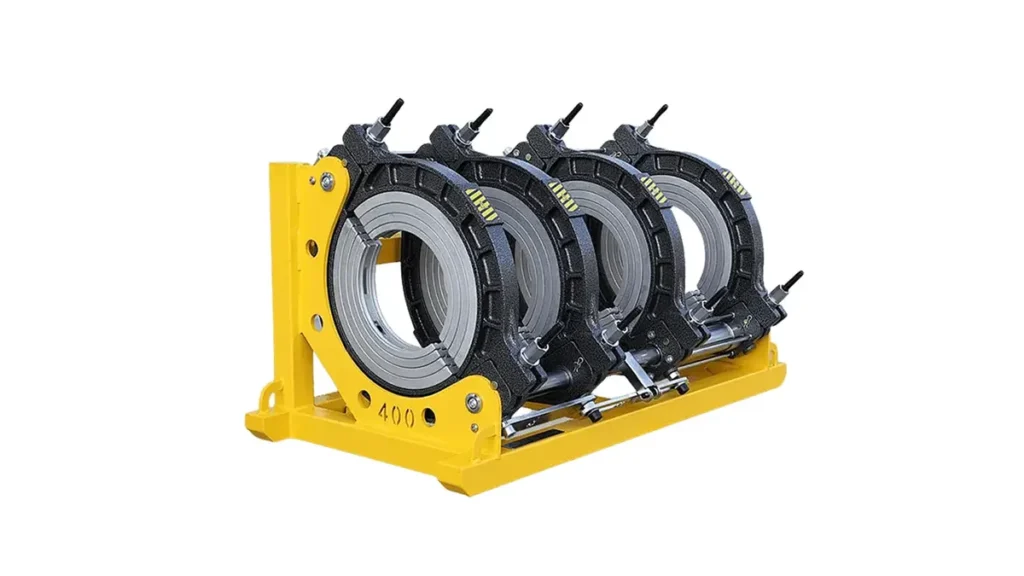
Whether your team works on water supply systems, gas distribution networks, mining pipelines, or industrial installations, a reliable welding process depends on consistency at every stage. High-performance equipment, such as a professional butt fusion machine, can help reduce interruptions by improving precision, stability, and long-term durability. But equipment alone is not enough. A smart operational strategy is what keeps jobs moving forward with fewer delays.
⚙️ Key idea: Reducing downtime is not about reacting after a machine fails. It is about building a system that prevents failures, detects problems early, and supports fast recovery when interruptions do occur.
1. Choose Equipment Built for Stable Performance
The fastest way to reduce downtime is to start with welding machines designed for reliability. Low-quality or underpowered equipment often creates hidden losses: unstable temperature control, poor clamp alignment, repeated rework, and frequent breakdowns. By contrast, a well-engineered machine maintains consistent pressure and heat, which supports stronger welds and fewer interruptions.
In butt fusion operations, stability matters because every weld depends on controlled heating, accurate pressure, and correct alignment. When these elements vary, the operator may need to repeat steps, inspect joints again, or stop the line entirely. Choosing equipment from a manufacturer with proven production standards and quality testing helps eliminate many of these problems before they appear.
Look for features such as: temperature accuracy, hydraulic pressure stability, clamp precision, durable components, and easy-to-service structures.
2. Prevent Problems with Scheduled Maintenance
Routine maintenance is one of the most effective ways to avoid unplanned stops. Welding machines work in demanding environments where dust, heat, vibration, and repeated mechanical movement can gradually affect performance. A maintenance schedule helps teams identify wear before it becomes a failure.
Daily checks should include cleaning the machine, inspecting heating plates, verifying cable connections, checking hydraulic oil levels, and confirming that clamps move smoothly. Weekly and monthly maintenance can go deeper, including calibration, lubrication, and inspection of seals or electrical parts. These small actions often save hours of repair time later.
✓ Practical tip: Keep a maintenance log for every machine. When the same problem appears repeatedly, the log helps technicians identify the root cause faster.
3. Train Operators to Work More Efficiently
Even the best equipment can create downtime if operators do not know how to use it properly. Training is essential because many interruptions come from human error rather than mechanical failure. Incorrect heating time, poor pipe preparation, wrong pressure settings, or incomplete surface cleaning can all lead to defective welds and wasted time.
Well-trained operators know how to prepare materials, follow welding procedures, recognize abnormal machine behavior, and respond quickly when something seems off. They also understand how to work efficiently without sacrificing quality. This balance is critical in projects where deadlines are tight and every minute matters.
In addition, cross-training more than one employee on each machine reduces dependency on a single specialist. If one operator is unavailable, the project can continue without major delays.
4. Standardize Welding Procedures
A standardized procedure reduces confusion and keeps production consistent. When different workers follow different habits, quality varies and downtime increases because defects take longer to identify and correct. Standard operating procedures should clearly define material preparation, machine setup, heating time, pressure levels, cooling time, and inspection requirements.
For teams managing multiple jobs or sites, written procedures also make onboarding easier. New operators can learn faster, and experienced operators can work more confidently because the process is clear. This reduces the chance of repeated mistakes and helps the whole team maintain a smooth workflow.
📌 Best practice: Post simple visual checklists near the machine so operators can confirm each step without leaving the workstation.
5. Keep Critical Spare Parts in Stock
One of the biggest causes of avoidable downtime is waiting for replacement parts. If a heating plate, control module, hydraulic component, or clamp part fails, production may stop until the needed item arrives. For this reason, smart welding teams keep a stock of high-risk spare parts on site.
The exact inventory depends on the machine type and usage volume, but common items often include fuses, seals, connectors, switches, control components, and consumable accessories. For high-volume projects, having these parts ready can make the difference between a few minutes of repair and a full day of delay.
If your project involves large pipeline work or tight delivery schedules, it is also wise to coordinate with a supplier that offers fast response and reliable logistics support. That way, if a less common issue appears, the replacement process can begin immediately.
6. Improve Material Preparation and Job Planning
Downtime is not always caused by the machine itself. Poor site organization and material handling can also slow down welding operations. If pipes are not cut correctly, surfaces are not cleaned properly, or components are not staged in advance, the welding crew must stop repeatedly to correct issues.
Good planning means placing pipes, tools, and accessories close to the work area, checking compatibility before starting, and confirming that power supply and workspace conditions are ready. In outdoor or remote jobs, planning also includes weather protection, generator capacity, and transport logistics. When all the necessary elements are prepared early, the welding process becomes much smoother.
Efficiency rule: A crew should never start a welding session without confirming materials, tools, power, and inspection requirements first.
7. Use Remote Support and Technical Guidance
When welding equipment stops unexpectedly, fast expert support can dramatically reduce the length of the interruption. In many cases, the issue is not major, but without technical guidance, the crew may spend hours trying to diagnose it. Access to professional support helps operators resolve problems sooner and avoid unnecessary part replacement.
This is especially useful for international projects, mobile teams, or distributors serving multiple sites. A supplier that provides training, troubleshooting advice, and after-sales support can help keep operations running even when challenges arise. Clear communication with the manufacturer is often a hidden advantage in minimizing downtime.
For businesses working with customized equipment, support becomes even more important because project-specific configurations may require tailored instructions and setup guidance.
8. Select the Right Machine for the Job
Downtime often increases when the machine is not matched to the job. A machine designed for small-diameter work may struggle on larger projects, while an overly complex machine may slow down a team that needs simple, fast operation. The right solution depends on pipe size, material type, site conditions, and production volume.
For example, manual, hydraulic, and CNC automatic machines each serve different needs. Manual systems are practical for lower-volume tasks, hydraulic systems improve force and repeatability, and CNC automatic systems help with precision and productivity on more demanding jobs. Matching equipment to the task reduces mechanical strain and minimizes operational interruptions.
🔧 Important: A machine that is too small, too complex, or not suited to the application can create more downtime than a properly selected unit with the right capacity.
9. Monitor Quality to Avoid Rework
Rework is a hidden form of downtime. A failed weld may look like a quality issue, but it also consumes labor, materials, and machine time. The best way to reduce rework is to inspect each joint consistently and correct problems early.
Quality monitoring should include visual checks, pressure verification, alignment review, and documentation of completed welds. When problems are caught immediately, they are easier and cheaper to correct. Over time, quality data can reveal patterns that help the team improve its process and reduce repeat failures.
10. Work with a Supplier That Supports Long-Term Productivity
Reducing downtime is not only about what happens on the welding floor. It also depends on the strength of your equipment partner. A supplier with long industry experience, quality control, customization capability, and global support can contribute directly to operational efficiency.
For pipeline contractors and distributors, this means choosing a partner that can provide durable machines, fast delivery, and technical assistance when needed. It also means working with a manufacturer that understands different project environments and can adapt equipment to fit specific operational demands. Strong supply support helps ensure that your team is never left waiting when time matters most.
When the entire system is aligned—from machine quality to after-sales service—downtime becomes much easier to control.
Strong support network = faster problem solving + fewer delays + better project continuity.
Conclusion
Downtime in welding operations can never be eliminated completely, but it can be reduced dramatically through thoughtful planning and disciplined execution. The most effective approach combines reliable equipment, preventive maintenance, operator training, standardized procedures, stocked spare parts, and responsive technical support. When these elements work together, welding teams can maintain productivity, protect quality, and complete projects more efficiently.
For businesses that depend on continuous welding performance, investing in the right machine and the right support structure is not a cost—it is a productivity strategy. A well-managed operation spends less time fixing problems and more time delivering results.
FAQs
Q1: What is the most common cause of welding downtime?
Unplanned machine issues, operator errors, and poor maintenance are among the most common causes. In many cases, regular inspection and training can prevent them.
Q2: How often should welding machines be maintained?
Basic checks should be done daily, while more detailed maintenance may be scheduled weekly or monthly depending on machine usage and job intensity.
Q3: Can operator training really reduce downtime?
Yes. Trained operators make fewer mistakes, detect problems earlier, and complete welding steps more efficiently, which directly lowers interruption time.
Q4: Why is spare parts inventory important?
Because waiting for replacement parts can stop production for hours or days. Keeping critical parts on hand helps restore operation much faster.
Q5: Does machine selection affect downtime?
Absolutely. A machine that matches the application, pipe size, and production demand will usually run more reliably and require less interruption than an unsuitable model.



