
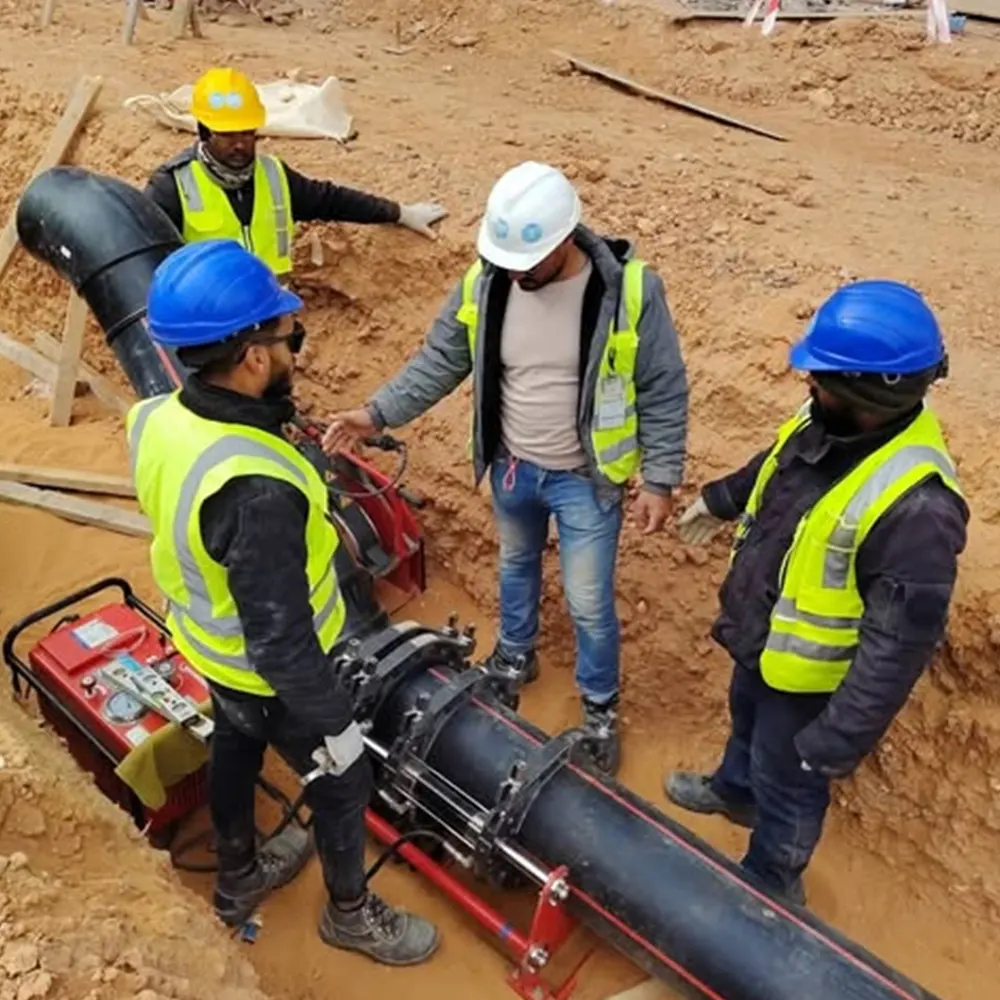
When buyers search for butt fusion machine suppliers, they are usually looking for more than a product list. They need an exporter who can deliver dependable equipment, stable quality, technical guidance, and on-time shipping without creating risk for their projects. In industrial welding, these expectations matter because pipe joining is not a minor process; it affects safety, efficiency, long-term durability, and the overall return on investment.
The best industrial welding equipment exporters are not simply companies that can place machines in a container and send them overseas. They are manufacturers and trade partners that understand international standards, project urgency, customization needs, and the diverse conditions faced by contractors, distributors, and engineering teams. For large-scale pipeline work, the exporter must support both product performance and supply reliability. That balance is what separates average sellers from trusted long-term partners.
Key point: the best exporters combine engineering quality, consistent manufacturing, responsive service, and global delivery capability. Buyers who focus only on price often overlook the hidden costs of unstable equipment, delayed shipments, and limited after-sales support.
What Defines a High-Quality Industrial Welding Exporter?
A high-quality exporter must begin with reliable production. Industrial welding equipment is expected to perform under pressure, temperature changes, and continuous use. That means every component, from the heating plate to the hydraulic system and clamping structure, must be designed for precision and durability. Exporters with strong manufacturing capability usually invest in modern production lines, precision machining, and strict testing procedures to ensure each machine performs consistently in the field.
Another defining feature is quality control. Reliable exporters do not depend on a single inspection before delivery. They verify temperature accuracy, hydraulic stability, alignment, electrical safety, and operational consistency across multiple stages. This is especially important for contractors working on water supply, gas distribution, and mining pipelines, where a weak weld can lead to costly failures. Strong exporters understand that quality is not a marketing slogan; it is a measurable process.
Trusted exporters usually provide:
✔ Stable performance for repeated industrial use
✔ Factory testing before shipment
✔ Clear technical documents and operating guidance
✔ Responsive communication for project support
✔ Custom options to match market and project requirements
Why Reliability Matters More Than the Lowest Price
In industrial procurement, the cheapest option is often the most expensive in the long run. Welding equipment that fails during operation can delay a project, increase labor costs, and damage the reputation of the contractor or distributor that supplied it. For this reason, the best exporters focus on predictable performance. They build machines that are easy to operate, maintain, and integrate into real-world projects.
Reliability also includes supply stability. A dependable exporter should be able to support both small and bulk orders, offer ready stock for urgent needs, and organize shipping efficiently. This matters for international buyers who often work under tight schedules. When a supplier can maintain inventory and move quickly, the buyer gains a real competitive advantage.
Look for exporters who can answer these questions clearly:
• Can they prove product testing and certification?
• Do they offer fast shipping and stock availability?
• Can they customize voltage, branding, color, and configuration?
• Do they provide after-sales guidance and technical support?
JQ-Fusion as an Example of a Professional Export Partner
Among industrial welding equipment suppliers, JQ-Fusion stands out as a professional manufacturer specializing in HDPE pipe welding machines. With more than 20 years of industry experience, the company has developed a strong reputation for delivering reliable butt fusion solutions for global pipeline projects. Its product range covers manual, hydraulic, and CNC automatic butt fusion welding machines, serving pipe diameters from small to large sizes.
This range is important because different projects demand different levels of automation and output. Some buyers need compact equipment for limited-site use, while others need more advanced systems for industrial-scale installations. JQ-Fusion addresses these needs through a broad product lineup and customizable solutions that help distributors and contractors match machine performance to real project conditions.
The company’s machines are widely used in water supply systems, gas distribution networks, mining projects, and industrial pipeline installations. These applications require not only high weld quality but also operational consistency. Exporters that can successfully serve these sectors tend to understand what global customers care about most: safety, durability, easy operation, and dependable results.
Manufacturing Strength and Production Control
A serious exporter should own or closely control its factory process. JQ-Fusion’s manufacturing capability includes advanced machinery, modern production lines, and experienced technicians who monitor each stage carefully. This kind of structure matters because industrial welding machines must maintain precision across many units, not just during sample testing.
Strong engineering support allows an exporter to improve product design, refine functions, and solve project-specific issues more efficiently. For example, some buyers may need upgraded control systems, different clamp sizes, or operational changes for local electricity standards. Exporters with internal engineering resources can respond faster and more accurately than traders who rely entirely on third-party factories.
In practice, factory strength gives buyers three advantages:
① Better consistency across every machine
② Faster response to customization requests
③ Greater confidence in long-term supply capacity
Customization: A Major Advantage for Global Buyers
One reason the best exporters win repeat business is their ability to offer OEM and ODM customization. For distributors, branding and market positioning matter. For contractors, technical adjustments can affect speed, safety, and compatibility. JQ-Fusion provides customization options including machine size, voltage, color, design, branding, and project-specific configurations.
This flexibility makes a supplier more valuable than a standard catalog seller. A customized machine can reduce operating friction and help buyers build stronger market identity. In competitive regions, this can be a major advantage, especially for companies that want to expand their own brand while relying on a proven industrial manufacturer behind the scenes.
Product Range That Supports Different Industrial Needs
A strong exporter usually offers a complete product ecosystem rather than a single machine type. JQ-Fusion’s product range includes hydraulic butt fusion welding machines, automatic butt fusion welding machines, electrofusion welding machines, and multi-angle pipe fitting welding machines. This breadth allows buyers to source multiple solutions from one trusted supplier, simplifying purchasing and support.
When an exporter can cover several welding applications, it also signals deeper industry knowledge. Buyers are more likely to trust suppliers who understand the technical differences among equipment types and can recommend the right model based on the project environment. That kind of consultation is especially useful for international customers who may not have a dedicated welding equipment specialist in-house.
A versatile product line helps buyers:
• Compare solutions for different pipe sizes and project types
• Consolidate procurement with one reliable supplier
• Reduce training and service complexity
• Improve spare parts and maintenance consistency
Certification and International Acceptance
For export markets, certification is not optional. Industrial buyers need equipment that meets recognized standards and can pass procurement checks in their home countries. JQ-Fusion’s products are manufactured in compliance with international standards and certified by SGS, which adds confidence for buyers concerned about safety, reliability, and documented performance.
Certification also affects the speed of sales. When equipment documentation is clear and credible, buyers can make decisions faster and with less internal resistance. For exporters, this means stronger market access and fewer barriers during negotiations. For customers, it means lower risk and more transparent purchasing.
Why JQ-Fusion Fits the Profile of a Reliable Exporter
The best industrial welding equipment exporters usually share a few traits: long experience, strong technical support, fast shipping, solid stock management, and proven global performance. JQ-Fusion reflects these qualities through its 20+ years of experience, robust OEM and ODM capability, stable stock supply, full technical support and training, and successful track record in international markets.
Just as important, the company supports clients beyond the sale itself. Exporters with real value help customers select the right product, install it properly, and maintain reliable performance over time. This kind of support reduces downtime and improves the buyer’s long-term confidence in the supplier.
For international buyers, this means access to:
✅ Stable welding performance
✅ Custom solutions for different projects
✅ Strict quality assurance before delivery
✅ Fast delivery and global shipping support
✅ Technical guidance from selection to after-sales
How to Evaluate the Best Exporters Before Buying
Before selecting an industrial welding equipment exporter, buyers should examine several practical indicators. First, review whether the supplier has experience in your target market or application. Second, ask for testing details, certification documents, and production capacity information. Third, evaluate communication speed and technical knowledge. A supplier that replies quickly and accurately is often easier to work with during urgent project stages.
It is also wise to consider inventory readiness and logistics. A supplier with a large, organized stock can reduce lead times and help avoid project delays. This is especially important when customers are working on deadlines, seasonal schedules, or remote-site installations. The right exporter should make delivery feel predictable, not uncertain.
Common Mistakes Buyers Should Avoid
Many buyers focus too heavily on brochures and pricing while ignoring support structure. This can lead to problems after purchase, especially if the exporter lacks technical depth. Another common mistake is not checking whether the machine specifications match local power supply standards, pipe diameter requirements, or operational expectations. Even a high-quality machine can become inconvenient if it is not matched properly to the site.
A final mistake is failing to ask about after-sales support. Industrial welding equipment is an investment, and that investment should be protected with guidance, training, and service assistance. Exporters that stand behind their products create more value over time than those who disappear after shipment.
Conclusion: The Best Exporters Deliver More Than Machines
Who are the best industrial welding equipment exporters for high-quality and reliable supply? They are the companies that combine strong manufacturing, clear quality control, flexible customization, dependable shipping, and real technical support. They understand that global buyers need more than equipment; they need trust, continuity, and practical partnership.
JQ-Fusion is a strong example of this model. With over two decades of experience, a wide product range, certified quality, and export-focused support, it offers the kind of value international buyers look for when sourcing industrial welding equipment. For contractors and distributors, choosing the right exporter is not just a procurement decision. It is a long-term business decision that affects performance, reputation, and growth.
Frequently Asked Questions
Q1: What should I prioritize when choosing an industrial welding exporter?
Prioritize product quality, factory testing, customization capability, delivery reliability, and technical support. Price matters, but stable performance matters more.
Q2: Why is certification important for welding equipment?
Certification helps confirm safety, reliability, and compliance with international expectations, which is essential for export markets and project approvals.
Q3: Can exporters provide customized welding machines?
Yes. Leading exporters often offer OEM and ODM options such as voltage adjustment, branding, color, design, and project-specific functions.
Q4: Why do buyers prefer exporters with stock availability?
Stock availability reduces lead time, helps urgent projects move faster, and lowers the risk of costly delays.
Q5: What makes JQ-Fusion suitable for global buyers?
JQ-Fusion combines long industry experience, a broad machine range, SGS-certified products, OEM/ODM flexibility, and dependable support for international projects.



