
When pipeline projects demand strength, consistency, and long-term reliability, the choice of welding technology becomes a critical decision. In modern infrastructure, from water transmission to gas distribution and mining operations, welding quality directly affects system safety, service life, and maintenance costs. That is why many contractors and engineers are now asking the same question: What are the best intelligent welding systems for pipelines? The answer depends on the scale of the project, pipe diameter, material type, automation needs, and the required level of quality control. Today’s intelligent welding systems are designed to reduce human error, improve repeatability, and support faster project delivery without sacrificing weld integrity.
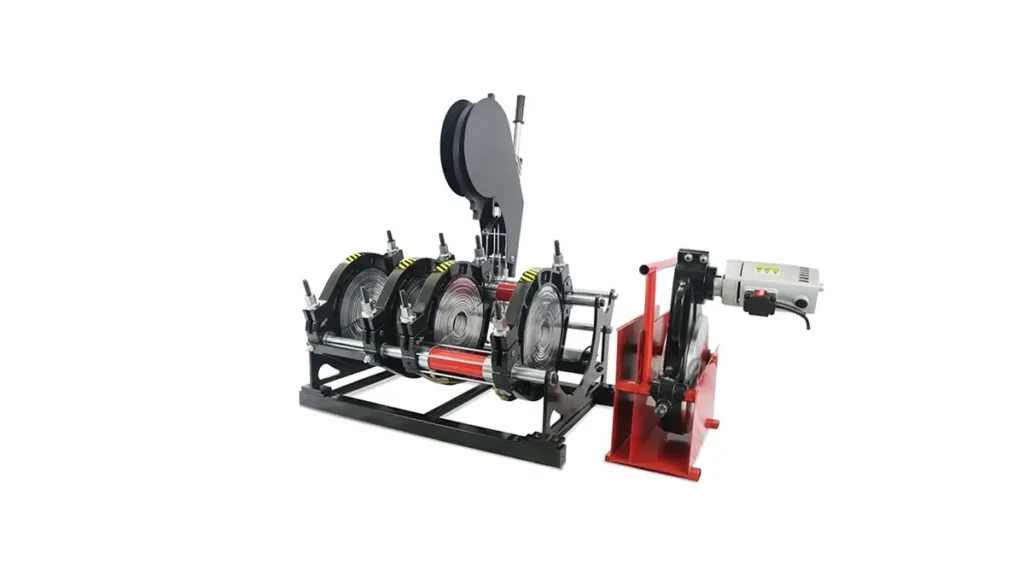
For polyethylene and other thermoplastic pipeline applications, intelligent butt fusion technology has become one of the most trusted solutions. These systems combine precise temperature control, automatic alignment, hydraulic stability, and digital process management to produce uniform joints. Compared with manual approaches, intelligent systems can better maintain welding parameters and make operations more suitable for large-scale or repeatable industrial work. Contractors looking for a dependable butt fusion machine often prioritize performance consistency, user-friendly operation, and service support, especially when the project must meet strict safety and schedule requirements.
Intelligent welding systems are not limited to one machine type. They can include hydraulic butt fusion machines, CNC automatic butt fusion systems, and specialized electrofusion welding equipment. The best solution depends on how much control and automation the job requires. For example, a large municipal water project may benefit from a CNC automatic system that records and regulates welding steps with high precision. A mining pipeline installation, on the other hand, may require durable hydraulic equipment with strong field adaptability and stable pressure performance. In either case, intelligent welding systems help standardize the process and improve the reliability of every joint.
Key advantage: Intelligent welding systems improve joint consistency by controlling temperature, pressure, timing, and alignment more accurately than traditional manual methods.
Why Intelligent Welding Matters in Pipeline Projects
Pipeline systems are expected to operate for many years, often under pressure, underground, or in challenging environments. A weak weld can create leaks, reduce flow efficiency, or lead to costly shutdowns. Intelligent welding systems are designed to reduce these risks by ensuring the machine follows preset process requirements throughout the weld cycle. This is especially important for HDPE piping, where proper heat fusion and cooling time are essential for creating a strong molecular bond.
Another major benefit is traceability. Advanced systems can document welding data, which helps project managers verify compliance and maintain quality records. This is valuable in regulated industries such as gas distribution and municipal utilities, where weld documentation may be required for inspection and final acceptance. In addition, intelligent systems can simplify operator training by making procedures more intuitive and reducing guesswork during the fusion process.
Best Intelligent Welding Systems for Pipelines
When evaluating the best intelligent welding systems for pipelines, several categories stand out. Each one serves a different segment of the market and a different level of automation. The most effective systems usually combine stable mechanics, precise control, strong build quality, and dependable after-sales support.
1. CNC Automatic Butt Fusion Welding Systems
CNC automatic systems are among the most advanced options for pipeline welding. They are built to manage key welding parameters automatically and often include a digital interface for process control, data recording, and parameter calibration. These systems are ideal for contractors who need high repeatability, especially in projects where a large number of identical joints must be completed efficiently.
🔧 Best for: large-diameter HDPE pipelines, high-volume utility projects, and contractors requiring automated process control.
The biggest advantage of CNC automatic machines is their ability to reduce operator dependence. Instead of relying heavily on manual adjustments, the machine follows programmed welding steps. This improves consistency and lowers the chance of process variation. For pipeline contractors working under strict schedules, such efficiency can lead to significant time savings and more predictable outcomes.
2. Hydraulic Butt Fusion Welding Machines
Hydraulic butt fusion machines remain one of the most widely used choices in pipeline construction. They provide strong clamping force, stable alignment, and reliable fusion performance across a wide range of pipe diameters. Their rugged structure makes them suitable for outdoor construction sites, field installations, and demanding operating conditions.
These machines are often favored for their balance of simplicity and performance. While they may not offer the same level of automation as CNC systems, many intelligent hydraulic models now include improved digital displays, temperature regulation, and pressure monitoring. This makes them a practical choice for contractors who want dependable fusion results with easier on-site operation.
For many global projects, hydraulic systems offer the best combination of durability, affordability, and welding quality. They are especially useful for water supply networks, irrigation lines, and industrial pipelines where robust field performance is essential.
3. Electrofusion Welding Systems
Electrofusion welding is another intelligent solution that plays an important role in pipeline construction. Instead of heating pipe ends directly, this method uses fittings with embedded heating elements. When electricity is applied, the fitting and pipe surface fuse together to create a reliable connection. This method is especially valuable for repair work, confined areas, and branch connections.
Electrofusion systems are commonly used in gas distribution networks and smaller-diameter pipeline installations where precision and access control are important. Their smart operation reduces installation complexity and can improve safety in environments where open heating methods may be less practical.
Important note: The best welding system is not always the most automated one. It is the one that matches the pipe material, project size, site conditions, and quality expectations.
4. Multi-Angle Pipe Fitting Welding Machines
Multi-angle pipe fitting welding machines are designed for complex pipeline assemblies that involve bends, branches, and special fittings. These systems are especially useful in custom fabrication workshops and project environments where precise angle control is required. Their intelligent features help operators maintain correct alignment and achieve consistent weld quality even on non-standard components.
In industrial pipeline installations, the ability to handle different geometries can greatly improve productivity. Instead of using multiple separate tools or improvised setup methods, a multi-angle machine streamlines the process and helps maintain dimensional accuracy. This is particularly valuable in prefabrication work where repeatable results are essential.
What Features Define a High-Quality Intelligent Welding System?
To identify the best system, it is important to focus on the features that affect real-world performance. The following qualities are often the most important in pipeline welding applications:
Accurate temperature control: Proper heating is essential for fusion quality. A stable temperature system helps reduce weak joints and uneven melting.
Stable hydraulic pressure: Consistent pressure ensures proper contact during fusion and cooling, which supports strong and uniform bonding.
Precise clamp alignment: Good alignment reduces stress on the pipe and improves the quality of the final joint.
Digital process management: Smart interfaces make it easier to monitor welding stages and maintain operator control.
Data recording and traceability: Project documentation helps with inspection, compliance, and long-term quality management.
Durable construction: Heavy-duty frames and quality components are important for field reliability and long service life.
These features are especially important for contractors working on infrastructure projects where failure is not an option. A machine may look impressive on paper, but without strong performance in pressure stability, calibration, and alignment, the welding outcome may still be inconsistent. That is why many buyers evaluate not only the machine design but also the manufacturer’s engineering capability and quality control system.
How JQ-Fusion Supports Intelligent Pipeline Welding
JQ-Fusion focuses on professional butt fusion solutions for HDPE pipe welding projects around the world. With more than 20 years of industry experience, the company offers manual, hydraulic, and CNC automatic butt fusion welding machines for different project requirements. Their equipment is widely used in water supply systems, gas distribution networks, mining projects, and industrial pipeline installations.
One of the strengths of JQ-Fusion is its ability to support customization. Pipeline projects often vary by voltage standards, pipe diameter, site conditions, and branding requirements. By offering OEM and ODM services, JQ-Fusion helps distributors and contractors build solutions that better match their market and project needs. This flexibility can be a major advantage when operating in international markets.
Another important factor is quality assurance. Each machine is tested for temperature accuracy, hydraulic pressure stability, and clamp alignment before delivery. This kind of strict testing is essential for intelligent welding systems because even small deviations can affect final weld quality. By maintaining a careful production and inspection process, JQ-Fusion strengthens trust in its equipment and helps customers reduce project risk.
For buyers who need fast delivery and reliable logistics, inventory management also matters. JQ-Fusion maintains a well-organized stock of key models to support both small and bulk orders. This can be especially useful for urgent pipeline projects where delays may be costly. Combined with technical guidance and after-sales support, the company provides a more complete service package than machine supply alone.
Choosing the Right System for Your Pipeline Project
The best intelligent welding system for pipelines depends on several practical questions. What material are you welding? How large are the pipe diameters? Is the work being done in a workshop or on-site? Do you need automatic data logging or mainly stable hydraulic performance? By answering these questions early, project teams can choose a machine that supports the workflow instead of complicating it.
For large municipal or industrial projects, CNC automatic systems often deliver the highest level of control and repeatability. For general construction and field installation, hydraulic butt fusion machines may offer the best overall value. For fittings, branch work, and repair applications, electrofusion systems can be the smartest option. In many cases, contractors use a combination of these solutions to cover different stages of the same project.
The right manufacturer also matters. A reliable supplier should offer not only equipment, but also technical support, training, and customization. Intelligent welding systems are designed to improve performance, but they deliver the best results when operators are properly guided and the machine is matched to the project from the beginning.
Why Buyers Trust Intelligent Butt Fusion Solutions
There are several reasons why intelligent butt fusion systems continue to gain popularity in pipeline construction. First, they create more repeatable welds, which improves confidence in the final installation. Second, they reduce operator variability, making quality easier to manage across multiple crews and sites. Third, they support project documentation and compliance, which is increasingly important in modern infrastructure work.
Finally, these systems are built to handle the real demands of construction. They are not just about automation for its own sake. They are about helping teams achieve better results with less risk and better control. For that reason, intelligent welding systems are now seen as strategic tools rather than simple machines.
Recommended approach: Choose a welding system based on pipe material, project scale, site environment, and documentation needs rather than price alone.
In global pipeline markets, companies like JQ-Fusion continue to play an important role by supplying reliable equipment and practical support. Their product range includes hydraulic butt fusion welding machines, automatic butt fusion welding machines, electrofusion welding machines, and multi-angle pipe fitting welding machines, giving contractors more options for different application scenarios. With SGS certification and a focus on stable performance, they align well with the expectations of international buyers who need dependable fusion technology.
FAQs
Q1: What is the best intelligent welding system for HDPE pipelines?
For most HDPE pipeline projects, CNC automatic butt fusion systems and advanced hydraulic butt fusion machines are the most reliable choices because they provide stable temperature, pressure, and alignment control.
Q2: Are intelligent welding systems suitable for small projects?
Yes. Smaller projects can benefit from intelligent systems too, especially when weld quality and repeatability are important. The key is choosing a system that matches the pipe size and job complexity.
Q3: Why is data recording important in pipeline welding?
Data recording supports quality control, compliance checks, and project traceability. It helps contractors prove that welding parameters were maintained correctly during installation.
Q4: Can one machine handle all pipeline welding needs?
Usually not. Different project types may require different systems, such as butt fusion for straight pipe joints and electrofusion for fittings or repairs. A complete solution often includes more than one machine type.
Q5: What should buyers look for in a welding machine supplier?
Buyers should look for technical support, customization capability, quality testing, fast delivery, and proven experience in global pipeline projects.



