
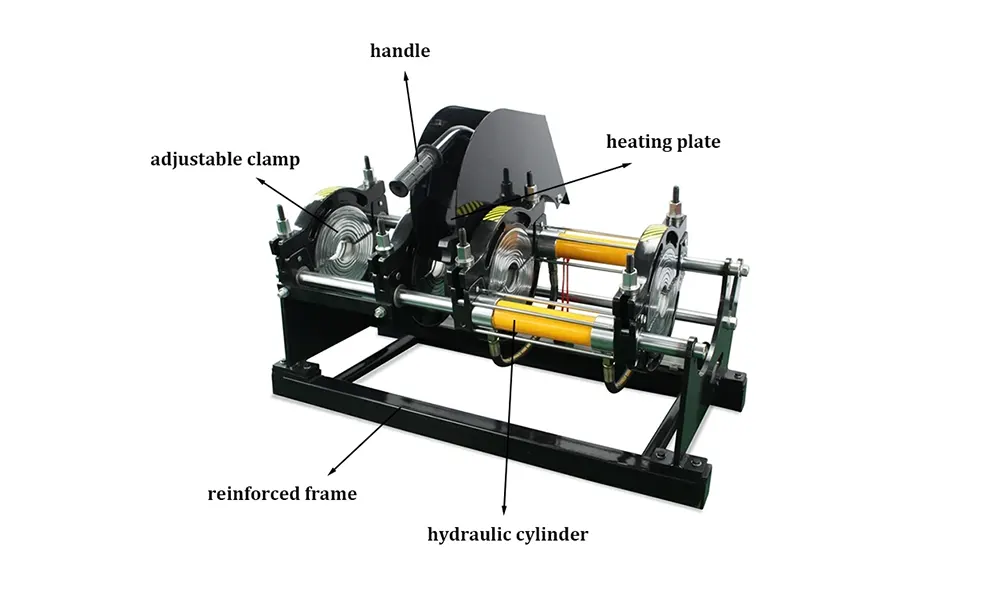
In pipeline construction, welding quality is not judged by appearance alone. A weld may look smooth on the outside and still contain hidden issues that can compromise strength, durability, and compliance. This is why butt fusion machine data logging has become an essential part of modern pipeline welding operations. It turns every fusion event into a measurable record, helping contractors prove that each joint was made under controlled conditions and in line with project specifications.
As pipeline systems expand across water supply, gas distribution, mining, and industrial applications, the need for traceability has never been greater. Data logging gives welding teams the ability to capture key variables such as temperature, pressure, heating time, cooling time, and operator actions. These records support better decisions in the field and create a reliable compliance trail for inspectors, clients, and regulators.
From a quality perspective, logging is more than paperwork. It is a practical way to reduce human error, identify weak processes, and improve repeatability across large-scale projects. When a welding team can compare real-time data against approved procedures, it becomes easier to maintain consistency from the first joint to the last. That consistency is especially important on long-distance pipelines where repairs are expensive and access is limited.
Key point: Data logging does not replace welding skill; it strengthens it by documenting the conditions that make a strong joint possible.
In practical terms, pipeline welding data logging records what happened during each cycle of the fusion process. This may include machine identification, pipe size, material type, ambient temperature, fusion pressure, bead formation timing, and operator details. When a problem occurs later, these records help teams trace the issue back to its root cause instead of relying on assumptions.
This traceability is a major reason why owners and contractors value logged welding data. It helps confirm that work was completed according to approved procedures, codes, and client requirements. In regulated industries, proof matters. A project can move faster and more confidently when documentation is complete, accurate, and easy to retrieve.
Why Data Logging Improves Welding Quality
Quality control in fusion welding depends on repeatable process conditions. Even a small variation in temperature or pressure can affect joint integrity. Data logging allows supervisors to see whether the machine stayed within the required range throughout the welding cycle. If a value drifts outside the acceptable limit, the joint can be flagged immediately for review.
That immediate visibility is valuable on busy construction sites. Instead of discovering defects after pressure testing or commissioning, teams can identify nonconforming welds early and prevent larger losses. This reduces rework, saves time, and improves the overall reliability of the pipeline.
Quality benefit: Logged parameters make it easier to standardize welds across multiple crews, shifts, and project locations.
Another important advantage is training and performance improvement. When weld data is available, supervisors can compare results across operators and detect patterns. For example, one crew may consistently perform better with certain machine settings, or one site may show more variation due to environmental conditions. These insights help teams refine procedures and improve future output.
In this way, logging becomes a continuous improvement tool. It not only captures the final result but also shows how the result was achieved. That difference is critical for organizations that want to build a reputation for dependable workmanship and long-term pipeline performance.
How Data Logging Supports Compliance
Compliance is one of the strongest reasons to maintain accurate welding records. Pipeline projects are often subject to strict standards, client inspection rules, and legal requirements. When welding data is properly stored, it can demonstrate that the work met the specified procedure and that the equipment performed correctly during production.
For many projects, this documentation is not optional. It may be required for handover packages, third-party audits, insurance reviews, or quality assurance reports. If records are incomplete, the project team may face delays, costly retesting, or even rejection of completed sections.
Data logging also makes inspections more efficient. Instead of inspecting every joint purely by visual judgment, auditors can review process records and focus on welds that need closer attention. This reduces uncertainty and supports a more transparent quality management system.
Compliance advantage: Clear digital records help demonstrate that the fusion process followed approved procedures from start to finish.
For global projects, compliance often means aligning with different standards across countries and industries. A strong data logging system helps unify documentation practices, making it easier for international teams to work from the same quality framework. This is especially useful for contractors managing multi-site operations or supply chains with diverse stakeholders.
For more details about professional welding equipment and customization support, you may explore the official resources at JQ-Fusion, where product information and industrial solutions are presented for global pipeline applications.
What Data Should Be Logged During Pipeline Welding
A reliable logging system should capture the variables that truly affect weld quality. The exact list may vary by procedure and machine type, but most pipeline fusion projects benefit from recording temperature, pressure, heating duration, cooling time, pipe diameter, material grade, and operator identification. These values create a complete picture of each weld cycle.
Modern welding machines can automate much of this process. Instead of relying on handwritten notes, digital systems can record data in real time and store it securely for later review. This reduces transcription errors and makes it easier to search, export, and analyze records when needed.
In addition to process values, many teams also log environmental conditions, job location, machine serial numbers, and maintenance status. These details may seem secondary, but they can be extremely useful when diagnosing performance issues or proving that equipment was operating properly at the time of welding.
Best practice: The more complete the record, the easier it becomes to verify weld integrity and defend project quality during audits.
When data is captured consistently, the project team gains a stronger foundation for inspection, maintenance, and future work planning. A well-maintained logbook or digital archive can also support warranty claims, customer service, and post-project analysis.
How Logging Reduces Risk on the Jobsite
Pipeline welding is high-stakes work. A failed joint can trigger shutdowns, environmental damage, safety hazards, and expensive repairs. Data logging helps reduce these risks by making the welding process more transparent and controllable. When parameters are monitored and stored, teams can catch deviations before they become failures.
This is especially important in long projects with many welders and changing field conditions. Weather, pipe alignment, equipment wear, and operator fatigue can all influence weld quality. Logging helps identify when these factors start affecting performance so corrective action can be taken quickly.
It also supports accountability. When every weld is linked to a record, it becomes easier to understand who performed the work, under what conditions, and with which machine settings. This is not about blame; it is about maintaining responsibility and building a culture of precision.
Risk control: Logged data provides an early warning system that helps teams prevent defect propagation and avoid major rework.
For organizations that value long-term performance, this risk reduction is just as important as the final weld itself. A strong logging process supports safer operations, smoother handover, and greater confidence in the pipeline’s service life.
The Role of Equipment in Reliable Data Logging
Not all welding machines offer the same level of documentation capability. Advanced systems are designed to collect precise data automatically, which improves both reliability and productivity. This is where manufacturers with strong engineering expertise stand out. Equipment that combines stable output with accurate logging can greatly simplify project quality management.
JQ-Fusion, for example, focuses on professional HDPE pipe welding solutions for global pipeline projects. Its range includes manual, hydraulic, and CNC automatic butt fusion welding machines designed for different pipe diameters and application needs. Such equipment is built to support consistent welding performance while also helping teams maintain the records required for quality assurance.
In modern project environments, the machine is part of the documentation process. A dependable machine does more than heat and fuse pipe ends; it helps prove that the weld was created within the approved process window. That function is increasingly valuable as pipeline owners demand better traceability and stronger digital records.
Explore the broader product range such as Hydraulic Butt Fusion Welding Machine, Automatic Butt Fusion Welding Machine, and Electrofusion Welding Machine for applications that require both performance and process visibility.
Equipment insight: Stable machine performance and accurate logging work together to support compliance, repeatability, and long service life.
Digital Records and Long-Term Project Value
One of the biggest advantages of data logging is long-term value. Even after construction ends, records remain useful for maintenance planning, future upgrades, and dispute resolution. If a pipeline section requires inspection years later, the original welding logs can provide a valuable history of how the system was built.
Digital records are especially useful because they can be backed up, searched, and shared quickly. This makes them much more practical than paper records, which can be damaged, lost, or difficult to organize across large projects. For companies managing multiple contracts, a digital approach can save time and reduce administrative burden.
Logging also contributes to business credibility. When clients see that a contractor maintains detailed records and follows a disciplined quality process, trust increases. That trust can lead to repeat orders, stronger partnerships, and better market reputation.
For companies seeking customized welding solutions, OEM & ODM support can also help align equipment features with project-specific documentation needs, voltage requirements, branding, and operational preferences.
Conclusion
Pipeline welding data logging is important because it connects quality control, compliance, and accountability into one practical system. It gives project teams the evidence they need to confirm proper welding conditions, reduce errors, and satisfy regulatory or client requirements. More importantly, it strengthens confidence in the integrity of every fused joint.
As pipeline standards continue to rise, companies that invest in accurate logging gain a clear advantage. They can inspect faster, respond to problems sooner, and deliver more reliable results. Whether the project involves water, gas, mining, or industrial piping, data logging is no longer a luxury. It is a core part of professional pipeline welding.
Final takeaway: Strong welding outcomes come from both skilled operators and trustworthy records that prove the process was done right.
FAQ 1: Is data logging required for every pipeline welding project?
Not every project has the same documentation rules, but many regulated and high-value projects require detailed weld records. Even when it is not mandatory, logging is still highly recommended because it improves traceability and quality control.
FAQ 2: Can data logging help reduce welding defects?
Yes. By recording key process variables, teams can detect abnormal conditions early and correct them before defects spread. This helps reduce rework and improves weld consistency across the jobsite.
FAQ 3: What is the main difference between paper records and digital logging?
Digital logging is faster, more accurate, and easier to store or share. Paper records are more vulnerable to loss, damage, and manual entry errors, while digital systems provide better traceability and access.
FAQ 4: Does a welding machine need special features to support logging?
Yes, machines with built-in recording functions or compatible digital monitoring systems make logging much more reliable. Advanced machines can automatically capture process data and reduce the need for manual documentation.
FAQ 5: How does data logging help with compliance audits?
It provides documented proof that welding was completed under approved conditions. Auditors can review these records to verify process control, machine performance, and procedural compliance.



