
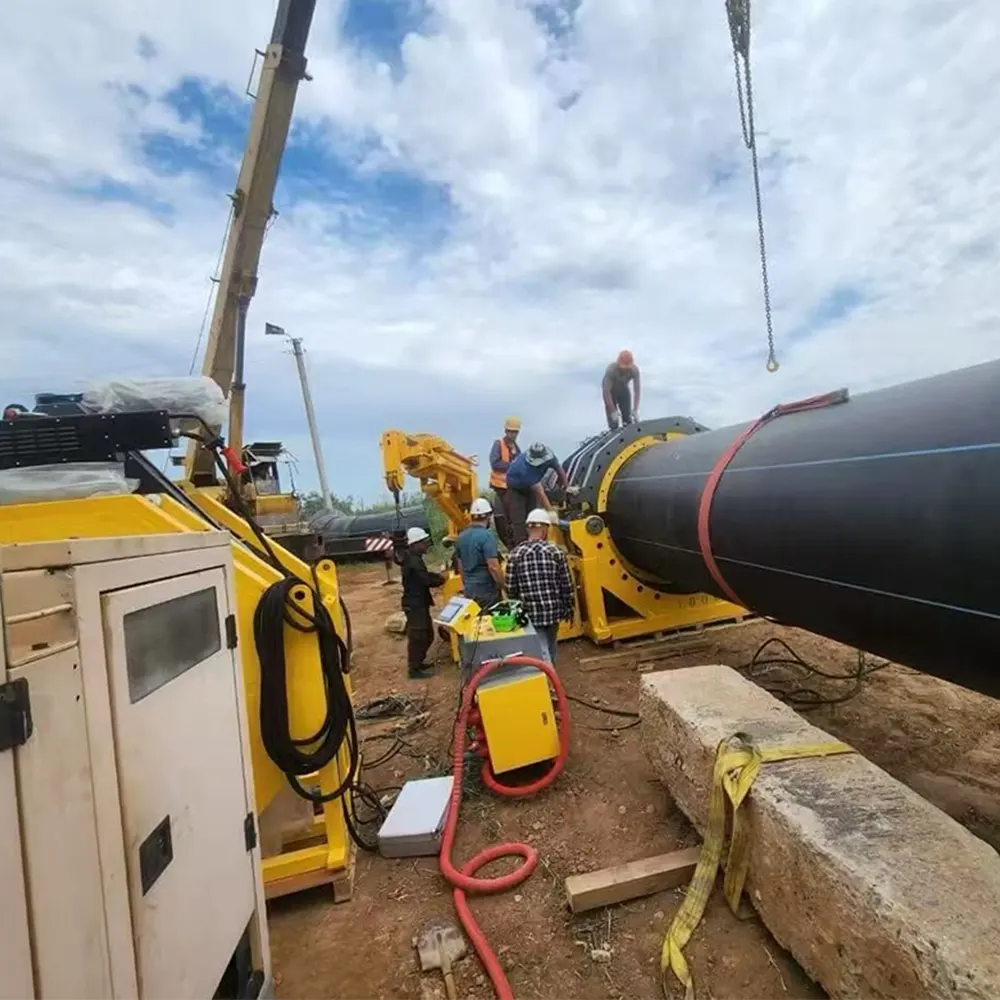
Plastic pipe welding has become a foundational process in modern infrastructure projects because it creates leak-resistant, durable, and cost-effective pipeline systems. From municipal water networks to gas distribution, mining operations, and industrial utilities, welded plastic pipes help engineers build systems that can withstand demanding conditions for decades. As cities expand and old pipelines are replaced, the need for reliable joining methods continues to grow. Among the many joining technologies available, butt fusion remains one of the most trusted methods for high-performance thermoplastic piping.
Unlike mechanical fittings that depend on seals and tightening components, plastic pipe welding creates a unified pipe structure by heating and joining pipe ends under controlled pressure. The result is a seamless bond that is often stronger than the pipe itself. This makes the method especially valuable in large-scale infrastructure where long-term integrity, reduced maintenance, and operational safety are essential. For contractors, utilities, and project owners, the benefits are not only technical but also economic, since fewer leaks and fewer repairs translate into lower lifecycle costs.
Why Plastic Pipe Welding Matters in Infrastructure
Infrastructure projects demand systems that can handle pressure, ground movement, temperature changes, and long service life. Plastic pipe welding is used because it helps produce joints with uniform strength and excellent resistance to corrosion. In environments where metal pipes may rust or require extensive protective coatings, welded HDPE and other thermoplastic pipelines offer a practical alternative. These systems are widely used in water supply, gas transmission, mining slurry transport, drainage, and industrial process lines.
✔ Key advantage: welded plastic pipelines reduce leakage risk and help infrastructure operators maintain stable network performance over many years.
For many projects, the decision to use welded plastic pipe systems is driven by both engineering requirements and long-term sustainability. Plastic pipelines are lighter than metal alternatives, which reduces transportation and installation difficulty. They also allow for efficient construction in remote or difficult terrain. This is one reason why the method is commonly selected for water mains, municipal upgrades, and utility corridors where installation speed matters.
How Butt Fusion Supports Large-Scale Pipeline Construction
Butt fusion is one of the most important welding methods in infrastructure projects. It joins two plastic pipe ends by heating them to a precise temperature, pressing them together, and allowing them to cool into a single continuous joint. The process requires accurate alignment, stable temperature control, and proper pressure management. When performed correctly, the welded joint performs reliably under pressure and mechanical stress.
For large-diameter pipelines, butt fusion is often the preferred choice because it avoids the limitations of couplings and allows long pipeline sections to be connected with consistent quality. Engineers and contractors value the process because it supports standardization across construction teams and project sites. It is also suitable for a broad range of pipe sizes, making it useful for both small municipal systems and major industrial networks.
In practical applications, contractors often rely on specialized equipment such as a butt fusion machine to ensure precise heating and alignment. Modern equipment improves consistency and helps reduce human error, which is critical in infrastructure projects where weld quality directly affects service reliability.
Typical Infrastructure Applications
Plastic pipe welding is used across multiple sectors of infrastructure because it delivers dependable results under different operating conditions. The most common applications include:
- Water supply systems: welded HDPE pipelines are widely used for potable water transmission and distribution.
- Gas distribution networks: fusion-welded joints help maintain safety and minimize leakage.
- Mining projects: slurry, tailings, and dewatering pipelines benefit from high abrasion resistance.
- Industrial pipeline installations: chemical and process systems use welded plastic lines for corrosion resistance.
- Wastewater and drainage: durable joints support long-term underground performance.
Each of these applications has different engineering requirements, but they share one common need: secure, durable connections. Plastic pipe welding addresses this need while supporting efficient installation and long-term operation. In projects where downtime is costly, the ability to construct strong pipeline networks quickly is a major advantage.
Advantages Over Traditional Joining Methods
Traditional joining methods such as threaded fittings, solvent welding, or gasketed connections may work well in some low-demand systems, but they are often less suitable for major infrastructure projects. Plastic pipe welding offers several advantages that make it especially valuable in demanding environments.
First, it creates a continuous joint. This continuity is important because it reduces the number of weak points in the pipeline. Fewer weak points mean fewer opportunities for leaks or structural failure.
Second, it improves corrosion resistance. Since thermoplastic pipes do not rust, the system can perform well in wet, buried, or chemically aggressive environments without expensive protective treatments.
Third, it supports long service life. Properly welded plastic pipelines can operate effectively for decades, helping infrastructure owners reduce replacement frequency and maintenance costs.
Fourth, it simplifies field installation. With trained operators and reliable equipment, welding can be completed efficiently on site, even in remote project locations.
Role of Equipment Quality in Project Success
The success of plastic pipe welding depends heavily on the quality and consistency of the equipment used. Accurate heating plates, stable hydraulic pressure, and proper clamp alignment are all necessary to form a dependable joint. In infrastructure work, where pipeline systems must meet strict performance expectations, equipment reliability is not optional. It directly affects project outcomes.
Manufacturers with strong quality control and technical experience help contractors achieve better results. For example, companies with long-term industry knowledge, such as JQ-Fusion, provide welding solutions designed for different pipe diameters and project conditions. Their product range includes hydraulic, manual, and automatic systems that support various construction needs. Reliable manufacturing, rigorous testing, and customization options are especially important for global contractors handling diverse projects.
Important: stable temperature accuracy, hydraulic pressure control, and correct clamp positioning are the three technical factors most likely to determine weld quality in the field.
Infrastructure contractors often work under tight schedules and challenging site conditions. That is why the availability of support services, spare parts, and training matters as much as the machine itself. A dependable equipment partner helps reduce delays and keeps welding operations moving efficiently.
How Project Teams Improve Welding Results
Even the best equipment cannot guarantee success without proper procedures and trained operators. Infrastructure teams improve welding quality by following standardized steps before, during, and after the fusion process. Pipe ends must be clean, aligned, and properly prepared. Heating time must match the pipe material and diameter. Cooling time should never be shortened, because the joint must fully stabilize before handling.
Training is also critical. Skilled operators can identify issues such as uneven heating, contamination, or misalignment before a faulty weld is completed. This prevents costly rework and protects the integrity of the entire pipeline. Many project teams also document weld parameters for quality assurance, creating traceable records that support inspection and compliance.
In large projects, fusion logs and inspection reports are useful because they help managers confirm that each joint was produced according to specifications. This is particularly important in public utilities and regulated industries where safety and performance standards are strict.
Why Plastic Pipe Welding Supports Sustainability Goals
Modern infrastructure is increasingly evaluated not only on cost and performance, but also on environmental impact. Plastic pipe welding supports sustainability in several ways. First, durable welded joints reduce leakage, which helps conserve water and minimize product loss in gas and industrial systems. Second, plastic pipelines are lightweight, which can reduce transportation emissions and energy use during installation. Third, their long service life lowers replacement frequency and material waste.
For many municipalities and industrial developers, sustainability also means building systems that can adapt to future demand. Plastic pipe networks can often be expanded, repaired, or integrated into broader utility systems with less disruption than traditional materials. This flexibility is valuable in rapidly growing regions where infrastructure must evolve over time.
When a project team selects a trusted fusion method and quality equipment, the result is more than a pipe connection. It is a long-term asset that supports safe delivery, efficient operation, and responsible resource management.
Choosing the Right Fusion Partner
Infrastructure projects require partners who understand both engineering demands and field realities. JQ-Fusion, as a professional manufacturer specializing in HDPE pipe welding machines, supports global pipeline projects with a wide range of solutions. Their experience across water supply systems, gas distribution networks, mining projects, and industrial pipeline installations makes them a practical choice for contractors and distributors seeking stable performance and technical support.
They also offer flexible OEM and ODM customization, which is useful for businesses that need specific branding, voltage configurations, or machine designs. In addition, strict quality testing and global shipping support help customers complete projects on time. For organizations that need reliable welding equipment and strong after-sales service, selecting an experienced manufacturer can make a measurable difference in project efficiency.
Choose a supplier that can provide: stable welding performance, customization, fast delivery, technical guidance, and proven global project experience.
Conclusion: The Future of Infrastructure Welding
Plastic pipe welding will continue to play a central role in infrastructure development as cities expand, utility systems age, and industries demand more durable pipeline solutions. Its ability to create strong, leak-resistant, and corrosion-free joints makes it one of the most reliable construction methods for modern thermoplastic piping. Whether the project involves water, gas, mining, or industrial transport, welded plastic pipelines help deliver long-term performance with lower maintenance demands.
As technology improves, welding equipment is becoming more precise, more efficient, and easier to use. This allows contractors to complete projects faster while maintaining high quality standards. For infrastructure owners and builders, the combination of dependable machinery, trained operators, and proven fusion methods is essential for achieving safe and sustainable results.
Frequently Asked Questions
Q1: Why is plastic pipe welding used in infrastructure projects?
It is used because it creates strong, leak-resistant joints that perform well in demanding environments and reduce long-term maintenance needs.
Q2: What is butt fusion in pipe welding?
Butt fusion is a process that heats two pipe ends and joins them under pressure to form one continuous, durable connection.
Q3: Where is plastic pipe welding most commonly applied?
It is commonly applied in water supply systems, gas distribution, mining pipelines, wastewater networks, and industrial installations.
Q4: What affects the quality of a welded plastic pipe joint?
The main factors are temperature accuracy, pipe alignment, pressure control, cleanliness, and operator skill.
Q5: How can contractors improve welding reliability?
They can improve reliability by using quality equipment, following standardized procedures, training operators, and inspecting welds carefully.



